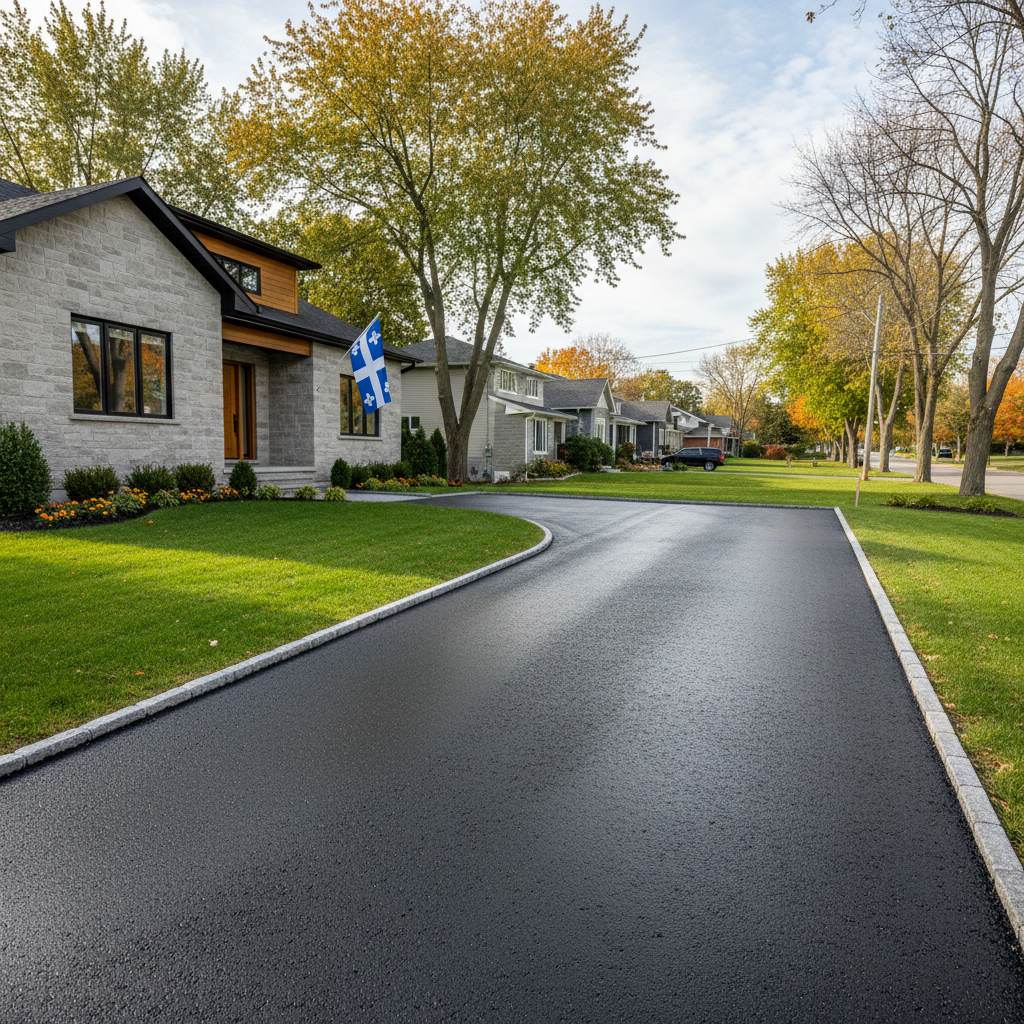
Driveway paving options and costs in Nipigon
Nipigon driveway paving comes with a clear choice: you can go with asphalt for the lowest upfront cost, choose interlocking pavers for curb appeal and easy spot repairs, or invest in concrete for a longer-lasting hard surface. Because 94.7% of dwellings in Nipigon are single-detached homes (Statistics Canada, 2021 Census), most driveways are tied to detached houses, so your driveway condition and base design can have an outsized effect on day-to-day usability. And with 87.1% of homes built before 1981 (Statistics Canada, 2021 Census), many properties already have older gravel approaches or patchy asphalt that need tear-out, grading, and drainage upgrades before any new surface goes down.
In Northwestern Ontario, pricing is shaped by deep frost and aggressive freeze–thaw cycles. That means contractors design for heaving control with a thicker, well-compacted granular base and careful drainage—especially if you’re on clay or poorly drained soils. The work is also compressed into a shorter paving season; hot-mix asphalt placement and compaction require suitable temperatures (practically, conditions above about 10°C for successful paving), so summer scheduling pressure and mobilization can push costs upward compared with milder regions.
In Nipigon, paving demand is often especially strong around the Nipigon town core, where driveways tend to be shorter but access and removal of existing surfaces can be more time-consuming. With that in mind, here’s a straightforward cost comparison to anchor your quote discussions before you review the table.
| Material |
Lifespan |
Maintenance |
Best For |
Price per sq ft |
| Asphalt (new installation, proper base) |
15–25 years |
Seal every 3–5 years |
Most driveways needing a strong, cost-effective surface |
$7 – $14 |
| Asphalt (overlay on existing gravel base) |
10–18 years |
Seal regularly; monitor edge raveling |
When gravel base is stable and drainage is good |
$6 – $12 |
| Interlocking concrete pavers |
20–30 years |
Re-sand joints as needed; lift-and-replace repairs |
Curb appeal and long-term repairability |
$18 – $35 |
| Poured concrete (broom finish) |
25–35 years |
Seal or recoat selectively; crack monitoring |
Clean look, low daily maintenance |
$14 – $28 |
| Exposed aggregate concrete |
25–35 years |
Seal for stain resistance; occasional patching |
Non-slip surface and premium appearance |
$16 – $32 |
| Gravel / crushed stone (budget option) |
3–7 years (varies) |
Re-grade and top up annually |
Short-term or lowest initial cost |
$3 – $7 |
Prices are estimates only and vary by project scope, site access and material selection.
What affects the price of paving in Nipigon
If you request quotes for the “same size driveway,” it’s common to see variation of 30% to 50% across Northwestern Ontario and even within Ontario-wide contractor lineups. The reason isn’t just the surface material—it’s what your contractor has to fix underneath. Two driveways that both measure, say, 600 sq ft can have very different base thicknesses, drainage needs, and tear-out requirements based on soil type and how much existing material must be removed.
In the Northwest, frost protection and freeze–thaw cycles are decisive cost factors. Deeper frost requires a thicker, compacted granular base to prevent heaving and cracking. In Ontario’s colder inland conditions, base designs are commonly in the 4 to 6 feet overall protection concept range in frost-sensitive areas, with a practical emphasis on building enough compacted granular thickness and upgrading materials where clay or poor drainage shows up. Contractors can’t “pave around” water: if runoff or meltwater sits near the driveway edge, you’ll often see surface breakup sooner and additional repairs later.
The shorter paving season also matters. Asphalt needs suitable air and base temperatures for proper compaction and curing; when the window is tight, crews spend more time mobilizing and scheduling around weather. That’s one reason asphalt pricing may align with the regional band of $7–$14 per sq ft even when material costs appear similar. Concrete projects can shift upward too—especially when air-entrained mixes, longer curing discipline, and controlled jointing are required for freeze–thaw durability, often pushing you toward the $14–$28 per sq ft concrete band depending on finish and thickness.
In Nipigon specifically, older properties (many built before 1981) often have softer subgrade or settlement around culverts and property lines. If your driveway slopes toward a low area, contractors may need additional grading, new subdrain, or upgraded base—each one can add several thousand dollars to the final scope, especially once tear-out and disposal are included. Conversely, if the existing base is well-drained and the driveway is already properly graded, you may be able to stay closer to the lower end of the bands.
| Price Factor |
Why It Matters |
Cost Impact |
| Driveway area in sq ft |
Most costs scale with surface area and base volume |
Typically the biggest driver; small changes can swing totals by thousands |
| Base depth required |
Frost line and subgrade conditions determine granular thickness |
More excavation and more aggregate—often a major portion of cost |
| Grading and drainage work |
Proper slope and water removal reduce freeze–thaw damage |
Adds labour and equipment time; can be a hidden “make-or-break” cost |
| Tear-out of existing surface |
Breaking, loading, and hauling impacts schedule and disposal |
Concrete removal and contaminated material disposal can raise costs sharply |
| Edge restraints and curbing |
Pavers need restraint to prevent lateral movement |
Material and install labour can add up; critical for long-term performance |
| Sealing requirement |
Asphalt requires sealing to protect from moisture and oxidation |
Often adds a planned maintenance line item every 3–5 years |
| Site access |
Narrow approaches slow equipment movement and increase crew time |
May add truck trips or reduce production efficiency |
| Asphalt mix specifications |
Freeze–thaw-rated mix designs improve durability |
Better binders and spec compliance can push unit pricing toward the top of band |
Permits & regulations in Ontario
For most homeowners in Ontario, paving a private driveway within your own property typically does not require a building permit. Where permits and approvals can come in is when the work affects the municipal right-of-way—for example, creating or changing a driveway access through a boulevard, adjusting curb cuts, altering storm drainage, or changing ditching that connects to municipal infrastructure. If the contractor will touch boulevard grading, curbs, or storm outlets, you should expect municipal approval steps.
In practical terms for Nipigon, before you sign, ask your contractor to confirm whether their plan includes any of the following: new driveway approach in the boulevard, modifications to storm inlets/culverts, or changes to the slope of municipal ditches. Those are the scenarios where you may need permits or at least formal municipal approvals.
Also, never skip utility locates. In Ontario, the standard practice is to submit an excavation locate request before any digging. Then, verify your contractor’s credentials:
- Check the Ontario business/contractor listing and confirm the legal business name matches the quote.
- Ask for a certificate of insurance (liability) showing coverage is active and aligns with the project date.
- Confirm WSIB/WCB coverage (or an appropriate exemption letter if they’re not required), and request proof in writing.
- Request a clear written scope showing what they will excavate, what they will haul away, and what they will replace.
That combination—right-of-way clarity plus proof of licensing and coverage—is what keeps a paving job smooth for both your property and your budget.
Asphalt vs pavers vs concrete for Nipigon driveways
Choosing between asphalt, interlocking pavers, and concrete in Nipigon is mainly about balancing upfront cost, how you want to handle repairs, and how the surface performs under Northwest freeze–thaw and winter maintenance (plowing plus de-icing salt). Asphalt is typically the most economical to install and can look clean when new, but it performs best when it’s sealed after the initial period—then maintained every 3–5 years. Without sealing, asphalt is more vulnerable to moisture getting into the surface, which can accelerate rutting and surface breakdown in wet spring thaw periods.
Interlocking pavers cost more upfront, but they shine in a climate where damage can be localized. If a section settles due to subgrade movement, crews can lift and replace only the affected pavers and re-sand joints rather than redoing the whole driveway. That’s especially valuable in older Nipigon properties where the approach may have had long-term settlement. Pavers also deliver strong curb appeal, which matters for homes where the driveway is a focal point in a smaller-town setting.
Poured concrete (air-entrained) sits in the middle on cost, and with correct mix design, it can handle freeze–thaw cycles well. However, concrete still needs proper base preparation and jointing; if water isn’t controlled through grading and drainage, cracking and spalling can show up sooner. Exposed aggregate is a premium look but adds cost, while permeable/draintable systems are an option when you truly need managed infiltration.
As a dollar example: if asphalt comes in around $7–$14 per sq ft for your driveway, pavers may land closer to $18–$35 per sq ft. That difference is often justified when you value curb appeal, want easy spot repairs, and expect your driveway subgrade or drainage to be imperfect—common realities in Nipigon’s older housing stock. If your base and drainage are engineered correctly from day one, asphalt can still be the most practical option for many homeowners.
| Material |
Frost Resistance |
Curb Appeal |
Repair Method |
Lifespan |
Price Band |
| Asphalt (sealed regularly) |
Good with proper base, drainage, and freeze–thaw-rated mix |
Medium (depends on edging and finish) |
Mill/patch localized sections |
15–25 years |
$7 – $14 |
| Interlocking concrete pavers |
Very good with compacted base and edge restraints |
High (variety of patterns and colours) |
Lift, re-level, re-sand, replace affected units |
20–30 years |
$18 – $35 |
| Poured concrete (air-entrained) |
Good to very good when air-entrained and properly jointed |
Medium to high (finish dependent) |
Patch cracks; sometimes section repair depending on severity |
25–35 years |
$14 – $28 |
| Exposed aggregate concrete |
Good when properly mixed and drained |
High (textured, premium look) |
Patch and re-finish localized areas |
25–35 years |
$16 – $32 |
| Permeable pavers (drainage grid) |
Good where drainage design prevents freeze-up |
High (modern look) |
Targeted replacement of affected grid/pavers |
20–30 years (design dependent) |
$22 – $40 |
| Chip seal / tar-and-chip |
Moderate; needs good base and sealing plan |
Low to medium (surface texture) |
Spot repairs and re-chip sections |
8–15 years |
$6 – $12 |
How to choose a paving contractor in Nipigon
In Nipigon and across Ontario, the safest way to choose a paving contractor is to verify licensing and coverage before you discuss price. First, ask for their Ontario business registration details and confirm the name on the quote matches what you find in public listings. Next, request a certificate of liability insurance that includes the project location and is current. Third, confirm they have appropriate WSIB/WCB coverage for their workers (or an exemption/clearance letter if applicable) and ask for proof in writing.
Then, get 2–3 itemised written quotes, ideally with a line-by-line breakdown for labour and materials (excavation, base aggregate, asphalt/concrete, edging, drainage corrections, compaction, and disposal). Avoid “lump sum only” quotes without scope detail—especially in freeze–thaw regions where base and drainage decisions drive long-term performance. Read the exclusions: is tear-out and haul-away included? Is permit or municipal approval support included if work touches the boulevard? What about restoring hydro/culvert areas?
Warranty matters too. Ask for (1) the workmanship warranty length, (2) any manufacturer warranty on materials (binder/aggregate/air entrainment where specified), and (3) whether the warranty is transferable to future owners.
On payment, a practical rule is: never pay more than 10–15% upfront. Hold back a portion until the surface is complete, compacted, and cleaned, and ensure your contract spells out the final inspection and touch-up responsibilities. Finally, request the timeline: start date and an estimated completion window in writing.
- Provided a written scope with base depth, materials, and compaction steps.
- Included disposal/haul-away for old asphalt or concrete.
- Explained drainage plan (slope, ditches, culvert tie-in) in plain language.
- Showed how they’ll protect adjacent landscaping, fences, and steps.
- Included edge restraints/curbs where pavers are used.
- Specified freeze–thaw-rated asphalt mix or air-entrained concrete requirements.
- Provided start date, completion estimate, and weather contingency plan.
- Clarified whether sealing is included (asphalt) and when it will be applied.
- Gave a clear warranty document (workmanship, materials, and transferability).
- Quoted itemised labour vs materials—no vague “miscellaneous” buckets.
- Verified insurance and WSIB/WCB coverage with certificates before work starts.
- Used a written payment schedule with retainage/holdback until closeout.
Red flags in Nipigon include: quotes that refuse to discuss base thickness or drainage; “too-good-to-be-true” pricing that skips tear-out or compaction steps; no proof of current liability insurance or WSIB/WCB coverage; pressure for large upfront deposits; and vague warranties that don’t define what’s covered or for how long.
Frequently asked questions — paving in Nipigon
When is the best time of year to pave in Nipigon?
In Nipigon, the best paving window is usually late spring through early fall—when crews can consistently achieve workable temperatures for compaction and curing. For asphalt, hot-mix placement typically needs air temperatures generally above about 10°C, and cold nights can interrupt mat quality if crews push too early. If you’re planning concrete, you’ll still want a stable stretch of weather so air-entrained concrete can cure properly and joints can be timed correctly. Because freeze–thaw effects are harsh, contractors in Northwestern Ontario prioritize quality over speed, and that can limit availability in peak weeks. If your quote aligns with a driveway sized typical for single-detached homes, you’ll still want to book early to secure a start date during the most reliable weather window. (Statistics Canada, 2021 Census)
How deep should the base be for Nipigon's frost?
Base depth isn’t a one-size number; it depends on your subgrade (clay vs. granular, and how well the site drains) and the frost-protection approach used in the design. In colder inland Ontario like Nipigon, frost protection is typically designed with a substantial granular assembly to resist heaving—often around 4 feet as a minimum concept, and sometimes requiring additional depth to manage the worst frost-susceptible conditions. What matters for your quote is whether the contractor will remove unsuitable material and build a properly compacted granular base with correct drainage so water doesn’t sit near the driveway. If you’ve got a wet spot that turns spongy in spring, that’s a sign base design may need to go deeper. A well-built base is part of why asphalt commonly lands in the regional band of $7–$14 per sq ft rather than bargain pricing.
How often should I seal my asphalt driveway?
For asphalt in Ontario’s freeze–thaw climate, sealing is best thought of as scheduled protection rather than a one-time job. After the driveway is installed, most contractors recommend waiting long enough for the asphalt to properly cure and then applying sealcoat; then plan on repeat sealing every 3–5 years depending on traffic, sun exposure, and how much winter abrasion you get from plowing and sanding. If your asphalt starts to look faded, shows light surface oxidation, or moisture seems to penetrate quickly around the edges, it’s usually time to seal. Sealing also helps slow oxidation that can lead to raveling—especially near where de-icing is used. Even if your initial quote is at the low end of the $7–$14 per sq ft asphalt range, maintaining it with timely sealing protects your long-term service life.
Why does my driveway crack and heave in winter?
Cracking and heaving in Nipigon typically come from a combination of water and frost action. If meltwater or rain can’t drain away properly—because slope is off, edges are unrestrained, or there’s a drainage blockage—the water freezes in the base/subgrade and expands. That repeated freeze–thaw cycle creates stresses that can lift (heave) parts of the driveway, then lead to cracking when the surface settles again. Older driveways (common in Nipigon where many homes were built before 1981) often have base material that has migrated or lost compaction, which makes frost penetration more damaging. Sometimes the surface cracks first, but frequently the underlying issue is inadequate base thickness or poor drainage design. A contractor that only patches cracks without addressing drainage and base compaction usually won’t solve the root problem.
Do I need a permit to pave my driveway in Ontario?
In most cases, paving a private driveway within your own property in Ontario doesn’t require a building permit. However, if the work impacts the municipal right-of-way, such as changing curb cuts, modifying boulevard access, or altering storm drainage/ditch systems tied to municipal infrastructure, approval or permits may be required by the municipality. Nipigon homeowners should ask the contractor up front whether any excavation or grading will occur in the boulevard and whether municipal approval steps are included in the plan. Also confirm utility locates are done before digging. For peace of mind, ensure your contractor provides proof of liability insurance and WSIB/WCB coverage before starting—especially because right-of-way work and deeper excavation increase the risk and complexity.
How long before I can drive on new asphalt?
With asphalt, you can usually drive on it after it cools enough to prevent damage from tire pickup and tracking. Many projects are workable the same day, but timing depends on the mix, thickness, weather, and whether the contractor can control traffic during the cool-down period. In colder nights (common in the shoulder seasons), crews may limit exposure and keep vehicles off longer to protect the surface. If you’re doing sealing later, you’ll also need to follow the sealcoat cure time stated in the manufacturer instructions—typically you’ll want vehicles kept off until it’s properly set. Ask your contractor how they’ll manage access during cool-down so you’re not tempted to use the driveway too soon. If your quote is built around a proper base and freeze–thaw-rated asphalt, it’s consistent with the $7–$14 per sq ft range for this region.