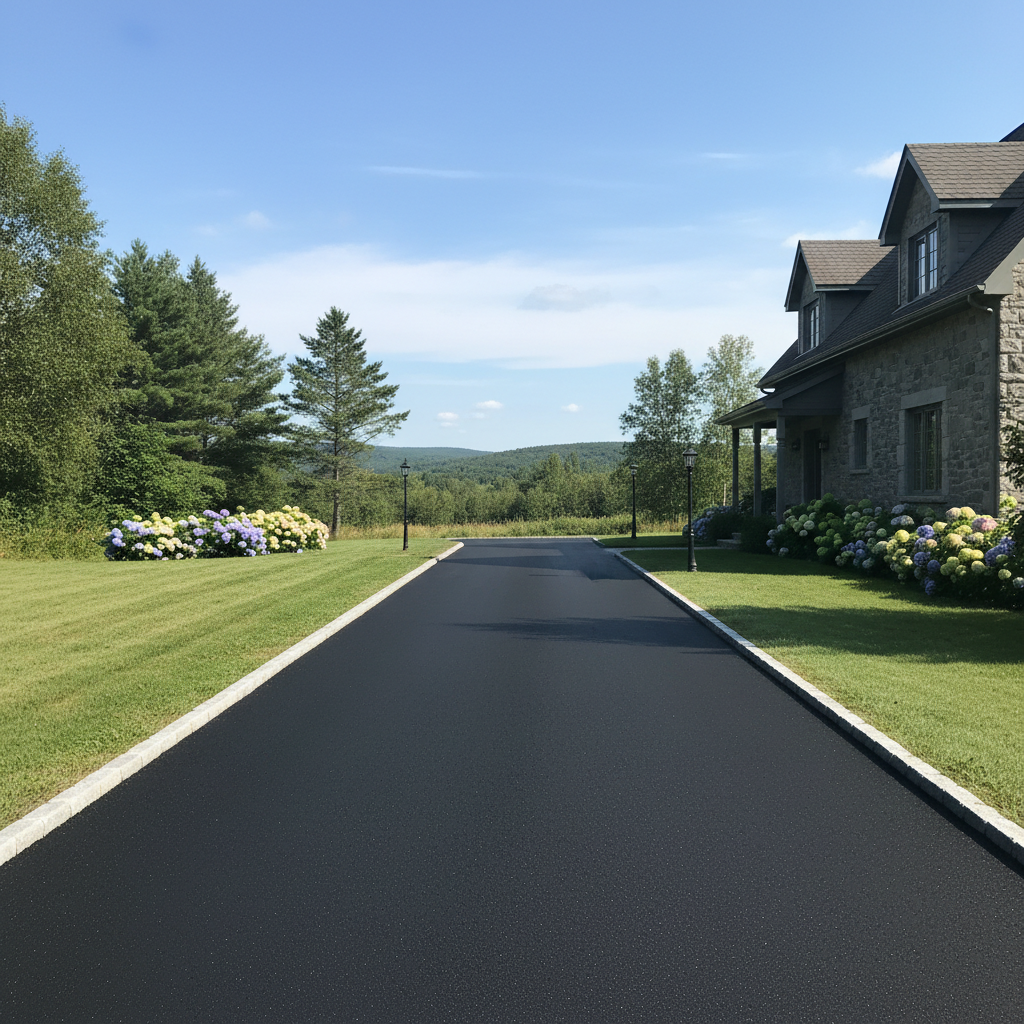
Driveway paving options and costs in Banbury-Don Mills
Banbury-Don Mills, Ontario homeowners typically face three big decisions when updating a driveway: asphalt, interlocking pavers, or concrete. With a population of (27,695) in the local area (Statistics Canada, 2021 Census), there’s steady demand for contractor availability—especially during the late spring-to-early fall window when paving crews can place hot mix efficiently. In neighbourhoods like the Don Mills and northern Toronto corridor, driveways are often attached to single-detached homes, and those lots usually require more engineered base and careful drainage to handle winter’s freeze–thaw cycles.
Toronto’s frost depth and repeated freeze–thaw events are a primary cost driver. Local frost line studies indicate ground freezing to roughly 3–4 feet, so driveways need deeper, well-compacted granular base layers and reliable drainage to prevent water from sitting under the surface. That’s why two quotes for the “same size driveway” can still differ: excavation depth, base design, and how crews stage work in a tight season all affect total installed cost. Interlock and concrete can also cost more on premium streets where access is tighter and finishes must be more precise.
The table below compares typical lifetime expectations and realistic price ranges you’ll see in Banbury-Don Mills for both replacement and common upgrades (like overlaying an asphalt surface). Use it as a baseline, then align your choice with your drainage needs and how you maintain your driveway through winter.
| Material |
Lifespan |
Maintenance |
Best For |
Price per sq ft |
Price Range |
| Asphalt (new installation, proper base) |
10–20 years |
Seal every 3–5 years; patch minor areas as needed |
Good value, smooth driving surface, faster installs |
$6.50–$12.00 |
$3,500–$8,000 |
| Asphalt (overlay on existing gravel base) |
8–15 years |
Seal as scheduled; monitor edge raveling and settlement |
When subgrade is stable and you’re upgrading from gravel |
$7.00–$13.50 |
$4,000–$7,500 |
| Interlocking concrete pavers |
25–40 years |
Re-sand joints; lift-and-relay repairs for localized failures |
Curb appeal, flexible movement, long service life |
$15.00–$26.00 |
$9,000–$20,000 |
| Poured concrete (broom finish) |
20–35 years |
Seal periodically; keep joints and drainage maintained |
Monolithic look, straightforward maintenance |
$12.00–$20.00 |
$6,000–$15,000 |
| Exposed aggregate concrete |
20–35 years |
Seal for stain protection; repair spalls promptly |
Slip resistance and premium curb appeal |
$14.00–$23.00 |
$7,500–$17,000 |
| Gravel / crushed stone (budget option) |
3–8 years |
Top up, re-grade, manage washouts |
Temporary solution or low-budget pads |
$4.00–$8.00 |
$2,000–$5,500 |
Prices are estimates only and vary by project scope, site access and material selection.
What affects the price of paving in Banbury-Don Mills
In the Toronto economic region, it’s common to see driveway paving quotes swing by roughly 30–50% even when the driveway looks similar on paper. The biggest reason is that “paving” isn’t just the surface—it’s excavation, subgrade preparation, granular base depth, drainage, and how crews work within a compressed season. In a frost-driven market like Toronto, the frost depth and freeze–thaw cycles are decisive cost factors: deeper frost requires a thicker compacted granular base so the pavement doesn’t heave or crack when water freezes and expands. Even with the same finish—say asphalt vs. concrete—the engineering details drive cost.
Workability also tightens in colder markets. Hot-mix asphalt placement generally needs air temperatures above about 10°C, so late spring and early summer demand can spike. When schedules get full, mobilization and crew rates rise, especially for prime dates.
Concrete costs can move up or down quickly depending on mix design and construction controls. For example, if your driveway is sloped toward a garage or down a yard, drainage corrections and additional base can add dollars quickly. Likewise, older homes in the area often have original soils that have shifted over decades; if subgrade stabilization is required, you’ll pay more to rebuild properly before placing a poured slab.
To keep expectations realistic: a new properly based asphalt driveway in this zone often lands around the lower part of the asphalt band ($3,500–$8,000), while higher-end interlock for long life and curb appeal frequently sits within the interlocking band ($9,000–$20,000). The “right” answer depends less on what looks good today and more on how water and frost behave under your driveway.
| Price Factor |
Why It Matters |
Cost Impact |
| Driveway area in sq ft |
Surface area largely determines material and labour volume |
High (primary driver) |
| Base depth required |
Frost line dictates granular thickness to prevent heaving |
High (more excavation and material) |
| Grading and drainage work |
Correct slope and drainage prevent water pooling |
Medium to high (often overlooked) |
| Tear-out of existing surface |
Breaking and hauling asphalt or concrete adds disposal and labour |
Medium to high |
| Edge restraints and curbing |
Interlock needs edge stability; asphalt benefits from firm edges |
Medium |
| Sealing requirement |
Asphalt should be sealed after initial curing (commonly 6–12 months) |
Low to medium (lifetime cost consideration) |
| Site access |
Narrow lots slow equipment movement and extend labour time |
Medium |
| Asphalt mix specifications |
Freeze–thaw-rated mixes reduce early cracking in Ontario winters |
Medium (material premium) |
Permits & regulations in Ontario
In Ontario, paving a private driveway on your property typically does not require a building permit when you’re staying within your existing driveway footprint and not changing major drainage patterns. However, work that affects the municipal right-of-way often does require municipal approval—especially anything involving new curb cuts, changes to boulevard areas, or adjustments to storm drainage and runoff flow near the street. Some municipalities also have lot-grading bylaws that limit how close hard surfaces can be built to property lines and how drainage must be managed. Even if a permit isn’t required, inspections or approvals for right-of-way work are common.
Before excavation, always confirm utilities using the proper locate service (Ontario One Call). That one step can prevent expensive surprises with hydro, gas, cable and water services.
To verify an Ontario contractor (for paving in Banbury-Don Mills), follow a simple checklist. First, check their Ontario licensing status in the appropriate public registry (where applicable for their business type), and request a certificate of insurance showing general liability limits suitable for driveway work. Second, confirm WSIB coverage if they employ workers; the contractor should provide evidence of active clearance or coverage. Third, ask for written scope details (materials, base depth, drainage, disposal) and confirm who pulls any municipal permissions if right-of-way changes are required. If they can’t provide insurance and coverage documentation up front, treat that as a red flag.
Asphalt vs pavers vs concrete for Banbury-Don Mills driveways
For Banbury-Don Mills driveways, asphalt, interlocking pavers and concrete all handle winter differently under Toronto’s freeze–thaw cycles. Asphalt is usually the lowest upfront cost, and when it’s built with the right granular base and sealed on schedule, it performs smoothly. The trade-off is that asphalt typically needs sealing every 3–5 years to protect it from oxidation, and localized cracking still needs timely patching.
Interlocking pavers often cost more at the start, but they’re flexible and repairable. If a section settles or suffers minor movement, it can be lifted, re-leveled, and reinstalled without replacing the entire driveway—an advantage when frost lifts moisture. In a place where plowing and de-icing salt are part of winter routine, the curb appeal and long service life are why many homeowners choose interlock even in the higher band ($9,000–$20,000).
Poured concrete sits mid-range. It can last decades if it’s air-entrained, properly jointed, and built over a well-draining base designed for frost. Without correct drainage and joint planning, freeze–thaw and salt can accelerate surface scaling and cracking. Exposed aggregate can improve slip resistance, but it still requires the same frost-safe base and drainage logic.
Base preparation in the Toronto region generally needs to respect the frost depth reality (with deeper, compacted granular layers and drainage so water can’t sit under the slab). If your driveway struggles with puddling after rain, the most “expensive” option can still be the cheapest long-term because it’s better engineered to resist water-driven heaving.
Dollar example: if asphalt quotes come in around $3,500–$8,000 but your current driveway has frequent edge settlement, you may spend more now on interlock in the $9,000–$20,000 range only after fixing drainage and base—where the cost is justified by fewer full-surface replacements over the years.
| Material |
Frost Resistance |
Curb Appeal |
Repair Method |
Lifespan |
Price Band |
| Asphalt (sealed regularly) |
Good with proper base and drainage |
Medium |
Patch and seal localized areas |
10–20 years |
$3,500–$8,000 |
| Interlocking concrete pavers |
Very good (flexible surface over engineered base) |
High |
Lift-and-relay localized sections |
25–40 years |
$9,000–$20,000 |
| Poured concrete (air-entrained) |
Good with joints and air entrainment |
Medium to high |
Patch spalls; control joints help limit cracking |
20–35 years |
$6,000–$15,000 |
| Exposed aggregate concrete |
Good with proper base and sealing |
Very high |
Patch and reseal; match finish for small repairs |
20–35 years |
$7,500–$17,000 |
| Permeable pavers (drainage grid) |
Very good when paired with correct drainage |
High (modern look) |
Re-sand and re-level; address underdrain performance |
20–35 years |
$10,000–$22,000 |
| Chip seal / tar-and-chip |
Variable; needs good base |
Low to medium |
Spot patch; reseal/overlay when aged |
5–10 years |
$3,000–$6,500 |
How to choose a paving contractor in Banbury-Don Mills
Choosing the right contractor matters in Banbury-Don Mills because the quality difference shows up during freeze–thaw seasons. Start with Ontario licensing and liability insurance. Ask for their insurance certificate (general liability) and verify the coverage limits are appropriate for excavation and paving operations on residential property. If the contractor uses workers, confirm WSIB coverage for workers’ compensation—request a WSIB clearance letter or evidence of active coverage. A contractor who won’t provide documentation up front usually isn’t budgeting properly for workmanship, safety, and compliance.
Next, get 2–3 itemised written quotes. You want a breakdown that separates excavation, disposal, granular base and compaction, underdrain/drainage work, asphalt or concrete supply, finishing, and any edging/curbing. Avoid pure lump sums because the hidden scope is where bids diverge. Make sure the quote states what’s included and what’s excluded: permit pull responsibilities (if right-of-way work is triggered), grading allowances, disposal fees, and protection of landscaping.
Warranty should be in writing. Ask about workmanship warranty length (for example, settlement/cracking due to base issues) and whether product/manufacturer warranties apply to the materials used. Also confirm if warranties are transferable if you sell the house.
For payment schedule, never pay more than about 10–15% upfront. Hold back a portion until the driveway is clean, edges are corrected, and final cleanup is done. Finally, insist on a start date and completion estimate in writing—Toronto crews often get booked quickly in peak months, so calendar clarity prevents long gaps.
- Confirm insurance certificate is current and names the right parties as required
- Verify WSIB coverage (or clearance) if they employ workers
- Request an Ontario-based address and a business contact you can reach during construction
- Ask for base depth and compaction specs—not just “proper base”
- Confirm drainage plan: slope, ditch/edge drains, and where runoff goes
- Make sure tear-out includes breaking, haul-off, and disposal (not “allowance only”)
- Get line-by-line pricing for materials vs labour
- Confirm edge restraint/curb details for pavers and asphalt prevent spread and raveling
- For asphalt: ask when sealing is recommended (often 6–12 months) and who performs it
- Request photos of similar Banbury-Don Mills or Toronto-area jobs (not only gallery images)
- Agree on cleanup and protection of lawns, gardens and walkways
- Put warranty terms, limitations and exclusions in writing
Red flags to watch for in Banbury-Don Mills include: a quote with no base thickness or drainage details, a contractor who won’t provide insurance/WSIB documentation, payment demands over 15% upfront, vague “lump sum” pricing without scope, and pressure to accept a start date without a written schedule and completion estimate.
Frequently asked questions — paving in Banbury-Don Mills
How often should I seal my asphalt driveway?
In Banbury-Don Mills and across Ontario, asphalt sealing is mainly about protecting against oxidation and water intrusion that can worsen freeze–thaw damage. A common rule of thumb is to seal your driveway after it’s fully cured—often around 6–12 months after installation—then reseal about every 3–5 years depending on traffic, sun exposure and how aggressively winter maintenance is done. If you keep the surface clean and patch small cracks early, you’ll usually stretch the interval toward the longer end. If you’re comparing materials in your quote, note that sealing is a long-term cost factor: even with asphalt installed around the $3,500–$8,000 band, budgeting for periodic sealing helps protect that investment through Toronto winters (Statistics Canada, 2021 Census).
Why does my driveway crack and heave in winter?
The most common cause in Banbury-Don Mills is moisture moving through a weak base or poor drainage. During freeze–thaw cycles, water expands when it freezes and contracts when it melts; repeated movement can push the surface up (heaving) and create cracking. This is especially likely if the granular base wasn’t deep/compacted enough for the local frost conditions (Toronto’s frost depth can reach roughly 3–4 feet), or if runoff from rain and spring thaw can’t drain away from the driveway edges. De-icing salts and plough impacts don’t cause the problem by themselves, but they can accelerate surface wear once cracks start. A correct repair usually includes base/drainage fixes—not just topping with asphalt.
Do I need a permit to pave my driveway in Ontario?
For most homeowners in Ontario, repaving a private driveway on your own property within the existing driveway footprint typically does not require a building permit. However, if your project involves work in the municipal right-of-way—such as a new curb cut, modifying boulevard areas, or changing storm drainage—you may need municipal approval. Banbury-Don Mills homeowners should also be aware that some areas apply lot-grading rules that can affect how close hard surfaces are built and how surface runoff must be managed. Practical next step: confirm whether any curb cut or drainage changes are involved before work starts, and always ensure utility locates are completed. A reputable contractor should explain what does and doesn’t require permission as part of the scope.
How long before I can drive on new asphalt?
New asphalt placement usually needs time to cool and cure before full vehicle traffic. Many crews allow light foot traffic first, then restrict vehicles until the mat has cooled and achieved early stability—often within about 24–48 hours, depending on weather and mix. Full curing and ideal performance typically takes longer; the asphalt needs time for internal bonding and to reach the condition where sealing can be applied. In a Toronto-area schedule, cold snaps can slow curing, and rain right after placement can affect surface integrity. If your quote is in the asphalt band (for example, $3,500–$8,000), ask the contractor to state the expected drive-on and completion windows for your specific weather outlook and mix design.
What causes potholes and how are they repaired?
Potholes form when water gets under asphalt and weakens the base, then freezes and expands or softens during warm-up, causing the surface to break. In Ontario’s freeze–thaw climate, a small crack can become a pathway for water. Over time, repeated cycling and plough impacts enlarge the damage. Repairs in Banbury-Don Mills should start with inspection: a proper fix removes failed material down to a stable base, addresses drainage/edge issues if needed, then places asphalt in compacted lifts. Simply “patching on top” may look good initially but often fails again if the underlying base is still saturated. A good contractor will explain what they found, how deep they plan to cut, and how they’ll compact the replacement.
How do I prepare for a paving project?
Preparation can reduce delays and cost overruns. In Banbury-Don Mills, start by clearing the work area of cars, trailers, and loose items so equipment can access the driveway safely. If you have landscaping near the edges, ask the contractor how they’ll protect beds, trees and fences. Review the written scope for tear-out and disposal, drainage corrections, and whether edging/curb restraints are included. Confirm that utility locates are requested before excavation and that you understand the work timeline window for the season. Finally, plan for payment scheduling: keep upfront payments modest (roughly 10–15%), and hold remaining funds until the driveway is finished, swept/cleaned, and the warranty paperwork is provided. This helps ensure you get the results you’re paying for—whether you’re comparing asphalt at $3,500–$8,000 or interlock in the higher band.