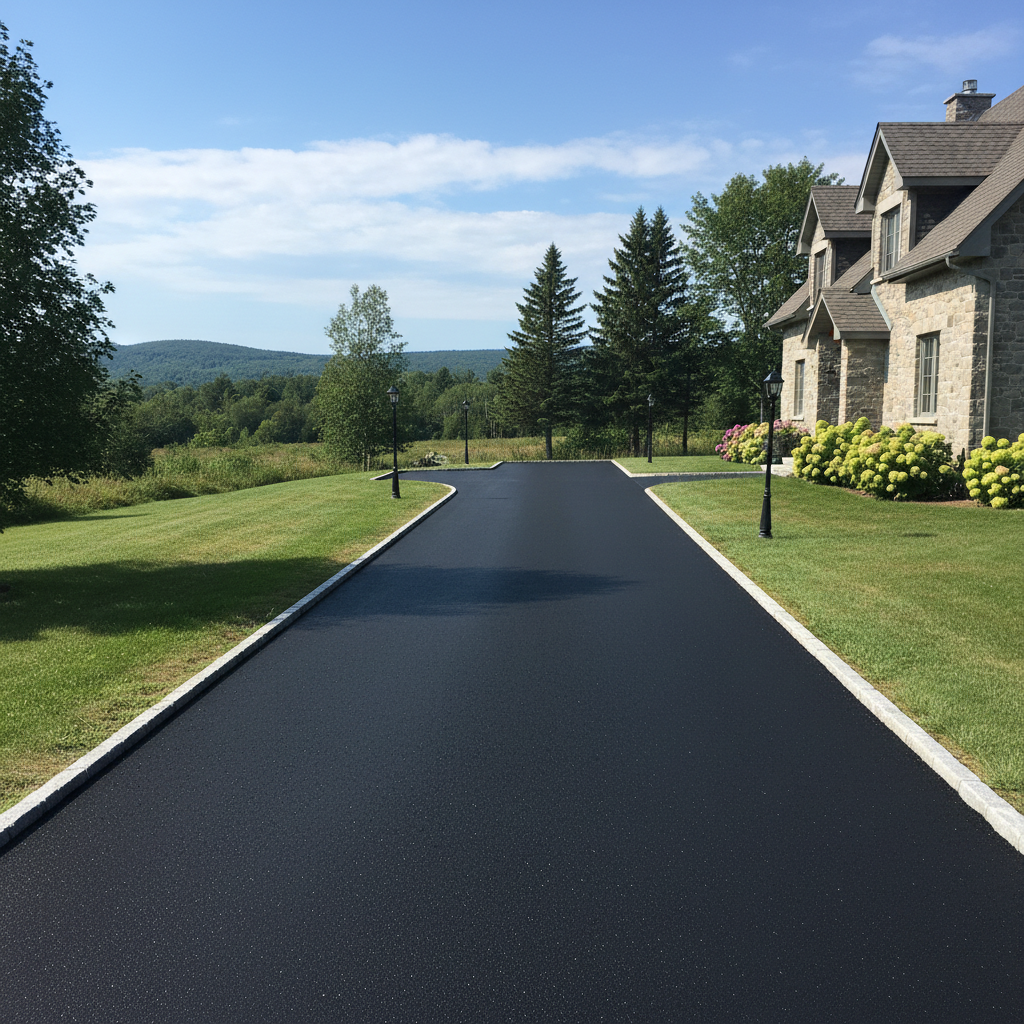
Driveway paving options and costs in Salmon Arm
Salmon Arm homeowners have a lot of driveway choices, but the costs usually come down to how thick and well-drained the base is for Thompson–Okanagan freeze–thaw conditions. With 62.4% of local dwellings being single-detached homes, most driveways are tied to detached properties—so the work volume is steady and competitive, especially around popular areas like the Salmon Arm waterfront and surrounding downtown neighbourhoods where curb access and drainage details matter. In 2021, Salmon Arm had 19,432 residents and about 6,300 homeowner households (77.7% of households own), which supports a strong base of private paving projects, repairs, and resurfacing each season (Statistics Canada, 2021 Census).
Pricing in the Thompson–Okanagan interior isn’t just about asphalt or concrete—it’s about building a frost-resistant section under the pavement. Crews plan around a shorter, drier paving window than the coast, because hot-mix asphalt generally needs warmer air temperatures (often above 10°C) for paving and proper compaction. That weather pressure, plus the need for a substantially more granular base than the minimum “frost line for structures,” is why two quotes that look similar on paper can differ once excavation, drainage grading, and granular thickness are included.
To help you compare apples to apples, the table below uses typical Salmon Arm structure and maintenance expectations. Use it as a starting point before you ask your contractor for an itemised breakdown by material, base depth, and site conditions—especially if you have older homes (38.6% built before 1981) where subgrades and drainage may be less predictable (Statistics Canada, 2021 Census).
| Material |
Lifespan |
Maintenance |
Best For |
Price per sq ft |
Price Range |
| Asphalt (new installation, proper base) |
12–20 years |
Seal coat every 3–5 years; patch as needed |
Most budget-aware homeowners who want a smooth, quiet ride |
$6.50–$10.50 |
$4,500–$9,000 |
| Asphalt (overlay on existing gravel base) |
10–16 years |
Seal coat every 3–5 years; monitor edge condition |
Lots where the gravel base is stable and drainage is already good |
$5.75–$9.25 |
$4,000–$8,000 |
| Interlocking concrete pavers |
25–40 years |
Occasional re-leveling; seal selectively if desired |
Curb appeal, long-term durability, and easy repairs without full replacement |
$10.00–$16.50 |
$6,500–$14,000 |
| Poured concrete (broom finish) |
20–30 years |
Minor joint maintenance; occasional patching |
Clean lines and a solid surface for heavier vehicles |
$9.00–$14.50 |
$7,000–$15,000 |
| Exposed aggregate concrete |
20–30 years |
Limited maintenance; seal optional for stain resistance |
Higher-end appearance with extra surface texture/grip |
$11.00–$17.00 |
$8,500–$16,000 |
| Gravel / crushed stone (budget option) |
3–8 years (varies by drainage) |
Regrade and top up annually; weed control |
Short-term or transitional solutions on a tight budget |
$3.00–$6.25 |
$2,000–$5,500 |
Prices are estimates only and vary by project scope, site access and material selection.
What affects the price of paving in Salmon Arm
Even for the “same” driveway, quotes in Salmon Arm can vary by 30–50% across the Thompson–Okanagan region and British Columbia because the work isn’t identical underneath the surface. In the interior, contractors must design for repeated freeze–thaw cycles and moisture movement. That means deeper, well-compacted granular base and more time spent on excavation, subgrade conditioning, and drainage grading. On the coast, crews often face less freeze–thaw-driven movement, so the pavement section can sometimes be built closer to the lower frost-design expectations. In Salmon Arm, you’re paying for durability that holds up through winter temperature swings.
One of the biggest drivers is frost-related section thickness. Where deeper frost and more moisture exposure mean the compacted granular base has to be thicker, the material quantities and compaction effort increase—so your cost moves with base depth. In Thompson–Okanagan driveways we commonly end up around the 8.5–9" total asphalt/construction range for residential work (with roughly 6" of compacted base in many typical installs), whereas coastal schedules and sections can differ. Asphalt also needs proper air temperatures for paving and compaction; hot-mix is typically placed when temperatures are warm enough to achieve good density. A shorter effective season concentrates demand into the drier months, so mobilization, crew scheduling, and weather risk are built into pricing.
Concrete can cost more when excavation reveals poor soils or when joints, dowels, and air entrainment details are upgraded to resist winter movement. Gravel can be cheaper upfront, but drainage problems and slope issues lead to more frequent regrading and topping—so it often costs more over a few years. If your project starts near the lower end of $4,500–$9,000 for asphalt, it usually stays there only when the base is sound and edges are straightforward; once you add tear-out and drainage corrections, many projects move closer to the upper band. Conversely, some paver jobs land in $6,500–$14,000 when homeowners choose them for easy repair and long-term curb appeal, not just initial price.
| Price Factor |
Why It Matters |
Cost Impact |
| Driveway area in sq ft |
Most materials and machine time scale directly with surface area |
Typically the largest line-item; can change pricing by thousands on larger lots |
| Base depth required |
Frost and moisture movement require thicker, well-compacted granular thickness |
Extra excavation and material haul can noticeably increase cost |
| Grading and drainage work |
Proper slope and water management reduce heaving, ruts, and early cracking |
May add significant labour and trucking if drainage is poor |
| Tear-out of existing surface |
Breaking, loading, and hauling old asphalt or concrete affects disposal time and equipment |
Often increases cost more than homeowners expect |
| Edge restraints and curbing |
Pavers need restraints; asphalt needs good edge definition to resist migration |
Can add labour and materials, but helps prevent future failure |
| Sealing requirement |
Asphalt sealing after installation protects against oxidation and winter water intrusion |
Usually a planned additional cost within the first 6–12 months |
| Site access |
Narrow driveways and tight turns slow equipment and may require smaller deliveries |
More time on site and higher mobilization |
| Asphalt mix specifications |
Freeze–thaw-rated mixes and correct binder content can cost more |
Material cost rises, but service life improves |
Permits & regulations in British Columbia
In British Columbia, paving a private driveway on your own property usually does not require a building permit. The general idea is that you’re improving a driveway surface within your lot, not constructing a new building. However, permits and approvals commonly come into play when the work touches the public right-of-way or affects municipal infrastructure.
Work that typically DOES require municipal approval includes: any new or altered curb cuts, changes to the boulevard, modifications that affect storm drainage or how water flows to municipal drainage infrastructure, and any changes that interfere with sidewalk/road assets. Some municipalities also regulate lot grading, which can restrict how close hard surfaces can be to property lines and how runoff must be handled to prevent water from crossing into neighbours’ lots or ponding on the boulevard.
Work that typically does NOT require a building permit is: resurfacing an existing driveway in place, installing a driveway surface wholly within your property limits, and replacing like-for-like with proper base preparation—so long as you are not altering municipal right-of-way features.
Before excavation in Salmon Arm, have your utilities located by calling BC 1 Call. Then verify your contractor’s BC licence and paperwork. Ask for: (1) proof of valid liability insurance (certificate of insurance naming you as additional insured when applicable), (2) coverage for workers via the appropriate WorkSafeBC (WCB) account information, and (3) a current certification or licence listing when you request it. Contractors should provide these documents promptly, and clear, project-specific certificates are a strong sign you’re working with a legitimate operator.
Asphalt vs pavers vs concrete for Salmon Arm driveways
For Salmon Arm, the “best” driveway material depends on how much you value upfront cost versus long-term repair flexibility—especially under interior freeze–thaw conditions. Asphalt is usually the lowest upfront option and gives a smooth, quiet ride, but it relies on good sealing and edge protection; many homeowners plan a seal coat every 3–5 years to reduce oxidation and help water resistance. Interlocking concrete pavers cost more up front, yet they’re the most homeowner-friendly to repair: a section can be lifted, the base corrected (if drainage is the culprit), and pavers reinstalled without replacing the entire driveway. Poured concrete tends to be mid-range and durable, but it must be properly air-entrained and correctly jointed—otherwise it can crack as moisture freezes and expands.
Across Thompson–Okanagan, base preparation and drainage design are the deciding factors for all three options. In practical terms, that means excavating to remove weak soils, building a well-compacted granular base (often around the 8.5–9" total structure range for typical residential asphalt builds), and grading to keep water from sitting in the driveway. Winter maintenance also matters: plowing can stress edges and cause raveling on poorly restrained surfaces, and de-icing salts can increase wear on some concrete finishes—so contractors should recommend jointing and mix design appropriate for cold climates.
Here’s a realistic example: if you’re choosing between a driveway in the asphalt band of $4,500–$9,000 and pavers in the $6,500–$14,000 band, the price gap is often justified if you’ve had drainage issues, you expect heavy vehicles, or you want curb appeal and easier future repairs. If your subgrade and drainage are already excellent, asphalt can deliver very good value—provided sealing and patching are budgeted.
| Material |
Frost Resistance |
Curb Appeal |
Repair Method |
Lifespan |
Price Band |
| Asphalt (sealed regularly) |
Good with proper base and drainage |
Medium (clean, dark finish) |
Mill/patch localized areas |
12–20 years |
$4,500–$9,000 |
| Interlocking concrete pavers |
Excellent when edge restraints and base are correct |
High (wide colours/patterns) |
Lift-and-replace individual stones |
25–40 years |
$6,500–$14,000 |
| Poured concrete (air-entrained) |
Good with air entrainment and correct joints |
Medium to High (finish options) |
Patch cracks and spalls (may be more visible) |
20–30 years |
$7,000–$15,000 |
| Exposed aggregate concrete |
Good with proper mix design and curing |
High (textured, premium look) |
Patch sections; finish may require matching aggregate |
20–30 years |
$8,500–$16,000 |
| Permeable pavers (drainage grid) |
Very good when designed for site water |
Medium to High (depends on pattern) |
Lift-and-replace; clean out drainage cells if needed |
20–35 years |
$7,500–$16,000 |
| Chip seal / tar-and-chip |
Moderate; depends heavily on prep |
Low to Medium |
Spot repairs and re-chip as needed |
6–12 years |
$3,500–$7,500 |
How to choose a paving contractor in Salmon Arm
In Salmon Arm and across British Columbia, you should verify three things before any work starts: proper BC licensing/qualifications (as applicable to the scope), liability insurance, and WorkSafeBC coverage for workers. Ask the contractor to provide documentation in advance—don’t just take verbal assurances. For insurance, request a certificate of insurance and confirm it covers the correct business name and address, and that liability limits are appropriate for driveway paving operations. For WorkSafeBC (WCB), they should be able to share their WorkSafeBC account information or coverage confirmation. If they can’t provide it, or if paperwork looks generic, pause the decision.
Next, get 2–3 itemised written quotes that break down labour and materials rather than one lump sum. A good quote clearly lists: excavation, granular base thickness, asphalt mix and thickness, thickness of topping/overlay, compaction requirements, drainage/grading allowances, and disposal of old material. Read what’s excluded—common exclusions include permit work, utility locates, unsuitable soils removal beyond a set depth, and premium access costs. Ask whether curb/boulevard approvals (if needed) are included, and whether disposal is included or you’re billed separately.
Warranty matters. Confirm the workmanship warranty length and what it covers (settlement, cracking, raveling) and whether product/manufacturer warranties apply and are transferable. For payment, keep it sensible: never pay more than about 10–15% upfront. Hold back a portion until the final inspection and cleanup are complete. Finally, insist on a written start date and completion estimate so you can understand the schedule pressure from the shorter interior paving season.
- Ask for their BC paperwork and insurance before signing anything.
- Confirm WorkSafeBC coverage details for their crew.
- Request an itemised quote: excavation, base depth, paving thickness, and compaction.
- Specify drainage/grading inclusions—don’t accept “as required” without numbers.
- Clarify tear-out scope and disposal fees.
- Make sure edge restraints (especially for pavers) are included where needed.
- For asphalt, confirm when sealing is required and whether it’s in the plan (after 6–12 months).
- Check whether the contractor provides utility locate coordination or you must arrange it.
- Ask what happens if weather interrupts paving during warm months.
- Review the warranty in writing, including exclusions and response timelines.
- Get a written schedule: expected start date and estimated completion.
- Use milestone payment: small deposit, then progress payments, with holdback.
Red flags in Salmon Arm include contractors who won’t provide certificates of insurance and WorkSafeBC coverage, quotes that omit base depth/compaction details, “cheap” prices that assume no tear-out or no drainage work even when water sits in the driveway, vague warranties, and payment requests for large upfront deposits that don’t match the work milestones.
Frequently asked questions — paving in Salmon Arm
Asphalt vs interlocking pavers vs concrete — which is best in Salmon Arm?
In Salmon Arm, asphalt is often the best fit if you want the lowest upfront cost and you’re willing to seal it regularly. The Thompson–Okanagan freeze–thaw pattern punishes thin builds, so choose an asphalt install with proper base and drainage, not a bargain overlay. Interlocking pavers are usually best when curb appeal and repair flexibility are your priorities—because if you ever have a drainage issue or settlement, pavers can be lifted and corrected locally instead of replacing the whole surface. Poured concrete is a strong mid-range option when it’s air-entrained and properly jointed for cold weather, but it can crack if the subgrade or jointing is overlooked. If you’re comparing budgets, asphalt often lands around $4,500–$9,000, while pavers typically come in higher, often in the $6,500–$14,000 range.
How long does a paved driveway last in Salmon Arm?
Driveway lifespan in Salmon Arm largely depends on base preparation, drainage, and maintenance habits—especially sealing and edge control for asphalt. A well-built asphalt driveway commonly lasts about 12–20 years, assuming a seal coat is planned every 3–5 years and repairs are handled promptly. Interlocking pavers, when installed with proper restraints and base, often last 25–40 years because individual units can be re-leveled or replaced. Poured concrete is often around 20–30 years when it’s air-entrained, cured correctly, and jointed for freeze–thaw movement. If your driveway sees heavy plowing impacts or water ponds near the edges, expect a shorter life and higher maintenance. Older properties built before 1981 (38.6% of local homes) can also have unknown drainage or subgrade issues that shorten service life unless addressed during excavation (Statistics Canada, 2021 Census).
When is the best time of year to pave in Salmon Arm?
For British Columbia interior work like Salmon Arm, the best time is typically late spring through summer when conditions are drier and temperatures are consistently warm enough for paving and compaction. Asphalt placement generally needs air temperatures that allow reliable compaction (often above about 10°C). Early spring or rainy weeks can force delays and lead to poor density or trapped moisture, which affects performance through the next freeze–thaw cycle. Scheduling also matters because driveway paving crews want to mobilize when the weather window is strong, and the Thompson–Okanagan season is shorter than coastal BC. If you’re planning an asphalt project, ask your contractor about their sealing plan too—seal coats are commonly done after the pavement has cured, often within 6–12 months depending on temperature and product used.
How deep should the base be for Salmon Arm's frost?
In Salmon Arm, you don’t design only to the minimum “frost line for structures.” Driveways and slabs see higher moisture exposure and traffic loading, so contractors usually build a thicker, well-compacted granular base to limit heaving and cracking through winter cycles. In practical residential driveway builds, that often results in an asphalt total structure around 8.5–9", with roughly 6" of compacted base in many typical installs—assuming the subgrade is stable. If you have clayey soils, poor drainage, or a slope that channels water, deeper excavation and upgraded granular material may be required. The right depth is a site-specific call based on soil conditions and drainage, so the best quotes will state the base thickness they’re building—not just the paving thickness.
How often should I seal my asphalt driveway?
For asphalt in Salmon Arm, homeowners typically plan a seal coat every 3–5 years. The first seal is usually applied after the asphalt has cured—often within the first 6–12 months—so the contractor can confirm readiness based on weather and product. Sealing matters more in the interior because repeated freeze–thaw cycles and moisture intrusion accelerate oxidation and surface wear. If your driveway is exposed to lots of water pooling, frequent plowing, or harsh de-icing conditions, sealing may need to be on the earlier side of that range. Skipping sealing doesn’t just change appearance; it can make cracks appear sooner and allow water to get into the structure. If you’re budgeting, treat sealing as part of owning the driveway—similar to how you’d budget regular maintenance on a home system.
Why does my driveway crack and heave in winter?
The most common reasons in Salmon Arm (and across the Thompson–Okanagan) are water and frost acting together. If water can get under the pavement—through edges, weak spots, or poor drainage—it freezes and expands, which can lift the base (“heave”) and open cracks. Cracking can also happen when the driveway structure is too thin for local moisture and freeze–thaw demands or when the base wasn’t compacted to specification. Poor grading, inadequate slope, or missing edge restraints can let surface water migrate toward the pavement and undermine support over time. Homes built earlier (and especially those without modern drainage improvements) may have subgrade or drainage conditions that contribute to movement. The fix is usually not just “patching”—it’s correcting water flow and rebuilding the granular base where needed.