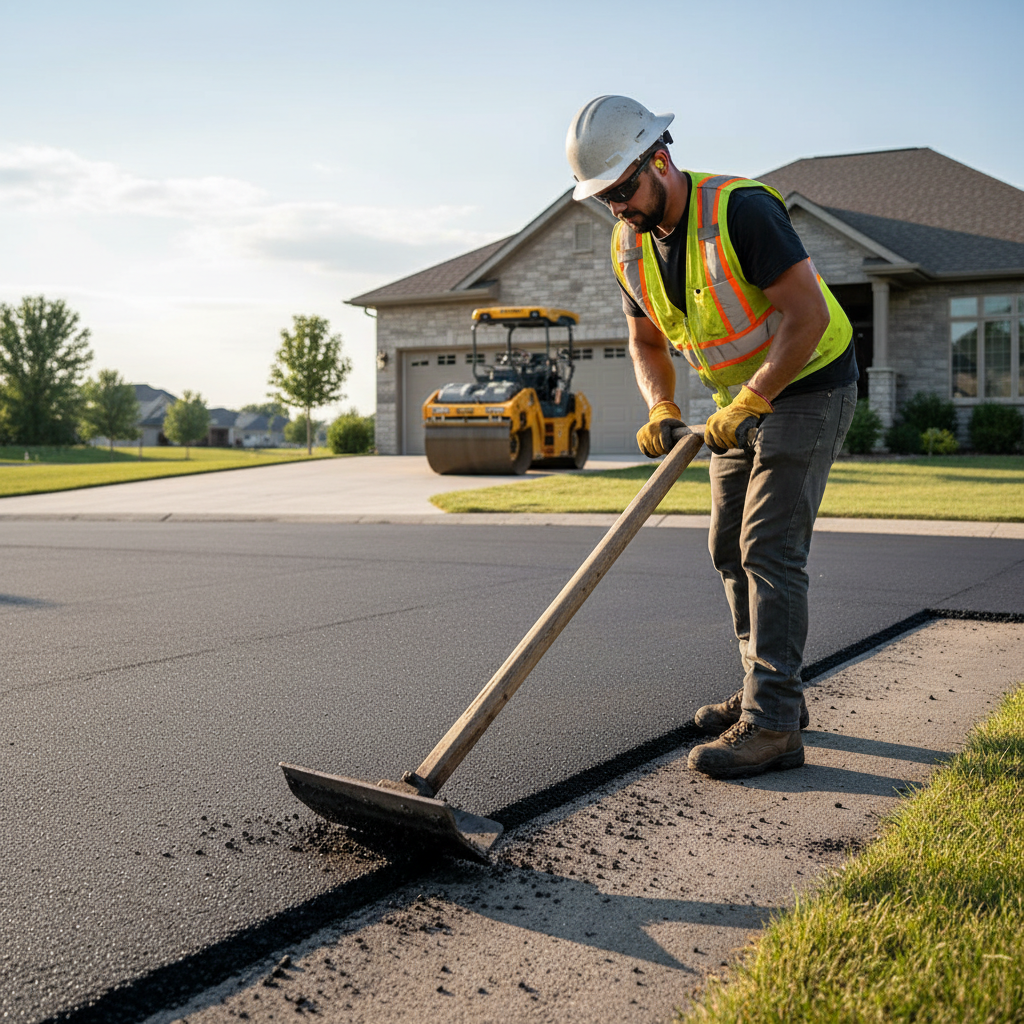
Driveway paving options and costs in New Westminster
New Westminster homeowners have a few clear driveway paving paths, and the right choice usually comes down to how you want it to look, how you want it to be repaired, and how you’re balancing upfront cost with long-term maintenance. With a population of 78,916 (Statistics Canada, 2021 Census) and about 19,740 homeowner households, most private driveways in the city serve established homes rather than new subdivisions. That matters because a lot of local housing stock is older—around 41.0% of homes were built before 1981—so you often see pre-existing slopes, weaker base, or drainage issues that need correction before any new asphalt or concrete goes down. Single-detached houses are also a meaningful share of the dwelling mix (13.8% of dwellings), and detached homes typically drive heavier vehicle use and more frequent curb crossings.
In the Lower Mainland–Southwest, pricing is influenced more by intense rainfall and drainage than by deep, severe frost. Frost penetration is relatively shallow compared with Interior or Northern BC, but our regional design still assumes freeze-thaw movement around a typical frost line for sensitive infrastructure, so base thickness and compaction remain non-negotiable. Clay-heavy pockets in parts of the Fraser Valley can trap water, and that’s where improper granular base, inadequate slope, or clogged weeping/drainage leads to rutting and cracking. The longer paving season helps scheduling, but shoulder-season storms can still tighten workable windows—so reputable crews often prioritize better-prepped sites in neighbourhoods like Glenbrook or Uptown where driveway refresh demand is especially consistent.
Below is a practical cost comparison you can use as a baseline when you’re getting quotes; the final number usually hinges on excavation depth, base/drainage needs, and how much tear-out is required.
| Material |
Lifespan |
Maintenance |
Best For |
Price per sq ft |
| Asphalt (new installation, proper base) |
15–25 years |
Seal every 3–5 years |
Smooth, cost-effective driveway with good weather tolerance |
$12–$20 |
| Asphalt (overlay on existing gravel base) |
8–15 years |
Seal every 3–5 years; monitor edges and settlement |
When existing base is sound and drainage is already corrected |
$14–$22 |
| Interlocking concrete pavers |
25–35 years |
Spot repairs as needed; re-screed periodically |
High curb appeal and easy individual-stone repairs |
$20–$40 |
| Poured concrete (broom finish) |
20–30 years |
Limited sealants; watch for hairline cracking |
Low-sheen, durable surface with straightforward maintenance |
$18–$35 |
| Exposed aggregate concrete |
20–30 years |
Occasional seal (as specified) to protect appearance |
Non-slip finish and upgraded appearance |
$22–$38 |
| Gravel / crushed stone (budget option) |
3–7 years |
Re-grade and top up every 1–3 years |
Short-term budget or until drainage/base work is addressed |
$6–$12 |
Prices are estimates only and vary by project scope, site access and material selection.
What affects the price of paving in New Westminster
In New Westminster and the broader Lower Mainland–Southwest, you can see quote differences of 30–50% for the same-looking driveway. The big reason is that paving companies often treat the work differently: some include proper drainage correction and full granular base rebuild, while others price “surface-only” replacements. In British Columbia, labour and equipment mobilization costs are also real drivers—especially when excavation is deeper than expected or when access is tight. Premium asphalt mix designs and restrained disposal/turf restoration can add cost too.
Frost line depth and freeze-thaw cycles are decisive cost factors even here on the coast. While frost penetration is typically shallower than in Ontario and Alberta, regional practice still assumes a frost line on the order of about 18" for exposed infrastructure. That means you can’t cut corners on compacted granular thickness. In colder provinces, you’ll often see 6–12 inches of granular base in typical designs, but in coastal BC we commonly target about 4–6 inches in simpler exposed applications when conditions are very well drained; when soils are clay-heavy or wet, the design shifts thicker and deeper excavation becomes necessary. Asphalt also needs consistent installation temperatures; hot-mix asphalt generally requires air temps above about 10°C, so spring and summer scheduling pressure can tighten crew availability and influence labour rates.
Concrete pricing also swings with local site conditions. For example, homes built before 1981 frequently have older footing encroachments or drainage paths that don’t match modern driveway slopes, which can mean more tear-out and grading before you can pour. And if your driveway ties into an older curb cut or discharges toward landscaping, drainage correction may be required before switching from gravel to asphalt at a baseline around $12–$20 per sq ft or pavers in the $20–$40 range—because the material choice can’t fix a saturated base.
| Price Factor |
Why It Matters |
Cost Impact |
| Driveway area in sq ft |
The surface and base are priced largely per square foot after excavation. |
Often drives 50–70% of total cost; bigger jobs scale quickly |
| Base depth required |
Freeze-thaw movement and wet clay soils demand adequate compacted granular thickness. |
Commonly adds major cost when excavation increases (sometime +20–40%) |
| Grading and drainage work |
Slope corrections and redirecting runoff prevent water pooling and future settlement. |
Can add several thousand dollars depending on drainage complexity |
| Tear-out of existing surface |
Breaking, loading, and hauling concrete or old asphalt increases labour and disposal fees. |
Often +$1,500–$4,000+ on typical residential jobs |
| Edge restraints and curbing |
Restrains prevent paver spread and asphalt edge deterioration. |
Moderate add-on; crucial for paved longevity |
| Sealing requirement |
Asphalt needs sealing after curing (often 6–12 months) to protect binder from moisture. |
Adds recurring cost; usually planned as a lifecycle expense |
| Site access |
Narrow lots and limited turning radii slow equipment movement and increase manual handling. |
Can add 5–15% due to extra labour and staging time |
| Asphalt mix specifications |
Freeze-thaw rated mixes and locally appropriate binder choices reduce cracking risk. |
Material upcharge can raise per-sq-ft pricing |
Permits & regulations in British Columbia
In British Columbia, paving a private driveway within your own property typically does not require a building permit. The usual situation is: if you’re placing new asphalt or concrete (or replacing pavers) entirely on your lot, without changing the city’s storm servicing or altering how water is directed, you can generally proceed as a homeowner-directed private improvement.
Where permits and approvals do come into play is when the work affects municipal infrastructure or drainage in the right-of-way. For New Westminster, you should expect municipal approval if you’re doing any of the following: creating or modifying a curb cut, changing boulevard drainage, altering storm connections or catch basins, or doing any work that changes how runoff leaves your property at the street. Some streets also have lot-grading expectations that limit how close hard surfaces can be to property lines or require that runoff be managed properly to avoid impact to neighbours and sidewalks.
Before excavation, always ensure utilities are located through BC One Call. Then verify your contractor properly: ask for their British Columbia licence credentials (where applicable to the trade they perform), a current certificate of liability insurance naming you as additionally insured if requested, and proof they carry WSBC coverage for workers (or the correct exemption documentation if they’re not using employees). A reputable contractor will provide these without hesitation, and you should request them in writing before work starts. Keep a copy of their quote, schedule, and scope so you can confirm what approvals (if any) are included.
Asphalt vs pavers vs concrete for New Westminster driveways
For New Westminster driveways, asphalt, interlocking pavers, and poured concrete all work—provided the base and drainage are designed for our Lower Mainland–Southwest rain patterns and the freeze-thaw movement around the shallow coastal frost line. Asphalt usually has the lowest upfront cost and delivers a smooth ride, but it performs best when you seal it on schedule every 3–5 years. Without sealing, moisture exposure and binder aging can accelerate surface deterioration, particularly where water ponds near the edges after storms. Interlocking concrete pavers cost more at the start, but they’re the most flexible for repairs: if a utility trench gets opened later or if a specific area settles, you can lift and re-set those stones without replacing the entire driveway.
Poured concrete sits in the middle on cost and can look clean and permanent, but it’s more sensitive to cracking if the subbase isn’t properly prepared or if joints aren’t planned for expected movement. In a coastal freeze-thaw climate, air-entrainment and a well-graded, well-drained base help concrete resist scaling and cracking. De-icing and winter maintenance routines (salt and sand, plus plough-style snow clearing) also matter; concrete can tolerate this better when it’s properly finished and sealed as recommended.
In practice, a lot of homeowners find the price difference is justified by risk control. For example, if asphalt is priced around $12–$20 per sq ft but your site needs substantial drainage and base reconstruction, upgrading the surface to pavers in the $20–$40 range may still pay off if you expect long-term utility access needs or want the easiest future repair path. If you prefer straightforward maintenance and the drainage is solid, asphalt is often the most cost-effective option. If you want maximum curb appeal and local repairability, pavers win. If you want a classic, monolithic look with mid-range cost, quality broom-finished concrete is a strong choice.
| Material |
Frost Resistance |
Curb Appeal |
Repair Method |
Lifespan |
Price Band |
| Asphalt (sealed regularly) |
Good with proper base/drainage and freeze-thaw-rated asphalt |
Medium (clean black finish) |
Patch and re-seal localized areas |
15–25 years |
$12–$20 |
| Interlocking concrete pavers |
Very good; movement is accommodated by modular construction |
High (variety of colours and patterns) |
Lift, replace stones, re-screed and compact |
25–35 years |
$20–$40 |
| Poured concrete (air-entrained) |
Good if base is well compacted and joints/air entrainment are correct |
Medium (clean, modern slab look) |
Crack repair and patching; full replacement if widespread |
20–30 years |
$18–$35 |
| Exposed aggregate concrete |
Good; finish resists surface wear with correct curing |
Very high (textured, premium appearance) |
Specialty patching to match texture/colour |
20–30 years |
$22–$38 |
| Permeable pavers (drainage grid) |
Excellent for water management when properly designed for soil infiltration |
High (still modern, with drainage performance) |
Remove and reset; serviceable reservoir layers in many systems |
25+ years |
$28–$50 |
| Chip seal / tar-and-chip |
Moderate; sensitive to base quality and moisture movement |
Low to medium (texture-heavy) |
Re-coat and re-chip localized areas |
8–15 years |
$10–$18 |
How to choose a paving contractor in New Westminster
Choosing the right contractor is the difference between a driveway that looks good for years and one that develops edge failures, settlement lines, or patchy cracking after the first heavy rains. Start with licensing and insurance checks in British Columbia. Ask for a certificate of liability insurance (and confirm the limits) and proof of WSBC coverage for any workers they employ. Then verify their business legitimacy—use their public registry presence, and ensure the quote is on company letterhead with a contact address and a named project supervisor.
Next, request 2–3 itemised written quotes—not a single lump sum with vague wording. You want a breakdown that separates excavation, base material and compaction, drainage/grading work, disposal, asphalt or concrete thickness, and surface finishing. Good quotes clearly state what’s included and what’s excluded: is permit work included if required for curb cut or right-of-way changes? Is hauling/disposal included? Are saw cuts, jointing, or edge restraints included? If you’re overlaying asphalt, do they specify when full-depth reclamation is necessary?
Look at warranty details too. Ask for the workmanship warranty term, whether it’s tied to proper sealing schedules for asphalt, and whether the manufacturer warranty is separate and actually applies to the product used. A transferable warranty matters if you sell your home. For payment, never pay more than about 10–15% upfront; the holdback should stay until completion and walkthrough. Finally, get the start date and the estimated completion date in writing.
- Confirm WSBC coverage for workers and request proof before work starts.
- Verify liability insurance and ensure it covers driveway excavation and traffic control.
- Ask for 2–3 recent local driveway references in New Westminster or the Lower Mainland–Southwest.
- Insist on an itemised quote: excavation, base depth, compaction, drainage corrections, and disposal.
- Check whether utility locates (BC One Call) are scheduled before digging.
- Verify edge restraints/curbing are included for pavers and asphalt edges are properly detailed.
- For asphalt, confirm sealing is scheduled after curing (typically 6–12 months).
- For concrete, ask about air-entrainment, joint placement, and curing/finishing steps.
- Confirm the specified thicknesses (2.5–3" asphalt wearing course and appropriate base, or paver base plus bedding sand).
- Ask how they handle saturated subgrade: what’s the plan if soils are soft or clay-heavy?
- Set payment terms: small deposit, balance at completion, retainage until final cleanup.
- Get start/completion dates and weather-related rescheduling terms in writing.
Concrete paving red flags in New Westminster include contractors who won’t discuss base thickness and drainage, quotes that omit excavation depth or disposal, promises of “no need to seal” for asphalt, vague warranty language, and start dates offered without a realistic weather window given the region’s heavy rainfall and shoulder-season storms.
Frequently asked questions — paving in New Westminster
How much does driveway crack repair cost in New Westminster?
In New Westminster, crack repair costs typically range from the low hundreds up to a few thousand dollars depending on how extensive the cracking is and whether water has damaged the base. For asphalt, small cracks are commonly addressed with cleaning, crack sealing, and patching; for more serious cracking, contractors may need to saw-cut and patch sections to stop water migration. If you’re dealing with edge failures or settlement lines, you might be better off with localized milling/patching rather than surface-only sealing. As a rough guide, many homeowners budget in the same spirit as sealing & repair bands—about $2–$6 per sq ft for sealing/repair work, plus extra labour if there’s tear-out. Because Lower Mainland–Southwest rain can worsen base erosion, getting a contractor to assess drainage and base condition is key. (Statistics Canada, 2021 Census)
What base thickness do I need for pavers in New Westminster?
For paver driveways in New Westminster, a common residential design is about 6" of compacted granular base topped with bedding sand before installing the 2.5–3.5" pavers (with thicker builds for heavier loads or weaker soils). The exact depth depends on how well your site drains and whether soils are clay-heavy or saturated after storms. In Lower Mainland–Southwest conditions, we focus heavily on drainage and compaction because water retention leads to movement during freeze-thaw cycles around the coastal frost line concept. If your existing base is poorly drained or already showing settlement, you should expect deeper excavation and rebuild rather than simply adding pavers on top. A good contractor will confirm base thickness after inspecting your subgrade, not just based on driveway size.
How do I get the most accurate paving quote in New Westminster?
To get an accurate paving quote in British Columbia—especially in New Westminster’s wet-weather conditions—ask for an on-site assessment and an itemised scope. Ensure the contractor measures driveway area, checks slope and drainage patterns after rainfall if possible, and reviews whether the existing base is sound. Request a written breakdown separating excavation, granular base depth, compaction, drainage/grading corrections, disposal, and the exact surface thickness (for example, asphalt wearing course thickness and the granular base used). If there’s any work near the curb cut or boulevard drainage, confirm whether municipal approvals are needed so you don’t get surprised later. Also confirm the sealing plan for asphalt: asphalt often needs sealing after curing—commonly after 6–12 months—to protect the surface. Quotes that skip these items often lead to add-ons once crews discover soft subgrade or water-related failures.
How much does it cost to pave a driveway in New Westminster?
Most driveway paving in New Westminster lands within the region’s practical price bands once base prep and drainage are accounted for. For asphalt new installation with proper base work, homeowners often see about $12–$20 per sq ft. Interlocking concrete pavers typically run about $20–$40 per sq ft because of the base, bedding sand, paver materials, and edge restraints. Poured concrete is commonly in the $18–$35 per sq ft range depending on thickness and finish. If you only need sealing/repair, smaller jobs can be far less—commonly in the $2–$6 per sq ft range for sealing or targeted repair. The final total depends on excavation depth, whether tear-out is required, and whether drainage/grading corrections are necessary due to saturation and freeze-thaw movement around the coastal frost line assumption.
Asphalt vs interlocking pavers vs concrete — which is best in New Westminster?
“Best” depends on what you value most. Asphalt is usually the lowest upfront option and works well in the Lower Mainland–Southwest when the base is properly compacted and drained; plan for sealing every 3–5 years. Interlocking concrete pavers are typically the best choice if you want high curb appeal and the ability to repair localized areas without replacing the entire surface—an advantage if you ever need access to utilities or if a section settles. Poured concrete sits in the middle on upfront cost, but it relies on air-entrainment, jointing, and careful subbase preparation to manage freeze-thaw stress and cracking risk. A common justification example: if asphalt ($12–$20 per sq ft) is cheaper but your site has recurring drainage issues, the real win may be investing in drainage and base first; then you can choose pavers if you want the easiest long-term repairs, or asphalt if you prefer a simpler maintenance cycle.
How long does a paved driveway last in New Westminster?
In New Westminster, a well-built paved driveway can last decades because the weather is mild compared to Interior BC, but the rainy seasons and freeze-thaw movement still demand correct base preparation. Asphalt installed with proper granular base and drainage commonly lasts about 15–25 years, with sealing every 3–5 years to extend life. Interlocking pavers often last 25–35 years because individual stones can be repaired and the system tolerates minor movement better than rigid slabs. Poured concrete typically lasts around 20–30 years, though cracking risk increases if drainage is poor or if the subbase wasn’t compacted and graded properly. Homes built before 1981 (41.0% of the local housing stock) often have older drainage patterns, so driveway lifespan depends heavily on correcting those conditions rather than the surface alone. (Statistics Canada, 2021 Census)