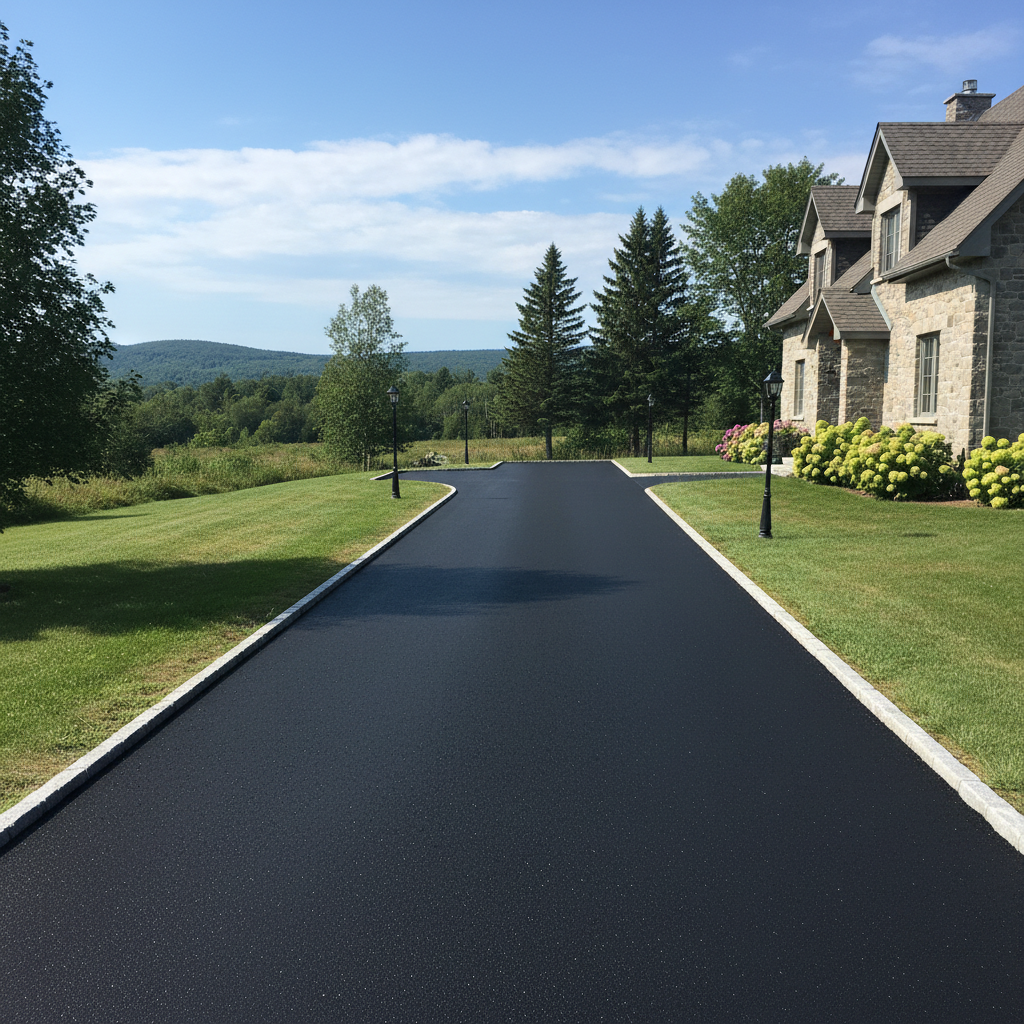
Driveway paving options and costs in McKee
In McKee, homeowners usually choose between asphalt, interlocking pavers, and concrete based on upfront budget, long-term maintenance comfort, and how well the surface handles Lower Mainland–Southwest rain events. With a population of 4,840 (Statistics Canada, 2021 Census), McKee is smaller than nearby hubs, so workmanship and scheduling depend heavily on whether contractors can batch jobs from the broader Fraser Valley corridor. Most private driveways here are tied to single-detached homes, and that matters because driveway size and vehicle traffic intensity drive both excavation and finished thickness.
In the Lower Mainland–Southwest, paving costs are shaped more by intense rainfall and drainage than by extreme frost alone. Frost penetration is relatively shallow compared with Interior or Northern BC, but local practice still assumes a meaningful freeze line for exposed infrastructure. That means you don’t “skip” base prep: proper granular thickness, compaction, and a well-defined slope toward existing drainage are what prevent rutting, edge breakdown, and cracking over repeated freeze–thaw cycles.
As a result, the main cost swings you’ll see in McKee quotes are excavation/haul, base depth, and how much drainage correction is needed. In neighbourhood pockets near the more established residential streets (where older driveways are often being widened or replaced), demand is especially steady because homeowners want clean drainage lines and improved curb presentation before the wetter months.
Use the ranges below as a starting point for comparing materials and realistic scopes, then align the base plan with your lot conditions before committing.
| Material |
Lifespan |
Maintenance |
Best For |
Price per sq ft |
| Asphalt (new installation, proper base) |
15–25 years |
Seal every 3–5 years; crack fill as needed |
Best value with good drainage and compaction |
$12–$20 |
| Asphalt (overlay on existing gravel base) |
10–18 years |
Seal every 3–5 years; patch localized failures |
When your base is sound and elevation is near target |
$10–$18 |
| Interlocking concrete pavers |
25–35+ years |
Re-sand joints; replace individual pavers when needed |
Maximum curb appeal and easy spot repairs |
$20–$40 |
| Poured concrete (broom finish) |
20–30 years |
Sealer optional; patch spalls/cracks as needed |
Durability with a clean, simple finish |
$18–$35 |
| Exposed aggregate concrete |
20–30 years |
Light cleaning; occasional crack repair |
High slip resistance and premium look |
$22–$38 |
| Gravel / crushed stone (budget option) |
3–7 years |
Regrade; top up annually; weed control |
Short-term solution or low-traffic access |
$6–$12 |
Prices are estimates only and vary by project scope, site access and material selection.
What affects the price of paving in McKee
Even when you’re comparing the “same driveway” across quotes in McKee and the wider Lower Mainland–Southwest, prices can swing by 30–50%. The reason is that paving is usually won and lost in the prep work: excavation volume, base thickness, drainage corrections, and disposal. A contractor who finds weak, clay-heavy subgrade will need more granular material and tighter compaction control, while another crew may price a minimal base and later rely on surface thickness to do the work—which doesn’t last well under our wet winters and freeze–thaw activity.
Frost line depth and freeze–thaw cycles are decisive cost factors in BC. In colder provinces, you often see thicker compacted granular bases (6–12 inches) to prevent heaving and cracking; in coastal BC, typical practice can be leaner, but you still need a properly built base around a freeze line assumed in exposed applications (often on the order of 18" for sensitive infrastructure in regional planning). That’s why Lower Mainland driveways still commonly target asphalt installs around 2.5–3" over about 6" of compacted granular base, with deeper excavation in saturated or weak soils.
The paving season also matters. Asphalt needs air temperatures above about 10°C, so scheduling pressure in spring and early summer can tighten availability and labour rates. Asphalt mix design has to meet local freeze–thaw expectations, and that can move you from a “budget” approach toward a more robust mix that costs more upfront but reduces premature failures.
Two McKee examples: if your driveway ties into an older slope with poor runoff, correcting grading and drainage can add significant labour and extra base. If you’re replacing concrete that’s heaved, tear-out and hauling can push the project from the lower end near the $12–$20 asphalt band toward higher scope totals. Conversely, a straightforward tear-out of aged asphalt over a stable base with good access may keep you closer to the mid-range.
| Price Factor |
Why It Matters |
Cost Impact |
| Driveway area in sq ft |
Most costs scale directly with square footage (excavation, base, surface) |
Can change pricing by 20–60% between otherwise similar lots |
| Base depth required |
Frost line assumptions and subgrade conditions determine granular thickness |
Additional base can add major material and compaction time |
| Grading and drainage work |
Slope, culvert tie-ins, and drainage corrections prevent standing water |
Commonly one of the largest “surprise” cost items |
| Tear-out of existing surface |
Breaking, loading, and hauling concrete or old asphalt takes time and disposal |
Often raises total cost by several thousand dollars on small jobs |
| Edge restraints and curbing |
Prevents pavers/asphalt from spreading and protects the perimeter |
Adds labour and materials, especially with curves |
| Sealing requirement |
Asphalt performs better with timely seal coats to protect the binder |
Ongoing maintenance budget; also affects scheduling plans |
| Site access |
Narrow drives, soft shoulders, and tight turns slow equipment and increase handling |
Can add hourly labour and re-positioning costs |
| Asphalt mix specifications |
Freeze–thaw-rated mixes cost more and may require different production specs |
Typically pushes asphalt toward the upper part of $12–$20 |
Permits & regulations in British Columbia
In British Columbia, paving a private driveway within your own property usually does not require a building permit. However, permit requirements can kick in when the work touches municipal infrastructure. In McKee, the key distinction is whether you are working inside the municipal right-of-way or changing how stormwater and curbs function.
Work that typically DOES require municipal approval includes: creating or changing a curb cut/apron, altering boulevard drainage features, adjusting storm drainage connections, or modifying municipal curbs/sidewalk interfaces. Some communities also have lot-grading expectations that restrict how close hard surfaces can sit to property lines and how runoff must be handled to protect adjacent properties.
For homeowners verifying your contractor in BC, start with utility locates before any excavation—confirm markings for gas, power, telecom, and water. In Ontario you’d call Ontario One Call; in BC, use BC 1 Call (your contractor may coordinate this, but you should confirm it’s being done). Then verify credentials step-by-step:
- Licence/registration: check the provincial registry for the paving/contracting type applicable to your contractor.
- Liability insurance: request a current certificate of insurance showing coverage limits that match your project.
- Workers’ coverage: confirm WSIB/WCB-equivalent coverage is active (ask for documentation, not verbal assurances).
- Clearance letter (if applicable): ask whether a clearance letter is available for your project timeframe.
- Ask for business address details and a written scope so the permit/allocation responsibilities are clear.
Asphalt vs pavers vs concrete for McKee driveways
For McKee driveways, choosing between asphalt, interlocking concrete pavers, and concrete comes down to how you want the driveway to behave in our Lower Mainland–Southwest cycle of heavy rainfall, shoulder-season storms, and repeated freeze–thaw around a shallow freeze line. Asphalt is typically the lowest upfront option and blends well with snow-plough routines, but it relies on proper base build and should be sealed every 3–5 years to protect the binder. Interlocking concrete pavers cost more upfront, yet they’re the most forgiving for repairs: a localized settlement or utility cut can be corrected by removing and resetting affected pavers rather than replacing the whole slab. Poured concrete sits in the middle for cost, and with air-entrainment it performs well, but it can still crack if base prep, drainage, or thickness aren’t matched to the freeze–thaw movement.
In practice, the Lower Mainland approach still targets about 6" of compacted granular base under residential asphalt and a well-drained system—especially in clay-heavy pockets common to parts of the Fraser Valley where saturation can soften subgrade. For pavers, you’ll typically see similar base depth plus bedding sand and jointing sand to lock the surface. When maintenance includes ploughing and seasonal sanding, pavers generally hold up well because individual units can be swapped; asphalt can last long, but it’s more sensitive to surface wear if sealing is delayed.
Here’s where the money is often justified: if asphalt comes in near $12–$20 per sq ft, and pavers are quoted closer to $20–$40, the extra cost can be worth it when you want premium curb appeal and easy future repairs—particularly if you anticipate drainage or utility changes. If your driveway is straightforward with stable access and you’re comfortable with ongoing sealing, asphalt usually provides the best value.
| Material |
Frost Resistance |
Curb Appeal |
Repair Method |
Lifespan |
Price Band |
| Asphalt (sealed regularly) |
Good with proper base and drainage |
Moderate (smooth, dark finish) |
Patch/overlay localized areas; crack fill + seal |
15–25 years |
$12–$20 |
| Interlocking concrete pavers |
Very good (flexible system over base) |
High (varied colours/patterns) |
Lift and replace individual pavers or sections |
25–35+ years |
$20–$40 |
| Poured concrete (air-entrained) |
Good when properly thicknessed and drained |
Moderate (clean, uniform) |
Patch cracks/spalls; possible resurfacing later |
20–30 years |
$18–$35 |
| Exposed aggregate concrete |
Good with correct mix and base prep |
High (premium texture) |
Patch or replace affected zones (limited aesthetic matching) |
20–30 years |
$22–$38 |
| Permeable pavers (drainage grid) |
Very good when engineered for runoff control |
High (modern look) |
Replace damaged units; maintain infiltration system |
20–30+ years |
$28–$52 |
| Chip seal / tar-and-chip |
Moderate (surface wear can show sooner) |
Low to moderate |
Maintenance reseal/chip top-ups |
7–15 years |
$10–$18 |
How to choose a paving contractor in McKee
When you hire a paving contractor in McKee, you’re really choosing how they manage excavation, base compaction, drainage, and liability—not just how fast they lay surface. In British Columbia, start by verifying licensing/registration in the relevant contractor category and request a certificate of liability insurance that covers your project. For workers’ coverage, ask for proof of active WSIB/WCB coverage (and any related clearance documentation if they can provide it). If they can’t supply documents promptly, that’s a major warning sign.
Next, get 2–3 itemised written quotes. You want a line-by-line breakdown: excavation depth, volume of imported granular base, base type, compaction method, asphalt/paver/concrete thickness, reinforcement (for concrete if applicable), drainage adjustments, and disposal/hauling. Avoid lump-sum quotes that don’t state thickness targets. Also clarify what’s excluded: permit pull responsibility, disposal fees, core samples/testing, and whether you’re paying extra if the subgrade is found wetter/softer than expected.
Warranty matters too. Ask for the workmanship warranty length and whether it covers base settlement or only surface defects. Product/manufacturer warranties should be separate and clearly stated; check whether warranties are transferable if you sell the home.
Payment schedule should protect you: never pay more than about 10–15% upfront. Use a holdback until substantial completion and final cleanup, with any punch-list items finished. Finally, insist on a written timeline with a start date window and estimated completion date, accounting for weather—especially in BC when heavy rainfall can compress viable asphalt placement days.
- Confirm jobsite contact and who supervises base preparation on the day of work.
- Ask for base thickness targets (e.g., granular base and any undercut/replacement plan).
- Require written slope and drainage details (where runoff goes and how it’s controlled).
- Request evidence of compaction testing or a documented compaction process.
- Clarify disposal/haul included vs charged as an extra.
- Make sure edge restraints/curbing requirements are listed for pavers and asphalt.
- Verify asphalt mix specs are freeze–thaw rated, not “standard” by guess.
- Ask how joints (pavers) or control joints (concrete) will be installed.
- Confirm sealing schedule for asphalt (generally after curing, typically within months).
- Confirm warranty terms in plain language and what triggers service visits.
- Use an itemised quote with quantities, not just square footage and totals.
- Insist on a written start/completion timeline and weather contingency notes.
In McKee, I often see these red flags: (1) they won’t show proof of insurance/coverage before starting, (2) they quote without visiting to assess drainage and subgrade, (3) they promise “thin base is fine” to hit budget, (4) they accept full upfront payment, and (5) they leave out disposal/hauling or edge restraint details so costs creep upward after excavation.
Frequently asked questions — paving in McKee
Can asphalt be laid in cold weather in McKee?
In McKee and across British Columbia’s Lower Mainland–Southwest, asphalt placement is possible only when conditions meet minimum air-temperature and surface-temperature targets. Asphalt generally needs air temperatures above about 10°C to achieve proper compaction and finish quality; once nights get colder or the base is damp/frozen, the crew may delay or use methods that still can compromise long-term performance if rushed. That’s why your paving start date matters: contractors typically schedule for dry, mild stretches and manage rain risk. If you’re comparing bids, ask how they handle cold snaps and whether they’ll protect the subbase during setbacks. Even with a shorter frost depth than Interior BC, freeze–thaw around the shallow freeze line can still punish weak base prep.
What is a driveway apron and do I need one in McKee?
A driveway apron is the transition area where your driveway meets the sidewalk/curb section, helping support traffic loads and managing runoff. In McKee, whether you “need” one depends on how your driveway connects to municipal frontage and drainage. If you’re changing curb cuts, adjusting the boulevard, or altering storm drainage, that work typically falls under municipal approval. Even when permits aren’t required for work strictly within your property, an apron is often recommended to prevent edge breakdown from vehicles turning on and off the street. It can also improve appearance and reduce raveling at the perimeter. Your contractor should clarify if your scope includes curb/edge reconstruction and how that ties into drainage.
How do I maintain my driveway through McKee winters?
For asphalt in McKee, winter maintenance is mostly about protecting the surface from accelerated wear. Keep ploughing technique in mind: use careful blade angles to avoid gouging. After sanding, remove excess grit when possible so it doesn’t abrade the surface during thaw cycles. The biggest practical maintenance item is staying ahead of water: ensure downspouts and runoff don’t pour directly onto the driveway edges, because saturation softens base and promotes rutting. For cracks, catch them early with proper crack fill (not just temporary patching) so water doesn’t migrate into the base. If you want the best long-term performance, plan sealing on schedule (often every 3–5 years) rather than waiting until the surface is visibly oxidized.
Is it worth sealing a new driveway right away in McKee?
Usually, sealing is worth it, but “right away” depends on curing and weather. In McKee’s Lower Mainland–Southwest climate, you want the asphalt to cool, stabilize, and complete initial curing before applying seal. A common approach is to do sealing within the first year once the surface has properly cured—then repeat every 3–5 years if you want maximum protection against rainfall-driven oxidation and surface wear. If your driveway was quoted at the lower end of the typical asphalt band (for example, near $12–$20 per sq ft), sealing is a key part of keeping that value over time, not just as an aesthetic coat. Ask your contractor what curing window they recommend and whether they’ll schedule around wet-weather risk.
What is a chip seal driveway and is it suited to McKee?
Chip seal (tar-and-chip) is an asphalt binder topped with aggregate that provides a textured, durable wearing surface. In McKee and across British Columbia’s Lower Mainland–Southwest, chip seal can be a cost-effective option for low-to-moderate traffic drives, but it’s not the “set and forget” choice many homeowners want. Surface wear can be more noticeable where vehicles turn frequently or where snowploughing causes localized scuffing. It also typically needs maintenance top-ups sooner than a standard asphalt driveway. If your priority is curb appeal and a smooth, easy-to-manoeuvre surface, asphalt or pavers are usually a better match. That said, some homeowners like chip seal for its lower upfront cost, often falling closer to the $12–$20 style asphalt range depending on prep and thickness.
How much does driveway crack repair cost in McKee?
Crack repair pricing in McKee depends on crack type and extent: hairline drying cracks usually require cleaning and targeted crack fill, while wider cracks or areas with base movement may need patching into the failure zone. As a practical guide, many homeowners spend roughly in the “sealing & repair” style band of $2–$6 per sq ft for minor work, but that can increase if excavation and patch base reinforcement are required. If water is getting in along the crack edges—common after intense rainfall—surface-only patching may not last, and a contractor may recommend a broader patch or (in some cases) an asphalt overlay plan. For the best quote, ask for a short assessment and a written scope describing what’s being removed, how deep they’ll go, and whether drainage is part of the fix.