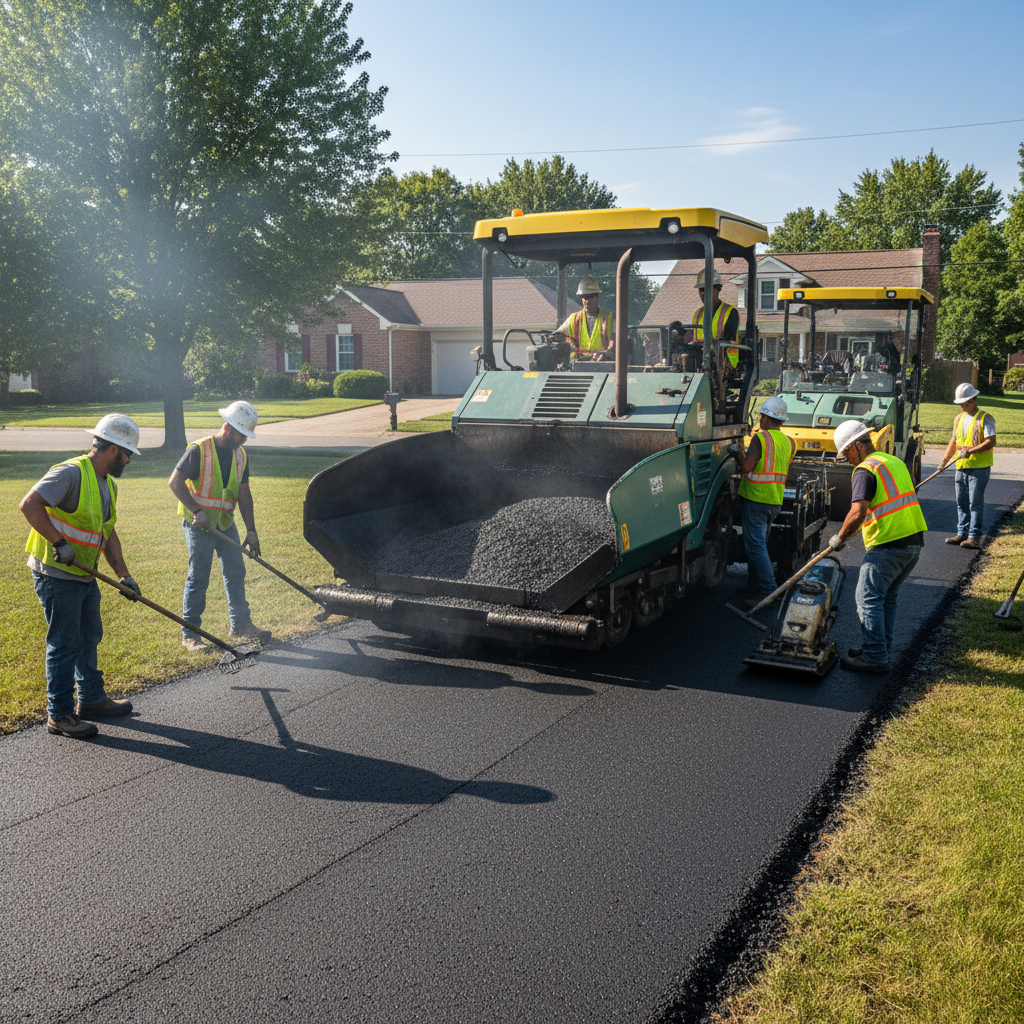
Driveway paving options and costs in English Bay
English Bay is a coastal neighbourhood where driveways need to handle heavy Pacific rain, long shoulder seasons, and plenty of vehicle traffic—so the “finish” matters, but the base and drainage matter more. With a local population of 14,225 (Statistics Canada, 2021 Census), there’s steady demand for homeowner upgrades and renewed curb appeal, especially along the lanes and flatter side streets where grades and runoff management can be tricky. The Lower Mainland–Southwest market is also dense with single-family housing stock, which keeps private driveway work busy and means contractors are competing on quality workmanship, not just the lowest material price.
In English Bay and the broader Lower Mainland–Southwest (Vancouver area), frost depth is generally less extreme than interior regions, yet local practice still treats freeze conditions seriously. That affects excavation and base design: a proper compacted granular base (commonly about 6" for standard residential applications) and correct drainage reduce the risk of rutting, edge failure, and cracking caused by damp soils and repeated temperature swings near the frost line. Because the paving season is longer in coastal BC, scheduling can be easier in summer, but heavy winter rains and post-storm ground saturation can still delay installs and tighten availability during peak months.
Contractor pricing is commonly strongest in high-demand pockets such as the English Bay / Stanley Park-adjacent area, where access constraints, heritage-style homes, and landscaping tie-ins can increase preparation time. Use the table below as a realistic pricing framework for your driveway choice, then we’ll break down what drives differences between bids.
| Material |
Lifespan |
Maintenance |
Best For |
Price per sq ft |
| Asphalt (new installation, proper base) |
12–20 years |
Seal every 3–5 years; patch as needed |
Good value, smooth ride, standard residential vehicle traffic |
$12 – $20 |
| Asphalt (overlay on existing gravel base) |
8–15 years |
Seal every 3–5 years; more frequent patching if base is weak |
When excavation is limited and the existing base is still solid |
$10 – $16 |
| Interlocking concrete pavers |
20–30 years |
Replace individual stones; re-sand joints as needed |
Curb appeal, ease of localized repairs, varied design options |
$20 – $40 |
| Poured concrete (broom finish) |
20–30 years |
Seal selectively; crack control plan recommended |
Low maintenance feel, clean lines, heavier vehicle traffic |
$18 – $35 |
| Exposed aggregate concrete |
20–30 years |
Sealer as specified (often every 3–6 years) |
High texture/traction and premium curb appeal |
$22 – $40 |
| Gravel / crushed stone (budget option) |
3–8 years |
Top up annually; weed control and reshaping |
Temporary solution or very limited budgets; drainage-friendly |
$6 – $12 |
Prices are estimates only and vary by project scope, site access and material selection.
What affects the price of paving in English Bay
In English Bay and across the Lower Mainland–Southwest, two contractors can quote the “same-sized” driveway and still differ by 30–50% because the hidden scope is where money goes. Asphalt may look straightforward, but excavation, base compaction, drainage corrections, and haul-off of saturated soil often decide the true cost. Labour availability also shifts through the year: after storms and during peak installs, crews are booked and scheduling pressure can tighten, which influences price.
Frost line depth and freeze–thaw cycles are decisive cost factors in coastal BC, even though frost penetration is generally shallower than Interior or Northern regions. Local practice still assumes a frost line on the order of 18" for sensitive infrastructure, so bases and exposed applications must be built with a properly graded, compacted granular layer. Where the granular base is too thin or drainage is poor, repeated freeze–thaw around that shallow zone can cause heaving, rutting, and reflective cracking. If you need thicker base work, you’re moving toward the higher end of the typical asphalt range (for example, asphalt often lands in the $12 – $20 band when full base rebuild and proper drainage are included). If the job requires deeper excavation or a heavier-load design, concrete can also shift toward its upper $18 – $35 band due to higher forming, reinforcement, and finishing requirements.
Concrete examples in English Bay that raise cost: adding dowels/anchors at tie-ins to existing sidewalks, repairing misaligned grades to shed water, or correcting clay-heavy subgrade that pumps during wet periods. Costs can lower when the existing base is stable (fewer inches to remove) and when access is easy—wide lanes with straightforward equipment movement.
| Price Factor |
Why It Matters |
Cost Impact |
| Driveway area in sq ft |
Material and labour scale directly with surface area |
Usually the biggest driver; small increases in size can swing the total meaningfully |
| Base depth required |
Frost-line risk requires enough compacted granular thickness |
Deeper base can add days of excavation and more granular supply |
| Grading and drainage work |
Proper slope and water routing prevent pooling and subgrade saturation |
Can add notable cost if drains, swales, or regrading are needed |
| Tear-out of existing surface |
Breaking concrete or removing old asphalt/failed base adds labour and hauling |
Often a major jump versus “new over old” scenarios |
| Edge restraints and curbing |
Pavers and asphalt edges need containment to resist lateral movement |
Higher when lot lines are tight or curbing is required |
| Sealing requirement |
Asphalt needs sealant after installation to protect from rain and oxidation |
Usually adds a scheduled cost in year 1–2, and again every few years |
| Site access |
Narrow driveways and tight landscaping slow equipment and increase hand-work |
Can add labour charges and extend the install schedule |
| Asphalt mix specifications |
Freeze–thaw-rated mixes and proper compaction specs reduce early failures |
Higher material cost, but often fewer repairs over time |
Permits & regulations in British Columbia
In British Columbia, paving a private driveway within your own property typically does not require a building permit. That’s the common scenario for replacing an existing asphalt or installing a new surface entirely inside the lot line. However, you may need municipal approval when the work affects the municipal right-of-way, including changes to curb cuts, new or altered boulevard connections, modifications to storm drainage, or any work that changes how water flows onto the street.
Also watch for municipal lot-grading bylaws. Many municipalities regulate how close hard surfaces can sit to property lines and how grades are handled so neighbouring properties aren’t impacted by redirected runoff. Even when permits aren’t required, a contractor should confirm these local rules before excavation—especially in older English Bay neighbourhoods where lot lines and grades were set long ago.
Before the first shovel hits the ground, always arrange utility locates through BC 1 Call. Then, verify your contractor properly: check their licensing status through the appropriate BC trade/contractor registry where applicable, request a certificate of insurance (liability) naming you/your property as the certificate holder, and confirm coverage documents for workers (WSIB coverage where applicable). For contractors, ask for their clearance letter or coverage documentation and ensure the dates line up with your planned start date.
Step-by-step: confirm scope and whether any right-of-way or drainage changes are involved → request proof of insurance and WSIB/WCB coverage → check licencing status → verify the quote includes any municipal coordination needed.
Asphalt vs pavers vs concrete for English Bay driveways
For English Bay driveways, asphalt, interlocking pavers, and concrete can all perform well—but each has different strengths for the Lower Mainland–Southwest’s rain-and-drainage reality. Asphalt typically has the lowest upfront cost, and when built with about 6" of compacted granular base and a proper drainage slope, it delivers a smooth, vehicle-friendly surface. The trade-off is maintenance: asphalt is usually sealed every 3–5 years to protect against oxidation and water-driven deterioration.
Interlocking concrete pavers usually cost more up front, but they’re the most homeowner-friendly for repair. If a section settles or you find a drainage issue later, pavers can be lifted, corrected, and reset without replacing the entire driveway. That can matter in areas of English Bay where historic grades and clay-heavy subgrade can lead to localized failure. Concrete sits in the middle-to-higher range: it’s sturdy and low-maintenance in day-to-day use, but it’s more sensitive to freeze–thaw and movement if it isn’t detailed correctly—particularly at joints and tie-ins. If de-icing salts are used, air-entrainment and proper mix design help reduce surface damage.
Local winter routine is usually a mix of plowing and sand (and sometimes salt), so the best long-term choice often comes down to how well the base is drained and compacted. If water can’t get out, all materials suffer—pavers may just fail in a more repairable way.
Price example: moving from asphalt (often around the $12 – $20 band) to pavers (often $20 – $40) can be justified if you want maximum curb appeal and the ability to repair a broken section without full replacement. If you’re prioritizing lowest first cost and you’re comfortable with periodic sealing, asphalt can be the better value—provided the drainage plan and base thickness are done right.
| Material |
Frost Resistance |
Curb Appeal |
Repair Method |
Lifespan |
Price Band |
| Asphalt (sealed regularly) |
Good when base is compacted and drained; sensitive if water pools |
Medium (clean and dark finish, limited pattern options) |
Cut/patch sections; resurface with overlay if needed |
12–20 years |
$12 – $20 |
| Interlocking concrete pavers |
Very good with correct base; performs well under freeze–thaw when sand joints are maintained |
High (colour/pattern variety) |
Lift, re-compact base, replace stones; reset and re-sand joints |
20–30 years |
$20 – $40 |
| Poured concrete (air-entrained) |
Good when air-entrained mix and control joints are correctly installed |
Medium to high depending on finish |
Limited patching; may require resurfacing or targeted repairs |
20–30 years |
$18 – $35 |
| Exposed aggregate concrete |
Good with proper mix and curing; texture can hide minor wear |
Very high (premium texture) |
Crack repairs are more visible; full replacement is sometimes required |
20–30 years |
$22 – $40 |
| Permeable pavers (drainage grid) |
Excellent for drainage; still needs a well-built structural base |
High (modern look) |
Same as pavers: localized repairs by section |
18–30 years |
$25 – $45 |
| Chip seal / tar-and-chip |
Moderate; performs best on well-prepared base and maintained surface |
Low to medium (not as premium as pavers/concrete) |
Spot repairs and re-seal often required |
6–12 years |
$9 – $16 |
How to choose a paving contractor in English Bay
Choosing the right contractor in English Bay comes down to proof, process, and clarity. In British Columbia, you want a contractor who can show current liability insurance and workers’ coverage documentation where applicable, and who can produce their company details and credentials on request. Ask for a certificate of insurance with a policy effective date covering your planned install window, and request WSIB/WCB coverage documentation (or clearance letter) for workers assigned to your job. Don’t accept verbal confirmation—get copies or photos of the actual paperwork.
Next, get 2–3 itemised written quotes. You’re looking for labour and materials breakdowns (excavation, base gravel, compaction, asphalt mix or concrete components, forms, disposal, and surfacing/finishing). Avoid lump-sum quotes with vague scope. Read the scope carefully: confirm whether permit coordination (if the job touches municipal right-of-way or drainage changes) is included, and whether tear-out disposal is priced in. In the Lower Mainland, hauling saturated material away can be a cost driver—so make sure it’s specified.
Warranty matters. Require a workmanship warranty length for the install, plus separate manufacturer product warranty details. Ask if workmanship warranty transfers if you sell the home. For payment, never pay more than 10–15% upfront; use a holdback until completion and cleanup are verified. Finally, insist on a start date and an estimated completion timeline in writing, including conditions like rain delays.
- Ask for the crew’s plan for base excavation and compaction (and how they verify compaction).
- Confirm drainage strategy: slope, subdrain options, and how water is routed away from foundations.
- Require a written scope for tear-out, including disposal/haul-away.
- Check that edges/restraints match your chosen material (especially paver edging).
- Get asphalt mix details (freeze–thaw-rated specs) and compaction method.
- For concrete, confirm air-entrainment and joint/control plan (and tie-in method).
- Verify insurance: liability certificate with correct dates and your property listed as required.
- Verify workers’ coverage documentation (WSIB/WCB clearance letter or equivalent).
- Confirm permits/right-of-way coordination if curb cuts, boulevard work, or drainage changes are involved.
- Demand itemised pricing and clear exclusions (what’s not included).
- Agree on payment schedule: 10–15% max deposit, holdback until completion.
- Ask for cleanup/traffic control plan and protection of landscaping during work.
Red flags in English Bay: quotes that omit base thickness and drainage details, “we’ll pave over anything” promises without subgrade evaluation, no written warranty terms, insurance/coverage only mentioned verbally, and refusal to provide itemised labour/material breakdowns or a clear start date.
Frequently asked questions — paving in English Bay
How do I get the most accurate paving quote in English Bay?
To get the most accurate quote in English Bay, start by having your contractor visit the site and review grading and drainage—not just measure square footage. Ask them to explain the proposed base build-up (granular type, thickness, and compaction) and how they’ll manage rainwater so it doesn’t pool. If you’re replacing a failed driveway, confirm they’ll assess the subgrade (especially if your lot has clay-heavy soil that can hold moisture) and include proper tear-out and haul-away. Request an itemised quote with labour and materials listed separately and confirm whether sealing is included for asphalt. Also ask if any work touches municipal right-of-way (curb cuts, boulevard changes, storm drainage). That determines whether municipal approvals may be needed and can affect scheduling and cost (Statistics Canada, 2021 Census).
How much does it cost to pave a driveway in English Bay?
Cost in English Bay typically lands inside the local price bands, but the total depends heavily on your driveway area, the condition of the existing base, and how much drainage correction is required. For asphalt, many residential installs in the Lower Mainland–Southwest fall around $12 – $20 per square foot when a full proper base is included. Pavers often run higher at $20 – $40 per square foot due to excavation, bedding sand, paver setting, and edge restraints. Concrete commonly sits around $18 – $35 per square foot depending on finish and whether control/joint work and tie-ins are complex. If your asphalt needs sealing after the first season, that’s an additional recurring maintenance item in the $2 – $6 range per square foot equivalent depending on product and project conditions.
Asphalt vs interlocking pavers vs concrete — which is best in English Bay?
“Best” in English Bay depends on your priorities and your subgrade/drainage situation. Asphalt is usually the best value upfront (often $12 – $20 per square foot) and works well in coastal BC when the base is correctly built and the driveway slopes shed water away from structures. Interlocking concrete pavers are usually the top curb-appeal option and can be repaired section-by-section, which is helpful if you have localized settlement from wet soils; that’s why pavers often land in the $20 – $40 band. Poured concrete (around $18 – $35) is sturdy but must be detailed properly for freeze–thaw and movement control; bad drainage and poor jointing can lead to cracking faster. If you expect heavy winter maintenance (plowing/sanding) and want easy repairs without full replacement, pavers often win. If you want lowest first cost and plan for sealing, asphalt is a strong choice.
How long does a paved driveway last in English Bay?
With proper base preparation and maintenance in British Columbia’s Lower Mainland–Southwest, asphalt driveways often last about 12–20 years, with sealing every 3–5 years to protect the surface from weathering and rain exposure. Interlocking concrete pavers can last 20–30 years because damaged areas can be lifted, corrected, and reset rather than replacing the entire driveway. Poured concrete is commonly expected to last 20–30 years as well, but performance depends on air entrainment, curing, control joints, and how well the base and drainage prevent water-related movement. In English Bay, the biggest early-life failures usually come from inadequate drainage or weak clay subgrade that saturates after storms, then shifts around the shallow coastal freeze zone. That’s why compaction and granular thickness are non-negotiable even when winters are milder than Interior BC.
When is the best time of year to pave in English Bay?
The best time to pave in English Bay is typically late spring through summer, when subgrades are drier and crews can keep equipment productive. Asphalt needs workable conditions and hot-mix asphalt placement requires air temperatures above about 10°C, so scheduling is generally tighter in early spring and less reliable during wet shoulder-season weeks. You can still do work in the fall with correct planning, but heavy rain can force delays because excavation and compaction require stable, not-saturated material. Pavers and concrete can be planned into shoulder seasons too, but concrete curing and rain protection still matter. A good contractor will also account for drying time after base installation and the waiting period before sealers (for asphalt). In practice, many homeowners in the Lower Mainland–Southwest aim for summer installations so the driveway can settle and perform through the winter season.
How deep should the base be for English Bay's frost?
For English Bay and the Lower Mainland–Southwest, the “right” base depth is about more than frost—it’s about frost risk plus drainage and soil support. Residential asphalt driveways are commonly built with about 6" of compacted granular base plus roughly 2.5–3" of asphalt surface, with deeper excavation where soils are weak or saturated. Even though coastal frost penetration is generally shallower than in Interior or Northern BC, local practice still assumes a frost line on the order of 18" for sensitive infrastructure, and repeated freeze–thaw around that zone can cause movement if the driveway doesn’t drain. That’s why most reliable contractors build a properly graded, well-drained granular foundation and don’t shortcut base thickness. If you have clay-heavy subgrade, the contractor may increase base depth or improve drainage to reduce water retention before paving.