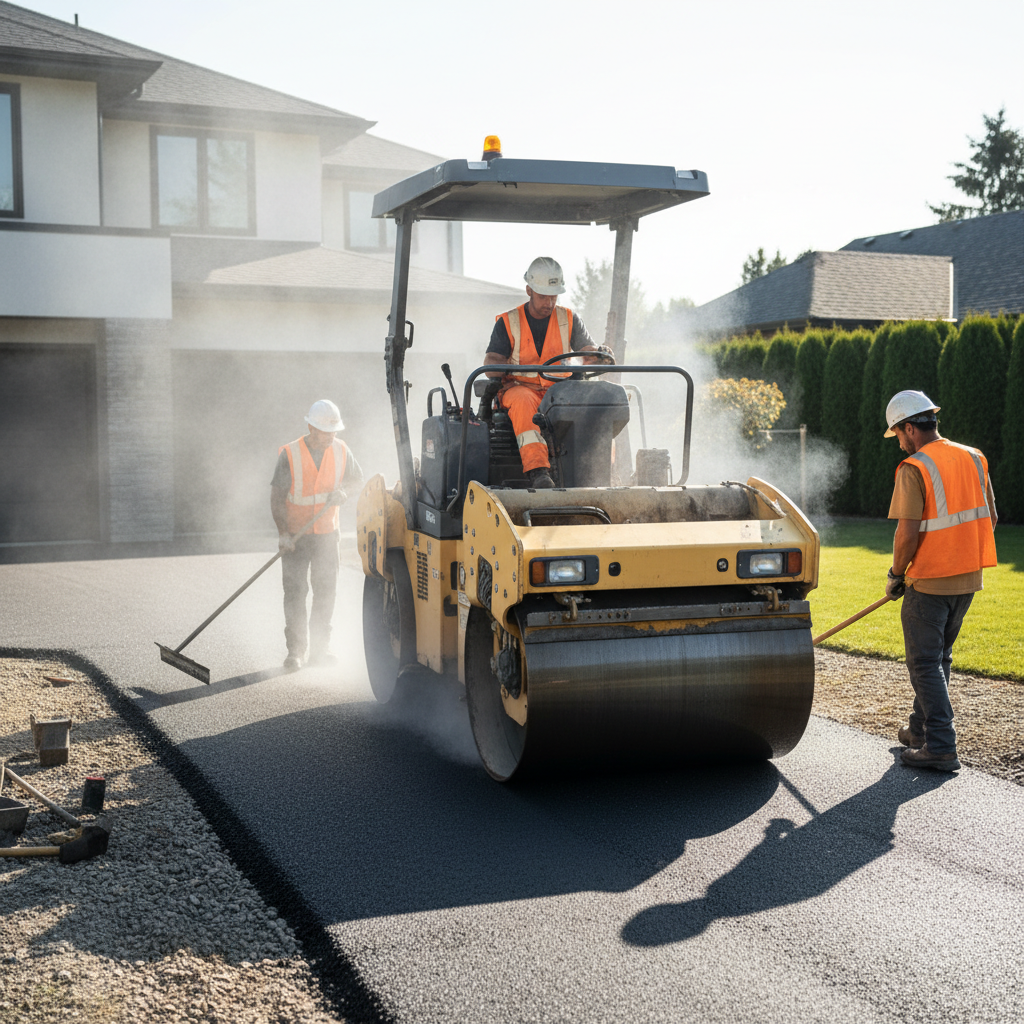
Driveway paving options and costs in Comox
Comox homeowners typically have a short list of driveway materials, and the reason is simple: in a community where most residences are single-detached (65.8% of dwellings) and many are owner-occupied (77.2% of households own), driveways are a major piece of day-to-day property value. With 39.6% of homes built before 1981, you also see a lot of older gravel lanes and aging bases that need excavation and re-compaction before a new surface will last.
On Vancouver Island and the Coast, costs are shaped by a mild coastal climate, but freeze-thaw cycles still happen—especially in areas with drainage issues and repeated ponding after rain. That means we don’t design like the deep-frost interior, yet we still build a proper granular base, control water at the driveway edges, and engineer transitions at the street. In Comox proper, demand stays steady around the Comox Peninsula and the more established neighbourhoods toward Lewis Park, where access can be tight and crews schedule carefully to avoid wet subgrade days.
Because base depth, excavation, haul distance (when we have to import better base), and finish choice drive labour and material use, two “same size” quotes can differ. The comparison below gives you realistic starting points for material, expected lifespan, and typical maintenance, so you can line up bids apples-to-apples before you sign.
| Material |
Lifespan |
Maintenance |
Best For |
Price per sq ft |
| Asphalt (new installation, proper base) |
12–20 years |
Seal every 3–5 years |
Balanced cost, smooth ride, good curb finish |
$10–$20 |
| Asphalt (overlay on existing gravel base) |
8–15 years |
Seal every 3–4 years; spot patching likely |
Lower upfront cost when base is stable |
$12–$22 |
| Interlocking concrete pavers |
25–40 years |
Replace individual stones as needed |
Longevity and repairability; premium curb appeal |
$25–$45 |
| Poured concrete (broom finish) |
20–30 years |
Minor patching; recoat optional |
Clean, low-maintenance look |
$18–$35 |
| Exposed aggregate concrete |
20–30 years |
Reseal periodically if specified |
Slip resistance and decorative finish |
$22–$40 |
| Gravel / crushed stone (budget option) |
3–8 years |
Top up and re-grade 1–2 times/year |
Short-term budget or where drainage is being corrected |
$6–$12 |
Prices are estimates only and vary by project scope, site access and material selection.
What affects the price of paving in Comox
In Comox and across Vancouver Island and the Coast, the same driveway can land anywhere from a “budget-looking” quote to a “premium rebuild” quote because paving isn’t just buying asphalt or concrete—it’s excavation, compaction, drainage control, and how much labour it takes to prepare a stable base. It’s common to see 30–50% swings across bids when one contractor prices only surface replacement while another includes subbase repair, additional base depth, and proper edge restraints.
Frost and freeze-thaw cycles are decisive cost factors here. While our coastal frost line is relatively shallow compared with colder provinces, repeated freezing and thawing still expands and contracts moisture in the base and subgrade. In practice, that means we budget thicker, well-compacted granular base in problem areas and around transitions—often in the 4–6 inch range for well-draining coastal subgrades, but more where soils are marginal or where water tends to sit. In colder regions, contractors go deeper (6–12 inches) to fight deeper frost; the concept is the same, just tuned to our local freeze conditions. Also, hot-mix asphalt needs warm conditions for placement (typically above 10°C air temperature), so the paving season pressure on the Island can tighten scheduling and raise labour rates when weather windows are good.
Two concrete examples from Comox: (1) if we uncover soft spots after tear-out, we may have to over-excavate and import base, which pushes an asphalt job toward the upper end of the $10–$20/sq ft range; (2) if your driveway has poor slope toward the street, grading and drainage corrections can add enough labour that concrete or pavers become more comparable in real “all-in” cost. The material choice matters, but the base and water plan are usually what decide whether you pay “$10–$20” for asphalt or closer to a premium, properly engineered install.
| Price Factor |
Why It Matters |
Cost Impact |
| Driveway area in sq ft |
Most material and machine time scale directly with square footage |
High |
| Base depth required |
Moisture + freeze-thaw control depends on granular thickness and compaction |
High |
| Grading and drainage work |
Correct slope, crown, and water management reduce heaving and premature cracking |
Medium–High |
| Tear-out of existing surface |
Breaking, loading, disposal, and hauling add labour and equipment costs |
Medium–High |
| Edge restraints and curbing |
Prevents paver spread and helps keep asphalt from migrating at the edges |
Medium |
| Sealing requirement |
Asphalt needs sealing after installation window to manage moisture and oxidation |
Low–Medium (over time) |
| Site access |
Narrow lots or long carries slow equipment movement and increase labour time |
Medium |
| Asphalt mix specifications |
Freeze-thaw-rated mix can cost more but performs better in coastal winter conditions |
Medium |
Permits & regulations in British Columbia
In British Columbia, paving a private driveway within your own property usually does not require a building permit. Where permits and approvals start to matter is when work touches the municipal right-of-way or alters how water is managed. In Comox, for example, you should expect municipal approval if you’re changing curb cuts, modifying the boulevard, extending a driveway apron into the area managed by the municipality, or altering storm drainage that affects surface runoff to the street.
Also, some municipalities include lot-grading or surface-drainage bylaw requirements that restrict how close a hard surface can sit to property lines and how runoff must be handled. Before you start, confirm with the local municipality—especially if the plan changes the driveway slope or creates new drainage patterns toward adjacent properties.
Regardless of permits, always arrange utility locates before excavation. In B.C., that typically means contacting BC 1 Call so underground services can be marked before any base digging.
For contractor verification, here’s the practical homeowner checklist: first, confirm the contractor’s B.C. licence/registration status through the appropriate provincial registry (look up the exact legal name the contractor uses on their quote). Next, request a certificate of liability insurance showing coverage amount and effective dates. For coverage proof, ask whether they carry WSIB (and provide clearance documentation where applicable) or the equivalent coverage proof they’re required to maintain. A reputable contractor will provide these documents quickly—before mobilization and before you sign.
Asphalt vs pavers vs concrete for Comox driveways
For Comox, the “best” driveway material usually comes down to how you want it to perform through damp winters and freeze-thaw cycles, and how you prefer repairs to be handled. Asphalt is typically the lowest upfront option and gives a smooth, quiet ride, but it relies on proper sealing—generally every 3–5 years—to keep moisture and oxidation under control. Interlocking concrete pavers cost more upfront, but they’re highly repairable: if one area settles or cracks, we can lift and reset blocks without tearing out the whole driveway. Poured concrete sits in the middle for upfront cost; when it’s properly air-entrained and detailed with joints and drainage, it can last a long time, but freeze-thaw cracking is more likely if the base is weak or water can get trapped. In a coastal climate, de-icing (if used) and repeated wetting also affect surface durability.
Across Vancouver Island and the Coast, base preparation is the real differentiator. We still design to prevent moisture entrapment and movement during freeze-thaw, typically using a coastal-appropriate granular base thickness (often around 4–6 inches for stable, well-draining soils, with thicker builds for marginal subgrade). Drainage design—correct slope, proper edge restraint, and transitions at the driveway-to-street—directly affects whether any material holds up to winter maintenance routines like plowing, sand, and repeated thawed-rain cycles.
A practical dollar example: a properly installed asphalt driveway often falls within the $10–$20/sq ft band, while interlocking pavers usually sit higher at $25–$45/sq ft. The difference is justified when you want long-term curb appeal and easier localized repairs—common for Comox homes with established landscaping where you’d rather avoid major rework later.
| Material |
Frost Resistance |
Curb Appeal |
Repair Method |
Lifespan |
Price Band |
| Asphalt (sealed regularly) |
Good with proper base and sealing |
Good (clean, dark finish) |
Mill and patch localized areas |
12–20 years |
$10–$20 |
| Interlocking concrete pavers |
Very good when bed and compaction are right |
Excellent (premium look) |
Lift/replace individual pavers |
25–40 years |
$25–$45 |
| Poured concrete (air-entrained) |
Good with correct mix and joints |
Good to very good (varies by finish) |
Patch small areas; larger repairs may require sections |
20–30 years |
$18–$35 |
| Exposed aggregate concrete |
Good with correct base and sealing |
Very high (textured, slip resistance) |
Localized patching; cosmetic touch-ups may be needed |
20–30 years |
$22–$40 |
| Permeable pavers (drainage grid) |
Very good for water management (when designed correctly) |
Good (modern look) |
Replace grid and stones if clogged or damaged |
20–30 years |
$30–$55 |
| Chip seal / tar-and-chip |
Variable; needs good base and maintenance |
Basic |
Spot patch and periodic reseal |
7–12 years |
$8–$18 |
How to choose a paving contractor in Comox
Choosing the right contractor in Comox is less about flashy ads and more about proving they’ll build for freeze-thaw performance, drainage control, and long-term durability. Start with licensing and insurance verification. In B.C., ask for their contractor registration/licence details (match the legal company name), and request a current certificate of liability insurance. For worker coverage, ask for their WSIB/WCB coverage proof (and clearance documentation if they provide it). A serious paving company will provide these documents before scheduling equipment or starting excavation.
Next, get 2–3 itemised written quotes. You want a breakdown that separates excavation/haul, base material and compaction, asphalt or concrete supply, labour, edge restraints, and any disposal fees. Avoid quotes that only list a lump sum “per sq ft” without specifying base depth, whether drainage corrections are included, and what happens if unsuitable soils are discovered after tear-out.
Warranty matters too: request the workmanship warranty length (and what it covers), and confirm whether the material/manufacturer warranty is separate. Ask if warranty is transferable to future homeowners, which can matter in a market where many properties are owner-occupied.
Payment scheduling should be cautious. Never agree to more than about 10–15% upfront; the rest should follow progress and be held back until completion and cleanup are verified. Get a start date and a completion estimate in writing, and ask how weather delays are handled—Vancouver Island scheduling can tighten when conditions are ideal.
- Confirm B.C. licensing/registration matches the company name on the quote.
- Request a current certificate of liability insurance and verify effective dates.
- Ask for proof of worker coverage (WSIB/WCB) and clearance documentation if applicable.
- Ensure quotes list base depth and compaction method, not just surface material.
- Ask what’s included for grading and drainage corrections (slope, crown, transitions).
- Clarify tear-out scope: how much existing material is removed and where it’s hauled.
- Confirm edge restraints/curbing plans—especially for pavers and asphalt edges.
- For asphalt, ask about initial curing time and the timing of your sealing step.
- Check disposal and tipping fees are included (or clearly excluded).
- Get a written timeline and weather-delay plan.
- Verify warranty is in writing and understand what voids it.
- Agree on a payment schedule with a holdback until full completion.
Red flags we see in Comox include: quotes that won’t specify base depth or compaction, contractors who skip drainage details and blame cracks later, refusal to provide insurance/licence documentation, charging heavy upfront payments beyond 10–15%, and “per sq ft” numbers that exclude haul-away or edge restraints—then surprise you with change orders after excavation.
Frequently asked questions — paving in Comox
When is the best time of year to pave in Comox?
In Comox and across Vancouver Island and the Coast, the best paving windows are usually late spring through summer when the weather is drier and temperatures stay workable for asphalt placement. Hot-mix asphalt generally needs warm conditions (often around 10°C air temperature or higher), and wet subgrade can trap moisture under a new surface. You’ll also get better compaction results when the base isn’t saturated from repeated fall rains. If you’re planning a full driveway rebuild, aim for a date after site grading is verified and utilities are located, since excavation and base import can take time. In shoulder months, some contractors can still schedule but may require more curing time and tighter protection for fresh asphalt or concrete.
How deep should the base be for Comox's frost?
For Comox, we design for coastal freeze-thaw rather than deep interior frost. That usually means a granular base around 4–6 inches in well-draining, stable areas—then thicker (or with localized over-excavation and rebuild) where soils are poor, ponding happens, or where the driveway transitions collect water. The reason is moisture: freeze-thaw cycles can heave weak, waterlogged zones even in mild coastal climates. A contractor should base the depth on your existing soil conditions after excavation, your drainage plan, and how the driveway slopes to the street. If someone quotes a fixed base depth without inspecting subgrade or discussing water control, it’s a risk for winter cracking and movement.
How often should I seal my asphalt driveway?
For asphalt in British Columbia’s coastal freeze-thaw environment, sealing is typically recommended every 3–5 years. The exact schedule depends on how quickly the surface oxidizes, how much water infiltration is happening, and whether the driveway sees heavy vehicle loads or frequent sanding/snow operations. If your driveway is newly installed, we usually follow the contractor’s curing and sealing timeline so the binder can properly lock in. Budget-wise, driveway sealing is often priced as a small part of the overall job (sealing & repair commonly runs about $1–$4 per sq ft), but it’s what extends the service life by protecting against moisture and raveling. If your asphalt already has visible cracking or bleeding, ask for a repair-first plan rather than sealing over failing areas.
Why does my driveway crack and heave in winter?
Winter cracking and heaving usually come from a water/structure problem, not a “bad batch” of asphalt or concrete. In Comox, repeated freeze-thaw cycles can expand moisture in a base that wasn’t fully compacted, is too thin, or lacks proper drainage. If the driveway slope is incorrect or edges aren’t restrained, water can collect and work its way under the surface. Old driveways—especially where homes are older (39.6% built before 1981)—often sit on inconsistent materials that compress unevenly. When the subgrade moves, you’ll see settlement lines, hairline cracks, and sometimes heaving near transitions. The fix is usually more than surface patching: correct grading, improve base compaction, address drainage, and then choose an appropriate mix and maintenance plan.
Do I need a permit to pave my driveway in British Columbia?
In British Columbia, paving a private driveway within your own property generally doesn’t require a building permit. However, permits or municipal approvals may be required if your work touches the municipal right-of-way—like changing curb cuts, altering boulevard areas, or modifying storm drainage patterns that affect how runoff reaches the street. Some municipalities also have lot-grading rules that can affect how close hard surfaces can be to property lines and how drainage must be managed. For safety and compliance, you should also call for utility locates before excavation. The best contractor will ask you where your driveway ties into the street and confirm whether any right-of-way approvals are needed before scheduling base work.
How long before I can drive on new asphalt?
After asphalt installation in Comox, many contractors allow light vehicle use relatively soon, but the exact timing depends on weather, mix design, and temperature. In mild coastal conditions, the driveway may be ready for driving sooner than in colder, wetter weather; however, fresh asphalt still needs time to cool and stabilize before heavier loads or turning movements. A typical practical guidance is to avoid sharp turns and heavy loads for at least 24–48 hours, and follow the contractor’s site instructions for curing/protection. If you’re also coordinating sealing, remember sealing is usually done after an appropriate curing window (often part of a 3–5 year maintenance cycle). For a detailed timeline, ask your contractor to confirm the expected temperature range and when they’ll complete compaction and handwork at edges and transitions.