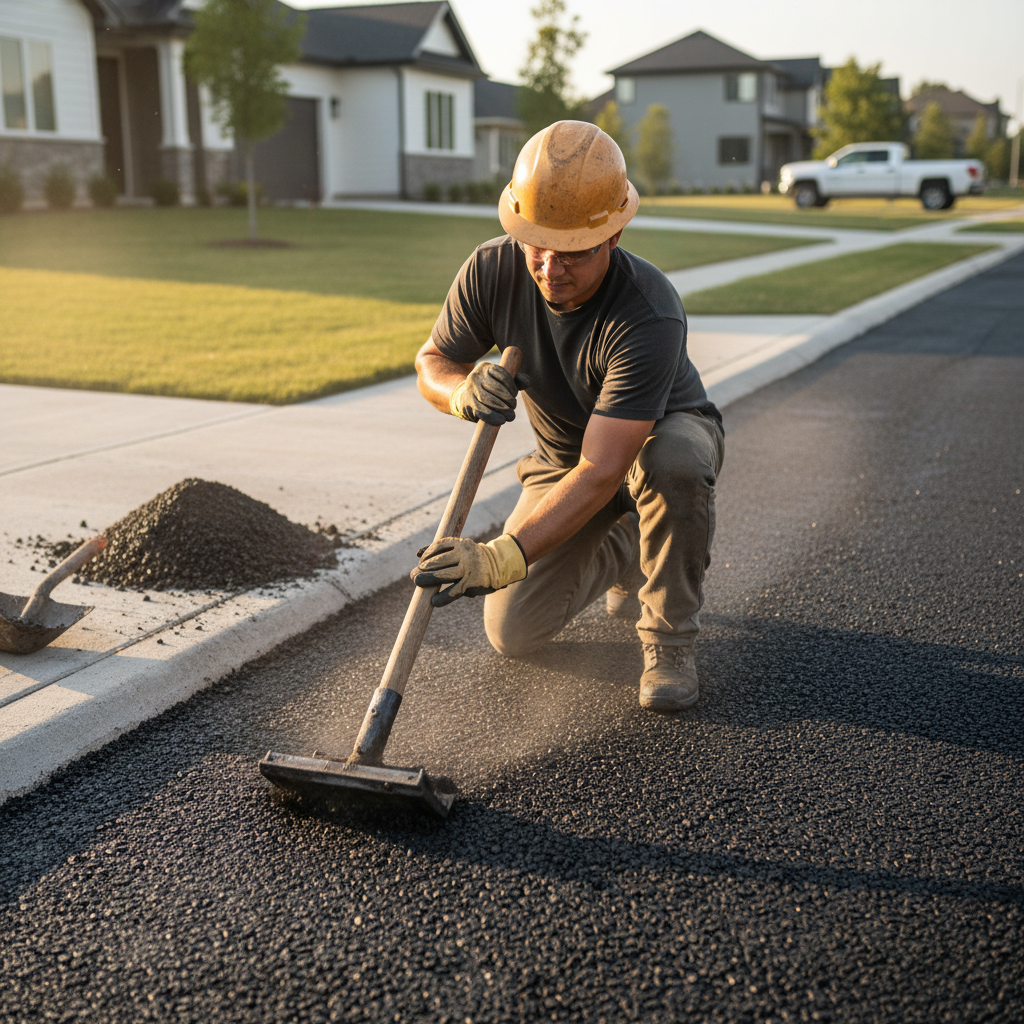
Driveway paving options and costs in East Newton North
East Newton North is home to 7,336 residents (Statistics Canada, 2021 Census), and most driveways here serve single-detached homes, so driveway resurfacing and full replacements are a steady part of local trades. In the Lower Mainland–Southwest, pricing is driven less by deep freeze and more by intense rainfall, drainage quality, and the way water behaves in clay-heavy patches of the Fraser Valley. While frost penetration is relatively shallow compared with Interior or Northern BC, local practice still assumes a frost line on the order of 18 inches for sensitive infrastructure in exposed areas—meaning the base has to be built to perform through winter wet periods and shoulder-season swings.
Contractors in areas like north and west parts of East Newton (near busier arterials where access is tighter and drainage fixes are common) tend to be busiest when homeowners move from “gravel look” to a paved finish, especially ahead of spring and early summer. The longer paving window in coastal BC helps scheduling, but heavy winter rain still shortens the truly workable days. That’s why two quotes for the same asphalt square footage can differ: excavation depth, granular type, compaction testing, and surface thickness matter as much as the surface material itself.
Below is a practical comparison of common driveway materials and what homeowners typically budget in East Newton North. Use it as a baseline, then your contractor should confirm your site conditions, base requirement, and drainage plan before locking a number.
| Material |
Lifespan |
Maintenance |
Best For |
Price per sq ft |
| Asphalt (new installation, proper base) |
15–25 years |
Seal 6–12 months after install, then every 3–5 years |
Lower upfront cost with good appearance when base/drainage are correct |
$12 – $20 |
| Asphalt (overlay on existing gravel base) |
10–18 years |
Seal every 3–5 years; watch edges and low spots |
When you can reuse a solid, well-compacted base and keep excavation minimal |
$14 – $22 |
| Interlocking concrete pavers |
25–35 years |
Rinse/clean as needed; replace individual stones if settled |
Curb appeal and easier localized repairs |
$20 – $40 |
| Poured concrete (broom finish) |
20–30 years |
Seal as recommended; manage minor cracks early |
Straight runs, simpler layouts, and a clean, uniform look |
$18 – $35 |
| Exposed aggregate concrete |
25–35 years |
Seal periodically; clean out debris in joints/finishes |
Slip resistance and a premium finish |
$22 – $38 |
| Gravel / crushed stone (budget option) |
3–8 years |
Top-up and re-grade regularly |
Temporary solution or steep budget constraints |
$7 – $14 |
Prices are estimates only and vary by project scope, site access and material selection.
What affects the price of paving in East Newton North
In East Newton North and across the Lower Mainland–Southwest, it’s common to see driveway quotes vary by 30–50% for what sounds like the same job—especially between asphalt, pavers, and concrete. Part of that difference comes down to real site conditions (how much excavation is required, whether base drainage is failing, and whether the existing slab or gravel is sound). Another part is scheduling and crew productivity: when rains hit and crews can’t compact in optimal moisture, contractors must rebook work into tighter windows, which can tighten pricing.
Frost line depth and freeze–thaw cycles are decisive cost factors even on the coast. In colder regions, deeper frost requires thicker compacted granular base (6–12 inches in Ontario/Alberta versus about 4–6 inches in coastal BC), but Lower Mainland projects still typically need granular thickness designed to perform through winter moisture and assumed frost impacts on exposed sections. The goal is to prevent heaving, rutting, and surface cracking. Asphalt also depends on mix design; freeze–thaw-rated mixes cost a bit more, and that’s reflected in the asphalt range of roughly $12 – $20 per sq ft when the base is done properly.
Concrete can cost more or less depending on detailing. For example, a simple broom-finish pour on a stable base may land closer to $18 – $35 per sq ft, while a premium finish like exposed aggregate generally pushes higher due to material and finishing time. In East Newton North, older driveways often need tear-out and re-grading because settlement has created low areas that collect water—drainage corrections are a frequent cost driver. If you’re in a neighborhood where lots sit slightly lower or ditches/drainage paths are constrained near fences, plan for more base and drainage work rather than just swapping the surface.
| Price Factor |
Why It Matters |
Cost Impact |
| Driveway area in sq ft |
Most material and equipment charges scale directly with square footage |
Major: often drives the largest difference between bids |
| Base depth required |
Frost line assumptions and soil condition determine granular thickness to prevent movement |
High: every extra inch of compacted base adds excavation, hauling, and compaction cost |
| Grading and drainage work |
Correct slope and drainage reduce winter water damage and premature failure |
Medium to high: can include swales, ditch tie-ins, or rework of low spots |
| Tear-out of existing surface |
Concrete breaking and asphalt removal add labour, equipment time, and disposal |
Medium: can significantly increase total cost on older driveways |
| Edge restraints and curbing |
Edges keep pavers from spreading and help maintain asphalt joint integrity |
Medium: small linear footage can still add meaningful labour |
| Sealing requirement |
Asphalt benefits from sealant after initial curing to slow moisture intrusion |
Low to medium: typically an added line item after 6–12 months |
| Site access |
Narrow driveways, slopes, or fence lines reduce equipment efficiency and slow material placement |
Medium: affects production rate and cleanup time |
| Asphalt mix specifications |
Freeze–thaw-resistant mixes help reduce cracking under local wet/winter cycles |
Low to medium: price per tonne may be higher, especially in premium builds |
Permits & regulations in British Columbia
In British Columbia, paving a private driveway within your own property typically does not require a building permit. Where permits and approvals come into play is when the work affects the municipal right-of-way—such as new or modified curb cuts, changes to the boulevard, or adjustments to storm drainage that connect to municipal infrastructure. Some areas also have lot-grading bylaws that can restrict how close hard surfaces may be to property lines and how drainage must be managed to avoid diverting water onto neighbouring lots.
For East Newton North homeowners, the simplest process is: (1) confirm whether any part of your driveway tie-in touches the boulevard/road allowance; (2) call for utility locates before any excavation (in BC, use BC 1 Call); and (3) verify lot-grading rules with your municipality if you plan significant regrading or drainage changes.
When hiring a contractor in British Columbia, verify three things before the job starts. First, check their BC business licence/registration where applicable and their relevant provincial standing via the contractor’s official listing. Second, request a certificate of liability insurance naming you as additional insured if your contract requires it—make sure coverage is current and sufficient for excavation and asphalt/concrete work. Third, confirm their worker coverage documentation (WSBC coverage) and that they can provide clearance/verification upon request. Ask for these items in writing and keep copies with your contract.
Asphalt vs pavers vs concrete for East Newton North driveways
For East Newton North, asphalt, interlocking pavers, and concrete all work—but the “best” choice depends on how you want the driveway to handle moisture, winter maintenance, and future repairs. Asphalt usually offers the lowest upfront cost and a smooth ride, but it relies on a good granular base and proper slope, plus regular sealing every 3–5 years after the initial cure period. Interlocking pavers are the most expensive up front, yet they’re also the most flexible: if one section settles or you later need access to a buried line, pavers can be lifted and rebuilt without replacing the whole surface. Poured concrete sits in the middle for cost and appearance, but it needs air-entrainment and proper finishing and jointing to resist cracking in BC’s wet freeze–thaw conditions and winter de-icing routines.
Lower Mainland–Southwest base preparation still matters. Even with a shallower frost profile than Interior BC, we design the granular layer to manage water and frost impacts; drainage (clean outlets, correct crown/slope, and no trapped low spots) is often more important than chasing maximum frost thickness. In practical terms, asphalt holds up well when sealed and edged correctly; pavers shine where homeowners want curb appeal and manageable repairs; and concrete can be durable when joints, air-entrainment, and curing are done right.
Where the price difference is justified: a typical paver driveway may fall around $20 – $40 per sq ft versus asphalt at $12 – $20 per sq ft. If you anticipate utility access, want the best long-term looks, or you have a layout with complex edges, pavers can be worth the premium. If you want the best value and you’re committed to sealing maintenance, asphalt is usually the most cost-effective route.
| Material |
Frost Resistance |
Curb Appeal |
Repair Method |
Lifespan |
Price Band |
| Asphalt (sealed regularly) |
Good with proper base and drainage; relies on sealing to slow moisture intrusion |
Medium (clean, modern look; fewer pattern options) |
Mill/patch or overlay section-by-section |
15–25 years |
$12 – $20 |
| Interlocking concrete pavers |
Very good; movement is tolerated and localized repairs are straightforward |
High (colour/pattern options) |
Lift and replace individual pavers/blocks |
25–35 years |
$20 – $40 |
| Poured concrete (air-entrained) |
Good when air-entrained and properly jointed; cracking can still occur |
Medium to high (broom finish or stamped/exposed options) |
Concrete patching/spot repairs; larger sections may require resurfacing |
20–30 years |
$18 – $35 |
| Exposed aggregate concrete |
Good with correct mix and curing; texture helps traction |
Very high (premium finish) |
Spot patching can be harder to match; may need larger-area work |
25–35 years |
$22 – $38 |
| Permeable pavers (drainage grid) |
Excellent drainage management when designed correctly |
Medium to high (modern drainage look) |
Replace sections; clean out bedding/infiltration areas as needed |
20–30 years |
$26 – $45 |
| Chip seal / tar-and-chip |
Variable; surface can ravel without good base and traffic control |
Lower (more utilitarian appearance) |
Maintenance/recoating; spot patching is limited |
6–12 years |
$9 – $17 |
How to choose a paving contractor in East Newton North
Choosing a paving contractor in East Newton North is mostly about verifying the boring details that protect you from cost overruns and failed work. In British Columbia, ask for: (1) liability insurance—request a current certificate of insurance; (2) proof of WSBC worker coverage (or clearance documentation, as applicable for the work); and (3) licensing/business registration details tied to the company that will actually perform the driveway installation. Don’t rely on verbal assurances. Ask the contractor to email you the documents so you can review them before the first shovel hits the ground.
Next, get 2–3 itemised written quotes with labour and materials broken out (excavation, hauling/disposal, granular base, compaction, asphalt lift thickness or concrete thickness, edge restraints, and sealing/curing requirements). A lump-sum quote with vague “surface work included” wording is where surprises happen. Read the scope carefully: what’s excluded (utility cutting, pump-out, additional base depth if soils are saturated), is disposal included, and are any permits or municipal approvals required and included? For East Newton North, drainage tie-ins or boulevard-related changes are the kinds of scope items that can shift the job.
Warranty matters too. Confirm the workmanship warranty length, whether it starts from substantial completion or final completion, and what it covers (settlement, premature cracking, base failure). Check if the product/manufacturer warranty is provided and whether it’s transferable if you sell the home. Payment schedule: never pay more than 10–15% upfront; hold back the remainder until completion and cleanup. Finally, demand a written start date and completion estimate.
- Verify WSBC worker coverage and request clearance/verification in writing.
- Request a current certificate of liability insurance (and confirm limits).
- Ask who will be doing the work (crew) and if subcontractors are used.
- Get 2–3 itemised quotes—no “one line” pricing.
- Confirm base thickness, granular specification, and compaction expectations.
- Ensure drainage and slope correction are described, not assumed.
- Check whether tear-out and disposal are included or billed separately.
- Confirm edge restraints/curb requirements and paver setting details (bedding sand depth).
- For asphalt: specify lift thickness and whether sealing is included or excluded (sealing is usually after curing).
- Ask for a written timeline with start date, weather contingency, and completion target.
- Review warranty terms for workmanship and surface failures.
- Use a holdback—don’t release full payment until final inspection and cleanup.
Red flags in East Newton North include: a contractor who won’t document base specs or drainage plan, promises “no need to remove existing material” without evaluating settlement and saturation, skips utility locates or won’t provide liability/WSBC proof, gives only a lump sum with no thickness/lift details, or pressures you for large upfront payments. If any of these show up, slow down and re-check the scope in writing.
Frequently asked questions — paving in East Newton North
What base thickness do I need for pavers in East Newton North?
For pavers in East Newton North, a common durable build starts with about 6 inches of compacted granular base with proper drainage and a well-levelled subgrade, then bedding sand and the paver thickness. Because Lower Mainland–Southwest projects focus on moisture control and assume frost impacts on exposed sections, extra base depth is often required if your soil is clay-heavy, saturated, or already settled. A contractor should inspect for soft spots, evaluate how water drains from the driveway, and confirm the finished slope before quoting. The goal is a stable platform that compacts evenly—most paver problems here come from poor drainage or inadequate base, not from frost depth alone. (Statistics Canada, 2021 Census)
How do I get the most accurate paving quote in East Newton North?
To get an accurate quote in East Newton North, ask for a site visit and require an itemised breakdown. Provide the contractor with driveway dimensions and any known drainage issues (ponding areas, downspout discharge paths, or where water runs during storms). Request that the quote specify excavation depth, base thickness, compaction steps, and whether tear-out and disposal are included. Make sure the proposed asphalt thickness/lifts or concrete thickness and finishing details are written down—this is where pricing differences come from in the Lower Mainland. If you’re comparing options, anchor to the local asphalt range of about $12 – $20 per sq ft for proper base work, then compare apples-to-apples. Also confirm if sealing is included or excluded (it’s typically done after curing, and often added around 6–12 months).
How much does it cost to pave a driveway in East Newton North?
Driveway costs in East Newton North typically depend on square footage, base preparation, drainage correction, and whether you’re resurfacing or starting from scratch. As a baseline, asphalt driveway paving commonly falls around $12 – $20 per sq ft when proper base and compaction are included. Interlocking pavers often land around $20 – $40 per sq ft due to materials, labour, and edging/installation detail. Poured concrete commonly ranges from about $18 – $35 per sq ft depending on finish type and reinforcement/jointing. If your existing driveway has settlement or drainage failures, excavation and re-grading can push the total up—sometimes more than the surface material choice itself.
Asphalt vs interlocking pavers vs concrete — which is best in East Newton North?
“Best” in East Newton North usually comes down to your priorities. Asphalt is often the best value upfront and performs well when built on a properly compacted base and sealed after curing; plan on sealing every 3–5 years in wet coastal conditions. Interlocking pavers generally win for curb appeal and easier localized repairs—if a section needs attention, it can be lifted and rebuilt without tearing out the whole driveway. Concrete can be a strong option when the mix is air-entrained, properly jointed, and finished for traction; however, it’s less forgiving than pavers if the base moves. If you want a straightforward value path, asphalt is typically closest to $12 – $20 per sq ft. If you want long-term aesthetics and patchability, pavers’ $20 – $40 per sq ft premium is often justified.
How long does a paved driveway last in East Newton North?
With correct base preparation and drainage, asphalt driveways in East Newton North commonly last about 15–25 years, especially when sealed after curing and then maintained every 3–5 years. Interlocking pavers often reach 25–35 years because they tolerate minor movement and can be repaired one section at a time. Concrete typically lasts about 20–30 years, but its lifespan depends heavily on mix design (air-entrainment), curing, and jointing—plus whether the driveway experiences trapped water and heavy winter de-icing habits. In Lower Mainland–Southwest conditions, premature failure is usually tied to drainage or base stability rather than the material itself. The contractor should address slope, outlets, and water pathways during quoting so you’re not paying for a surface that fails because water can’t escape.
When is the best time of year to pave in East Newton North?
In East Newton North, the best time to pave is typically late spring through summer when air temperatures and weather windows are more predictable for asphalt placement and compaction. Asphalt needs workable conditions—hot-mix asphalt placement requires warm enough air temperatures (often above about 10°C) and a base that can be compacted properly. Coastal BC’s longer season helps, but heavy rain in shoulder months can delay scheduling and affect compaction quality. For concrete, timing matters for proper curing and finishing conditions too. If you’re aiming to start a new asphalt driveway, plan around a time when rain is less likely and the site can stay dry for base preparation, paving, and initial curing. Your contractor should provide a written schedule and weather contingency plan.