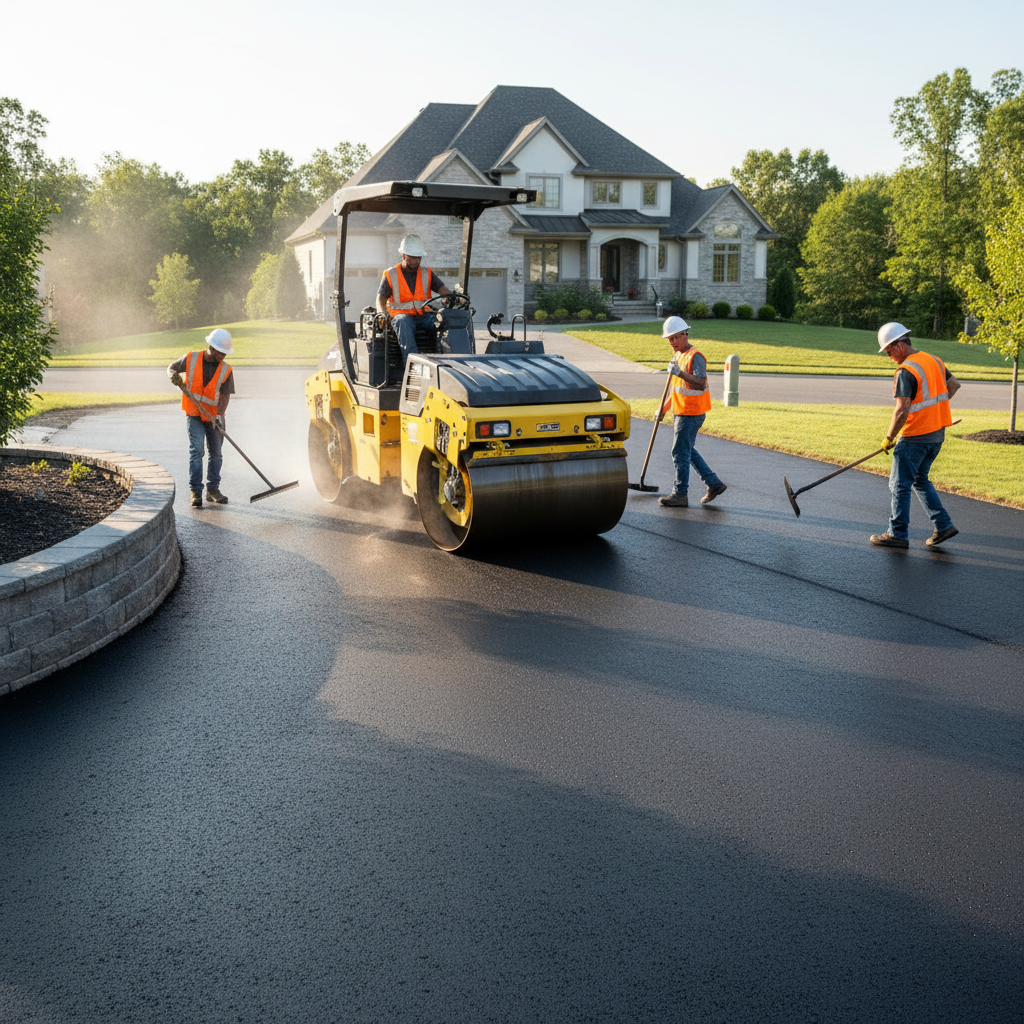
Driveway paving options and costs in Killarney
Killarney, British Columbia is a popular choice for homeowners who want a clean, durable curb line at the street and a driveway that can handle Lower Mainland–Southwest weather. With a community population of 29,325 (Statistics Canada, 2021 Census), there’s steady demand from the kind of typical residential lots where driveways serve day-to-day access—most often attached to single-family homes, which means homeowners tend to care about appearance, smooth access, and practical maintenance. In Killarney, pricing is shaped less by deep Interior-style frost and more by heavy rainfall, drainage performance, and the repeated freeze–thaw around a relatively shallow frost level. That combination can stress weak subgrades, especially where soils are clay-heavy, and it’s why good granular base and proper slope/drainage planning are a major part of your quote.
Contractors in the Killarney area—especially around the Hastings–Victoria corridor and the closer residential blocks where lots have narrower side access—often see tighter scheduling windows. Winter rain can delay excavation and base compaction, and shoulder-season storms can limit asphalt placement days, which pushes contractors to focus on the jobs that meet weather-ready criteria. The result: two driveways that look similar can land in different price bands if one needs more drainage correction, deeper base, or a full tear-out.
Use the table below to compare the most common materials—then match the option to your site conditions and maintenance preferences before you request an itemised quote.
| Material |
Lifespan |
Maintenance |
Best For |
Price per sq ft |
| Asphalt (new installation, proper base) |
12–18 years |
Seal after 6–12 months, then every 3–5 years |
Best value and smooth driving surface; standard residential access |
$12–$20 |
| Asphalt (overlay on existing gravel base) |
8–14 years |
Seal on schedule; monitor edges and settlement |
When existing base is sound and thickness is confirmed |
$10–$17 |
| Interlocking concrete pavers |
20–30+ years |
Occasional panel-level repairs; re-sand joints as needed |
High curb appeal and easy spot repairs |
$20–$40 |
| Poured concrete (broom finish) |
25–30 years |
Limited; may require crack filling/patching |
Clean look and durable, low-fuss surface |
$18–$35 |
| Exposed aggregate concrete |
25–30 years |
Crack sealing as needed; keep surface clean to reduce staining |
Better slip resistance and premium appearance |
$22–$40 |
| Gravel / crushed stone (budget option) |
3–7 years |
Re-grade and add stone; weed control |
Short-term budget, low maintenance access needs |
$6–$12 |
Prices are estimates only and vary by project scope, site access and material selection.
What affects the price of paving in Killarney
In Killarney and across British Columbia’s Lower Mainland–Southwest, the same driveway can end up with quotes that differ by roughly 30–50% because the cost drivers aren’t just the surface material—they’re what’s underneath and what needs to be corrected. Frost line depth and freeze–thaw cycles are decisive, even in coastal areas. While coastal BC generally has shallower frost than Ontario/Alberta, local practice still assumes a meaningful freeze depth for sensitive infrastructure and bases. If the granular base is too thin, the repeated freeze–thaw around that zone can contribute to heaving, rutting, and reflective cracking. In colder regions, deeper frost can require thicker compacted granular base (6–12 inches is more typical in Ontario/Alberta, compared with about 4–6 inches in coastal BC for exposed residential work), which is a big reason you’ll see scheduling and pricing differences—especially when contractors are busy.
The paving season also behaves differently. Hot-mix asphalt requires workable air temperatures (often above 10°C), so spring/summer scheduling pressure rises when weather windows open. That affects labour availability and crew time, pushing asphalt installation into the clearer-weather months. Mix design matters too: a freeze–thaw-rated asphalt mix costs a bit more because it’s engineered to handle local conditions.
In Killarney, two common examples raise cost: (1) you have to excavate deeper because the existing base is soft or saturated after winter rains; and (2) drainage corrections are needed because the driveway grades toward the garage or toward a low spot. Costs can be lower when you have stable existing gravel, straight access for a mini-excavator, and clean removal of old surfacing without major utility issues. For budgeting, many homeowners end up between the asphalt bands of $12–$20 per sq ft for new work and the paver band of $20–$40 per sq ft when curb appeal and repairability are priorities.
| Price Factor |
Why It Matters |
Cost Impact |
| Driveway area in sq ft |
The surface area drives asphalt/paver/concrete quantities and crew time |
High: can swing the total dramatically on small lot changes |
| Base depth required |
Frost and freeze–thaw demand adequate granular thickness for stability |
Medium–High: deeper base means more excavation, gravel, and compaction |
| Grading and drainage work |
Slope correction and drainage lines reduce pooling and prevent base failure |
Medium: can add days of labour and extra materials |
| Tear-out of existing surface |
Concrete breaking/haulage and asphalt milling are labour-intensive |
Medium–High: disposal and equipment time add cost |
| Edge restraints and curbing |
Prevents paver spread and asphalt edge breakdown under wetting cycles |
Low–Medium: usually worthwhile for long-term performance |
| Sealing requirement |
Asphalt needs sealing after curing (often 6–12 months) to protect from moisture |
Low: modest add-on cost, but affects lifespan |
| Site access |
Narrow lots slow equipment movement and can increase setup time |
Low–Medium: more labour handling and more time per step |
| Asphalt mix specifications |
Freeze–thaw-rated mix and proper binder selection improves durability |
Low–Medium: small per-sq-ft difference, larger impact on lifespan |
Permits & regulations in British Columbia
In British Columbia, paving a private driveway within your own property typically does not require a building permit, as long as you’re not making changes that affect municipal services. Where things change is when the work touches the municipal right-of-way—common examples include building a new curb cut, modifying boulevard areas, or altering storm drainage in a way that affects municipal infrastructure. In those cases, municipal approval is usually required before excavation and asphalt/concrete placement.
Also confirm any lot-grading bylaws with your municipality. Some rules restrict how close to property lines hard surfaces can be or require that surface water be managed to prevent drainage impacts on neighbours. Before any digging in Killarney, always call for utility locates (BC 1 Call) so cables, conduits, and service lines are marked. That step protects you and helps contractors schedule excavation safely and efficiently.
To verify a contractor’s British Columbia credentials, ask for three things and check them directly: (1) their BC licence or registration—look it up via the relevant online registry tied to the trade/contractor category; (2) their certificate of insurance—make sure it clearly shows liability coverage for the job and the address/project; and (3) their workplace coverage—confirm WSIB coverage (or the applicable proof/clearance documentation where required for the scope of work). If they can’t provide current documents quickly, that’s a red flag.
Asphalt vs pavers vs concrete for Killarney driveways
For Killarney homeowners deciding between asphalt, interlocking pavers, and concrete, the “right” choice comes down to how you want the driveway to perform during Lower Mainland–Southwest wet winters and how you’ll maintain it. Asphalt typically has the lowest upfront cost and a smoother driving surface, but it needs sealing regularly—usually every 3–5 years after the initial seal—so moisture doesn’t accelerate wear. Interlocking concrete pavers cost more up front, yet they’re extremely repairable: if a section settles due to drainage or a localized base problem, you can lift and reset individual units instead of replacing the entire surface. Poured concrete usually lands in the middle on price and offers a clean, long-lived surface, but it can develop cracking if the base isn’t properly prepared or if the concrete isn’t air-entrained for freeze–thaw exposure and de-icing conditions.
In Killarney, regardless of material, the base and drainage design matter more than the surface finish. With the local freeze–thaw behaviour (not extreme frost, but repeated cycling), asphalt and concrete both benefit from a well-graded granular base installed at the right thickness and compacted correctly, with drainage that prevents water pooling. Pavers perform especially well when edge restraints are installed and the bedding sand and jointing are done to spec.
Here’s a practical budget example: if your quote is $12–$20 per sq ft for asphalt but $20–$40 per sq ft for pavers, spending the difference can be justified if you expect heavy use, want maximum curb appeal, or prefer a “repair without full replacement” approach. If your priority is lowest upfront cost and you’re willing to seal on schedule, asphalt is often the better value.
| Material |
Frost Resistance |
Curb Appeal |
Repair Method |
Lifespan |
Price Band |
| Asphalt (sealed regularly) |
Good when base is correct and water drains away; freeze–thaw dependent |
Good (clean, dark finish; minimal texture variation) |
Patch and compact; seal after |
12–18 years |
$12–$20 |
| Interlocking concrete pavers |
Very good with proper base, restraints, and jointing |
Excellent (colour/stretches and design options) |
Lift-replace/reset affected units |
20–30+ years |
$20–$40 |
| Poured concrete (air-entrained) |
Good to very good when air-entrained and properly reinforced |
Good (uniform look; depends on finish) |
Crack repair/seal and patch localized areas |
25–30 years |
$18–$35 |
| Exposed aggregate concrete |
Good with proper air content and strong base |
High (textured, premium appearance) |
Patch with matching mix/finish where feasible |
25–30 years |
$22–$40 |
| Permeable pavers (drainage grid) |
Very good by reducing surface water and improving drainage |
Good to high (modern drainage aesthetic) |
Lift/replace panels; manage infill material |
15–25 years |
$22–$42 |
| Chip seal / tar-and-chip |
Moderate; performs well when maintained but is sensitive to fines loss |
Fair (texture and colour vary) |
Spot re-chipping and re-application |
7–12 years |
$10–$18 |
How to choose a paving contractor in Killarney
Choosing the right paving contractor in Killarney starts with proof—not just promises. In British Columbia, verify three items before you sign: (1) their trade/contractor licence or registration applicable to the work they’ll do—ask for the exact licence number and check it through the online registry; (2) their liability insurance certificate—make sure it lists your job site/address and shows adequate coverage; and (3) their workplace coverage documentation—confirm WSIB coverage (or the applicable clearance/proof required for the scope). A reputable crew will provide documents promptly and consistently.
Next, request 2–3 itemised written quotes. You want line items for labour and materials separately (excavation, granular base, compaction, geotextile if used, asphalt or pavers or concrete, disposal, and edging/restraints). Avoid quotes that are “all-in” without a breakdown; they make it difficult to compare scope and quality. Read the scope carefully for exclusions: permit pulling, utility locate costs, disposal and hauling, and whether grading/drainage corrections are included or treated as extras.
For warranty, ask for both workmanship and product/manufacturer terms. Clarify the warranty length and whether it’s transferable to future homeowners. For payments, keep it conservative: never pay more than 10–15% upfront, and hold back the remainder until the job is complete and you’ve inspected surface compaction, drainage grades, and finish quality. Get a start date and estimated completion in writing, and confirm what weather conditions could delay asphalt placement or curing.
- Ask for an itemised quote (labour + materials) instead of a lump sum.
- Confirm base depth and compaction method in the written scope.
- Require drainage notes: slope, outlets, and how water will be managed.
- Check that disposal/haulage is included if there’s tear-out.
- Ask who pulls permits (if required) and whether right-of-way work is handled.
- Verify edging/restraints are included for pavers (to prevent spread).
- Get the asphalt mix/spec referenced for freeze–thaw performance.
- Confirm sealing schedule for asphalt (initial seal timing and re-seal interval).
- Ask about geotextile use where soils are weak or saturated.
- Review the workmanship warranty in writing and what it covers.
- Confirm payment schedule (max 10–15% upfront; holdback until completion).
- Request a written start date and completion estimate with weather contingency.
If a contractor in Killarney won’t show insurance documents, can’t explain base thickness and drainage design, pressures you for a large upfront deposit, provides no itemised breakdown, or refuses to put warranty details in writing, treat it as a serious red flag.
Frequently asked questions — paving in Killarney
What is a chip seal driveway and is it suited to Killarney?
Chip seal is an asphalt-based surface treatment where an adhesive binder is sprayed and then covered with aggregate chips, followed by rolling. It’s sometimes used on lower-cost driveways or in places where a fully smooth asphalt finish isn’t the goal. In Killarney and across coastal parts of British Columbia, it can work well when drainage is managed properly and the surface is kept maintained, because the Lower Mainland–Southwest climate brings heavy rainfall and persistent wetting that can loosen fines over time if the base is weak. That said, it typically has a shorter lifespan than new asphalt or pavers. If you’re budgeting, chip seal often comes with a lower initial price band (for example, around $10–$18 per sq ft), but you should expect periodic maintenance. For most homeowners who want a long-term driveway with predictable upkeep, asphalt with sealing or interlocking pavers are usually the safer long-run choices.
How much does driveway crack repair cost in Killarney?
Crack repair costs in Killarney vary mainly based on crack width, length, and whether the issue is “surface-only” or suggests base movement. For small, stable cracks, contractors may clean the crack, install a crack sealant, and spot patch as needed. If you’re dealing with wider cracks that need patching and re-compaction, the job costs more. Many homeowners also discover that the crack is tied to drainage or poor edge restraint, which means a good quote includes the repair plus a plan to stop water from sitting in the same area. For budgeting, many repair line items fall within the broader sealing & repair band of about $2–$6 per sq ft for typical surface repair/seal-type work, while deeper patching can be higher depending on the extent. Ask the contractor to show photos, measure crack widths, and describe the base condition before you approve any repair.
What base thickness do I need for pavers in Killarney?
For interlocking pavers in Killarney, typical residential practice in the Lower Mainland–Southwest is about 6 inches of compacted granular base, plus bedding sand and the paver thickness. In wetter or weaker soil conditions—common after winter rains—contractors may need deeper excavation and additional base to achieve proper compaction and drainage. The reason is freeze–thaw cycling around a shallow frost level: if water saturates the base and the base isn’t thick/compacted enough, you can get settlement, edge heaving, and uneven joints over time. A good contractor will confirm the required base thickness based on your site conditions (soil type, existing base condition, drainage grade, and whether there’s a garage approach). If you want the most accurate recommendation, ensure your quote includes a site assessment and notes on base depth, compaction targets, and edging/restraints.
How do I get the most accurate paving quote in Killarney?
To get an accurate paving quote in Killarney, don’t rely on measuring alone—ask for an onsite assessment and make sure the quote is itemised. Start by requesting 2–3 written bids that include the scope details: excavation depth, base thickness, how drainage/slope will be corrected, disposal/haulage, and whether geotextile or additional granular layers are included. For asphalt, ask what sealing is included and when (often after curing, with an initial seal after 6–12 months). For pavers, confirm edge restraints, bedding sand depth, joint sand approach, and whether the contractor plans for any settling concerns. Also confirm what’s excluded: permit pull (if any), utility locates, and concrete/asphalt tear-out. When homeowners compare quotes in the Lower Mainland, differences in base preparation and drainage work are a major reason totals vary—sometimes by 30–50%—even when the driveway size is similar.
How much does it cost to pave a driveway in Killarney?
Driveway paving costs in Killarney depend mainly on square footage, base preparation, and whether you’re installing new surface or tearing out an existing one. For asphalt, many residential projects in the Lower Mainland–Southwest land in the $12–$20 per sq ft range for new installation with a properly prepared base. For interlocking concrete pavers, the common band is $20–$40 per sq ft because labour and materials are higher and the base/edge restraint system is more detailed. Poured concrete often sits around $18–$35 per sq ft depending on thickness and finish. Small repairs or sealing typically fall into the $2–$6 range for related work, but that’s not a full replacement. If you share approximate driveway dimensions and whether you’re on existing asphalt, gravel, or concrete, you can narrow the estimate quickly.
Asphalt vs interlocking pavers vs concrete — which is best in Killarney?
The “best” option in Killarney depends on your tolerance for maintenance, how you handle winter impacts (plowing and de-icing), and how complex your site drainage is. Asphalt is usually the best value upfront and works well when the base is correct and you seal after curing—then reseal every few years. Interlocking concrete pavers cost more upfront in the $20–$40 per sq ft band, but they tend to be the easiest to repair if a localized settlement happens; that matters in a climate where heavy rainfall and freeze–thaw cycling can expose weak base or drainage issues. Concrete is durable and often mid-range on price (commonly $18–$35 per sq ft), but it requires correct base preparation and air-entrainment to manage freeze–thaw and moisture. If your driveway sees frequent plowing and you want curb appeal with repair flexibility, pavers are often the top pick. If you want smooth driving at a lower initial cost and will follow a sealing schedule, asphalt usually wins.