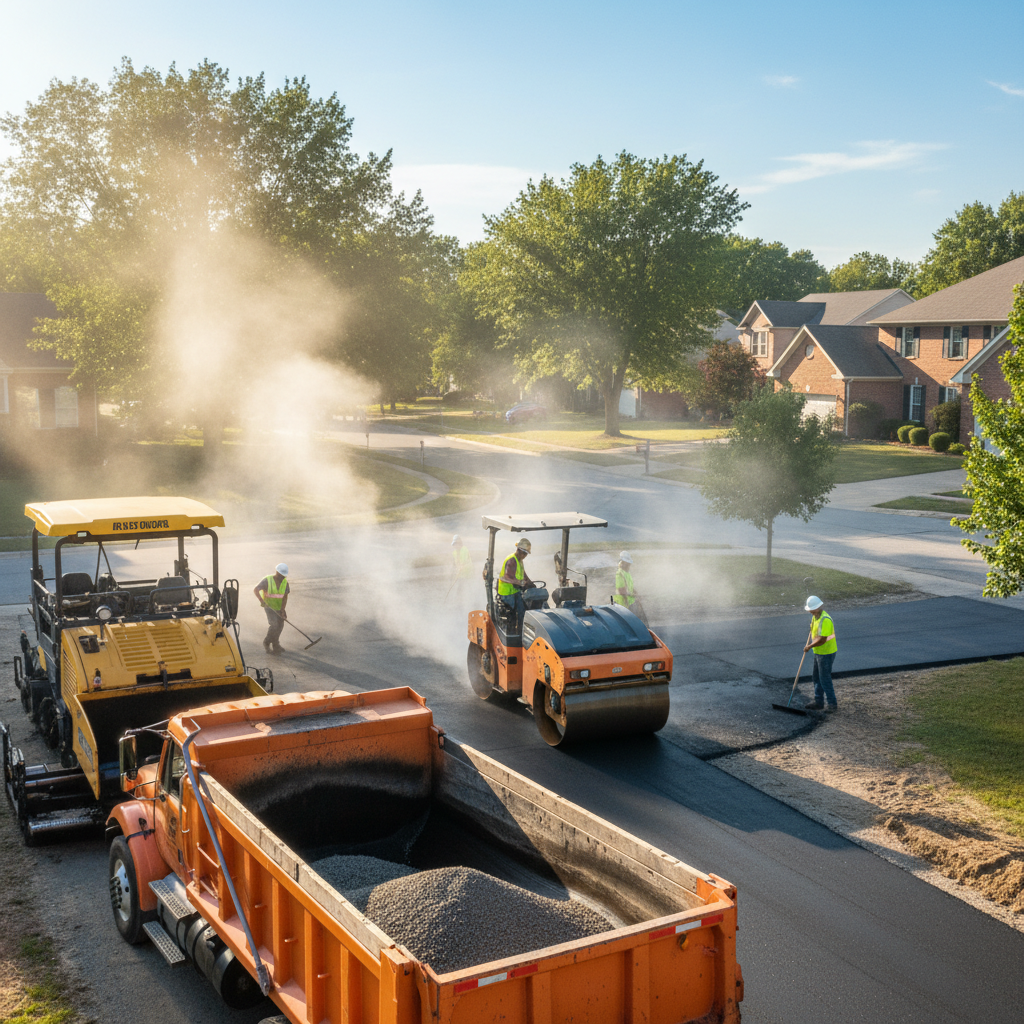
Driveway paving options and costs in Tumbler Ridge
Tumbler Ridge homeowners usually start with the question: “What will it cost to pave my driveway here?” In our area, that decision matters because most housing is tied to single-detached homes—69.4% of dwellings are that type, and homeowner households make up about 68.5% of all households (Statistics Canada, 2021 Census). That means a lot of driveways are private, residential lots where durability and maintenance planning are top-of-mind.
In the Northeast of British Columbia, pricing is driven by deep frost lines and hard freeze–thaw cycling. Contractors typically need more excavation and a thicker, properly compacted granular base to reduce frost heave and surface cracking. The paving season also runs shorter because hot-mix asphalt needs warm, dry conditions (often requiring air temps above 10°C). Add in freight to northern communities and limited local crew/plant availability, and you’ll see higher unit prices and tighter scheduling than milder parts of BC.
Local demand is especially strong around the downtown core and the heavier residential pockets where cars get driven daily and plowing traffic is common—areas like Northgate / Scotties area tend to see a lot of winter wear on driveways and approaches. With that in mind, here’s a practical comparison of materials and typical pricing for Tumbler Ridge projects, based on local market conditions.
| Material |
Lifespan |
Maintenance |
Best For |
Price per sq ft |
| Asphalt (new installation, proper base) |
15–25 years |
Seal every 3–5 years; patch minor failures |
Most common choice where you want good durability per dollar |
$7 – $13 |
| Asphalt (overlay on existing gravel base) |
10–18 years |
Seal every 3–5 years; more frequent spot repairs if base is weak |
When the existing base is sound and you want lower upfront cost |
$6 – $10 |
| Interlocking concrete pavers |
25–35 years |
Re-level/re-sand as needed; easy section repairs |
Curbside aesthetics and “repair without total replacement” |
$13 – $22 |
| Poured concrete (broom finish) |
20–30 years |
Crack repairs as needed; minimal routine work if well built |
Long-term, low-maintenance driving surface with clean lines |
$14 – $24 |
| Exposed aggregate concrete |
20–30 years |
Sealer periodically; manage minor aggregate pop-outs |
Better texture/traction and premium look |
$16 – $28 |
| Gravel / crushed stone (budget option) |
2–7 years (varies widely) |
Re-grade and top up yearly; pothole management |
Short budgets or interim surface |
$3 – $6 |
Prices are estimates only and vary by project scope, site access and material selection.
What affects the price of paving in Tumbler Ridge
In Tumbler Ridge and the broader Northeast region of British Columbia, the same driveway can land 30–50% apart between quotes—especially when one company prices for a full frost-proof build and another assumes the existing base is “good enough.” That’s why you’ll see asphalt starting around the mid part of the local band (for example, roughly $4,500 – $8,500 for typical asphalt driveway paving scope), while a more engineered base or upgrade work can push the project toward the upper end quickly.
Frost line depth and freeze–thaw cycles are decisive. In colder northern conditions, contractors often need a thicker compacted granular base to limit frost heave and surface cracking. Where you might see 6–12 inches of compacted granular base in other provinces’ inland systems, Northeast BC often lands in the “thicker-than-coastal” range—so quotes rise when excavation, geotextile, and additional aggregate are required. Asphalt and concrete also have to meet local freeze–thaw expectations; hot-mix asphalt requires proper mix design and placement during a short paving season. Since work generally needs air temperatures above about 10°C for asphalt production/laydown, crews must schedule around weather windows, and mobilization/overtime costs can concentrate into a narrow timeframe.
Two common Tumbler Ridge examples that raise cost: (1) driveways on poorly drained soils where extra grading and positive drainage correction are needed, and (2) older homes built before 1981—18.3% of dwellings in the area—often come with older undersized bases, so the “tear-out and rebuild” component can be bigger. Conversely, cost can drop when the driveway footprint is straightforward (easy access, minimal curving) and the existing base is well-compacted with no mud pumping. If you’re comparing concrete, remember that poured concrete typically sits in a higher band than standard asphalt, and interlocking pavers carry the highest materials/installation effort—often aligning with the regional interlocking range of $8,000 – $16,000 depending on size and detailing.
| Price Factor |
Why It Matters |
Cost Impact |
| Driveway area in sq ft |
The surface and base scale directly with square footage. |
Largest driver; small area changes noticeably swing total cost. |
| Base depth required |
Frost conditions determine granular thickness and compaction plan. |
Thicker base = more excavation and aggregate (often a big quote difference). |
| Grading and drainage work |
Proper slope and drainage prevent water trapping under asphalt/concrete. |
Can add substantial labour and materials if regrading is extensive. |
| Tear-out of existing surface |
Breaking/hauling old concrete or removing existing asphalt costs time and disposal fees. |
Typically adds days/costs compared with “overlay” scenarios. |
| Edge restraints and curbing |
Pavers need restraint to prevent spreading; asphalt/cement benefit from stable edges. |
Moderate cost increase, but protects against early failure. |
| Sealing requirement |
Asphalt needs sealing after curing, then periodic re-sealing in northern climates. |
Ongoing cost; usually small per year compared to resurfacing. |
| Site access |
Narrow lots slow equipment movement and can limit truck access. |
Can increase labour and mobilization; sometimes adds hand-work. |
| Asphalt mix specifications |
Freeze–thaw-rated mixes and thickness choices influence longevity. |
Upfront mix and placement costs increase, but reduce early cracking. |
Permits & regulations in British Columbia
In British Columbia, paving a private driveway within your own property usually does not require a building permit. However, you do need approvals when the work affects the municipal right-of-way or public infrastructure—this can include creating or changing a curb cut, modifying boulevard/sidewalk areas, or changing storm drainage flows at the property line.
Also, some municipalities have lot-grading by-laws or related rules that restrict how close to property lines you can place hard surfaces and how drainage must be handled. Because Tumbler Ridge is in a northern, freeze-prone area, drainage compliance matters: contractors will typically need to maintain proper slopes so meltwater doesn’t pond and turn into future frost heave.
Step-by-step, here’s how a homeowner can verify your contractor in British Columbia:
- Ask for the contractor’s licence/registration details and verify them through the relevant BC registry listings available online (contractors should be able to provide proof without hesitation).
- Request a certificate of liability insurance naming you (or confirming coverage) and confirm the policy is current.
- Confirm they have the proper workers’ coverage (WSIB/WCB-type coverage for workers) and ask for proof of clearance.
- Before excavation, ensure they complete or coordinate utility locates through the applicable service (BC 1 Call) and confirm the locate ticket number.
- Ask whether any right-of-way permits or municipal approvals are required and whether that work is included in the quote.
Asphalt vs pavers vs concrete for Tumbler Ridge driveways
For Tumbler Ridge driveways, all three options—asphalt, interlocking concrete pavers, and concrete—can perform well when the base is built for Northeast freeze–thaw conditions. The difference is mainly upfront cost, how the surface behaves in winter, and how you repair it when something inevitably happens (from plough strikes, seasonal movement, or water intrusion).
Asphalt is usually the lowest upfront cost and is relatively quick to install, which helps when the paving season is short. The trade-off: asphalt needs sealing regularly (commonly every 3–5 years). In this region, sealing isn’t “optional cosmetic”—it helps slow moisture damage that can worsen cracking under freeze–thaw cycles. Asphalt base design and proper drainage are what keep the surface from heaving.
Interlocking concrete pavers cost more upfront, but they’re the most forgiving to repair. If a section settles after a thaw, pavers can be lifted, base corrected, then reset—often without replacing the whole driveway. If curb appeal matters and you want flexibility, this is a strong fit. That’s why interlocking pricing often aligns with $8,000 – $16,000 in the local bands, especially once edge restraints and proper bedding are included.
Poured concrete typically lands in the mid-range, but it must be built with the right thickness, air entrainment, and jointing. Concrete can be susceptible to freeze–thaw cracking and surface spalling if it isn’t correctly air-entrained or if drainage is poor—issues that aren’t uncommon where older driveways were built with minimal granular support. For a lot of homeowners, the “value” in concrete appears over time because it’s less routine maintenance than asphalt, but it’s less forgiving than pavers when base issues do occur.
Example: If an asphalt driveway estimate comes in near the lower end (roughly $4,500 – $8,500), switching to pavers might add about several thousand dollars. That extra money is usually justified when you expect frequent plowing contact, want easy localized repairs, or care strongly about appearance along the approach.
| Material |
Frost Resistance |
Curb Appeal |
Repair Method |
Lifespan |
Price Band |
| Asphalt (sealed regularly) |
Good when base is frost-proof and drainage is correct |
Moderate |
Patch and re-pave small areas; seal to protect |
15–25 years |
$4,500 – $8,500 |
| Interlocking concrete pavers |
Very good with proper bedding and restrained edges |
High |
Lift/re-lay affected blocks after base correction |
25–35 years |
$8,000 – $16,000 |
| Poured concrete (air-entrained) |
Good to very good if air-entrained and well jointed |
Moderate to high |
Crack repair/seal; localized patching |
20–30 years |
$9,000 – $18,000 |
| Exposed aggregate concrete |
Good with correct mix and finishing; surface texture aids traction |
Very high |
Patch carefully and re-finish spots; sealer touch-ups |
20–30 years |
$10,000 – $19,500 |
| Permeable pavers (drainage grid) |
Very good when drainage design is engineered |
High to moderate (depends on layout) |
Section replacement; base inspection/maintenance |
20–30 years |
$10,000 – $20,000 |
| Chip seal / tar-and-chip |
Fair to good; depends heavily on base and compaction |
Low to moderate |
Spot re-seal and re-chipping as needed |
7–15 years |
$4,000 – $7,500 |
How to choose a paving contractor in Tumbler Ridge
Choosing the right paving contractor in Tumbler Ridge is mostly about verifying credentials, matching the quote to a frost-proof build, and making sure the scope is actually complete. In British Columbia, start by requiring proof they’re properly licensed/registered for the work they advertise. Ask for:
- Liability insurance: request a certificate of insurance and confirm coverage is current.
- Workers’ coverage (WSIB/WCB-type coverage in BC context): ask for a clearance letter or proof of coverage.
- Clear written scope: ensure base prep, drainage corrections, and compaction are described (not just “as per spec”).
- Itemised quotes: labour, equipment, materials, haul/disposal, and mobilization should be separated—no single lump sum.
- Warranty details: workmanship warranty length, and whether product/manufacturer warranties apply to your driveway specifically.
- Transferability: confirm whether warranties transfer to a new owner if you sell.
- Payment schedule: never agree to more than about 10–15% upfront; hold back a portion until completion and cleanup.
- Timeline in writing: start date target and completion estimate, including weather contingencies.
For quotes in Northeast BC, the most common “gotcha” is exclusions: disposal fees, compaction testing (where applicable), edge restraint, topsoil replacement, or whether permit work is included if your driveway ties into a right-of-way area. Make sure those are clear before you sign.
Red flags to watch for in Tumbler Ridge: (1) they can’t clearly explain the base build for frost conditions, (2) they dismiss sealing for asphalt with “we don’t do that,” (3) vague scope like “we’ll pave it” without depth/thickness and drainage notes, (4) no proof of insurance/coverage, and (5) asking for most of the money upfront before any work starts.
- Bring your driveway dimensions (length/width) and confirm the sq ft the quote is based on.
- Ask whether the contractor will verify drainage slope and address standing water.
- Confirm excavation depth and granular specs are included in the written scope.
- Ask if geotextile is planned for separation where soils are unstable.
- Confirm edge restraints/curbing are included if using pavers or if edges are weak.
- Check whether tear-out and hauling/disposal are included, or listed as an add-on.
- Request a start date and “weather delay” terms—especially for asphalt.
- Ask how they protect fresh asphalt/concrete from cold snaps and freeze before cure.
- Verify cleanup: final grading, site restoration, and disposal are addressed.
- Get names/contacts for warranty service and confirm response timelines.
- Ensure the quote includes reinstatement of any disturbed lawn/landscaping.
- Confirm who supplies compacting equipment and whether compaction is documented by process.
Frequently asked questions — paving in Tumbler Ridge
How long does a paved driveway last in Tumbler Ridge?
Paved driveway life in Tumbler Ridge depends mainly on base thickness, drainage, and how often you maintain the surface through freeze–thaw cycles. For a properly built asphalt driveway with a frost-resistant granular base, many homeowners plan on roughly 15–25 years. Asphalt that’s installed over weak or muddy subgrade can fail much sooner due to frost heave and cracking. Interlocking pavers typically last longer—often 25–35 years—because sections can be repaired without replacing the entire surface. Poured concrete with air entrainment and good jointing commonly reaches 20–30 years. If your driveway is part of a high-traffic approach where plowing scrapes happen frequently, surface wear may drive earlier sealing/patching even if the structure is sound (Statistics Canada, 2021 Census).
When is the best time of year to pave in Tumbler Ridge?
For asphalt, the best window is late spring through summer—when daytime conditions are consistently warm and dry enough to place and compact hot-mix asphalt. Cold weather matters because asphalt placement generally needs air temperatures above about 10°C and paving crews must avoid getting the mat down in a way that causes premature cooling. In British Columbia’s Northeast region, winters are long and the effective paving season is shorter, so demand can be high and scheduling tight. Concrete can be done earlier and later than asphalt with the right curing plan, but it still requires protection from freezing conditions while it sets. Always ask your contractor for the planned work dates and what happens if weather delays occur—credible companies price in northern conditions and will communicate contingency schedules.
How deep should the base be for Tumbler Ridge's frost?
There isn’t one magic number for every driveway because base depth depends on subgrade condition and how much excavation is required to reach stable soil. That said, the Northeast BC frost environment usually demands a thicker, well-compacted granular base than coastal BC. The goal is to reduce frost heave and limit water trapped beneath the driveway, which is what leads to heaving and cracking in winter. In many strong builds, the excavated granular portion is designed in the “thicker-than-coastal” range—often with added inches of aggregate plus separation layers if soils are unstable. If your quote looks unusually low compared to typical asphalt paving ranges (for example, around $4,500 – $8,500 for many driveway scopes), ask whether the base depth and drainage corrections are truly included. A reputable contractor should explain their frost-proof section design clearly.
How often should I seal my asphalt driveway?
In Tumbler Ridge, sealing helps protect asphalt from moisture intrusion that accelerates freeze–thaw damage. Most homeowners plan to seal asphalt after it fully cures—commonly within the first 6–12 months—then re-seal every 3–5 years depending on wear, rainfall patterns, and how much plowing contact you get. If your driveway sees heavier traffic or more winter sand/salt exposure, you may need earlier attention, especially near the entrance apron where water collects. If you’re comparing quotes, don’t assume sealing is “extra”—it’s part of making an asphalt surface last through northern winters. Some contractors will include the first seal in the price; others don’t. Check the warranty and whether sealing is required to maintain it.
Why does my driveway crack and heave in winter?
Cracking and heaving usually come from water and frost interacting under the surface. In Tumbler Ridge, deep frost lines and intense freeze–thaw cycles mean that any trapped moisture beneath asphalt or concrete can expand when temperatures drop. If the driveway base is too thin, poorly compacted, or lacks proper drainage and grading, the subgrade can shift and pump water during thaw periods. Older driveways (including many built before 1981—18.3% of area dwellings) may have undersized granular support, which shows up as early cracking once the freeze–thaw cycling starts. Another common cause is settlement at weak spots like transitions to grass or dips where water pools. The fix isn’t just surface patching—once the base is wrong, future cycles repeat the problem.
Do I need a permit to pave my driveway in British Columbia?
In British Columbia, paving a private driveway on your own property usually does not require a building permit. However, permits or approvals may be needed when the project touches the municipal right-of-way—such as changing a curb cut, altering boulevard areas, or modifying storm drainage connections near the property line. Some municipalities also have lot-grading rules that affect how close hard surfaces can be placed and how drainage must be managed. Before excavation, you should always ensure utility locates are completed through the applicable service in BC (BC 1 Call). When reviewing a contractor, ask whether any municipal approvals are required and confirm that their scope reflects those responsibilities. A well-prepared contractor in Tumbler Ridge should also be able to show you their British Columbia documentation and proof of insurance.