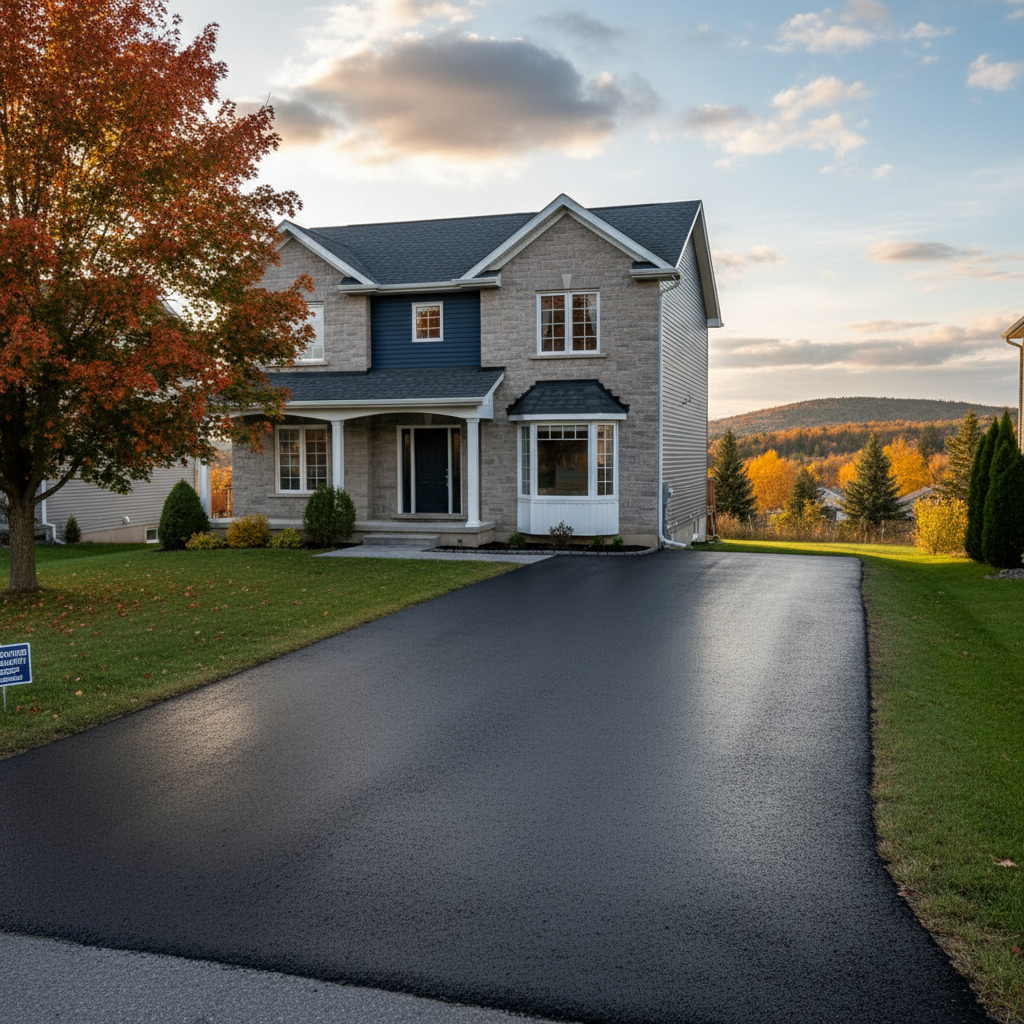
Driveway paving options and costs in University Endowment Lands
University Endowment Lands, British Columbia is a compact community where driveways are a daily convenience—so homeowners tend to focus on long-term performance, drainage, and a neat finish that fits the streetscape. With a population of 16,920 (Statistics Canada, 2021 Census), there’s steady demand for driveway work, especially around the older, established pockets of the area where many properties have mature trees and more constrained grading. In practice, most private driveways here serve single-detached homes, which makes driveway replacement and base repairs a common trigger for upgrades.
In the Lower Mainland–Southwest, pricing is shaped less by deep frost and more by intense rainfall, saturated soils, and freeze–thaw movement near the shallow frost line. Contractors still design for a frost depth assumption (roughly 18" for sensitive infrastructure) in exposed sections, so proper excavation, granular base thickness, and drainage details drive the cost more than the surface material alone. Work is also scheduled around shoulder-season storms; while the paving season is longer than in Northern BC, wet stretches can reduce production and tighten availability.
Where demand is especially strong is near dense residential streets closer to Wesbrook Mall and the University/Endowment Lands core, because lots often have established slopes and mature landscaping that require careful excavation planning. To help you compare apples to apples, use the table below as a realistic starting point for University Endowment Lands driveway projects based on typical Lower Mainland–Southwest build-ups.
| Material |
Lifespan |
Maintenance |
Best For |
Price per sq ft |
| Asphalt (new installation, proper base) |
15–25 years |
Seal every 3–5 years; patch as needed |
Best overall value when drainage and base are done right |
$12 – $20 |
| Asphalt (overlay on existing gravel base) |
10–18 years |
Seal every 3–5 years; more frequent patching if base is weak |
When the base is sound and excavation costs must be minimized |
$10 – $16 |
| Interlocking concrete pavers |
25–40 years |
Minimal; lift-and-replace individual stones |
Curb appeal and repairability for busy driveways |
$20 – $40 |
| Poured concrete (broom finish) |
20–30 years |
Light crack management; occasional patching |
Smooth, low-maintenance surface (when air-entrained and sealed) |
$18 – $35 |
| Exposed aggregate concrete |
20–30 years |
Reseal as recommended by finish system |
Premium look with good slip resistance |
$22 – $38 |
| Gravel / crushed stone (budget option) |
5–10 years |
Top up 1–2 times per year; regrade |
Short budget runway or low-traffic access |
$8 – $14 |
Prices are estimates only and vary by project scope, site access and material selection.
What affects the price of paving in University Endowment Lands
In University Endowment Lands and the wider Lower Mainland–Southwest, you’ll often see 30–50% quote differences for “the same” driveway size. The reason is that the surface price is only part of the build: excavation depth, base grading, drainage fixes, haul-away/disposal, and whether the contractor uses freeze–thaw appropriate asphalt or air-entrained concrete can swing the total dramatically. Labour availability can also tighten during dry windows, and when it rains hard, crews may compress schedules—sometimes raising effective labour and equipment costs.
Frost line depth and freeze–thaw cycles are decisive cost factors in coastal BC designs. Even though frost penetration is relatively shallow compared with Interior or Northern BC, repeated movement near that assumed frost line can push weak base layers. That means the granular base thickness and compaction matter. A driveway built with a proper 6" of compacted granular base and an asphalt wearing course (often around 2.5–3") is common when soils are stable; in weak or saturated spots, excavation and base depth increase, which nudges pricing toward the upper end of the asphalt band—think $12 – $20 per sq ft for full “do it right” installs. Drainage corrections can also add to the bill, especially where downspouts or slope runoff are feeding the driveway edge.
Concrete examples: (1) if you need new forms, thicker slab, or doweling at transitions because the existing grade is out, costs can move from the mid $18 – $35 band upward; (2) if your driveway area requires deeper removal due to soft subgrade, concrete can become more expensive than asphalt because of heavier excavation and more material. Housing age matters too—older lots often have marginal base conditions under decades-old surfacing, so “repair” quotes can be misleading if they don’t address drainage and subgrade.
| Price Factor |
Why It Matters |
Cost Impact |
| Driveway area in sq ft — the primary cost driver |
Material and labour scale with total surface area and lift thickness |
Usually the biggest swing factor; larger areas raise equipment time and production |
| Base depth required — frost line determines granular thickness |
Deeper excavation and thicker compacted base resist freeze–thaw movement and saturation |
Can add significant excavation, gravel supply, and compaction time |
| Grading and drainage work — slope or drainage corrections add cost |
Rainwater management prevents trapped water and base failure |
May require subdrains, swales, culverts, or regrading |
| Tear-out of existing surface — breaking and hauling concrete or old asphalt |
Removal exposes the true condition of subgrade/base |
Break-up, loader time, and disposal fees can materially increase the quote |
| Edge restraints and curbing — needed to prevent paver spread |
Edges hold shape under loads and water movement |
Extra materials and installation time; especially important on sloped sites |
| Sealing requirement — asphalt must be sealed after 6–12 months |
Sealing protects binder from UV and water infiltration |
Short-term add-on cost; often reduces long-term cracking risk |
| Site access — narrow or tight lots slow equipment movement |
Smaller pathways increase staging time and manual handling |
Higher labour hours; may require smaller equipment and more trips |
| Asphalt mix specifications — freeze-thaw-rated mix costs more |
Better mix design improves durability under local weather patterns |
Higher material cost, but typically better performance through wet winters |
Permits & regulations in British Columbia
In British Columbia, paving a private driveway within your own property usually does not require a building permit—especially when you’re simply resurfacing or replacing like-for-like on your lot. However, work that affects the municipal right-of-way can require approval. That includes building or changing a curb cut, altering the boulevard area, modifying nearby sidewalks/road interfaces, or changing storm drainage patterns in the public right-of-way. If your driveway project includes any stormwater tie-ins, catch basins, or drainage re-routing near the roadway, confirm the municipal requirements before excavation.
Some municipalities also enforce lot-grading rules that restrict how close hard surfaces can be to property lines and how drainage must be managed to avoid directing water onto neighbours’ property. In University Endowment Lands, where slopes and drainage pathways are common considerations, it’s worth confirming lot-grading and runoff expectations early—your contractor should be able to outline the drainage plan.
Step 1: call for utility locates before you dig (BC 1 Call). Step 2: ask the contractor whether the scope stays fully within your property line or triggers any right-of-way approvals. Step 3: verify licensing and coverage. In BC, confirm the contractor’s business licence/registration and provide a certificate of liability insurance naming you as additionally insured where applicable. Ensure they carry WSBC coverage (or provide clearance documentation showing their status). Step 4: request written proof—don’t rely on verbal assurances.
Asphalt vs pavers vs concrete for University Endowment Lands driveways
Choosing between asphalt, interlocking pavers, and concrete in University Endowment Lands comes down to how you want to manage drainage, maintenance time, and visual impact through the wet winters and busy homeowner schedules. Lower Mainland–Southwest conditions mean water is the enemy: intense rainfall saturates soils, and then freeze–thaw movement near the shallow frost line can lift weak edges or push fines upward. All three materials can perform well when the base and drainage are engineered properly, but they behave differently once they age.
Asphalt typically has the lowest upfront cost, and for many driveways it’s the practical choice—especially when the site is straightforward. It also suits routine winter maintenance where plows push back snow and sand is used; however, asphalt needs sealing every 3–5 years to limit water intrusion. Interlocking concrete pavers cost more up front, but they’re the most repairable: if a section settles or a utility repair happens, you can lift and replace the affected blocks without redoing the entire driveway. Poured concrete is often mid-range in price, but it is more susceptible to cracking from freeze–thaw if it’s not correctly air-entrained and finished, and if de-icing salts are used aggressively.
For base design, even with coastal BC having relatively shallow frost, contractor practice still assumes a frost depth order of ~18" for exposed applications. That’s why a properly compacted granular base and correct slope matter more than the surface label. Where the price difference is justified: if you’re replacing a driveway and expect future grade tweaks or you want “spot repair” capability, pavers can make sense despite a higher band like $20 – $40 per sq ft compared with asphalt at $12 – $20. If your priority is keeping the project simple and you’ll maintain sealing, asphalt usually offers the best value.
| Material |
Frost Resistance |
Curb Appeal |
Repair Method |
Lifespan |
Price Band |
| Asphalt (sealed regularly) |
Good when base is well-drained and mix is freeze–thaw rated |
Moderate (clean lines, dark finish) |
Cut-and-patch the affected area |
15–25 years |
$12 – $20 |
| Interlocking concrete pavers |
Very good with correct base and edge restraint |
High (colour and pattern options) |
Lift, adjust base, and replace individual units |
25–40 years |
$20 – $40 |
| Poured concrete (air-entrained) |
Good when air-entrained and properly cured; still prone to cracking if drainage is poor |
Moderate to high (finish choices) |
Patch and seal cracks; grind/reseal in some cases |
20–30 years |
$18 – $35 |
| Exposed aggregate concrete |
Good when properly cured and sealed |
Very high (texture and premium look) |
Patch by matching finish system; more labour to match texture |
20–30 years |
$22 – $38 |
| Permeable pavers (drainage grid) |
Excellent for water management when maintained (no clogging) |
High (modern drainage look) |
Replace grid segments/units if needed; service drainage layers |
25–35 years |
$28 – $50 |
| Chip seal / tar-and-chip |
Moderate; depends on binder and stone embedment |
Low to moderate (texture varies) |
Reapply surface; spot corrections |
8–15 years |
$10 – $18 |
How to choose a paving contractor in University Endowment Lands
Start by verifying the basics with clear documentation. In British Columbia, confirm the contractor’s business registration and request a current certificate of liability insurance. The certificate should show limits appropriate for residential paving risk and ideally include you as additionally insured for the job. For worker coverage, ask whether they’re registered with WSBC and request a clearance letter or documentation that shows their status (your contractor should provide this without pushback). If they can’t provide proof, treat it as a serious warning sign.
Next, get 2–3 itemised written quotes. You want a breakdown that separates labour, excavation, granular base materials, asphalt/paver/concrete supply, compaction, disposal/haul-away, and edge restraints or forms. A quote that’s a single lump sum with unclear scope is hard to compare and often leads to change orders later. Read exclusions carefully: is permit/utility coordination included, is disposal included, and are modifications to drainage part of the scope or “extras”?
Warranty matters too. Ask for workmanship warranty length and what it covers (settlement, surface raveling, cracking, separation at edges). Also ask whether manufacturer/product warranty is provided and if it’s transferable when you sell your home—contractors differ on transferability. Payment schedule should be conservative: never pay more than 10–15% upfront. Use a holdback until the job is complete and deficiencies are corrected. Finally, require a written timeline with a start date and an estimated completion window, especially important in University Endowment Lands where wet shoulder-season weather can tighten schedule availability.
- Provide proof of BC business registration and current contact details.
- Show certificate of liability insurance (and additionally insured if offered).
- Confirm WSBC coverage and request clearance documentation.
- Use an itemised quote: excavation, base, surfacing, compaction, disposal.
- Ask how they handle drainage and grade correction—show plan details.
- Confirm the base spec (thickness and compaction method) before pricing.
- Check whether edge restraints/curbing are included for pavers.
- For asphalt, confirm sealing schedule (typically after 6–12 months).
- Ask about asphalt mix design meeting local freeze–thaw expectations.
- Verify warranty terms in writing (workmanship and product, if any).
- Keep payment conservative (10–15% max upfront) and hold back on completion.
- Get a written start date, completion target, and weather contingency approach.
Red flags to watch for in University Endowment Lands: they refuse to show base compaction details, they quote asphalt without discussing drainage or base thickness, they won’t provide insurance/WSBC documentation, they demand large upfront payments, or they offer only a vague “we’ll make it last” warranty without written scope and coverage.
Frequently asked questions — paving in University Endowment Lands
How deep should the base be for University Endowment Lands's frost?
In University Endowment Lands, you plan the driveway for the Lower Mainland–Southwest freeze–thaw pattern: even though frost penetration is relatively shallow compared with Interior or Northern BC, movement near the shallow frost line still matters for exposed edges and saturated soils. Many residential installs start with about 6" of compacted granular base and then an asphalt wearing course (often 2.5–3") or the proper bedding layer plus pavers. If your site has clay-heavy pockets or water tends to collect, excavation may need to go deeper and increase base thickness. The key is that base thickness must be matched to the subgrade condition and drainage plan, not guessed from the driveway type alone. A well-prepared base is typically why “full install” asphalt quotes land near the $12 – $20 per sq ft band.
How often should I seal my asphalt driveway?
For asphalt in British Columbia (including University Endowment Lands), sealing is typically done after the pavement has had time to cure and oxidize—often around 6–12 months after installation—then repeated based on exposure and traffic. In real homeowner terms, many driveways need sealing every 3–5 years. If your driveway gets frequent ploughing, sanding, and direct rainfall runs across the surface, sealing helps limit water infiltration and slows raveling. If you skip sealing, you may see faster surface aging and more patching as binder loss allows moisture into the pavement structure. When you compare quotes, ask whether sealing is included as a separate line item or if it’s something you should budget later. Repair/seal work in the local market often sits around the $2 – $6 per sq ft range, depending on what’s being done.
Why does my driveway crack and heave in winter?
Cracking and heaving in the Lower Mainland–Southwest usually come from water and weak layers, not from extreme frost like you’d see far inland. During heavy rain, if drainage is poor or the slope directs runoff into the driveway edge, the base can saturate. When the temperature swings around that shallow frost zone, freeze–thaw cycles can lift fine particles and create voids—leading to heaving, then cracking when loads hit those disturbed areas. Common triggers include inadequate granular base thickness, poor compaction, missing or ineffective edge restraints (especially with pavers), and no clear fall away from the house. If the driveway is older, the subgrade may also have clay migration. The fix is usually not just surface patching; it often requires correcting drainage and rebuilding the base to stop the cycle from repeating.
Do I need a permit to pave my driveway in British Columbia?
In most cases, paving a private driveway within your own property in British Columbia does not require a building permit, particularly when you’re replacing like-for-like. However, approvals can be needed when work affects the municipal right-of-way—such as new or modified curb cuts, changes to boulevard areas, or storm drainage changes near the road. Some municipalities also regulate lot grading (how water is directed and how close surfaces can be to property lines). For University Endowment Lands homeowners, the practical step is to confirm whether any portion of your scope touches drainage infrastructure or right-of-way interfaces. Also, always ensure proper utility locates before excavation (BC 1 Call). A reputable contractor will tell you up front whether permits/approvals are likely and include utility coordination steps in the plan.
How long before I can drive on new asphalt?
Typically, you can drive on new asphalt the same day or within about 24 hours, depending on temperature, mix type, and weather conditions. In British Columbia’s variable shoulder-season, contractors adjust the schedule so the surface has cooled and set properly before vehicles cross it. While driving may be allowed quickly, avoid turning or heavy loads that could disturb the mat for a longer period. If the job includes full-depth removal and base reconstruction, allow extra time for any compaction/settling checks and curing. Ask your contractor for a specific “open to traffic” window in writing for your driveway. If you’re planning multiple trades (landscaping, drainage modifications, or curb work), coordinate dates so the asphalt isn’t stressed before it’s ready. Sealing usually comes later—often after 6–12 months—so it’s important not to rush that step.
What causes potholes and how are they repaired?
Potholes form when water gets into a weak pavement area, softens the underlying base, and then traffic removes material. In University Endowment Lands, this is often linked to saturated soils and localized drainage problems: if water can’t drain away, freeze–thaw movement can widen existing cracks. Once the surface loses structural support, small failures grow into potholes. Repair usually starts with locating the cause—poor drainage or failed base—then removing the damaged asphalt to sound material, rebuilding the base as needed, and compaction in lifts. The contractor then replaces the asphalt with appropriate thickness and finish. Avoid “surface-only” patching if the base is undermined, because the pothole often returns. If you catch issues early, repairs are usually far cheaper than waiting until the damaged zone expands across a lane.