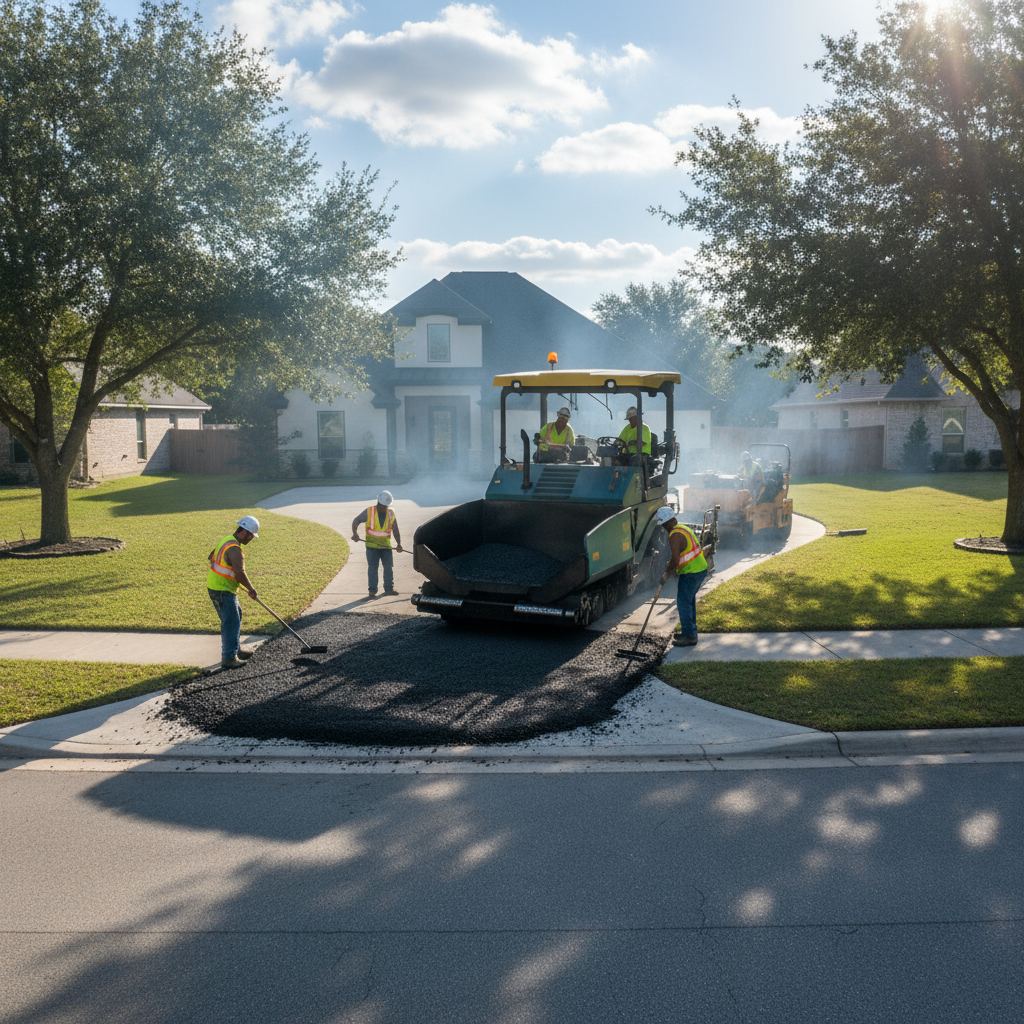
Driveway paving options and costs in Port Hardy
Port Hardy homeowners have a few solid driveway paving options, and the right choice usually comes down to how your site handles moisture and freeze-thaw. In Port Hardy, most private driveways serve single-detached homes (56.4% of dwellings), and owner-occupants make up 67.4% of households (Statistics Canada, 2021 Census). That matters because driveways are frequently “multi-use” access points—garbage pickup, deliveries, and plowing—so the surface and base need to last, not just look good for a season.
On Vancouver Island and the Coast, our climate is mild compared to interior BC, but frost is still shallow and repeat freeze-thaw cycles still happen, especially when drainage is poor or the driveway sits low relative to the road. That’s why excavation, a compacted granular base, and water management at transitions are usually where the best value is created. Costs can also run higher for Port Hardy because the paving season is tighter when shoulder months are cool and wet, and trucking aggregate/asphalt from Island markets adds overhead. Labour availability can tighten during peak conditions around town and along the Highway 19 corridor.
If you’re in an area with frequent driveway tie-ins—common along the main approach corridors around Campbell Way and the harbour-side neighbourhoods—expect contractors to pay extra attention to access and slopes. With that in mind, here’s a practical comparison of common driveway materials and the typical price ranges you’ll see for Port Hardy projects, which we then translate into your quote breakdown.
| Material |
Lifespan |
Maintenance |
Best For |
Price per sq ft |
| Asphalt (new installation, proper base) |
15–25 years |
Seal coat at year 6–10, then every 3–5 years |
Good value with a smooth, quiet surface |
$10 – $20 |
| Asphalt (overlay on existing gravel base) |
10–18 years |
Seal earlier if surface oxidizes; patch as needed |
When the base is already stable and excavation is limited |
$12 – $22 |
| Interlocking concrete pavers |
25–40 years |
Weed control and occasional panel re-laying |
Curb appeal and repairs without full replacement |
$25 – $45 |
| Poured concrete (broom finish) |
25–35 years |
Crack monitoring; reseal if recommended |
Low-maintenance, strong surface for plowing |
$18 – $35 |
| Exposed aggregate concrete |
25–35 years |
Sealer as advised by finish; spot repair |
Slip resistance and decorative look |
$20 – $38 |
| Gravel / crushed stone (budget option) |
3–10 years |
Top-ups, grading, weed control |
Short-term access while you plan a longer-term rebuild |
$3 – $8 |
Prices are estimates only and vary by project scope, site access and material selection.
What affects the price of paving in Port Hardy
You can get two very different quotes for what looks like the “same” driveway in Port Hardy, and across Vancouver Island and Coast locations it’s not unusual to see 30–50% swings once the scope is actually itemized. Even within British Columbia, the reasons tend to be consistent: how much excavation is required, how drainage is corrected, whether the crew has to work under tight seasonal windows, and what mix/specifications are needed to handle freeze-thaw. In Port Hardy’s market—where the population is 3,902 and there are 1,210 homeowner households (Statistics Canada, 2021 Census)—demand is concentrated in workable months, so scheduling and standby time can affect labour pricing.
Frost and freeze-thaw cycles are decisive cost factors for coastal BC. A deeper frost line in colder regions generally means thicker compacted granular bases (6–12 inches), but in coastal BC we often target thinner bases (commonly 4–6 inches) because the frost line is relatively shallow. However, “shallow” doesn’t mean “no problem”: localized freezing around edges, water trapped under the driveway, and weak base areas can still lead to heaving and cracking. That’s why quotes rise when we have to rebuild base thickness or improve drainage rather than simply resurface.
Concrete examples in Port Hardy: an older home built before 1981 (71.3% of homes) often has older subgrade and drainage patterns that require additional undercut and re-compaction before poured or exposed aggregate concrete goes in. Conversely, if your existing base is already engineered and well-drained, overlay-type asphalt work can stay closer to the lower end of the $10 – $20 asphalt band. If we find poor soil or weeping water at the tie-in to the street, your project can shift toward the higher asphalt costs within the $12 – $22 ranges once base remediation is included.
| Price Factor |
Why It Matters |
Cost Impact |
| Driveway area in sq ft |
Most materials and production time scale directly with square footage |
Usually the biggest driver; can move total cost the most |
| Base depth required |
Freeze-thaw control depends on a properly compacted granular thickness |
Adding inches of base and compaction typically increases cost significantly |
| Grading and drainage work |
Correct slope and water routing prevent soft spots and future heave |
Cost rises when drainage rock, pipe, or regrading is needed |
| Tear-out of existing surface |
Breaking asphalt/concrete and hauling disposal is labour- and equipment-heavy |
Can add a substantial one-time cost before paving begins |
| Edge restraints and curbing |
Edges keep pavers/aggregates from spreading and washing out |
Moderate to high impact on paver and interlock projects |
| Sealing requirement |
Asphalt needs sealing to slow oxidation and water penetration |
Typically adds an additional line item after initial installation |
| Site access |
Narrow lots, steep grades, or limited staging slow equipment movement |
Higher labour time and sometimes smaller batch logistics |
| Asphalt mix specifications |
Freeze-thaw-rated mixes and proper thickness reduce early cracking |
More specialized mix and engineering can raise asphalt per-square-foot pricing |
Permits & regulations in British Columbia
In British Columbia, paving a private driveway within your own property usually doesn’t require a building permit. Where permits and approvals commonly come into play is when you work in the municipal right-of-way—think changes that affect the road edge, drainage pattern, or access geometry. That typically includes new or modified curb cuts, altering the boulevard, changing roadside ditching, or any work that impacts storm drainage. Some municipalities also have lot-grading expectations, which can restrict how close a hard surface is to property lines and how runoff must be directed.
Before excavation, you should always call for utility locates. In BC, that’s done through BC 1 Call (the call-before-you-dig service), and it’s critical whether you’re replacing asphalt or lifting pavers. Utility checks are not just good practice—they’re necessary to avoid damage and expensive delays.
To verify your contractor in Port Hardy, ask for (1) proof of British Columbia contractor licensing where applicable for the scope, (2) liability insurance, and (3) proof of workers’ compensation coverage (commonly WSIB/WCB-style coverage documents). You can check licensing through the province’s online registry or the applicable trade registry for the contractor’s listed business name, then request a certificate of insurance and a coverage clearance letter (or equivalent proof) for your project. Also confirm whether they pull any required municipal approvals (if your driveway tie-in touches the boulevard/right-of-way), and get the responsibility in writing.
Asphalt vs pavers vs concrete for Port Hardy driveways
For Port Hardy driveways, asphalt usually wins on upfront cost and speed, interlocking concrete pavers lead on curb appeal and “repair without the whole replacement” convenience, and poured concrete sits in the middle but must be built correctly to resist freeze-thaw movement. In our Vancouver Island and Coast climate, frost is relatively shallow, yet localized freeze-thaw cycles still stress weak edges and poorly drained bases. Asphalt at the lowest upfront end is typically in the $10 – $20 band when proper base prep is included; the trade-off is that sealing is usually needed every 3–5 years to keep water out and slow oxidation.
Interlocking pavers tend to be the highest upfront option (commonly $25 – $45), but they handle winter maintenance better in a practical way: if a corner heaves or a utility patch is needed later, sections can be lifted and rebuilt. Poured concrete (often $18 – $35) needs correct base compaction and air-entrainment to reduce freeze-thaw damage from trapped water. It’s also important to avoid de-icing habits that grind grit into the surface; salt and repeated traffic can accelerate surface wear when concrete isn’t properly finished and maintained.
Where drainage design matters most in Port Hardy is transitions—at the street tie-in, at any low spots, and around driveway edges where water can pond. A properly built asphalt driveway with a sealed surface can hold up very well with plowing, but the long-term best value is the base and drainage engineering, not just the surface layer.
Example: if your driveway is 400 sq ft and the base is straightforward, asphalt could land around the lower band (roughly $10 – $20 per sq ft), while pavers might be closer to $25 – $45 per sq ft. The price difference is justified when you want maximum curb appeal and easier spot repairs for long-term freeze-thaw movement at edges.
| Material |
Frost Resistance |
Curb Appeal |
Repair Method |
Lifespan |
Price Band |
| Asphalt (sealed regularly) |
Good when base/drainage are engineered; relies on sealing |
Moderate (clean, uniform look) |
Patch and compact; seal after repairs |
15–25 years |
$10 – $20 |
| Interlocking concrete pavers |
Very good with proper edging restraints and base leveling |
High (designer colours/patterns) |
Lift and relay affected sections |
25–40 years |
$25 – $45 |
| Poured concrete (air-entrained) |
Good when air-entrained and properly finished; control joints matter |
Moderate to high |
Crack repair/seal; localized patching |
25–35 years |
$18 – $35 |
| Exposed aggregate concrete |
Good with correct mix and drainage; surface texture helps traction |
Very high (decorative finish) |
Spot repair and patch; reseal to match finish |
25–35 years |
$20 – $38 |
| Permeable pavers (drainage grid) |
Excellent for water management when subbase is built correctly |
High (architectural look) |
Lift/replace affected units; maintain openings |
25–35 years |
$35 – $55 |
| Chip seal / tar-and-chip |
Moderate; can perform well if maintained and properly bedded |
Low to moderate |
Spot rejuvenation; re-chip when needed |
8–15 years |
$8 – $15 |
How to choose a paving contractor in Port Hardy
Choosing a paving contractor in Port Hardy is mostly about confirming they can actually deliver the base/drainage quality your driveway needs in a freeze-thaw coastal climate. Start by verifying British Columbia coverage and accountability: ask for proof of liability insurance and workers’ compensation coverage (WSIB/WCB-style documentation, as applicable for the business). For licensing, check the contractor’s name against the relevant online registry for their trade and business details—then match that with the certificate name you receive. If something doesn’t match (business name, address, or coverage dates), that’s a pause-and-clarify moment.
Next, get 2–3 itemised written quotes (not just a lump sum). You want separate line items for excavation/haul, base material and compaction, any drainage correction, the asphalt/paver/concrete supply, and finishing/sealing. Confirm what’s included for disposal (old asphalt/concrete haul to an approved site), and whether permit/approval tasks—like right-of-way approvals—are included if your driveway tie-in affects the municipal boulevard/storm drainage.
Warranty matters in paving, because “surface failures” often come from base problems. Ask for the workmanship warranty length, whether product/manufacturer warranties apply (and what they cover), and whether warranties are transferable if you sell the home. For payment, never pay more than 10–15% upfront; use progress payments tied to measurable milestones (base compaction proof, rough grading, surface completion). Get a start date and completion estimate in writing so scheduling changes don’t become your cost.
- Ask for a sample scope: base depth, compaction method, and drainage corrections.
- Verify liability insurance is current and named for your project/address.
- Request proof of workers’ compensation coverage (WSIB/WCB-style documentation).
- Confirm contractor licensing/registration details through the proper BC online registry.
- Require itemised labour vs materials breakdown (excavation, base, surface, finishing).
- Clarify what’s excluded: permits, utility locating, disposal, and any patching beyond scope.
- Ensure edge restraints/curbs are included if pavers are proposed (to prevent spread).
- For asphalt, confirm sealing expectations (typically after 6–12 months) and who applies it.
- Ask for joint/control cut plan for concrete (spacing and where it’s used).
- Confirm base compaction targets and how the contractor documents compaction on site.
- Get the warranty in writing, including workmanship start/end dates.
- Use a payment schedule that holds back until completion and cleanup are verified.
Red flags in Port Hardy include: quotes that skip base depth and drainage details, “cheap” asphalt pricing without a sealing plan, no proof of insurance/coverage, a warranty that’s only verbal, and contractors who won’t provide an itemised written scope (especially around tear-out/disposal and right-of-way tie-ins).
Frequently asked questions — paving in Port Hardy
How do I maintain my driveway through Port Hardy winters?
In Port Hardy, the goal is to manage water and avoid premature wear during freeze-thaw cycles. Keep the driveway draining properly—if you notice ponding after rain, ask your contractor to inspect the slope and any drainage rock or edge areas. During winter, plowing is unavoidable, but use sharp guidance so the blade doesn’t gouge edges and corners. If you use de-icing, keep it reasonable; salt and abrasive sand can accelerate surface wear, especially on concrete and exposed aggregate. For asphalt, consistent sealing (typically after initial curing, then every 3–5 years) helps slow oxidation and water penetration. If you see small cracks widening after freeze periods, patching early is usually cheaper than waiting for full repairs. (Statistics Canada, 2021 Census)
Is it worth sealing a new driveway right away in Port Hardy?
Usually, you shouldn’t seal “right away” on a fresh asphalt driveway. Asphalt needs time to cure so the surface can dry and bind properly; sealing too early can trap moisture and contribute to premature failure. In practice on Vancouver Island, we generally plan sealing after the driveway has had time to settle and cure—often within a 6–12 month window—then follow a routine of resealing every 3–5 years depending on traffic and surface condition. If your asphalt is installed in a project scope that already places you in the $10 – $20 per sq ft band, sealing is still typically one of the best protection steps you can control for long-term performance. Ask your contractor to include sealing timing in the written plan so you’re not guessing in your first winter.
What is a chip seal driveway and is it suited to Port Hardy?
Chip seal (also called tar-and-chip) is a spray-applied asphalt binder followed by aggregate chips rolled into the surface. It can be a cost-effective option for areas where you want faster installation and a more textured, quieter surface than bare gravel. In Port Hardy’s coastal freeze-thaw climate, chip seal can work when the base is well-prepared and the surface is maintained, but it generally isn’t as smooth as asphalt paving. It’s also less tolerant of heavy turning loads at driveway entrances if edge drainage isn’t managed. If you’re comparing prices, chip seal is often below full asphalt paving, such as the lower end near $8 – $15 in typical bands, but you should expect more frequent rejuvenation than with a properly installed asphalt surface.
How much does driveway crack repair cost in Port Hardy?
Crack repair cost in Port Hardy depends on whether it’s a simple crack seal or a “fix the base” situation. If the crack is narrow and localized, sealing/patching is usually a smaller, targeted task. If you have alligator cracking, edge heave, or drainage-related soft spots, the contractor may need partial tear-out and rebuild before sealing—those jobs cost more because the base must be corrected. As a rough guide, sealing and repair commonly falls in the $1 – $4 band per sq ft for light sealing/repair scopes, but full crack remediation after freeze-thaw movement can require more labour and disposal. The best way to price it accurately is to ask for an on-site assessment and a line-item scope that clarifies whether it’s seal-only or rebuild plus seal. (Statistics Canada, 2021 Census)
What base thickness do I need for pavers in Port Hardy?
For pavers in Port Hardy, base thickness is driven by how stable your subgrade is and how water drains off the driveway. In coastal BC, the frost line is relatively shallow, so we often don’t need the deep granular bases you see in colder zones, but you still need enough thickness and proper compaction to prevent movement from freeze-thaw cycles at edges and low spots. A common approach is to excavate to remove soft subgrade, install a compacted road base layer, then add bedding sand for the paver setting. The exact inches depend on soil condition, driveway slope, and whether you’re correcting drainage. The most accurate answer comes from your contractor’s excavation inspection and the quote’s written base-depth specification. If you’re comparing options, paver projects often sit in the $25 – $45 per sq ft range, and the base spec is a big reason why.
How do I get the most accurate paving quote in Port Hardy?
To get the most accurate quote in Port Hardy, start by giving contractors clear site details: driveway dimensions, photos of existing surface condition (including any ponding), and whether you have utility access or planned work. Then insist on itemised estimates—ask for separate line items for excavation/haul, base materials and compaction, drainage corrections, edge restraints, surface installation, finishing, and sealing (for asphalt). Also confirm whether disposal is included and whether any municipal approvals are required if the tie-in affects the boulevard/right-of-way or storm drainage. Timing matters too: the paving season can be shorter when shoulder months are cooler and wetter, so ask for a realistic start date and weather contingencies. Finally, verify contractor coverage and licensing in BC, and keep a small holdback until completion so the final details (edges, compaction, cleanup) match the scope.