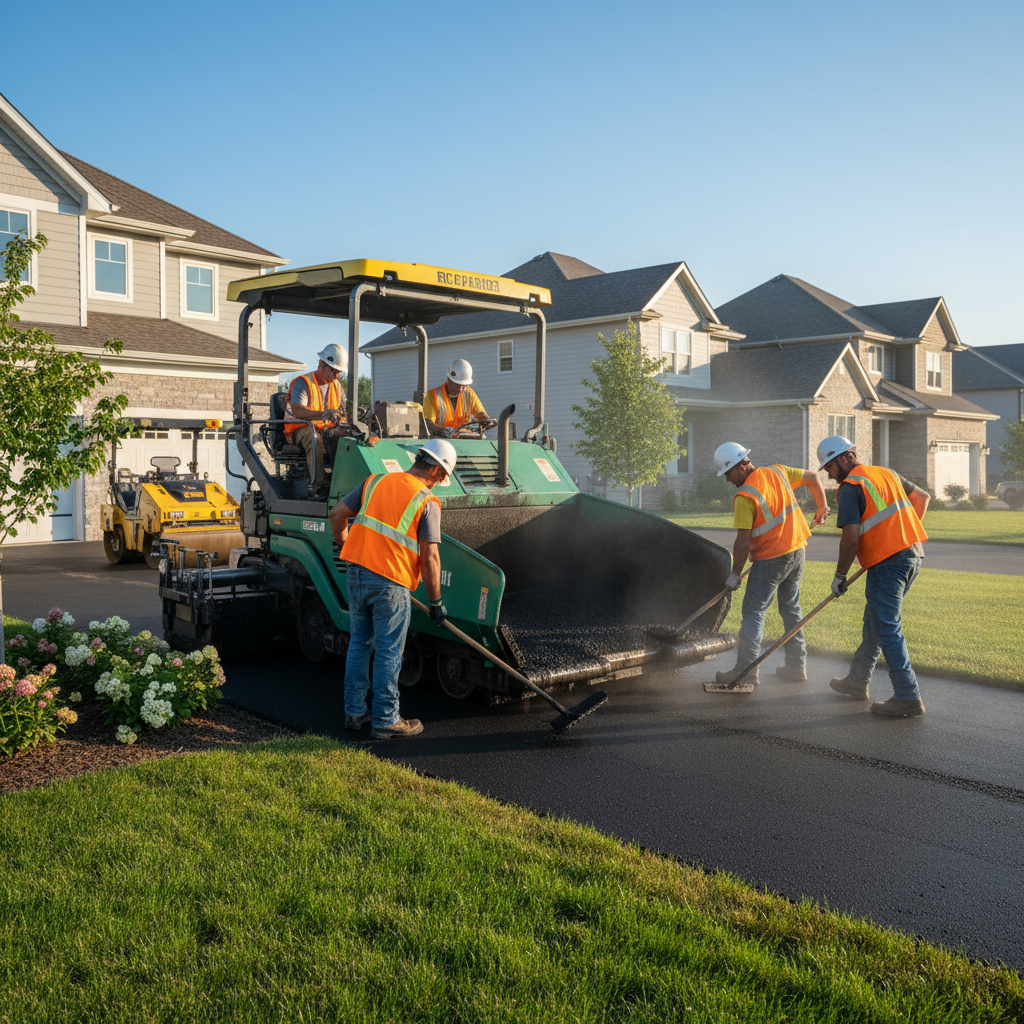
Driveway paving options and costs in Wetaskiwin
Wetaskiwin homeowners have several solid driveway paving options, but the “right” choice usually comes down to your base preparation, drainage, and how you expect the surface to handle Alberta’s freeze-thaw winters. With 12,594 residents and a housing mix where single-detached homes make up 58.2% of dwellings (Statistics Canada, 2021 Census), most driveways here serve detached properties—so durable frost protection is a big part of every quote. That matters even more because 55.7% of homes were built before 1981 (Statistics Canada, 2021 Census), which often means older driveways with thinner, compacted bases and drainage that no longer sheds water well.
In the Edmonton economic region, paving costs are driven less by the top layer and more by frost protection and drainage design. Edmonton-area bids commonly reflect deeper frost risk (often around 1.5 metres or more in local guidance) and the reality that freeze-thaw cycling will punish any weak or wet spot in the granular base. Contractors also schedule around a shorter paving season; hot-mix asphalt requires air temperatures above about 10°C, so spring work windows can be tight.
For Wetaskiwin specifically, this trade is especially active around older, established corridors like the downtown core and neighbourhoods near the St. Mary’s area, where access is tighter and many lots have aging asphalt or patched surfaces. Once you choose your material, the next step is understanding typical cost ranges—see the comparison table below.
| Material |
Lifespan |
Maintenance |
Best For |
Price per sq ft |
Price Range |
| Asphalt (new installation, proper base) |
15–25 years |
Sealcoat every 3–5 years |
Best value with good frost-protected base and drainage |
$3.50–$6.50 |
$7,000–$15,000 |
| Asphalt (overlay on existing gravel base) |
10–18 years |
Sealcoat every 3–5 years; monitor weak spots |
When base is solid and you’re improving grade |
$4.25–$7.25 |
$8,500–$16,500 |
| Interlocking concrete pavers |
25–40 years |
Replace individual stones; re-sand joints as needed |
Curb appeal, easier localized repairs, flexible to re-grade |
$8.00–$14.00 |
$12,000–$28,000 |
| Poured concrete (broom finish) |
20–30 years |
Minimal; seal optionally every 4–7 years |
Low-maintenance slab with proper base and control joints |
$6.00–$11.00 |
$9,000–$22,000 |
| Exposed aggregate concrete |
25–35 years |
Seal optionally for stain resistance |
Better traction and premium look without paver joints |
$7.00–$13.00 |
$11,500–$25,000 |
| Gravel / crushed stone (budget option) |
3–7 years |
Re-grade and top up; weed control |
Temporary solution or very low budget |
$1.75–$3.75 |
$3,500–$8,000 |
Prices are estimates only and vary by project scope, site access and material selection.
What affects the price of paving in Wetaskiwin
In Wetaskiwin, the same “average” driveway can come in anywhere from roughly 30–50% apart between bids, even when the top surface looks identical. The reason is that Edmonton-area pricing is heavily shaped by frost protection and drainage design: two driveways with the same square footage can still require different excavation depth, different base gradation, and different drainage fixes. Labour availability also matters—when crews are booked close to the workable spring window, mobilization costs and scheduling premiums can rise. Asphalt mix design is another variable; freeze-thaw-rated mixes cost more than generic blends and are often specified to reduce winter cracking and raveling.
Concrete and paver projects vary for similar reasons. If your existing driveway is already failing, contractors may have to remove old asphalt or concrete, haul debris, then rebuild the base to handle deeper frost and longer freeze-thaw cycles common in central Alberta. In practical terms, that can mean thicker compacted granular layers and added base preparation work. If your current base is “pumping” or holding water, the job shifts from “surface repair” to “structural rehab,” which pushes you toward higher price bands—often closer to asphalt at the upper end of $7,000–$15,000 or pavers toward the $12,000–$28,000 range.
In Wetaskiwin, two local examples I see frequently that change cost: (1) lots with poor downhill drainage require ditching or re-slope work before paving, and that added earthworks time can add several thousand dollars; (2) older homes built before 1981 often have curb and apron sections that don’t match current drainage expectations, so tie-ins and edge detailing become more labour-intensive. When the driveway is simple and access is good, costs can sit closer to the lower ends of the bands; when the base must be rebuilt, the higher end is where bids tend to land.
| Price Factor |
Why It Matters |
Cost Impact |
| Driveway area in sq ft |
Materials and paving labour scale directly with square footage |
Major driver; typically 40–60% of total cost |
| Base depth required |
Frost protection needs increase granular thickness to resist heaving and cracking |
Major; each extra lift can add substantial excavation/stone/compaction time |
| Grading and drainage work |
Proper slope and subsurface drainage keep water out of the base |
Moderate to major; can add several thousand dollars if drainage must be corrected |
| Tear-out of existing surface |
Breaking, removal, and hauling affect labour and disposal costs |
Moderate; higher for thick concrete or reinforced slabs |
| Edge restraints and curbing |
Prevents paver spread and asphalt edge breakdown |
Moderate; especially needed on wider driveways and near sidewalks |
| Sealing requirement |
Asphalt needs sealcoat to protect from winter moisture and oxidation |
Moderate; usually added to long-term budgeting |
| Site access |
Narrow lots slow equipment movement and increase manual work |
Moderate; can change crew efficiency and haul logistics |
| Asphalt mix specifications |
Freeze-thaw-rated mixes better resist cracking and raveling |
Moderate; improves performance but raises material cost |
Permits & regulations in Alberta
In Alberta, paving a private driveway on your own property usually does not require a building permit when you’re staying within your lot and not altering drainage to the point that it affects public systems. In practice, most Wetaskiwin homeowners can have new asphalt or concrete installed without permits when the work is confined to the driveway footprint and your grading remains compliant. However, permit requirements can come into play when the work touches the municipal right-of-way or changes how stormwater and access are handled.
Work that typically does require municipal approval (and sometimes a permit) includes: any new or modified curb cuts, changes to boulevard areas, alterations to municipal storm drainage, and modifications near curb/sidewalk where the project intersects public property. Also check if your lot-grading situation triggers any requirements; some municipalities restrict how close a hard surface and grading features can be to property lines or how runoff is directed.
Step-by-step for Wetaskiwin homeowners: (1) confirm the contractor pulls necessary approvals before excavation if the job is near the curb/sidewalk or includes drainage ties; (2) call Alberta One-Call for utility locates before the first skid-steer move; (3) verify the contractor’s Alberta business licence if applicable, and ensure they provide liability insurance and workers’ compensation coverage (WSIB/WCB) for their crews; (4) ask for a current certificate of insurance and a clearance letter where required by project standards; (5) keep a copy of your signed scope showing excavation, base construction, surface, and disposal responsibilities.
Asphalt vs pavers vs concrete for Wetaskiwin driveways
For Wetaskiwin’s freeze-thaw winters, the three most common driveway materials behave differently—not just in appearance, but in how they handle trapped moisture and winter maintenance. Asphalt typically has the lowest upfront cost and, with the right frost-protected base, performs well; however, it needs sealcoat every 3–5 years to slow water penetration that leads to winter raveling and edge breakdown. Interlocking concrete pavers cost more up front, but they’re highly repairable: if a section settles, contractors can lift and re-level that area without replacing the whole driveway. Poured concrete sits in the middle on price and offers a smooth, modern look, but it can crack if it isn’t properly designed with the right base, air-entrainment, and control joints—freeze-thaw cycles plus de-icing exposure are the main stressors when the slab is too rigid or water gets in under it.
In Edmonton-area conditions, you should plan for frost protection with a well-graded granular base and good drainage regardless of material. Where asphalt and concrete can both crack if the base is wet or uneven, pavers often “forgive” localized movement because the system is segmented. For winter maintenance, plowing and salty meltwater are harder on any surface that lets water sit in joints or edges; pavers generally manage this better when joint sand and edge restraints are done correctly.
Here’s where price differences can be justified: if asphalt is near $7,000–$15,000 and pavers are near $12,000–$28,000, pavers start making sense when you want curb appeal, anticipate future repairs (or utility access), or have a driveway shape that’s easier to re-grade later without full replacement. If your driveway is straightforward and your base/drainage are right, asphalt can be the most cost-effective long-term value.
| Material |
Frost Resistance |
Curb Appeal |
Repair Method |
Lifespan |
Price Band |
| Asphalt (sealed regularly) |
Good with proper base and drainage; sensitive to trapped moisture |
Moderate |
Patch and re-level localized areas; seal after repairs |
15–25 years |
$7,000–$15,000 |
| Interlocking concrete pavers |
Very good; segmented system tolerates minor movement |
High |
Lift/replace affected units; re-sand and compact |
25–40 years |
$12,000–$28,000 |
| Poured concrete (air-entrained) |
Good when base is engineered; requires control joints |
Moderate to high |
Concrete patching/spall repair; occasionally partial replacement |
20–30 years |
$9,000–$22,000 |
| Exposed aggregate concrete |
Good with correct mix and base; offers traction |
High |
Localized patching; repairs can be more visible than standard concrete |
25–35 years |
$11,500–$25,000 |
| Permeable pavers (drainage grid) |
Very good when installed with correct underdrain and base |
High |
Localized replacement of units; service underdrain if clogged |
25–35 years |
$14,000–$30,000 |
| Chip seal / tar-and-chip |
Fair to good; relies on base stability and proper winter maintenance |
Low to moderate |
Spot repairs and re-sealing; surface can wear unevenly |
8–15 years |
$6,000–$13,000 |
How to choose a paving contractor in Wetaskiwin
Choosing the right paving contractor in Wetaskiwin starts with verifying the basics and then locking down the details in writing. In Alberta, confirm the contractor’s eligibility and coverage before excavation: (1) Alberta business registration/licence information if provided by the contractor or available through provincial resources; (2) liability insurance—ask for a certificate of insurance that lists your address/project as applicable where required by contract; (3) WSIB/WCB coverage for their workers (and subcontractors). If they can’t produce current certificates and coverage documentation on request, that’s a serious warning sign.
Next, request 2–3 itemised written quotes instead of one lump sum. Look for separate line items for excavation, granular base depth and compaction, drainage/grading corrections, any tear-out and disposal, base stabilization (if listed), and the asphalt/paver/concrete supply and installation. Ask whether permits/approvals (if needed for right-of-way work) are included, and whether disposal is included in the price or billed separately.
Warranty matters in Wetaskiwin’s winter conditions. Ask for the workmanship warranty length and what it covers (surface cracking, edge breakdown, base settlement, drainage issues). Clarify product/manufacturer warranty terms and whether it’s transferable to you. For payment, avoid large upfront payments; a common safe approach is to keep upfront to around 10–15% and hold back a portion until the full scope is complete and reviewed. Also insist on a written start date and a realistic completion estimate, since spring schedules can shift quickly with freeze-thaw conditions.
- Ask for their latest proof of liability insurance and confirm effective dates.
- Confirm WSIB/WCB coverage for their crew and any subcontractors in the quote.
- Get an itemised scope: base depth, material type, and compaction method.
- Require drainage details in the written scope (slope, tie-ins, and water management).
- Clarify what’s included in tear-out and disposal (haul distance and fees).
- Confirm edge restraint/curbing details for pavers and asphalt boundaries.
- For asphalt, ensure the quote includes sealcoat timing (typically after curing, not immediately).
- Ask how they handle existing unstable subgrade (remove/replace vs patch).
- Verify equipment access plans for your lot to avoid delays.
- Check that they provide site protection measures for landscaping and utilities.
- Review warranty terms in plain language and get it in writing.
- Agree on payment milestones tied to inspections and completion of each stage.
Red flags we see in Wetaskiwin: vague “lifetime” claims without workmanship terms, a quote that ignores base depth and drainage, refusal to provide insurance/WSIB documentation, no written disposal/haul plan for tear-out, and starting work in tight windows without confirming curing/weather requirements (especially for concrete and asphalt).
Frequently asked questions — paving in Wetaskiwin
How deep should the base be for Wetaskiwin's frost?
In Wetaskiwin, the frost-protection depth isn’t a single number because it depends on soil conditions and how water behaves under the driveway, but the key is that central Alberta typically needs more granular thickness than milder climates. Edmonton-area guidance often reaches about 1.5 metres or more for frost risk, so contractors usually build a well-graded, compacted base with enough depth to prevent heaving and cracking. If your subgrade is wet, soft, or pumping, expect extra excavation and replacement rather than “just paving over it.” For older lots (many homes here are decades old), the existing base may be too thin or contaminated with organics, which raises the required rebuild depth and cost.
How often should I seal my asphalt driveway?
For most asphalt driveways in Wetaskiwin, sealcoat is typically done every 3–5 years after the asphalt has fully cured. Sealing isn’t just cosmetic—it’s how you slow water infiltration that can saturate the base and contribute to winter freeze-thaw damage. If your driveway is heavily used or receives a lot of melting water from plowing, you may lean toward the shorter end of that range. Many homeowners budget sealing as part of ongoing maintenance; pricing for sealing and repairs is commonly in the $600–$3,500 band depending on driveway size and condition.
Why does my driveway crack and heave in winter?
Winter cracking and heaving in Wetaskiwin usually comes from one of two root causes: water and weakness. When water gets into the base (from poor slope, missing drainage, or surface cracks), it freezes and expands, pushing upward (heave). Then, when thaw happens, the base can lose support and lead to cracking or settlement. Freeze-thaw cycling is especially hard on drives where the base was under-built or not compacted properly. Another common trigger in older driveways is inadequate edge restraint, which lets the edges break down first, creating pathways for water. If you see repeated “spot” failures, it’s often a localized subgrade problem—not just surface wear.
Do I need a permit to pave my driveway in Alberta?
Usually, paving a driveway on your own property within Wetaskiwin does not require a building permit, as long as you’re not changing drainage to affect public systems and you’re staying within your lot limits. Where approvals can be required is when the work involves the municipal right-of-way—think new curb cuts, changes to the boulevard, or alterations to storm drainage tie-ins. If your contractor plans excavation close to curb/sidewalk or includes drainage changes, confirm what municipal approvals are needed before work starts. Regardless of permits, you should always have utility locates done through Alberta One-Call before digging.
How long before I can drive on new asphalt?
For new asphalt in Wetaskiwin, most contractors aim for a short waiting period so the surface can cool and set properly. In general, you can often drive on it the same day after it cools, but you should avoid heavy turning, parking, or loads until the surface is fully set and stable—especially if it’s near the edges. If the job includes grading or sealcoat timing, sealing is usually not done immediately; it’s applied after curing in a seasonally appropriate window. To avoid traffic damage, ask your contractor for their exact curing and access instructions; this matters because spring and fall temperatures in central Alberta can slow drying and change how long you should stay off the surface.
What causes potholes and how are they repaired?
Potholes typically form when water enters a cracked or weak asphalt area, then freezes and breaks up the underlying layers. Repeated freeze-thaw cycles in Wetaskiwin stretch cracks open, loosen aggregate, and eventually create a void—then vehicle traffic accelerates the collapse. In some cases, poor drainage or a weak base creates a “pump” effect that keeps bringing water back. Repairs are usually done by cutting out the damaged area to sound material, cleaning it, and rebuilding with compacted base and asphalt patching. The job may be a simple patch or require a broader saw-cut to prevent the failure from returning. If your driveway is nearing the end of its service life, sometimes an overlay is more cost-effective than repeated patches within the $7,000–$15,000 range depending on scope.