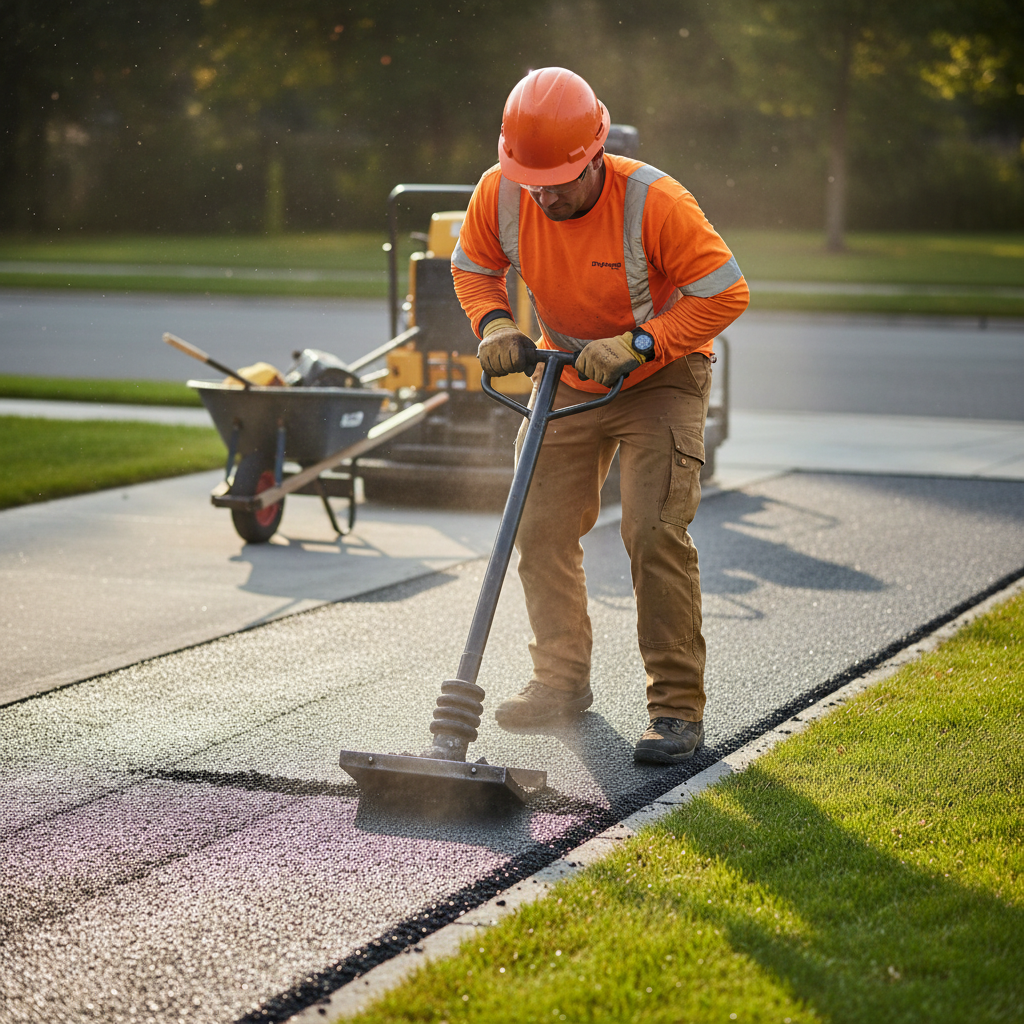
Driveway paving options and costs in Crescent Heights
Crescent Heights, Alberta is a compact, mature neighbourhood where many private driveways serve single-detached homes—so the demand for smooth, long-wearing surfaces is steady. In the 2021 Census, Crescent Heights had a population of 6,240 people (Statistics Canada, 2021 Census), and the area’s housing stock means a lot of homeowners are either resurfacing older asphalt or replacing failing gravel with a properly built base.
In Calgary’s cold continental climate, paving costs are driven as much by ground prep as by the surface finish. Frost can penetrate to about 1.2 m (4 ft), and the repeated freeze–thaw cycle works water through the subgrade. That’s why contractors price not just asphalt or concrete, but also deeper, well-graded granular bases, compaction, and positive drainage. The paving season is also compressed: hot-mix asphalt generally needs air temperatures above 10°C for reliable placement and curing, so spring and early-summer scheduling can tighten and push costs upward—especially for smaller driveways in peak months.
Trade is especially active around the north end of Crescent Heights where lots tend to be narrower and access is tighter for skid-steers and delivery trucks—those details can add labour time and mobilization. Below is a practical comparison of common driveway choices, so you can translate the scope from each quote into apples-to-apples pricing.
| Material |
Lifespan |
Maintenance |
Best For |
Price per sq ft |
| Asphalt (new installation, proper base) |
15–25 years |
Sealcoat every 3–5 years; crack repair as needed |
Good value, smooth ride, fast installation in short season |
$12 – $20 |
| Asphalt (overlay on existing gravel base) |
10–18 years |
Sealcoat every 3–5 years; more frequent patching if base shifts |
When you can keep costs down but still improve drainage |
$10 – $16 |
| Interlocking concrete pavers |
25–40 years |
Re-sand joints occasionally; targeted re-lift/replacement |
Maximum curb appeal and repairability without full replacement |
$18 – $30 |
| Poured concrete (broom finish) |
20–30 years |
Crack monitoring; occasional patching/joint maintenance |
Lower visual maintenance, straight-edged traditional look |
$15 – $25 |
| Exposed aggregate concrete |
20–30 years |
Sealer recommended; patching if chips occur |
Non-slip texture and a decorative finish |
$18 – $28 |
| Gravel / crushed stone (budget option) |
5–10 years |
Re-grade, top up annually; add edging to limit washouts |
Short-term solution or remote access constraints |
$6 – $12 |
Prices are estimates only and vary by project scope, site access and material selection.
What affects the price of paving in Crescent Heights
Even when two homeowners request the same “driveway paving,” quotes across Calgary and Alberta can swing by 30–50%. The biggest reason is that the visible surface is only part of the cost: the invisible work—excavation, granular base design, compaction, drainage correction, and disposal—often determines whether your driveway survives Calgary’s deep freeze and spring thaw.
In this region, frost line depth and freeze–thaw cycles are decisive cost factors. With frost penetration around 1.2 m (4 ft), contractors typically specify a thicker, engineered compacted granular base and well-graded aggregates to limit subgrade movement. Deeper frost and trapped moisture can also increase heaving, cracking, and surface raveling if drainage is off. The shorter paving season matters too: hot-mix asphalt generally requires air temperatures above 10°C, so crews and equipment get booked quickly from late spring into early fall, particularly for smaller jobs where mobilization costs are spread over fewer square feet.
Concrete pricing can rise when air-entrainment, proper thickness, and joint layout must be designed for freeze–thaw performance—those details prevent freeze damage. In Crescent Heights, driveways with older slopes, poor run-off direction, or downspout discharge landing near the driveway often require added grading and subsurface drainage work before any new asphalt or concrete goes down. Conversely, costs can come down when you have good existing base support and straightforward access—less tear-out and fewer trucking cycles.
As a guide, many properly built asphalt driveways land in the $12 – $20 per-square-foot band, while higher aesthetic or maintenance-friendly options like interlocking pavers often fall in the $18 – $30 range—often because the base build and restraint system are more involved.
| Price Factor |
Why It Matters |
Cost Impact |
| Driveway area in sq ft |
Materials and labour scale directly with square footage |
Largest driver; small drives cost more per sq ft |
| Base depth required |
Frost and moisture control depend on granular thickness |
+ cost when additional lift thickness and aggregate are needed |
| Grading and drainage work |
Positive drainage reduces freeze-thaw pumping |
Can add significant labour and excavation time |
| Tear-out of existing surface |
Breaking up and hauling away old asphalt/concrete |
Higher disposal and machine time for thicker slabs |
| Edge restraints and curbing |
Prevents paver spread and asphalt edge failure |
More concrete/steel forms and labour |
| Sealing requirement |
Asphalt needs sealcoating to slow moisture and oxidation |
Ongoing lifecycle cost; often included as an option |
| Site access |
Narrow lots slow equipment and deliveries |
Mobilization and extra labour hours |
| Asphalt mix specifications |
Freeze-thaw-rated mixes resist moisture damage |
Higher material cost but improved durability |
Permits & regulations in Alberta
For most homeowners in Crescent Heights, paving a private driveway on your own property typically does not require a building permit. However, when the work affects municipal infrastructure, you may need approval. The common “permit required” triggers are changes within the municipal right-of-way—especially new curb cuts, modifications to boulevard areas, and any alterations to storm drainage that change how water flows onto municipal land. If you’re changing the driveway profile near the street, adding drainage that ties into city systems, or altering curb/sidewalk edges, check with the municipality first.
A practical homeowner approach is to verify utilities and site rules before the contractor mobilizes. Call utility locates through the Alberta One-Call process before any excavation, even for shallow base work—driveways often sit above service lines, and shallow regrading still requires accurate locating.
Licensing and coverage checks are straightforward. Ask for the contractor’s Alberta business details and verify their trade eligibility where applicable; then request a current certificate of insurance showing liability coverage with your property protected as appropriate. For workforce coverage, confirm they carry WSIB/WCB as applicable for the jobs they perform (and that it matches the crews that will be on-site). Step-by-step: (1) get the quote in writing with scope and schedule, (2) request the COI and clearance/coverage confirmation, (3) verify the certificate dates are current, and (4) only sign after you confirm the contractor is insured for paving operations and any concrete/asphalt cutting they’ll do.
Asphalt vs pavers vs concrete for Crescent Heights driveways
In Crescent Heights, the freeze–thaw routine is unforgiving, so the “best” material depends on how you want the driveway to perform through winter, plus what kind of maintenance you’re willing to plan. Asphalt is usually the lowest upfront cost and fastest to install during Calgary’s shorter paving season, but it needs sealcoating every 3–5 years to protect the surface from moisture and oxidation. Interlocking concrete pavers typically cost more upfront and require careful base building, yet they’re the most homeowner-friendly when it comes to repairs: a damaged section can be lifted, base corrected, and re-set without tearing out the entire driveway.
Poured concrete is often a mid-range option and can last decades with the right mix and workmanship. In Calgary’s climate, air-entrained concrete and correct thickness/joint spacing matter because freeze–thaw can create cracking pathways, especially around edges and low spots. Exposed aggregate improves traction but still benefits from proper jointing and curing. For winter maintenance, pavers and well-built asphalt tend to tolerate sanding and plowing better when edge restraints are solid; concrete can perform well too, but de-icing salt and water intrusion into hairline cracks can accelerate deterioration if joints aren’t managed.
Base prep is the common thread across all three: with frost penetration around 1.2 m (4 ft), you can’t cut corners on granular thickness and drainage. Where the decision becomes financial is lifecycle. For example, if a well-built asphalt driveway is quoted in the $12 – $20 per-square-foot band but a paver design comes in around $18 – $30, the extra paver cost is easier to justify when you value repairability and curb appeal—especially in neighbourhoods like Crescent Heights where driveways are highly visible and access can make future full replacements more disruptive.
| Material |
Frost Resistance |
Curb Appeal |
Repair Method |
Lifespan |
Price Band |
| Asphalt (sealed regularly) |
Good when base is engineered and drainage is positive |
Medium; smooth modern finish |
Localized patching and crack repair |
15–25 years |
$12 – $20 |
| Interlocking concrete pavers |
Excellent with correct base and joint sand |
High; strong visual upgrade |
Lift-and-replace sections; reset after base correction |
25–40 years |
$18 – $30 |
| Poured concrete (air-entrained) |
Good to very good with air-entrainment and joints |
Medium; classic look |
Patch sections; manage cracks at joints |
20–30 years |
$15 – $25 |
| Exposed aggregate concrete |
Good with proper curing and edge detailing |
High; decorative texture |
Targeted patching for spalls/chips |
20–30 years |
$18 – $28 |
| Permeable pavers (drainage grid) |
Very good where drainage design is right |
Medium to high; modern eco look |
Lift-and-replace localized areas; clean and inspect grid |
25–40 years |
$20 – $35 |
| Chip seal / tar-and-chip |
Fair to good; more maintenance over time |
Low to medium; functional finish |
Rework surface as needed; occasional resurfacing |
5–12 years |
$10 – $16 |
How to choose a paving contractor in Crescent Heights
Choosing a contractor in Crescent Heights is mainly about verifying coverage and matching the quote to the real scope of work. Start with Alberta licensing/trade eligibility where applicable for the contractor’s operations, then confirm liability insurance—ask for a current certificate of insurance and check the coverage is active for the period the work will occur. Next, ask about WSIB/WCB coverage and make sure it applies to the crews who will be on-site. If a contractor can’t provide current proof on request, treat it as a serious warning sign.
Then get 2–3 itemised written quotes. “Itemised” matters: you want a breakdown showing labour, excavation/haul, base materials, asphalt or concrete thickness, tack coat/prime where applicable, compaction, edges/restraints, and any drainage corrections. Confirm what’s excluded: is permit handling included or not needed? Is disposal of old material included? Are landscape repairs (like topsoil/seed/ sod) included, or do you pay separately?
Warranty should be clear and separated into workmanship vs product/manufacturer warranty. Ask the workmanship warranty length, what it covers (cracks, edge failures, settlement), and whether the warranty is transferable if you sell your home. Payment schedule also protects you: never pay more than 10–15% upfront. Use a holdback until the job is complete and surfaces are accepted (especially after sealcoat curing timelines for asphalt).
Finally, insist on a written timeline with a start date window and completion estimate, since weather and cure time are crucial in Calgary’s colder shoulder months.
- Ask for proof of insurance and check expiry dates.
- Confirm WSIB/WCB coverage for paving crews.
- Verify Alberta registration/licensing details relevant to their work scope.
- Request 2–3 itemised quotes (labour + materials), not lump sums.
- Ensure the quote states asphalt/concrete thickness and base build (in inches).
- Confirm drainage/grading corrections are included if there are low spots.
- Check whether tear-out and disposal are priced (and how they’ll haul materials).
- Confirm edge restraints/curbing details and whether they’re included in price.
- Ask if your driveway slopes away from the house and where runoff will go.
- Get the sealing timeline in writing if it’s asphalt (and cure conditions).
- Review warranty terms: workmanship, materials, transferability, exclusions.
- Use a payment schedule with 10–15% max deposit and holdback at completion.
Red flags we see in Crescent Heights include: (1) quotes that ignore base depth or drainage and only talk about the surface; (2) contractors who won’t provide insurance/WSIB/WCB proof; (3) vague timelines that don’t account for curing and weather windows; (4) a “one-size-fits-all” price with no site access discussion for narrow lots; and (5) proposals that require large upfront payments without a signed scope and schedule.
Frequently asked questions — paving in Crescent Heights
When is the best time of year to pave in Crescent Heights?
For Crescent Heights, late spring through early fall is the practical paving window. In Calgary’s cold continental climate, asphalt placement and compaction depend on warm air temperatures; hot-mix asphalt generally needs air temperatures above 10°C for reliable results. That’s why many driveways get scheduled from May into August, with some work continuing into September if conditions hold. If you pave too late, incomplete curing and early freeze conditions can increase the risk of surface wear and early cracking. For concrete, you still need proper curing conditions, and crews manage temperature swings closely to avoid premature freezing. Plan ahead—smaller driveways book quickly during peak months because crews are in high demand across Calgary and nearby areas.
How deep should the base be for Crescent Heights's frost?
Base depth should be determined by site conditions (soil type, drainage, and driveway thickness), but frost is a major driver in Alberta. With frost routinely penetrating to about 1.2 m (4 ft), Calgary-area projects generally require a deeper engineered granular base than what you’d do in milder regions, to reduce subgrade movement during freeze–thaw cycles. A contractor should specify granular thickness and grading based on your driveway slope and how water behaves at the site. If drainage is poor or the soil is pumping, base depths and aggregate quality typically need to increase even more. Don’t accept a quote that only states “new asphalt” without addressing compaction lifts and the base build.
How often should I seal my asphalt driveway?
In Crescent Heights, most homeowners should plan to seal asphalt every 3–5 years, assuming the driveway was built with a proper base and receives routine crack repair. Sealcoat helps slow moisture infiltration and oxidation—both are critical in Alberta’s freeze–thaw conditions where water can expand under the surface. If your contractor recommends sealing, ask for the exact product type and the timing relative to installation (typically after the asphalt has cured). If you skip sealing and let cracks develop unchecked, you can end up spending more on patching or an earlier overlay. Sealing is usually priced as an add-on lifecycle item—local budgets often start around the $400 – $1,500 range depending on driveway size, preparation, and whether crack repair is included.
Why does my driveway crack and heave in winter?
Cracking and heaving usually come from water and movement. In Crescent Heights, freeze–thaw cycles can pump moisture through weak or improperly drained subgrade, and expansion during freezing lifts the surface. Common contributors include inadequate base depth, poor grading (so water ponds), lack of edge restraint, and missing or ineffective drainage outlets. Asphalt can also ravel at the surface when the base is unstable, which widens cracks over time. Another cause is de-icing salt and traffic concentrating stress—especially near the garage threshold or where the driveway slope changes. The right fix is often not just patching the crack, but correcting grading, improving drainage, and rebuilding the base where settlement is occurring.
Do I need a permit to pave my driveway in Alberta?
Typically, paving within your private property (on your lot) usually does not require a building permit in Alberta. Where permits or municipal approvals can come into play is when work affects the municipal right-of-way—for example, new curb cuts, changes to boulevard areas, or altered storm drainage that changes runoff patterns near the street. Also, some municipalities have lot-grading or drainage rules that restrict how close hard surfaces and grading can be to property lines. The best step for Crescent Heights homeowners is to confirm whether your scope includes any boulevard/curb modifications or stormwater tie-ins, and always call for utility locates before excavation. Ask your contractor to clearly indicate what is and isn’t within municipal land on the proposal.
How long before I can drive on new asphalt?
After asphalt placement in Alberta, timing depends on mix design, weather, and whether tack coat or multiple lifts were used. In general, residential driveways are often ready for light vehicle traffic after the surface cools and sets—many contractors schedule access within roughly 24–48 hours for light use, but they may restrict heavier loads longer. The key is allowing the asphalt to cool properly so it doesn’t deform under tires. If rain is expected or temperatures are dropping, crews adjust schedules and may delay vehicle access to reduce risk. For best long-term performance, follow the contractor’s direction on when to drive and when to avoid turning/parking on fresh edges. If you’re also sealing, ask about the sealcoating timeline, since that’s part of the lifecycle plan in Calgary.