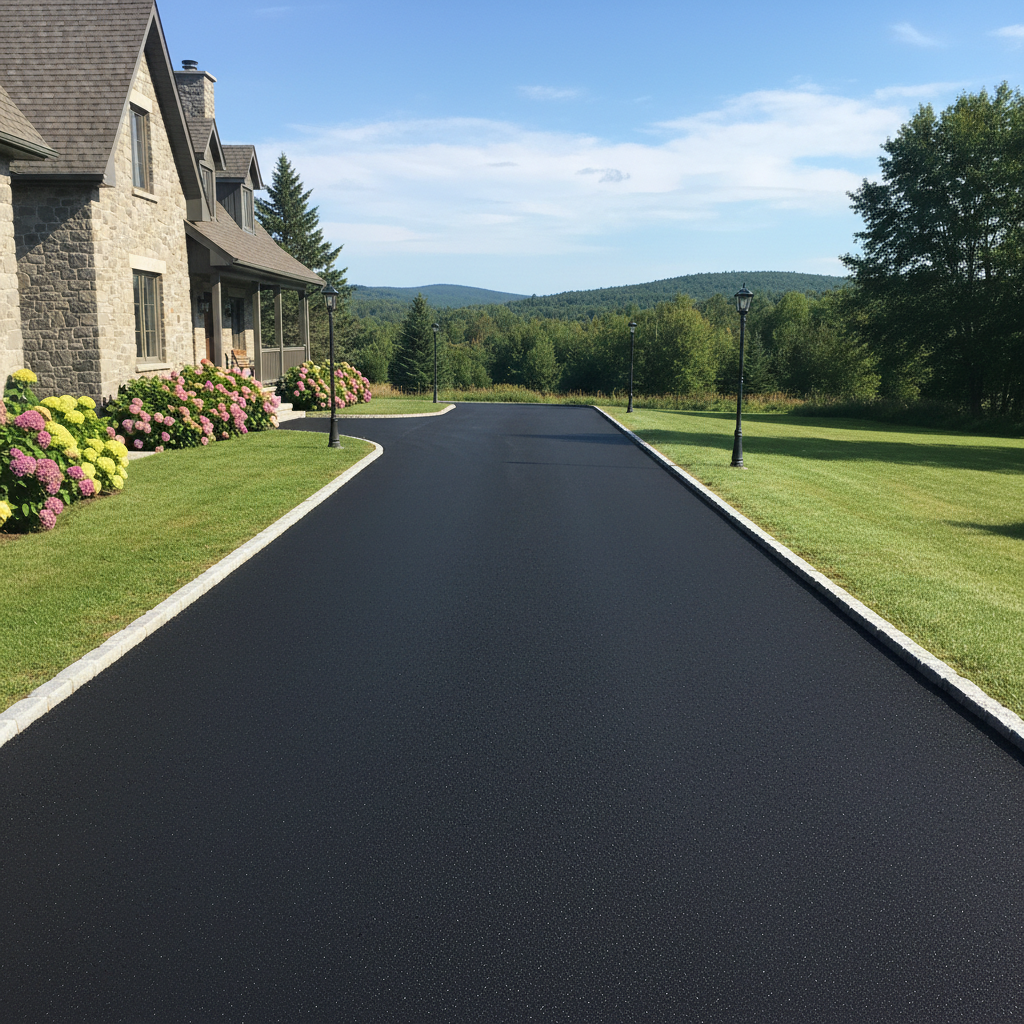
Driveway paving options and costs in Huntington Hills
In Huntington Hills, Alberta, most homeowners are choosing between asphalt, interlocking pavers, and concrete—each with a different balance of upfront cost, winter durability, and long-term upkeep. With Huntington Hills sitting at about 13,120 residents (Statistics Canada, 2021 Census), driveway replacement demand is steady, especially on the older residential stock where surface cracking and frost-related roughness start to show. In practice, private driveways here are commonly tied to single-detached homes, so you’re often planning for a long lifespan on a daily-use surface.
Calgary’s cold continental climate is a major driver of paving cost. Frost can penetrate to roughly 1.2 m, and repeated freeze–thaw cycles push on moisture in the subgrade. That means contractors typically design a deeper, well-compacted granular base and build in positive drainage—extra material and labour that add cost but reduce heaving and early cracking. Add in the compressed paving season (late spring through early fall) and scheduling pressure during peak months, and you can see why two “similar” driveways can land in noticeably different price ranges.
In Huntington Hills, demand is especially common around the more established lanes and infill pockets where driveways were built years ago and the approaches need rework—often after curb cut adjustments, drainage issues, or deteriorating edges. Once the site conditions and base thickness are set, your material choice determines whether you’ll pay less now (asphalt), more upfront for aesthetics and replaceable sections (pavers), or a mid-range install with higher cracking risk if the mix and base aren’t right (concrete).
Below is a practical cost comparison to help you benchmark quotes before you ask contractors for line-item breakdowns.
| Material |
Lifespan |
Maintenance |
Best For |
Price per sq ft |
Price Range |
| Asphalt (new installation, proper base) |
15–25 years (with sealing and repairs) |
Seal every 3–5 years; crack repairs as needed |
Best value for Calgary winters; smooth ride |
$12–$20 |
$4,200–$8,000 |
| Asphalt (overlay on existing gravel base) |
10–18 years |
Seal every 3–5 years; patching if base weakens |
When you’re starting from gravel and want to pave |
$14–$22 |
$5,000–$10,000 |
| Interlocking concrete pavers |
25–40 years (replaceable stones) |
Re-sand joints; occasional spot re-level |
Curb appeal and flexible repairs |
$18–$30 |
$6,800–$14,500 |
| Poured concrete (broom finish) |
20–35 years (proper air-entrainment + joints) |
Seal optional; patch hairline cracks if needed |
Low maintenance look; straightforward finish |
$15–$25 |
$5,500–$11,800 |
| Exposed aggregate concrete |
20–35 years |
Seal more often for stain resistance; patch sparingly |
Slip-resistant texture and premium appearance |
$18–$28 |
$6,800–$13,200 |
| Gravel / crushed stone (budget option) |
5–12 years (depends on drainage) |
Top up, grade, and refresh annually |
Temporary solution or limited budget |
$3–$8 |
$1,200–$4,500 |
Prices are estimates only and vary by project scope, site access and material selection.
What affects the price of paving in Huntington Hills
If you’ve ever looked at three quotes for the same driveway in Calgary, you’ve probably noticed pricing can swing by 30–50% even when the square footage is similar. The difference usually isn’t the asphalt or concrete itself—it’s the “hidden” work: excavation depth, granular base quality, drainage correction, removal and haul-off, and whether the contractor is building for frost movement instead of chasing the lowest initial install price.
In Huntington Hills, frost line depth and freeze–thaw cycles are decisive cost factors. With frost routinely penetrating to around 1.2 m in this region, contractors typically need a thicker compacted granular base and well-graded aggregates to prevent heaving, cracking, and raveling. The goal is simple: reduce water in the system and keep layers stable through repeated expansions and contractions. In addition, the paving season is compressed here, and hot-mix asphalt requires suitable air temperatures—so demand spikes in late spring and summer. That scheduling pressure, plus mobilization for residential streets and tight access, can push per-square-foot costs toward the top end of the local asphalt band ($12–$20) on smaller driveways.
For concrete, the mix design and details matter just as much. A poured slab that’s not properly air-entrained and jointed can show freeze–thaw cracking earlier, especially where de-icing chemicals or meltwater sit at the surface. On the flip side, driveways with good existing drainage and solid subgrade often cost less to rebuild, even if they still require base rework. For example, a driveway with minimal tear-out and a stable gravel subbase can come in closer to the lower end of asphalt budgeting, while a job needing full removal to reach firm, dry material may land higher—sometimes moving you from an asphalt install in the $12–$20 band toward the upper end once base and drainage work are included. In short: the cold and the water control the price long before the finishing surface does.
| Price Factor |
Why It Matters |
Cost Impact |
| Driveway area in sq ft |
Surface area directly drives material and labour quantities |
Major (often the biggest line-item change) |
| Base depth required |
Frost line determines granular thickness to prevent heaving |
Major (thickness increases can add thousands) |
| Grading and drainage work |
Slope correction, swales, and runoff control protect the subgrade |
Major on problem sites |
| Tear-out of existing surface |
Breaking, hauling and disposal increase labour and equipment time |
Medium to major depending on thickness |
| Edge restraints and curbing |
Prevents paver spread and asphalt edge failure |
Medium |
| Sealing requirement |
Asphalt needs sealing after installation to reduce water and oxidation |
Low upfront, recurring over lifespan |
| Site access |
Narrow drives slow equipment movement and increase labour time |
Medium |
| Asphalt mix specifications |
Freeze–thaw-rated mix costs more than basic mixes |
Medium (often worth it long-term) |
Permits & regulations in Alberta
In Alberta, paving a private driveway within your own property typically does not require a building permit. What usually triggers approvals is anything that affects municipal infrastructure—especially work near the curb/boulevard or storm drainage. For Huntington Hills homeowners, that means: new or altered curb cuts, changes to the boulevard area, reconnecting or redirecting storm drainage, or modifications that could impact how water flows to the municipal system. Those scope elements typically require municipal approval before excavation and paving.
Here’s the practical way to verify your contractor is operating correctly:
Step 1: Identify whether any municipal-right-of-way work is included. Ask your contractor to point out the exact area on a sketch or photo—where they’ll remove sod, cut curb, or adjust drainage. If the job stays fully on your property, permitting is usually not the issue. If it touches boulevard drainage or curb access, you’re in “approval required” territory.
Step 2: Call for utility locates. Before anyone digs, ensure locates are requested (Alberta One-Call). This reduces the risk of service strikes.
Step 3: Verify the contractor’s Alberta credentials. Request their certificate of insurance and confirm liability coverage is active for the project. Ask for WSIB/WCB clearance documentation (or proof of coverage/registration as applicable). Also confirm the contractor’s licensing/standing through Alberta’s online resources and by reviewing the clearance letter details. Don’t be shy—good paving firms expect this, and it protects you.
If you’re unsure whether your driveway ties into drainage or involves boulevard work, check first with the municipality and then lock the scope in your contract.
Asphalt vs pavers vs concrete for Huntington Hills driveways
For Huntington Hills driveways, the choice usually comes down to how you want the surface to behave through Calgary’s freeze–thaw winters and how often you want to spend on maintenance. Asphalt is the lowest upfront option in most cases and provides a smooth driving surface, but it performs best when you plan for sealing every 3–5 years. If sealing slips, water gets in faster and you can see oxidation, raveling, and crack widening—especially in shaded edges or low spots where meltwater lingers.
Interlocking concrete pavers cost more upfront (often the top tier of the $18–$30 band), but they’re the most homeowner-friendly when repairs are needed. If one area heaves or a utility issue develops, you can lift and re-set only the affected sections instead of replacing the whole slab. In a cold climate with water-sensitive subgrades, that “modular repair” matters.
Poured concrete sits in the middle in terms of initial cost, but it’s more detail-sensitive. In freeze–thaw conditions, concrete must be air-entrained and properly jointed with a base that won’t move. If those pieces aren’t right—or if de-icing salt and meltwater concentrate at surface edges—cracking can appear earlier than expected.
Exposed aggregate concrete can provide excellent texture and slip resistance, but the main driver of durability still remains base prep and drainage. For example, on a typical 600 sq ft driveway, moving from asphalt (commonly guided by the $12–$20 band) to pavers can mean several thousand dollars more. That premium is justified when you value appearance and want repair flexibility over the long haul—particularly if you expect future landscape changes or want a driveway that can be patched without redoing everything.
| Material |
Frost Resistance |
Curb Appeal |
Repair Method |
Lifespan |
Price Band |
| Asphalt (sealed regularly) |
Good with proper base and sealing; sensitive to poor drainage |
Moderate |
Crack seal + patch; full mill/overlay later |
15–25 years |
$12–$20 |
| Interlocking concrete pavers |
Very good when bed and restraints are built correctly |
High |
Remove/re-set individual pavers and re-sand joints |
25–40 years |
$18–$30 |
| Poured concrete (air-entrained) |
Good if air-entrained and properly jointed |
Moderate |
Patch/re-level limited sections; major repairs may require slab work |
20–35 years |
$15–$25 |
| Exposed aggregate concrete |
Good with correct mix and base; texture doesn’t prevent cracking |
Very high |
Targeted patching; reseal/stain management |
20–35 years |
$18–$28 |
| Permeable pavers (drainage grid) |
Good to very good if subgrade drains properly |
High (modern look) |
Section repair; inspect and maintain drainage path |
20–35 years |
$22–$34 |
| Chip seal / tar-and-chip |
Limited durability vs full asphalt in heavy residential use |
Low to moderate |
Maintenance overlays; re-chip as needed |
8–15 years |
$10–$18 |
How to choose a paving contractor in Huntington Hills
Choosing the right paving contractor in Huntington Hills is mostly about verifying coverage and locking down scope details. In Alberta, ask for proof of liability insurance—you want the certificate to name you as appropriate (or confirm it’s available for the job) and show the policy is active. Next, confirm WSIB/WCB coverage (or the contractor’s coverage/clearance documentation). You should also verify whether the contractor’s business standing and any required registrations are in order using Alberta’s online resources, then match those details to the paperwork you receive.
When you request quotes, don’t ask only for a lump sum. Get 2–3 itemised written quotes with a breakdown that separates excavation/grading, base materials and compaction, geotextile (if used), asphalt or concrete supply, reinforcement/jointing (for concrete), edge restraints, and disposal. Also ask: what’s included in the permit or approval process if boulevard work is involved, and what’s excluded? Disposal and haul-off are frequent “gotchas” on driveway tear-outs.
Warranty matters too. Ask for the workmanship warranty length and whether there’s a separate product/manufacturer warranty. Confirm whether any warranty is transferable to future owners and how defects are handled (and how long you have to report them).
For payment, avoid large deposits. A good rule is never pay more than 10–15% upfront; structure the rest with milestones and hold back a portion until the job is complete and properly surfaced. Finally, require a start date and completion estimate in writing—Calgary’s short paving season makes scheduling reliability part of the cost.
- Request itemised pricing (labour vs materials) instead of a single total.
- Confirm base type, granular specs, and compaction method.
- Ask for the thicknesses planned for asphalt/concrete and the granular base.
- Verify drainage and slope plan (where water goes).
- Confirm edge restraints/curbing details to prevent paver spread or asphalt edge failure.
- Make sure tear-out and disposal/hauling are included if there’s existing concrete or asphalt.
- Ask if geotextile will be used and in what location.
- Get the sealing plan for asphalt (timing and whether it’s included).
- Clarify warranty length for workmanship and what triggers a warranty claim.
- Request WSIB/WCB clearance documentation and verify it matches the job period.
- Review certificate of insurance for liability coverage and active status.
- Put the timeline (start/completion) in writing and schedule around the weather window.
Red flags to watch for in Huntington Hills: (1) quotes that skip base depth details, (2) “too low to be real” pricing without drainage scope, (3) refusal to provide insurance/WSIB/WCB clearance paperwork, (4) pressure to pay a large deposit upfront, and (5) vague timelines with no written start date in a short paving season.
Frequently asked questions — paving in Huntington Hills
Do I need a permit to pave my driveway in Alberta?
In most cases in Alberta, paving within your own property for a typical private driveway doesn’t require a building permit. However, if your project involves the municipal right-of-way—like a new or modified curb cut, changing the boulevard, or altering storm drainage connections—you should expect municipal approval. For Huntington Hills homeowners, the key is whether the scope reaches the curb/boulevard area or impacts how runoff is handled. Before excavation, ask your contractor to mark the affected limits on a sketch and confirm who is responsible for approvals. Also ensure Alberta One-Call locates are completed prior to digging.
How long before I can drive on new asphalt?
For new asphalt in Huntington Hills, the surface is typically ready for light vehicle traffic once it has cooled to a safe temperature, often the same day depending on weather and mix temperature. Many homeowners can drive on it relatively quickly, but it’s best to follow the contractor’s instructions because freeze–thaw risk is real early in the season. If there’s any chance of rain, grading disturbances, or early heavy loads, the contractor may extend the wait. If you want a long service life, plan for sealing within the recommended window—commonly after the asphalt has cured, and often within several months—because maintenance affects performance as much as initial install quality.
What causes potholes and how are they repaired?
Potholes usually start with water. In Calgary’s freeze–thaw conditions, water gets into small cracks or weak spots in the base, freezes, expands, and breaks the asphalt surface. Repeated cycles enlarge the damage until you get a void—then passing loads accelerate the failure. Repairs typically involve removing loose asphalt, cleaning and drying the area, and rebuilding with compacted granular base before placing asphalt patching. If the surrounding base is weak or drainage is off, patching alone can fail, and an overlay or deeper base correction may be required. That’s why good quotes include drainage/grading scope, not just surface patching.
How do I prepare for a paving project?
Preparation is mainly about access, decisions, and documentation. Clear the driveway and nearby landscaping, and confirm where materials and equipment will be staged. If there are any services near the work area (sprinklers, low-voltage lighting, buried lines), let your contractor know so they can coordinate with locates. Decide on finish details early—especially with pavers or exposed aggregate—so the crew doesn’t lose time during Calgary’s short paving window. Ask for the written scope and timeline, and confirm who handles disposal if tear-out is included. For asphalt, plan for the sealing timeline afterward; sealing is often part of lifecycle cost planning (many estimates keep asphalt maintenance in the $400–$1,500 band depending on driveway size and condition).
How do I compare paving quotes fairly?
To compare quotes fairly in Huntington Hills, line them up by scope, not by total price alone. Ensure each quote includes the same base depth, granular material type, compaction requirements, edge restraints, and drainage/grading work. Verify whether tear-out and disposal are included, and whether the contractor includes any geotextile where needed. For asphalt, check if the mix is freeze–thaw-rated and whether the quotation assumes proper sealing after installation—many contractors price asphalt around the local $12–$20 per sq ft band, but the real difference is how well the base and drainage are engineered. For pavers, confirm restraints and joint sanding details since that affects settlement and maintenance.
Can asphalt be laid in cold weather in Huntington Hills?
Asphalt can’t be treated like a year-round job in Huntington Hills. Calgary’s temperatures and ground conditions matter because hot-mix asphalt requires suitable air temperatures and enough warm conditions for compaction and curing. If the ground is too cold or damp, compaction suffers and you risk poor bonding and early surface distress. Contractors generally aim for the late spring to early fall window when the base can be prepared, placed, and compacted correctly. If you’re scheduling at the edge of the season, ask how the contractor will handle temperature constraints, protection, and compaction quality. This is one reason some “cheap” off-season scheduling bids often don’t hold up.