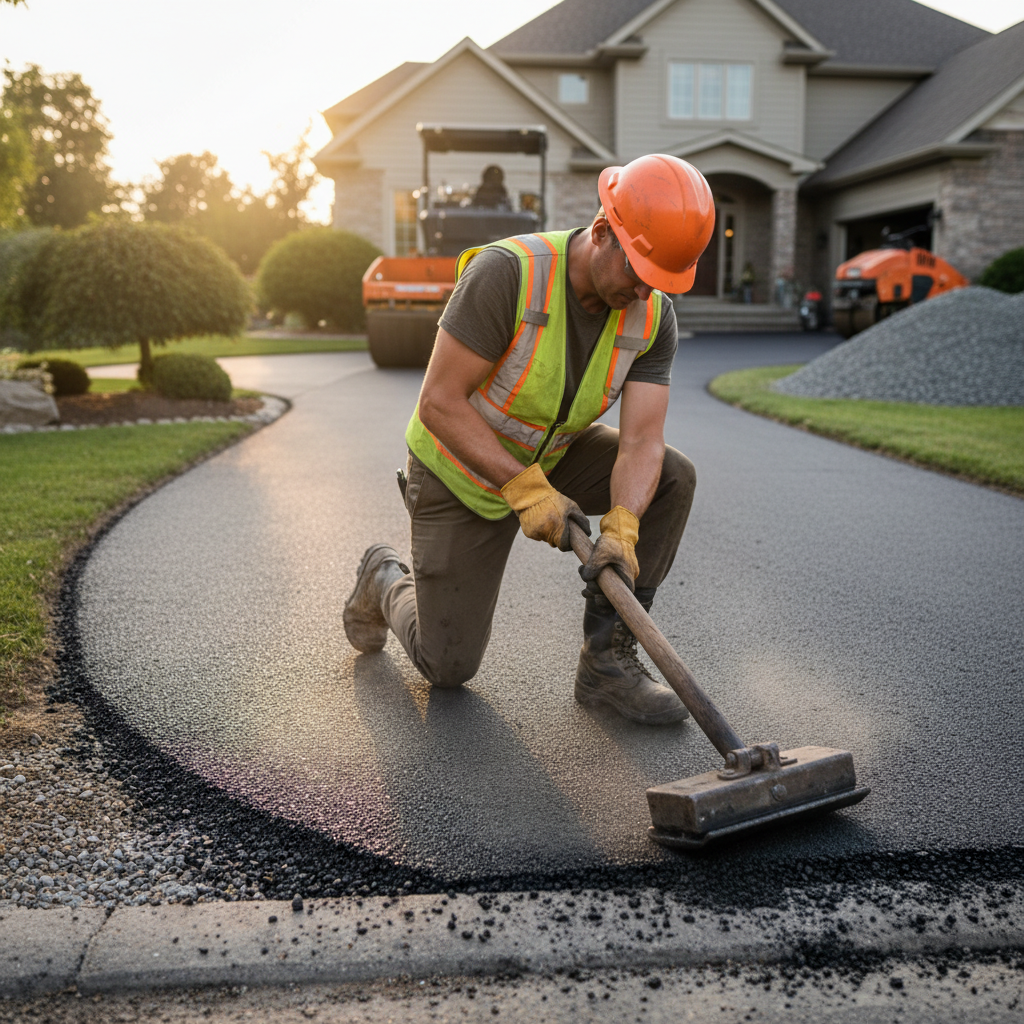
Driveway paving options and costs in Walden
In Walden, Alberta, most homeowners are deciding between asphalt, interlocking pavers, and concrete—because the right choice affects not just curb appeal, but also how your driveway survives freeze–thaw cycles. With a population of 7,650 (Statistics Canada, 2021 Census), Walden is small enough that paving scheduling can tighten quickly during peak summer weeks, especially when crews are balancing multiple jobs across the Calgary region. This matters because the vast majority of private driveways here are attached to single detached homes, so driveway work is steady year-to-year and contractors often prioritize projects that fit the short frost-safe window.
Cost is driven by Calgary-area cold continental conditions: frost can penetrate to around 1.2 m (4 ft), so contractors typically build deeper, well-graded bases and insist on positive drainage to limit heaving, cracking, and surface raveling. In Walden—particularly around areas like the newer residential pockets off 24 Street and adjacent service roads—access and drainage vary lot-to-lot, which can shift pricing noticeably even for similar square footage.
The table below gives realistic budget-to-midrange figures for common options, assuming proper base, compaction, and typical residential access. Use it as a baseline, then compare contractor scopes to make sure your quote is apples-to-apples before you sign.
| Material |
Lifespan |
Maintenance |
Best For |
Price per sq ft |
Price Range |
| Asphalt (new installation, proper base) |
15–25 years |
Seal coat every 3–5 years; patch minor cracks as needed |
Lowest upfront cost with good performance when base/drainage are correct |
$3.00–$6.50 |
$12–$20 |
| Asphalt (overlay on existing gravel base) |
12–20 years |
Seal coat every 3–5 years; monitor edge settling and potholes |
When you have usable shape but need a new asphalt surface |
$2.50–$6.00 |
$10–$18 |
| Interlocking concrete pavers |
25–40 years |
Re-leveling of minor sections; replace individual pavers if needed |
Maximum curb appeal and easier targeted repairs without full replacement |
$4.50–$8.50 |
$18–$30 |
| Poured concrete (broom finish) |
20–30 years |
Minor crack filling; reseal only if you choose for staining/appearance |
Simplest surface and good longevity with air-entrainment and joints |
$4.00–$7.00 |
$15–$25 |
| Exposed aggregate concrete |
20–30 years |
Sealer recommended; crack repair as required |
Slip-resistant texture and higher-end appearance |
$5.50–$9.00 |
$18–$30 |
| Gravel / crushed stone (budget option) |
3–10 years (depends on drainage and maintenance) |
Top-up annually or as needed; re-grade; weed control |
Short-term solution or where you need to manage water/levels first |
$1.50–$3.50 |
$5–$12 |
Prices are estimates only and vary by project scope, site access and material selection.
What affects the price of paving in Walden
It’s common in Calgary and the surrounding Alberta market to see the “same” driveway priced 30–50% apart, even when the square footage looks similar. The reason is usually scope: one quote includes proper granular base and drainage corrections, while another assumes the existing subgrade is solid. In a cold continental area like Walden, frost and water control are not optional—they’re foundational—and that’s where real costs show up.
Frost line depth and freeze–thaw cycles are decisive cost factors. When frost can penetrate deeply (around 1.2 m / 4 ft), contractors generally need a thicker compacted granular base—commonly in the 6–12 inch range in Alberta for typical residential driveways—to prevent heaving and cracking. Alongside that, positive drainage matters: if water can’t move away from the slab or asphalt, you pay for it later in settlement, ruts, and surface breakdown.
The paving season is also shorter. Hot-mix asphalt typically requires air temperatures above about 10°C for reliable placement and compaction, so demand compresses late spring through early fall. That concentrates crew and equipment availability, and smaller jobs can cost more per square foot during peak weeks. Mix design also needs to meet local freeze–thaw performance requirements, which can increase material cost versus “standard” assumptions.
In Walden, practical examples that raise costs include lots with soft spots where base must be undercut and replaced, and driveways that require grading to fix ponding near garages. Costs can be lower where you already have stable base, clean stone, and good slope away from the house—especially if you’re paving to a straightforward edge condition. As a rough guide, asphalt new installation commonly lands in the $12–$20 range, while pavers often track the $18–$30 tier once you factor edge restraint and polymeric jointing.
| Price Factor |
Why It Matters |
Cost Impact |
| Driveway area in sq ft |
Most labour and materials scale directly with surface area. |
High (usually the single biggest driver) |
| Base depth required |
Frost protection depends on granular thickness and compaction. |
Medium–High (more base = more hauling and labour) |
| Grading and drainage work |
Slope corrections and drainage fixes prevent water-related heaving. |
Medium (can become high on uneven sites) |
| Tear-out of existing surface |
Breaking, hauling, and disposal add time and equipment costs. |
Medium–High |
| Edge restraints and curbing |
Edges hold the mass in place during freeze–thaw movement. |
Medium |
| Sealing requirement |
Asphalt needs sealing after installation to slow oxidation. |
Low–Medium (budgeting for future costs matters) |
| Site access |
Narrow lots, soft shoulders, and long pushes slow equipment. |
Medium (can raise mobilization costs) |
| Asphalt mix specifications |
Freeze–thaw-rated mix and proper asphalt design can cost more. |
Low–Medium (but important for longevity) |
Permits & regulations in Alberta
For paving in Alberta, the general rule for Walden homeowners is straightforward: paving a private driveway within your own property usually does not require a building permit. Where approvals often come into play is when you work within the municipal right-of-way or you change drainage patterns that affect the street or neighbouring properties. That includes new curb cuts, changes to boulevard conditions, alterations to existing storm drainage, or any work that impacts municipal infrastructure.
How to verify what your project needs, step-by-step: (1) confirm your driveway tie-in point to the street and whether any curb/boulevard work is planned; (2) ask your contractor to list which permits (if any) they will pull and who holds responsibility; (3) contact your local municipality to confirm lot-grading and setback rules, because some areas restrict how close hard surfaces can be to property lines and how water must be directed. In every case, do utility locates before excavation—Alberta One-Call is the key call—so you don’t hit buried services when removing old asphalt or building base.
To protect yourself, verify your contractor’s Alberta licence (if applicable to their scope), and confirm insurance and coverage before work starts. Ask for (1) a certificate of liability insurance showing your project address and adequate limits; (2) WSIB/WCB coverage documentation; and (3) a clearance letter if their coverage framework requires it. Keep copies of these documents with your contract and quote so there’s no question if something changes during construction.
Asphalt vs pavers vs concrete for Walden driveways
For Walden’s freeze–thaw climate and how people actually maintain driveways, the best material is the one that matches both winter impacts and your tolerance for upkeep. Asphalt is typically the lowest upfront option, and when it’s built on a strong granular base it performs well—but it requires sealing every 3–5 years to slow surface oxidation from sun and Alberta winter cycles. Interlocking concrete pavers have the highest upfront cost in most cases, yet they’re very repairable: if a small section settles, a contractor can lift and re-set only the affected area instead of replacing the whole driveway. Poured concrete sits mid-range on price and can last decades, but it needs proper air-entrainment and jointing to manage cracking under moving freeze–thaw water and the reality of de-icing habits.
Base preparation is where Walden’s climate shows up in every option. With frost penetration around 1.2 m (4 ft), all three benefit from deeper, well-graded granular layers and careful compaction, plus positive drainage so water doesn’t sit under the surface. For pavers, reliable edge restraint is critical so pavers don’t “spread” when freeze–thaw movement pushes at the perimeter. For concrete, properly spaced joints and a consistent subgrade are what reduce random cracking. For asphalt, the right asphalt mix design and thickness reduces brittleness and raveling.
In winter maintenance, plowing and traction materials matter. Asphalt generally handles plow impacts fine when the base is solid, while concrete can be more tolerant of heavy plow contact but may crack if the subgrade is weak or if de-icing salts are used aggressively without protection strategies. As a practical example: if your driveway is a typical small residential size and asphalt is quoted in the $12–$20 tier, pavers often come in around the $18–$30 range; that price gap can be justified when you want long-term curb appeal and the option to repair localized sections rather than resurface everything.
| Material |
Frost Resistance |
Curb Appeal |
Repair Method |
Lifespan |
Price Band |
| Asphalt (sealed regularly) |
Good with proper base, drainage, and freeze–thaw-rated mix |
Medium |
Patch and re-compact; local milling and overlay if needed |
15–25 years |
$12–$20 |
| Interlocking concrete pavers |
Very good when base and edge restraint are correctly built |
High |
Lift affected pavers, re-level base, re-install individual units |
25–40 years |
$18–$30 |
| Poured concrete (air-entrained) |
Good with air-entrainment, joints, and solid subgrade |
Medium–High |
Crack repair with patching/grouting; panel replacement only if severe |
20–30 years |
$15–$25 |
| Exposed aggregate concrete |
Good with correct mix and base; texture helps traction |
High |
Patch with matching surface treatment; larger sections may require resurfacing |
20–30 years |
$18–$30 |
| Permeable pavers (drainage grid) |
Excellent water management when installed per design |
Medium–High |
Remove/rebuild localized sections; clean and maintain system to avoid clogging |
20–35 years |
$20–$35 |
| Chip seal / tar-and-chip |
Moderate; best for certain traffic and maintenance routines |
Low–Medium |
Spot re-chip and re-seal; periodic maintenance cycle |
6–12 years |
$10–$18 |
How to choose a paving contractor in Walden
Choosing the right contractor in Walden is mostly about verifying coverage and comparing itemized scope. Start with licensing and insurance documentation. In Alberta, ask for proof of liability insurance (certificate of insurance showing your project or at least your address) and confirm they carry the required WSIB/WCB coverage for their workers. How to check: (1) request the COI and review expiry dates and policy limits; (2) verify coverage status using the provider clearing/clearance letter process if they supply it; and (3) confirm the contractor is in good standing for the work they’re proposing (especially if they’re doing excavation, removals, or working around municipal infrastructure).
Next, get 2–3 itemised written quotes. You want a breakdown that separates labour, granular base material, asphalt/concrete, saw-cutting (if concrete), disposal/hauling, and compaction/testing where applicable—rather than just a lump sum. Read the scope carefully: what’s excluded? Is permit pull included if boulevard or curb work is required? Is disposal included for old asphalt or concrete? Ask about edge restraints and drainage improvements too, because those directly impact longevity in Alberta’s freeze–thaw conditions.
Warranty matters: ensure you have a clear workmanship warranty length, what it covers (material vs labour), and whether it’s transferable if you sell the home. For payment schedule, never pay more than about 10–15% upfront; hold back a portion until completion and cleanup. Finally, insist on a written timeline with a start date window and completion estimate—peak-season scheduling in Calgary can shift, but you should still have a clear plan.
- Confirm liability insurance certificate and adequate limits for driveways and excavation.
- Verify WSIB/WCB coverage using their clearance letter or documentation.
- Get an Alberta-based contact and a written contract with scope and exclusions.
- Request 2–3 itemised quotes (labour + materials + disposal, not “all-in”).
- Check base depth and granular spec (and whether they correct soft subgrade).
- Confirm drainage details: slope away from garage and positive runoff pathway.
- Verify edge restraints/curbing for pavers and asphalt perimeter stability.
- Ask who supplies and compacts the subbase and what compaction standard is used.
- For asphalt, ask about tack coat, lift thickness, and freeze–thaw mix design.
- For concrete, ask about air-entrainment and joint spacing/saw-cut timing.
- Clarify warranty terms and whether manufacturer warranties apply.
- Use a payment schedule with a small deposit and final holdback until completion.
Red flags I look for in Walden: vague “lump sum” quotes with no base thickness or disposal line-item, contractors who won’t discuss drainage or edge restraint, missing or outdated insurance/WSIB documents, promises to “skip base” to save cost, and pressure for large upfront payments without a clear completion inspection.
Frequently asked questions — paving in Walden
Is it worth sealing a new driveway right away in Walden?
In Walden and across Alberta, sealing is usually worth planning—but timing matters. Asphalt needs time to cure after installation so the seal can bond properly and not trap moisture. Many homeowners schedule seal coating in the first season, but a contractor may recommend waiting until the asphalt has aged enough (commonly after the initial curing period and depending on weather and mix). If you’re comparing options, sealing is one reason asphalt can stay cost-effective over time versus letting the surface oxidize. For budgeting, remember asphalt typically falls in the $12–$20 tier upfront, and then you should plan for a sealing maintenance cycle every few years to protect that investment in winter wear and plow impacts. Ask your contractor to note the exact seal type and target timing in writing.
What is a chip seal driveway and is it suited to Walden?
Chip seal (also called tar-and-chip) is an asphalt binder sprayed onto the subgrade or base, followed by aggregate chips broadcast on top. It’s sometimes used for lower-cost surfaces or specific applications, but it’s not always ideal for busy residential driveways in Walden because the surface can be more prone to chip loss, especially with Alberta freeze–thaw movement and plowing. If installed correctly, it can provide a workable all-weather surface, but many homeowners prefer conventional asphalt or concrete for longevity and smoother snow-removal. Cost-wise, chip seal can be priced below typical asphalt paving and may fall near the $10–$18 range depending on site conditions and aggregate selection. Suitability depends on traffic, drainage, and how quickly you’re willing to maintain it.
How much does driveway crack repair cost in Walden?
In Walden, crack repair costs depend on whether you’re sealing hairline cracks, doing targeted patching, or repairing areas where the base has started to move. Small, surface-level repairs can often be relatively affordable compared with full asphalt replacement, especially if caught early. When cracks are “working” due to frost heave or poor drainage, patching alone may not last and you may need deeper base correction—making the project more expensive. As a rough planning reference for your quote discussions, sealing and repair budgets commonly run from $400–$1,500 for typical residential crack/maintenance scopes. Always ask contractors to explain the cause of cracking (water path, settlement, base issues) so you don’t pay for a cosmetic fix that fails next winter.
What base thickness do I need for pavers in Walden?
For pavers in Walden, the exact base thickness should come from site conditions and frost protection needs, but a contractor should generally plan for a substantial, well-compacted granular base due to Alberta freeze–thaw behavior. Many Calgary-area residential installs target roughly 6–12 inches of compacted granular base (often layered and compacted in lifts), with additional bedding sand for setting the pavers. If your site has soft spots, variable soils, or drainage issues, you may need thicker or undercut/replacement base work to prevent movement. The key is not just the number—it’s compaction and drainage. Ask your contractor to state the proposed base depth and the material type (and whether they’ll correct grade and water flow). This is often what separates long-lasting paver driveways from those that heave or shift prematurely.
How do I get the most accurate paving quote in Walden?
To get an accurate quote in Walden, you need apples-to-apples scope. Start by measuring your driveway area and confirming the boundaries (including whether you’re paving to fences, curbs, or garage edges). Then ask for an itemised quote that lists base preparation, tear-out (if any), drainage/grading corrections, material type, and disposal/hauling. Specify your priorities: longevity, curb appeal, and snow-plow tolerance. Contractors should also ask about drainage patterns after spring melt, because water control affects frost movement. For asphalt, verify the mix design approach and planned lift thickness; for concrete, verify air-entrainment and joint plan. Finally, timing matters: because Walden ties into the Calgary region’s compressed paving season, book early and ask for a realistic start window. A good quote should fall within the local bands—often $12–$20 for asphalt or $18–$30 for pavers—depending on scope, not just square footage.
How much does it cost to pave a driveway in Walden?
The cost to pave a driveway in Walden depends mainly on square footage, base preparation needs, drainage/grading corrections, and whether you’re doing new installation or overlay. As a practical starting point, asphalt new installation is commonly estimated in the $12–$20 range, while interlocking pavers typically land in the $18–$30 tier once edge restraint and proper base are included. Poured concrete often sits in a similar mid-range band, commonly $15–$25, depending on finish and jointing requirements. If your existing surface needs tear-out and disposal, pricing rises because of labour and equipment time. Also remember Alberta’s frost depth and freeze–thaw cycles—contractors often need deeper granular bases and careful drainage, which protects the pavement and affects the final quote.