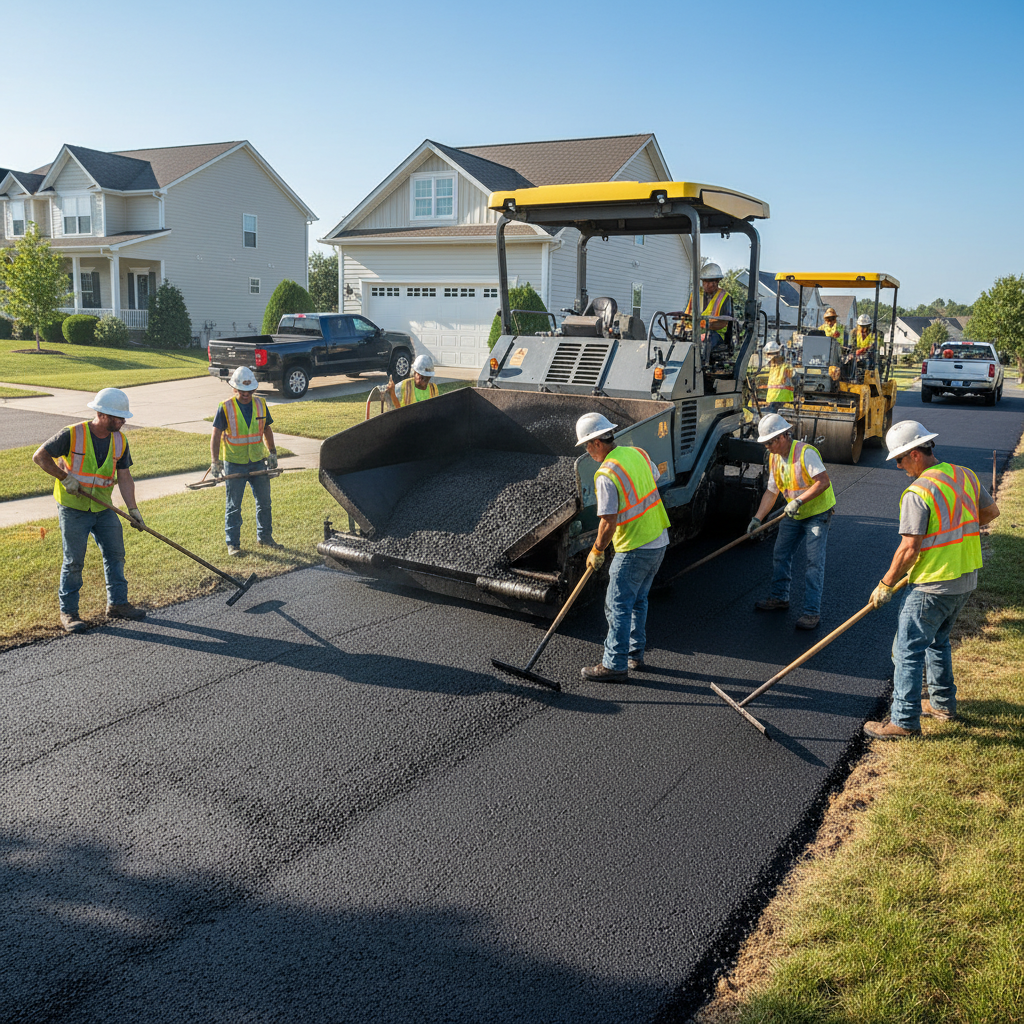
Driveway paving options and costs in Athabasca
Athabasca homeowners typically start with one question: “What will my new driveway actually cost?” The short answer is that it depends as much on frost protection and drainage design as it does on the surface. In Athabasca, most private driveways serve single-detached homes—about 68.0% of dwellings—so you’re usually planning for a strong base, good grading away from the house, and a surface that can handle Alberta’s freeze-thaw cycling. With only 2,759 residents (Statistics Canada, 2021 Census), the local market is smaller too, which can tighten scheduling in spring and lead to more variable availability across the Edmonton economic region. That matters because asphalt crews often prioritize jobs that are ready for base compaction when the weather window opens.
In practice, Edmonton-area pricing is highest when the existing base is soft, when drainage needs correction, or when access is tight enough to slow excavation and compacting. Many Athabasca driveways also face demand in areas like the East side/near the downtown core where older housing stock is common—about 39.4% of homes were built before 1981 (Statistics Canada, 2021 Census). Older drives can mean more tear-out and rebuilding, which pushes projects into the upper end of the typical price bands.
Use the comparison below to sanity-check proposals before you book site measurements.
| Material |
Lifespan |
Maintenance |
Best For |
Price per sq ft |
Price Range |
| Asphalt (new installation, proper base) |
15–25 years |
Sealcoat every 3–5 years; patch as needed |
Most cost-conscious driveways with good drainage |
$6.00–$12.00 |
$7,000–$15,000 |
| Asphalt (overlay on existing gravel base) |
10–18 years |
Sealcoat every 3–5 years; more frequent patching if base settles |
When the base is sound and height changes are limited |
$5.50–$11.00 |
$6,500–$13,500 |
| Interlocking concrete pavers |
25–35 years |
Weed control; re-leveling individual pavers if needed |
Curb appeal, repairability, and variable drainage |
$10.00–$20.00 |
$12,000–$28,000 |
| Poured concrete (broom finish) |
20–30 years |
Joint maintenance; patching spalls; reseal optional |
Clean look and long-run durability with correct base |
$9.00–$16.00 |
$9,000–$22,000 |
| Exposed aggregate concrete |
20–30 years |
Sealer (periodic); patching as needed |
Slip-resistant surface and premium look |
$12.00–$20.00 |
$11,000–$26,000 |
| Gravel / crushed stone (budget option) |
5–12 years (depends on grading and drainage) |
Top up and re-grade 1–2 times per year |
Lower upfront cost while you plan future upgrades |
$2.00–$5.00 |
$3,500–$9,500 |
Prices are estimates only and vary by project scope, site access and material selection.
What affects the price of paving in Athabasca
In Athabasca and across the Edmonton region, two quotes for the same-looking driveway can differ by 30–50% because the “real work” is often below the finished surface. Contractors may price different assumptions for excavation depth, base preparation, drainage corrections, and how much of the old driveway must be removed and hauled away. Even within the same local climate, asphalt and concrete behave differently once water is trapped in a base layer and subjected to freeze-thaw cycling.
Frost depth and freeze-thaw cycles are decisive cost factors in central Alberta. Deeper frost commonly requires a thicker, well-graded compacted granular base to reduce heaving and cracking. That means additional material supply, more compaction passes, and time for testing density—especially when you’re building new or rebuilding a failing subgrade rather than resurfacing. The paving season is also shorter in colder Prairie markets; hot-mix asphalt generally requires air temperatures above about 10°C, so spring scheduling pressure can raise mobilization and labour premiums. Mix design also matters: asphalt needs to be engineered to handle the local freeze-thaw demands, and that can push you toward the higher-quality (and higher-cost) options.
Concrete examples in Athabasca: if your driveway has poor slope to the street, water can migrate under the slab and increase subgrade movement—often increasing costs because contractors need to rebuild the base and drainage before they pour. If your current driveway is already failing with widespread cracking and pumping, tear-out and replacement typically move you toward the concrete price band closer to $9,000–$22,000, while a true overlay job that keeps the base intact can stay nearer the asphalt band $7,000–$15,000. Finally, older housing stock (Statistics Canada, 2021 Census) often means more buried utilities and more chances you’ll need careful utility-locate planning and partial excavation.
| Price Factor |
Why It Matters |
Cost Impact |
| Driveway area in sq ft |
Most charges scale by surface area and material quantity |
High |
| Base depth required |
Frost protection determines granular thickness and compaction time |
High |
| Grading and drainage work |
Proper slope and drainage prevents water retention and future failure |
Medium–High |
| Tear-out of existing surface |
Concrete/asphalt removal adds labour, equipment, and hauling/disposal |
Medium–High |
| Edge restraints and curbing |
Prevents paver spread and asphalt edge breakdown |
Medium |
| Sealing requirement |
Asphalt sealcoat timing (often 6–12 months) protects binder from oxidation |
Low–Medium |
| Site access |
Narrow gates, landscaping, or long haul distances slow equipment movement |
Medium |
| Asphalt mix specifications |
Freeze-thaw rated mixes can cost more but improve long-term performance |
Medium |
Permits & regulations in Alberta
For Athabasca homeowners, the permitting picture is usually straightforward for private driveway work. In Alberta, paving a driveway on your own property—meaning within your lot limits and not altering municipal infrastructure—typically does not require a building permit. That usually includes replacing asphalt or concrete on the driveway footprint, rebuilding the base on private land, and installing paver surfaces that stay within your property lines.
Permits and approvals are commonly required when work touches the municipal right-of-way. Examples include new or modified curb cuts, changes to boulevard areas, altering storm drainage flow patterns, or any excavation that impacts municipal drainage infrastructure. Because municipal requirements can vary by area around Athabasca, you should confirm with the local municipality before excavation begins.
Before any digging, homeowners should arrange utility locates through Alberta One-Call (and avoid starting excavation until locates are marked). Then verify your contractor the practical way: ask for (1) Alberta business licence/registration details if applicable, (2) a current certificate of liability insurance naming the homeowner or showing adequate coverage, and (3) WSIB/WCB clearance or coverage proof for their workers. In most cases, you can request a clearance letter and insurance certificate directly from the contractor, and you can also check publicly available business information online. If they won’t provide documents quickly and in writing, treat that as a warning sign.
Asphalt vs pavers vs concrete for Athabasca driveways
Choosing driveway material in Athabasca isn’t only about upfront price—it’s about how each surface handles Edmonton-area freeze-thaw cycles, how water drains, and how winter maintenance is done (ploughs, sand, and occasional salt). Asphalt is usually the lowest upfront option and is forgiving to install, but it needs sealcoating to protect the binder; many owners plan for sealing every 3–5 years. Interlocking concrete pavers have the highest upfront costs, yet they’re repairable: individual stones can be lifted and re-laid if the base shifts. Poured concrete usually lands mid-range and can look sharp, especially with proper broom finishing, but it’s still vulnerable to cracking if the base isn’t stabilized and air-entrainment isn’t right for freeze-thaw.
Base preparation depth and drainage design are what really make the difference in central Alberta. Contractors typically build a thicker compacted granular base for frost protection so water doesn’t sit and freeze under the surface. If your driveway has poor slope away from the garage or toward the street, any material will suffer—though pavers can tolerate localized base issues better because repairs are targeted.
Local maintenance routines also change the conversation. With snowplowing, pavers and well-constructed concrete typically take impacts well; asphalt needs good edge detail so the perimeter doesn’t ravel. A practical dollar example: if your asphalt quote is near $7,000–$15,000, and pavers come in near $12,000–$28,000, the price gap is most justified when you strongly value curb appeal, expect future excavation for utilities, or want a repairable system rather than resurfacing.
| Material |
Frost Resistance |
Curb Appeal |
Repair Method |
Lifespan |
Price Band |
| Asphalt (sealed regularly) |
Good with engineered base and drainage |
Medium |
Patch/overlay localized areas |
15–25 years |
$7,000–$15,000 |
| Interlocking concrete pavers |
Very good; tolerates movement better than rigid surfaces |
High |
Lift and replace individual pavers |
25–35 years |
$12,000–$28,000 |
| Poured concrete (air-entrained) |
Good when properly air-entrained and based |
Medium–High |
Crack sealing and patching; panel replacement if severe |
20–30 years |
$9,000–$22,000 |
| Exposed aggregate concrete |
Good; durable finish if joints and base are correct |
High |
Patch with matching mix; local resurfacing sometimes |
20–30 years |
$11,000–$26,000 |
| Permeable pavers (drainage grid) |
Very good for drainage; depends on subgrade permeability |
High |
Replace grid/pavers in sections if clogged |
20–30 years |
$14,000–$30,000 |
| Chip seal / tar-and-chip |
Fair to good; more maintenance sensitivity |
Low–Medium |
Spot repair and re-chip as needed |
8–15 years |
$6,000–$12,000 |
How to choose a paving contractor in Athabasca
When you’re hiring a paving contractor in Athabasca, start with proof—not promises. In Alberta, you want a contractor who can show current liability insurance and WSIB/WCB coverage (or equivalent coverage status for their workforce). Ask for a certificate of insurance and a clearance letter before work begins; if they can’t produce these documents quickly, that’s a risk for you as a homeowner. Also confirm their business details through the appropriate online listings, and ensure the crew assigned to your job is covered under that same insurance/coverage. A reputable operator will treat documentation as routine, not optional.
Next, request 2–3 itemised written quotes. You want labour and materials broken out (excavation, disposal, base course supply, compaction, asphalt lift(s), drainage adjustments, saw-cutting/joints for concrete, and edge restraints). Avoid “lump sum” quotes that don’t state what’s included. Clarify exclusions: is permit handling included if work affects the right-of-way, is hauling and disposal included, and what happens if they uncover unsuitable subgrade? Make sure the scope states the base depth and drainage measures they’re using for frost protection.
On warranty and payment: confirm the workmanship warranty length and whether it’s transferable to future owners. For payment, never give the contractor more than 10–15% upfront—hold back the remainder until key milestones are complete and you’ve accepted the completed base and surface. Get a start date and completion target in writing too, especially since Athabasca has weather-driven scheduling constraints.
- Ask for Alberta liability insurance certificate and ensure it’s current
- Request WSIB/WCB clearance proof (coverage status in writing)
- Confirm who will be on-site and whether subcontractors are insured too
- Get 2–3 itemised quotes with line-by-line labour/materials
- Confirm base depth and granular material specifications for frost protection
- Verify drainage plan: slope, outlet path, and how water is managed
- Clarify tear-out scope: removal depth and disposal included or extra
- Require edge restraints/curbing details (especially for pavers)
- For asphalt: confirm when sealcoat is scheduled (often 6–12 months)
- Ask about mix design compliance for freeze-thaw performance
- Review warranty terms: workmanship length, what’s covered, transferability
- Use a staged payment schedule with a holdback until final acceptance
In Athabasca, common red flags include contractors who (1) won’t provide insurance/coverage paperwork, (2) propose paving directly over soft/undocumented base, (3) give a low bid without a detailed drainage or base plan, (4) refuse to put the start/completion dates in writing, or (5) pressure you for large upfront payments (beyond 10–15%).
Frequently asked questions — paving in Athabasca
Can asphalt be laid in cold weather in Athabasca?
Asphalt paving in Athabasca is typically limited to the workable season. Hot-mix asphalt generally requires air temperatures above about 10°C to place and compact properly; below that, you risk poor compaction, weak mat quality, and early surface raveling. If you’re getting bids for late fall or early spring, ask how the contractor plans to handle weather—this includes tarping/heating strategies (if used), placement timing, and whether they’ll schedule production around temperature windows. In Edmonton’s colder cycle, freeze-thaw performance also depends on the base being dry and compacted before paving, not just the surface temperature. If your quote assumes paving “whenever,” that’s not a comfort factor for Athabasca winters.
What is a driveway apron and do I need one in Athabasca?
A driveway apron is the section at the edge/transition where the driveway meets the street or sidewalk area, often shaped to provide a smooth, safe ramp and protect edges from erosion. Whether you “need” one depends on your current approach, grade difference, and whether municipal elements are involved (such as curb cuts or boulevard drainage). In many Athabasca homes, if the driveway approach has a steep drop or is washing out, an apron helps stabilize the transition and reduces future edge failure—especially for asphalt, where unsupported edges can break down. If the work touches the municipal right-of-way, approvals may be required, so ask the contractor to specify what’s within your property versus what requires municipal coordination.
How do I maintain my driveway through Athabasca winters?
Winter maintenance in Athabasca is mainly about preventing water damage and protecting the surface edges. Start with drainage: keep the driveway slope directed away from the garage and avoid letting meltwater pond near the house side. When plowing, don’t scrape aggressively into the asphalt edges or paver borders—damage at the perimeter is a common trigger for water infiltration and freeze-thaw heave. Use sand sparingly; heavy salt use can accelerate asphalt binder oxidation over time and can be hard on concrete if joints aren’t protected. For asphalt, plan sealcoat later in the lifecycle (often after installation, then every 3–5 years). For concrete, keep an eye on joint sealing and patch spalls early.
Is it worth sealing a new driveway right away in Athabasca?
Usually, it’s not worth sealing immediately. Asphalt needs time to cure so the binder isn’t trapped under the sealer, which can lead to soft spots or poor bond. Many contractors schedule sealcoat about 6–12 months after placement, which aligns with typical local practice for performance through Alberta’s freeze-thaw cycle. If you’re quoted sealing “right away,” ask why and what product they’re using to address curing. Sealing is most effective when the surface is clean, dry, and prepared correctly, and when small repairs (hairline cracks and patch areas) are addressed first. Considering asphalt driveway paving in Athabasca often falls in the $7,000–$15,000 range, sealing is usually a cost-effective step to extend service life rather than an optional extra.
What is a chip seal driveway and is it suited to Athabasca?
Chip seal (tar-and-chip) is an asphalt binder sprayed onto a prepared base, followed by a layer of aggregate chips spread and rolled into place. It can be a budget-friendly option, sometimes coming in around $6,000–$12,000, but it has a different maintenance pattern than a paved hot-mix asphalt surface. In Athabasca, freeze-thaw and plowing impacts can dislodge chips if drainage and base compaction aren’t done correctly, and if the surface isn’t maintained. It can suit areas with lower traffic intensity or where you want a faster, lower-cost upgrade, but for homeowners seeking a smoother winter plow experience, many opt for properly built hot-mix asphalt or pavers. Ask for base thickness, geotextile use (if recommended), and an explanation of how they’ll prevent water retention.
How much does driveway crack repair cost in Athabasca?
Crack repair cost varies with crack width, length, and how much base movement caused the cracking. For small asphalt cracks, contractors typically do cleaning and sealing (often described as crack filling/sealing) and may include a patch where the surface has broken. For concrete, crack sealing and routing/patching can be more labour-intensive depending on whether you’re dealing with spalling. As a ballpark, sealing & repair jobs commonly land in the $600–$3,500 band, but larger repairs that require partial tear-out and rebuild of the base can approach the lower end of full driveway paving pricing. In Athabasca’s freeze-thaw environment, the cheapest repair isn’t always the best if drainage is wrong—ask the contractor whether water is the root cause.