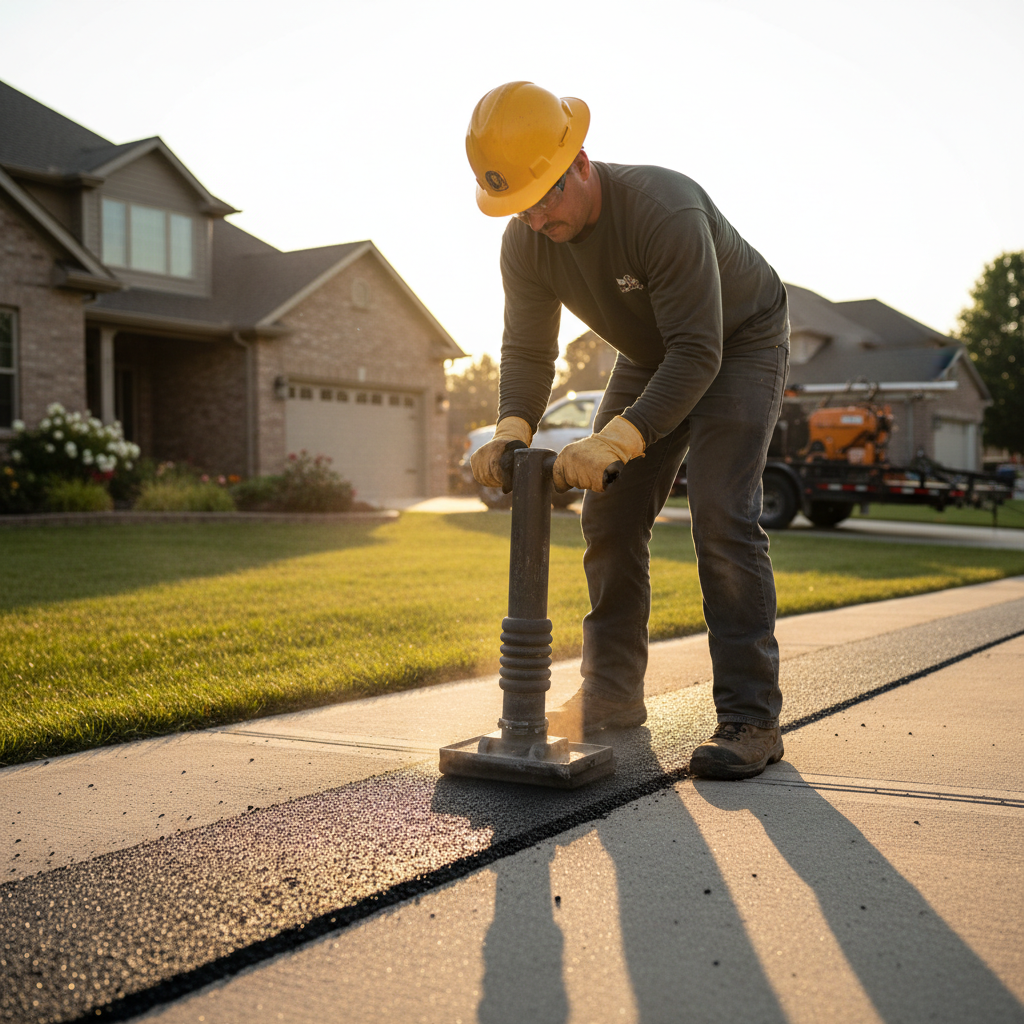
Driveway paving options and costs in Grimshaw
Grimshaw is a great place to plan your driveway properly—there are a lot of single-detached homes (74.1% of dwellings), and most homeowners are the ones footing the bill (70.4% of households own). With a total population of 2,601 (Statistics Canada, 2021 Census), contractor teams are smaller than in Edmonton or Calgary, so scheduling in spring and early summer gets competitive and pricing trends toward the upper end of Alberta norms. In the Athabasca–Grande Prairie–Peace River economic region, frost penetration commonly exceeds 1 m and the freeze–thaw season is long. That means a “cheap” surface without enough granular base depth and proper drainage can heave or crack sooner, especially where subgrades are clay or silt. Contractors often focus on meticulous compaction, well-graded crushed rock, and positive slope so meltwater doesn’t sit under asphalt or pavers and cycle repeatedly through freezing. In Grimshaw, this work is especially in demand around older neighbourhoods and service areas where driveways were built decades ago—many homes built before 1981 (54.2%) have surfaces that are ready for an upgrade rather than just a patch. Once you pick your preferred look and maintenance tolerance, it becomes much easier to compare apples to apples.
Use the table below as a realistic cost guide for typical Grimshaw driveway projects, then tailor it to your measurements and base/subgrade conditions.
| Material |
Lifespan |
Maintenance |
Best For |
Price per sq ft |
Price Range |
| Asphalt (new installation, proper base) |
12–20 years |
Sealcoat every 3–5 years; spot patch as needed |
Lowest upfront cost with good performance when built on a deep base |
$6.50–$10.00 |
$6,500–$12,000 |
| Asphalt (overlay on existing gravel base) |
10–16 years |
Sealcoat and monitor edge rutting; patch around weak spots |
Upgrading a gravel driveway without full tear-out |
$5.75–$9.00 |
$6,000–$10,500 |
| Interlocking concrete pavers |
25–35 years |
Occasional re-leveling; replace individual stones if damaged |
Curb appeal and repairability for heavy use |
$10.50–$16.00 |
$9,000–$18,000 |
| Poured concrete (broom finish) |
20–30 years |
Minor crack filling; keep drainage clear |
A clean, straightforward surface with long service life when air-entrained |
$9.00–$13.50 |
$8,000–$16,000 |
| Exposed aggregate concrete |
25–35 years |
Low maintenance; sealing optional depending on finish |
Premium look with better slip resistance in winter |
$10.50–$15.00 |
$10,000–$17,500 |
| Gravel / crushed stone (budget option) |
2–7 years (varies a lot) |
Re-grade and top up annually; control washouts |
Short-term solution or farm/low-traffic lanes |
$2.25–$4.50 |
$1,500–$5,000 |
Prices are estimates only and vary by project scope, site access and material selection.
What affects the price of paving in Grimshaw
In Athabasca–Grande Prairie–Peace River, it’s not unusual to see 30–50% quote variation for the “same” driveway because the scope underneath the surface is where most of the money is—base depth, drainage, haul distance, and how much existing material must be removed. For example, two contractors may both quote “asphalt,” but one might design for the region’s frost-susceptible conditions with a deeper, well-graded granular base, while the other relies on a thinner base that will be more vulnerable to heaving after spring thaw. In this frost-prone zone, frost penetration routinely exceeds 1 m, so deeper granular thickness and careful compaction are decisive. In colder areas, hot-mix asphalt placement depends on air temperature (often requiring conditions above about 10°C), so the paving window narrows to a mid-May–September period. That compresses scheduling and can add overtime and mobilization premiums, especially when crews are balancing multiple jobs in a short stretch.
Concrete pricing can also swing with local variables. If your driveway is built over fine-grained subgrade (clay/silt), contractors may need undercutting or stabilization before pouring, which adds labour and aggregate. If you have an older driveway built before 1981 (54.2% of local homes), there’s also a higher chance of buried base failures or unknown fill thickness—sometimes you get a lower quote only to discover additional tear-out after first excavation. On the other hand, a straightforward replacement on solid base can bring asphalt closer to the lower end of typical budgets. As a homeowner reference point, Grimshaw asphalt work often falls in the $6,500 – $12,000 band, while interlocking commonly trends higher in the $9,000 – $18,000 band once edge restraints and proper bedding are included.
| Price Factor |
Why It Matters |
Cost Impact |
| Driveway area in sq ft |
Most materials and equipment time scale directly with square footage |
Often the biggest driver; can change total by thousands |
| Base depth required |
Deeper frost needs thicker compacted granular base to reduce heaving |
Can add major haul/compaction cost; increases with poor subgrade |
| Grading and drainage work |
Positive slope and working drainage prevent meltwater from cycling freeze–thaw |
Often mid-range add-on; can become substantial on “flat” sites |
| Tear-out of existing surface |
Breaking concrete or removing old asphalt adds disposal and labour |
Frequently one of the largest scope adders in replacement jobs |
| Edge restraints and curbing |
Prevents paver spread and keeps asphalt from raveling at the edges |
Not huge by itself, but essential; omission can cut cost now and fail later |
| Sealing requirement |
Asphalt needs sealing after cure (often after 6–12 months) for winter protection |
Small upfront planning cost; reduces long-term deterioration |
| Site access |
Narrow lots slow equipment movement and may require smaller machines |
Can raise labour/mobilization; adds time and risk |
| Asphalt mix specifications |
Freeze–thaw rated mixes and correct binder selection perform better in the region |
Upfront mix cost may be higher; typically improves longevity |
Permits & regulations in Alberta
For most homeowners in Alberta, paving a private driveway within your own property usually does not require a building permit—especially when you’re simply replacing an existing hard surface and staying inside your property line. The items that typically DO require municipal approval involve work in the municipal right-of-way, such as new or altered curb cuts, changing the boulevard profile, or modifications that affect storm drainage (for example, rerouting surface water away from the road or adjusting catchment to meet local drainage expectations). Some municipalities also have lot-grading or drainage bylaws that control how close hard surfaces can be to property lines and how water must be directed so it doesn’t impact neighbours.
Before excavation in Grimshaw, confirm utility locations by calling Alberta One-Call (locates) so contractors can mark power, gas, telecom and any buried services. Then verify your contractor properly:
- Ask for their Alberta business licence details (if applicable) and the exact scope they’re licensed/qualified to do.
- Request a current Certificate of Insurance (liability) naming you as the certificate holder where possible.
- Confirm Workers’ Compensation coverage (WCB/WSIB coverage) for their workers—don’t rely on “we have it” without documentation.
- Look for a clearance letter or proof of account status where available through their provider process.
- Verify the work area approvals if they plan any right-of-way changes—don’t let them proceed on assumptions.
If a quote is “all-in” but they’re vague about right-of-way approvals, drainage compliance, or disposal, that’s a red flag for homeowners in Northern Alberta.
Asphalt vs pavers vs concrete for Grimshaw driveways
In Grimshaw, the best driveway material is the one built correctly for frost-susceptible soils and winter maintenance. Asphalt typically has the lowest upfront cost, but it depends on routine care—plan for sealing every 3–5 years to slow oxidation and protect against winter wear from plowing and sand. Interlocking concrete pavers cost more at the start, yet they’re highly repairable: if a section settles or a weak subgrade spot needs correction, a contractor can remove and re-lay those units without tearing up the whole driveway. For poured concrete, cost usually lands in the middle of the three, but freeze–thaw durability depends heavily on using air-entrained concrete and controlling water/cement ratio, curing and jointing. If the base is wrong or drainage is poor, any of these surfaces can crack or heave—but concrete’s cracking risk rises when freeze–thaw is paired with de-icing salts and shallow base support.
Across the Athabasca–Grande Prairie–Peace River region, you should expect a deeper granular base and strict compaction for any hard surface because frost can penetrate more than 1 m. Drainage design is equally important: contractors should grade for positive drainage away from the structure and keep meltwater from pooling under asphalt or paver bedding. In winter, repeated plowing and studded tires/sand accelerate surface wear—so asphalt benefits from timely sealing, while pavers handle localized repairs well. Concrete performs well long-term when properly air-entrained and jointed, but it’s less forgiving if the base isn’t stabilized. If you want a clear cost example: a typical asphalt driveway often lands in the $6,500 – $12,000 range, while interlocking in the same footprint commonly comes out around $9,000 – $18,000—the higher paver price is usually justified when curb appeal matters or when you anticipate future repairs or utility work.
| Material |
Frost Resistance |
Curb Appeal |
Repair Method |
Lifespan |
Price Band |
| Asphalt (sealed regularly) |
Good with deep base and drainage |
Medium |
Mill/patch or overlay localized areas |
12–20 years |
$6,500–$12,000 |
| Interlocking concrete pavers |
Very good with correct bedding |
High |
Remove/re-level/re-lay individual pavers |
25–35 years |
$9,000–$18,000 |
| Poured concrete (air-entrained) |
Good when base and joints are right |
Medium–high |
Crack repair and patch; full replacement if widespread failure |
20–30 years |
$8,000–$16,000 |
| Exposed aggregate concrete |
Good with proper base |
Very high |
Localized patching possible but often less “invisible” |
25–35 years |
$10,000–$17,500 |
| Permeable pavers (drainage grid) |
Very good where meltwater control is key |
High (clean modern look) |
Targeted removal for maintenance of joint aggregate |
20–30 years |
$11,500–$19,500 |
| Chip seal / tar-and-chip |
Fair to good; depends on base quality |
Low–medium |
Spot re-application and re-seal over time |
6–12 years |
$5,000–$10,000 |
How to choose a paving contractor in Grimshaw
Choosing the right contractor matters a lot in Northern Alberta because the weather window is tight and the base details decide whether your driveway survives the freeze–thaw cycle. Start by verifying licensing and insurance the practical way. In Alberta, ask for proof of liability insurance (Certificate of Insurance with your address/interest if possible). Confirm workers are covered under WCB (WSIB equivalents aren’t the right wording in Alberta)—and request a clearance letter or documentation your contractor can provide. Then verify their business details and standing: a reputable paving crew won’t hesitate to share insurance paperwork, recent project examples, and who will supervise the base preparation.
Next, get 2–3 itemised written quotes. Don’t accept a lump sum that hides key details like excavation depth, base thickness, compaction requirements, drainage/grading work, disposal, and whether the price includes saw cuts/joints for concrete. For asphalt and pavers, make sure the quote includes edge restraints and bedding materials, not just “material and install.” Ask whether permits are required for any right-of-way changes and whether disposal is included or billed separately. Use the wording in the contract to avoid surprises.
For payment, never pay more than 10–15% upfront—holdback until completion and cleanup, because quality checks are easiest at the end. Demand a timeline with a start date and completion estimate in writing so you can align with spring thaw conditions. On warranties, separate workmanship warranty from product/manufacturer warranty and confirm the duration and whether it’s transferable if you sell your home.
- Request Certificate of Insurance and verify policy active dates.
- Confirm WCB coverage for all workers (not just “the owner”).
- Ask who pulls permits if right-of-way work is involved.
- Insist on itemized base depth, materials and compaction steps.
- Verify drainage plan: slope, ditching, and how meltwater is managed.
- Confirm tear-out scope and disposal method (dump fees included?).
- For asphalt, ask when sealing will be scheduled (often 6–12 months cure).
- For pavers, confirm edging restraints and bedding thickness.
- For concrete, confirm air-entrainment, joint spacing and curing process.
- Request warranty details in writing (workmanship vs materials).
- Use a staged payment schedule with a holdback at substantial completion.
- Ask for references from Athabasca–Grande Prairie–Peace River jobs if available.
Red flags in Grimshaw include: contractors who quote without discussing base/drainage, vague wording like “as needed” for granular depth, refusing to show insurance or WCB proof, pushing high upfront deposits, and starting without clear written timelines for the short paving season.
Frequently asked questions — paving in Grimshaw
How do I compare paving quotes fairly?
In Grimshaw and across Alberta’s Athabasca–Grande Prairie–Peace River region, quotes can vary widely because the “surface” is only part of the cost. Ask for itemised pricing: excavation/tear-out, base thickness (crushed stone depth), grading and drainage corrections, bedding (for pavers), asphalt mix type (if applicable), compaction/testing, and disposal. Make sure each quote uses similar design assumptions—especially because frost can penetrate deeply and drive freeze–thaw movement. If one contractor proposes a thinner granular base, that often explains a lower number—but it can also lead to heaving or cracking sooner. For reference, if one quote puts asphalt in the $6,500–$12,000 band and another is far below while offering less base/drainage, that gap is often scope, not “better pricing.”
Can asphalt be laid in cold weather in Grimshaw?
Asphalt placement needs the right conditions. Even though northern Alberta has a long winter, hot-mix asphalt typically requires workable air temperatures—often around 10°C or higher—so the mix can be placed, compacted and achieve density. In Grimshaw, early fall frosts and soft spring subgrades can shorten the effective paving window, so contractors usually plan a mid-May–September schedule to avoid compaction problems and early failures. If a contractor promises asphalt in genuinely cold conditions, ask how they will protect the mat, manage temperature and meet mix specs for freeze–thaw durability. A well-built asphalt driveway also relies on a deeper, well-compacted base and drainage so water doesn’t sit beneath the pavement through freeze–thaw cycles.
What is a driveway apron and do I need one in Grimshaw?
A driveway apron is the paved section that transitions between your driveway and the adjacent roadway/sidewalk area, often including the curb cut area or where your driveway meets a municipal edge or lane. Whether you need one in Grimshaw depends on the existing approach and whether your work affects the municipal right-of-way. If you’re modifying a curb cut, changing the boulevard profile, or altering storm drainage flow near the road, municipal approval is commonly involved, and an apron treatment may be required for durability and safety. If you’re only paving inside your property line (replacing an existing private surface), you may not need an “apron” term specifically—but you still need proper edge detailing at the driveway boundaries to prevent washouts and raveling in winter. Always confirm with the contractor and, when right-of-way changes apply, with the municipality.
How do I maintain my driveway through Grimshaw winters?
Winter maintenance is where performance shows. For asphalt, plan snow removal that avoids gouging the surface; don’t use sharp metal blades that scoop aggregate. Apply sand rather than heavy de-icing salts when possible, because salt can accelerate deterioration—especially for concrete. Keep ditches and swales clear so meltwater can drain away; pooled water under the surface is a major freeze–thaw trigger. If you have a sealed asphalt driveway, schedule sealcoat after the initial cure period (often 6–12 months after paving) and then repeat every 3–5 years based on traffic and wear. For pavers, re-check that edge restraints stay tight after plowing and that joint material hasn’t washed out. Gravel driveways need frequent re-grading in spring thaw to level rutting caused by soft subgrade.
Is it worth sealing a new driveway right away in Grimshaw?
For asphalt, “right away” usually isn’t the right timing. Most sealing products require the asphalt to cure sufficiently before sealing; if sealed too early, you can trap moisture or reduce bond quality, which shortens service life. In Grimshaw, a practical approach is to have the contractor schedule sealing once the asphalt has cured—commonly after about 6–12 months—then re-seal every 3–5 years depending on traffic and surface condition. Budgeting matters too: sealing & repair work typically falls in the $500–$3,500 band depending on driveway size and repair scope. That cost is generally minor compared to resurfacing, and it helps protect against oxidation and winter wear from plowing and sand. For concrete and pavers, sealing decisions differ—ask your contractor what’s recommended for your exact finish.
What is a chip seal driveway and is it suited to Grimshaw?
Chip seal (tar-and-chip) is a surface treatment where a binder (asphalt emulsion or similar) is sprayed and topped with aggregate chips, then rolled. It can be a cost-effective option for lower-traffic areas, but it’s more sensitive to the quality of the base and drainage than most people expect. In Grimshaw’s frost-susceptible zone, a weak or poorly drained base can lead to early movement and aggregate loss during freeze–thaw cycles. If you’re considering chip seal, ask what base thickness and compaction plan is proposed—don’t let it be treated as a “quick coat.” In general, chip seal may suit seasonal lanes or budget-driven projects, but many homeowners prefer asphalt or pavers for full driveways where plowing and turning traffic are frequent. Typical chip seal pricing can be around $5,000–$10,000, but durability hinges on the groundwork.