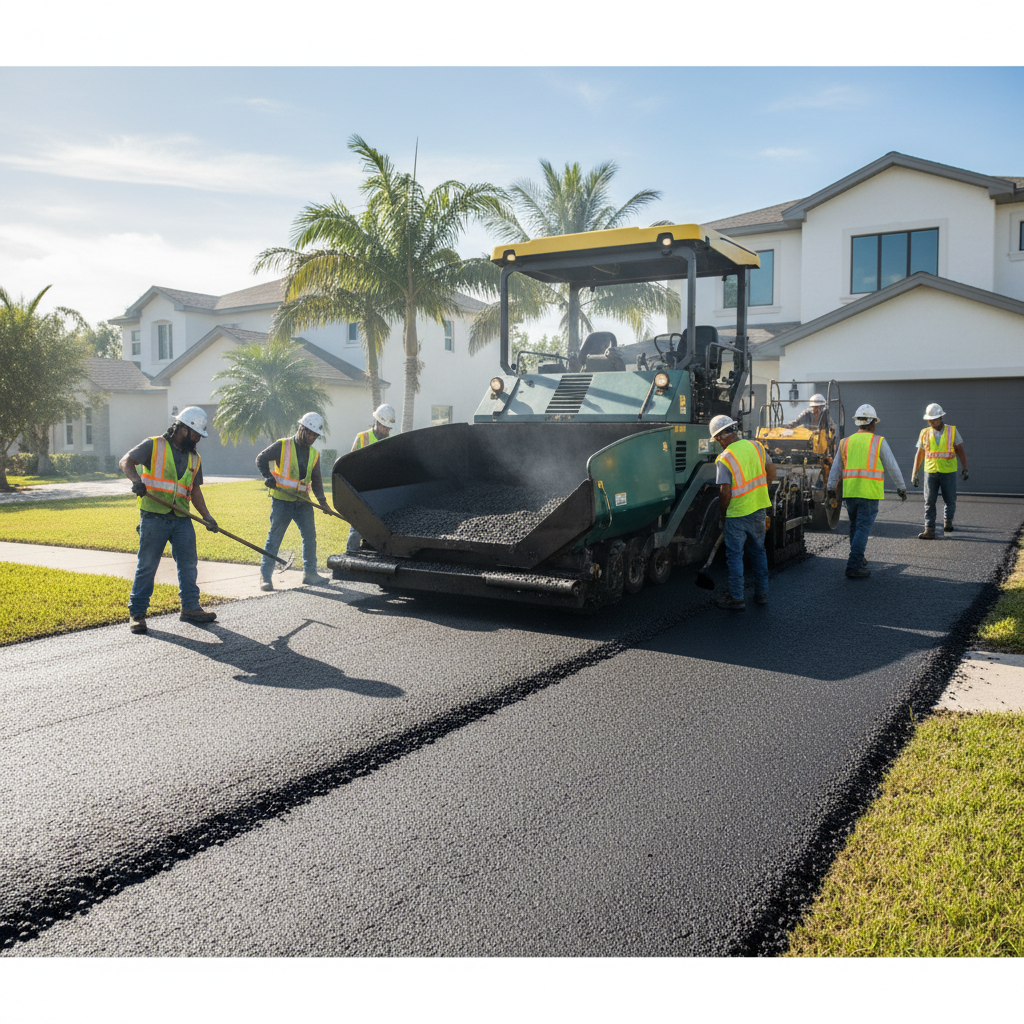
Driveway paving options and costs in North Glenmore
In North Glenmore, Alberta, choosing the right driveway surface is mostly about matching the material to our cold continental freeze–thaw cycles and the way Calgary-area lots manage water. With a 2021 population of 2,435 in the local profile area (Statistics Canada, 2021 Census), North Glenmore is the kind of neighbourhood where driveway work is often concentrated around established residential pockets rather than brand-new subdivision churn. A large share of private driveways here typically serve single-detached homes, which means most projects are straightforward in layout but demanding in base performance and edge restraint.
Calgary pricing reflects how frost penetrates to about 1.2 m (4 ft), which drives up base preparation and drainage work. Contractors build deeper granular layers and use well-graded aggregates to reduce subgrade movement and prevent heaving, cracking, and surface raveling. At the same time, the paving season is compressed—most asphalt and concrete work needs favourable temperatures and workable subgrades—so demand can spike from late spring through early fall. That’s why smaller projects in peak months can land at the higher end of the range, especially when crews are mobilizing to nearby communities and tying up equipment.
In North Glenmore, trades often see especially steady demand around the Wedgewood and North Glenmore Park-adjacent residential streets, where access is frequently tight and surface runoff management matters. Below is a practical comparison of your most common options before we get into what actually moves your quote up or down.
| Material |
Lifespan |
Maintenance |
Best For |
Price per sq ft |
| Asphalt (new installation, proper base) |
15–25 years |
Seal every 3–5 years; patch minor cracks as needed |
Lowest upfront cost with a durable, smooth drive |
$12–$20 |
| Asphalt (overlay on existing gravel base) |
12–20 years |
Seal every 3–5 years; monitor edges and weak spots |
Budget-friendly upgrade when the base is in decent shape |
$10–$16 |
| Interlocking concrete pavers |
25–40 years |
Occasional re-leveling; replace individual pavers if needed |
High curb appeal and easy spot repairs |
$18–$30 |
| Poured concrete (broom finish) |
20–30 years |
Reseal/cleaning as recommended; crack monitoring |
Clean lines, heavy-duty load capacity |
$15–$25 |
| Exposed aggregate concrete |
20–30 years |
Light cleaning; periodic seal if desired |
Slip resistance and a textured, premium look |
$20–$34 |
| Gravel / crushed stone (budget option) |
3–8 years (varies with grading) |
Top up annually; re-grade and add fresh stone |
Temporary or lowest-cost driveway foundation |
$3–$8 |
Prices are estimates only and vary by project scope, site access and material selection.
What affects the price of paving in North Glenmore
If you’re comparing quotes in North Glenmore, it’s normal to see the same driveway priced 30–50% apart across Calgary and the wider Alberta market. The spread usually comes down to the “invisible” work—how contractors address frost penetration, drainage, and subgrade stability—not just the surface material. In a cold continental climate where freeze–thaw cycles can penetrate to roughly 1.2 m (4 ft), deeper, well-compacted granular bases become non-negotiable. That’s why quotes that look similar on paper can diverge once you compare base thickness and aggregate quality.
Base depth is a major cost lever because freeze-thaw behaviour differs by region and soil conditions. In Alberta, contractors commonly plan granular thickness on the order of 6–12 inches (not counting the underlying subgrade improvements) when conditions call for stronger frost protection, especially if the existing soil is variable. In addition, the paving season is shorter: hot-mix asphalt generally needs air temperatures above 10°C for proper placement and rolling. Fewer workable weeks means higher demand for crews and equipment, which can push asphalt pricing toward the higher end of the $12–$20 per sq ft band in peak months.
Concrete quotes can also swing depending on whether the mix is air-entrained and how expansion joints and edges are detailed. For example, a driveway that must be torn out fully (old concrete removal and disposal) tends to land near the upper asphalt band as well, because hauling and replacement base material add labour. On the flip side, a site with good existing compaction, straightforward grading, and clean access can help keep costs closer to the lower end.
| Price Factor |
Why It Matters |
Cost Impact |
| Driveway area in sq ft |
Most costs scale directly with surface area and base footprint |
Large swing; expect the biggest portion of total cost |
| Base depth required |
Frost line depth and soil moisture drive granular thickness |
Can add substantial material and compaction time |
| Grading and drainage work |
Proper slope and positive drainage prevent water pooling |
Often a moderate to high increase if regrading is needed |
| Tear-out of existing surface |
Breaking and hauling concrete or old asphalt adds labour/equipment |
Commonly one of the highest “surprise” add-ons |
| Edge restraints and curbing |
Restraints keep pavers and asphalt from spreading at edges |
Typically adds cost but reduces future failure risk |
| Sealing requirement |
Asphalt needs sealing after installation window to extend life |
Adds future lifecycle cost; not usually included upfront |
| Site access |
Narrow lots slow equipment movement and increase labour time |
Can shift quotes upward during scheduling constraints |
| Asphalt mix specifications |
Freeze-thaw-rated mixes perform better under Calgary conditions |
May cost more per tonne but reduces early raveling |
Permits & regulations in Alberta
For homeowners in North Glenmore, Alberta, paving a private driveway within your own property usually does not require a building permit, as long as you’re not altering municipal infrastructure. The work that can require municipal approval typically includes anything in the municipal right-of-way (boulevard/road allowance) such as new curb cuts, changes to an existing driveway opening, or modifications that affect storm drainage and how runoff is managed at the lot line. Some areas also have lot-grading bylaws—meaning the municipality may restrict how close a hard surface can be to property lines or how water must flow.
Before excavation, always arrange utility locates through Alberta One-Call. This is non-negotiable because asphalt and base work often involves cutting, digging, and moving gravel—where underground services may run. Then confirm grading and drainage requirements with the municipality so your new driveway doesn’t trap water or force runoff onto a neighbour.
To verify a contractor, ask for three things in writing: (1) their Alberta licence status (check online through the appropriate provincial registry), (2) a current Certificate of Insurance showing liability coverage for property damage and bodily injury, and (3) their WSIB/WCB clearance letter or acceptable proof of coverage. A reputable paving company should also provide a copy of their work warranty terms before you sign.
Asphalt vs pavers vs concrete for North Glenmore driveways
In North Glenmore’s freeze–thaw climate, asphalt, interlocking pavers, and concrete can all work well when the base and drainage are done correctly. The difference is how each surface behaves under winter maintenance (salt/sand, plowing impacts, and repeated expansion/contraction) and how costly it is to fix problems later. Asphalt is typically the lowest upfront option—often closest to the $12–$20 per sq ft band—but it benefits from regular sealing every 3–5 years to slow oxidation and reduce raveling. Interlocking concrete pavers cost more upfront (commonly aligned with the $18–$30 per sq ft band) yet are one of the best choices when you value repairability: if a section settles, individual units can be lifted and reset without replacing the whole driveway.
Poured concrete sits in the middle on price and can last a long time, but it needs the right details—especially an air-entrained mix and careful jointing—because Calgary’s freeze–thaw cycling can widen micro-cracks and allow water ingress. Exposed aggregate concrete improves traction and can look premium, but it still depends on proper base prep and curing. For drainage-sensitive sites, properly installed permeable paver systems (with the correct base/drainage layers) can reduce water pooling, though they require more design discipline.
As a practical dollars example: if your driveway is about 400 sq ft, the spread between asphalt and pavers can be roughly $2,000–$7,200 depending on base, edging, and tear-out. That difference is often justified when you want long curb appeal and the ability to fix localized dips after plow wear—without redoing the entire surface.
| Material |
Frost Resistance |
Curb Appeal |
Repair Method |
Lifespan |
Price Band |
| Asphalt (sealed regularly) |
Good with frost-rated base and proper mix |
Good (clean, uniform finish) |
Patch localized areas; re-seal to extend life |
15–25 years |
$12–$20 |
| Interlocking concrete pavers |
Excellent when base is compacted and well-drained |
Very high (varied patterns/colours) |
Lift-and-reset individual pavers or sections |
25–40 years |
$18–$30 |
| Poured concrete (air-entrained) |
Good with air-entrainment and jointing |
Moderate to high (broom/finish options) |
Concrete patching; larger issues may require slab repair |
20–30 years |
$15–$25 |
| Exposed aggregate concrete |
Good with correct curing and drainage |
High (textured, premium look) |
Patch with matching mix; may be less seamless than pavers |
20–30 years |
$20–$34 |
| Permeable pavers (drainage grid) |
Good to excellent when designed for local soils |
High (clean grid/paver look) |
Replace affected units; clean/check drainage layer |
20–35 years |
$22–$38 |
| Chip seal / tar-and-chip |
Moderate; more sensitive to base and winter wear |
Low to moderate (serviceable finish) |
Spot repairs and periodic re-treatments |
5–12 years |
$8–$14 |
How to choose a paving contractor in North Glenmore
Choosing a paving contractor in North Glenmore comes down to proof, not promises. First, verify their Alberta licence status through the relevant provincial registry, then ask for a current Certificate of Insurance. You want liability coverage that matches the job size and shows they can cover damage during excavation, base work, and saw cutting. Next, confirm WSIB/WCB coverage: request their clearance letter or acceptable proof so you’re not exposed if a worker is injured on your driveway.
Get 2–3 itemised written quotes. Not a lump sum—ask for a breakdown that includes labour, granular base materials, asphalt/concrete supply, edging/curbs (if needed), excavation and haul-away, compaction, and any disposal fees. Also confirm what’s excluded: permit pulls (if required), utility locates, and repairs to settled areas beyond the paving footprint.
Look for a workmanship warranty in writing and ask whether it’s tied to the original homeowner and whether it’s transferable. For payment scheduling, never pay more than 10–15% upfront; hold back the remainder until the job is complete and cleaned. Because the paving season in Calgary is compressed, request a start date and a realistic completion estimate in writing, including weather contingencies.
- Ask for Alberta licence details and confirm the scope matches driveway paving.
- Request Certificate of Insurance and ensure it’s current for the project dates.
- Verify WSIB/WCB clearance letter or acceptable proof before work starts.
- Get 2–3 itemised quotes (labour + materials), not just a total.
- Require the base specs: thickness, aggregate type, and compaction standards.
- Confirm drainage plan: slope direction, tie-in to existing drainage, ditch/boulevard handling.
- Ask if tear-out and disposal are included if you have existing asphalt/concrete.
- Clarify edge restraints/curbing: what is installed and why.
- For asphalt: confirm mix type (freeze-thaw rated) and whether sealing is scheduled after cure.
- For concrete/pavers: confirm air-entrained mix (concrete) and jointing/drainage details (pavers).
- Get warranty terms in writing (workmanship + product, and transferability).
- Set a payment schedule with a final holdback until your punch list is complete.
Red flags we frequently see in North Glenmore: contractors who won’t show insurance/coverage documents, quoting without base thickness or drainage details, offering “cheap” paving with minimal compaction/aggregate specs, pushing full payment upfront, or starting late-fall work despite Calgary’s temperature needs—then blaming the weather for early deterioration.
Frequently asked questions — paving in North Glenmore
What base thickness do I need for pavers in North Glenmore?
In North Glenmore, base thickness for interlocking pavers depends on soil condition, drainage, and how much frost protection your subgrade needs. Because freeze–thaw cycling is a big driver here (frost can penetrate around 1.2 m / 4 ft), contractors typically engineer a compacted granular base and then build upward with bedding sand for proper setting. In many residential Calgary-area driveways, the structural base is commonly planned in the “several inches to roughly a foot” range when soils are variable—what matters is the compacted depth and gradation, not just a single number. The best approach is to have the contractor assess existing subgrade and confirm a drainage slope before final design. If you see a quote that doesn’t mention base type, depth, and compaction, ask directly.
How do I get the most accurate paving quote in North Glenmore?
For the most accurate quote in North Glenmore, make sure the estimator can see the driveway and measure the site properly. Provide driveway dimensions (length × width), confirm whether you have existing asphalt/concrete to remove, and note any drainage issues (ponding near the garage, downspouts discharging toward the drive, or a low spot near the curb cut). Ask for itemised pricing that includes excavation, granular base and compaction, drainage/grading corrections, and haul-away. Also request the mix/product details—freeze–thaw-rated asphalt and air-entrained concrete make a difference in performance here. A “ballpark” number often becomes a much tighter range once base depth and drainage are confirmed, which is where many quotes can otherwise differ by 30–50%.
How much does it cost to pave a driveway in North Glenmore?
Typical costs in North Glenmore line up with regional price bands: asphalt driveway paving commonly falls around $12,000–$20,000 in the per-sq-ft style bands you’ll see in Calgary estimates (the exact totals depend on your area, base, and tear-out). For concrete, many homeowners land in the $15,000–$25,000 range per sq ft band depending on finish and site conditions. Interlocking pavers are often the highest upfront, commonly in the $18,000–$30,000 per-sq-ft band range for material + installation. If sealing is part of your asphalt lifecycle plan, plan an additional $400–$1,500 for sealing/repairs depending on scope and condition after the initial cure period. Your final number should clearly show base, drainage, and access—those are the cost movers in our freeze–thaw climate.
Asphalt vs interlocking pavers vs concrete — which is best in North Glenmore?
“Best” depends on whether you prioritize lowest upfront cost, curb appeal, or long-term fixability. Asphalt is usually the most economical to install and can perform well in Alberta when built on a properly compacted frost-protected base; it typically needs sealing every 3–5 years to stay looking sharp. Interlocking concrete pavers cost more up front, but in North Glenmore’s winter conditions they’re often a top choice because repairs are localized—you can lift and replace affected units if a spot settles. Poured concrete can be a strong mid-range option, especially with an air-entrained mix and good jointing to manage freeze–thaw movement. If your driveway sees heavy plowing impacts or you want the easiest future repairs, pavers often win; if budget is tight, asphalt is usually the best value when drainage and base depth are done right.
How long does a paved driveway last in North Glenmore?
With correct base preparation and maintenance, driveway life in North Glenmore is typically measured in decades rather than years. Asphalt installed over a proper base often lasts about 15–25 years, but it usually needs sealing every 3–5 years to protect against oxidation and winter surface wear. Interlocking pavers often reach 25–40 years because individual units can be replaced if needed, which is helpful if freeze–thaw movement or localized drainage issues appear. Poured and exposed aggregate concrete commonly fall around 20–30 years when the concrete mix is air-entrained and joints are properly detailed. The reality is that Calgary-area freeze–thaw cycles and how you maintain the surface (salt/sand and plowing habits) can significantly change the outcome—so the best “longevity plan” includes base quality and a realistic maintenance schedule.
When is the best time of year to pave in North Glenmore?
The best time to pave in North Glenmore is typically late spring through early fall, when temperatures are suitable for compaction and curing. For asphalt, crews generally need air temperatures above about 10°C to place and roll hot-mix properly; paving too early or too late often compromises density and can lead to early raveling. Concrete placement also depends on temperature and curing conditions, and winter work is usually limited to patching or special circumstances. Because the paving season is compressed in Calgary, scheduling can tighten quickly—so homeowners who want the best availability should book during the first wave of spring scheduling rather than waiting for peak summer weeks. Your contractor should also provide a start/completion window in writing and explain how they handle weather delays.