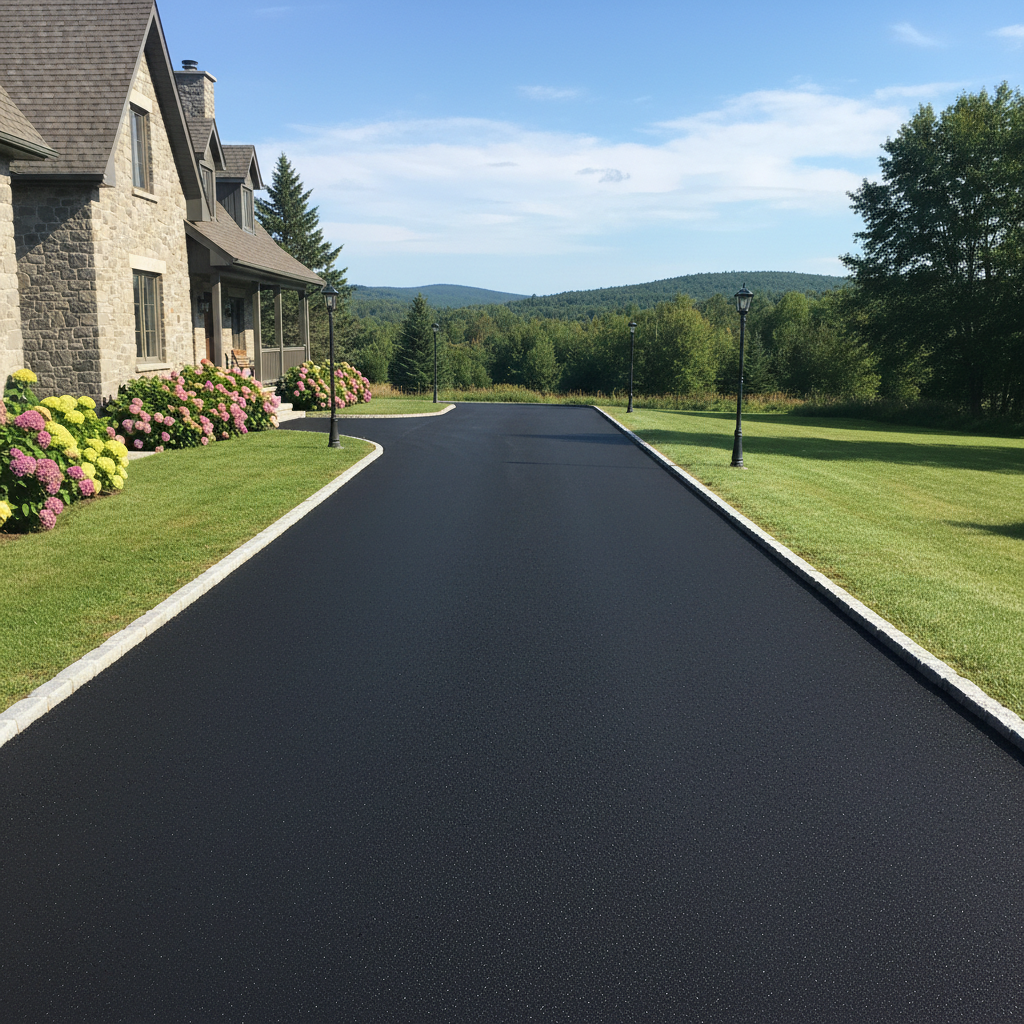
Driveway paving options and costs in Michaels Park
Michaels Park, Alberta is a small community (2,196 people in the 2021 Census, Statistics Canada), and most private driveways here are tied to detached homes—so driveway access and winter durability matter year-round. When homeowners compare options, the big differences usually come down to what thickness of base is feasible on their lot, how well drainage can be established, and how quickly the work can be completed within Calgary’s compressed paving season. In practice, crews often prioritize areas with reliable access and clear haul routes; that’s why the demand is especially noticeable around older established pockets of the Calgary–Rocky View County edge, where lots can be a bit tighter and soils vary.
In Calgary’s cold continental climate, frost routinely penetrates to about 1.2 m (4 ft). Freeze–thaw cycles move water and fine material under the surface, so the cheapest paving approach only works if the granular base is built deeper, compacted properly, and drained correctly. That’s also why you may see a 30–50% swing in quotes on similar-looking driveways: base construction, tear-out, edge restraint, and the chosen asphalt mix design all change labour and materials.
The table below compares common driveway builds you’ll see quoted in Michaels Park, along with typical lifespan, maintenance expectations, and realistic per-square-foot ranges. Use it as a starting point before you request itemised bids.
| Material |
Lifespan |
Maintenance |
Best For |
Price per sq ft |
| Asphalt (new installation, proper base) |
15–25 years |
Sealcoat every 3–5 years; patch as needed |
Smoother ride and lower upfront cost than concrete |
$12–$20 |
| Asphalt (overlay on existing gravel base) |
10–18 years |
More frequent patching; sealcoat as scheduled |
Budget refresh when the base is already stable |
$10–$17 |
| Interlocking concrete pavers |
25–40 years |
Replace individual stones/sections; joint sand re-topped |
Curb appeal and easier localized repairs |
$18–$30 |
| Poured concrete (broom finish) |
25–35 years |
Seal every 5–8 years; crack repair where needed |
Low visual maintenance with strong base support |
$15–$25 |
| Exposed aggregate concrete |
25–35 years |
Seal periodically; manage minor surface wear |
Improved texture for slip resistance |
$18–$28 |
| Gravel / crushed stone (budget option) |
3–8 years |
Ongoing top-ups, grading, weed control |
Temporary solution or very tight budgets |
$6–$12 |
Prices are estimates only and vary by project scope, site access and material selection.
What affects the price of paving in Michaels Park
In Michaels Park and across Calgary’s broader market, it’s common to see quotes for “the same” driveway differ by 30–50%. The reasons are rarely the asphalt or concrete line item alone; they’re usually base construction, drainage fixes, tear-out scope, equipment time, and whether the contractor can schedule your job when crews are already mobilized. In a compressed season, a small driveway in peak months may cost more simply because demand is high and equipment/crew availability is limited.
The biggest technical cost driver is frost line depth and freeze–thaw cycles. In Alberta’s cold continental conditions, frost can penetrate roughly 1.2 m (4 ft), which means you can’t treat the granular base as “optional.” Deeper frost requires a thicker compacted base and well-graded aggregates to reduce water movement and prevent heaving and cracking. Paving also depends on air temperature: hot-mix asphalt generally needs air temperatures above about 10°C for proper placement and compaction, so start dates can shift—raising scheduling overhead. Asphalt mix design matters too; freeze–thaw-rated mixes cost more than basic blends.
Concrete can land higher or lower depending on how it’s built. For example, if your slope directs runoff toward the driveway, the drainage correction (extra grading and pipe/stone work) can add hundreds of dollars before any concrete is poured. Conversely, if your subgrade is firm, well-drained, and the existing base is reusable, an asphalt overlay might stay closer to the lower end of Calgary’s asphalt band—around $12,000 – $20,000 depending on total area and thickness—while a fully rebuilt base will push you toward the higher range. If you’re comparing curb appeal options, interlocking pavers often fit best when you’re budgeting near the $18 – $30 per-square-foot range and want section-by-section repairs instead of full-slab replacements.
| Price Factor |
Why It Matters |
Cost Impact |
| Driveway area in sq ft |
Most costs scale directly with square footage (materials and compaction time) |
High—often the largest portion of the quote |
| Base depth required |
Frost protection depends on thicker granular layers and proper compaction |
Medium to high—changes quickly with soil/water conditions |
| Grading and drainage work |
Positive drainage prevents water pooling and freeze–thaw damage |
Medium—can jump if swales/culverts/grades need correction |
| Tear-out of existing surface |
Breaking and hauling concrete or removing old asphalt adds labour and disposal |
Medium to high—varies with thickness and access |
| Edge restraints and curbing |
Pavers need restraints to prevent lateral spread; asphalt needs solid edge support |
Low to medium—can become high on long edges or complex layouts |
| Sealing requirement |
Asphalt benefits from sealcoat after installation and during maintenance cycle |
Low for install, medium over lifecycle (budget it annually) |
| Site access |
Narrow lots slow equipment movement and increase labour time |
Medium—mobilization and staging can add costs |
| Asphalt mix specifications |
Freeze–thaw-rated mix design and quality control support longevity |
Low to medium—usually reflected across the asphalt per-sq-ft rate |
Permits & regulations in Alberta
In Alberta, paving a private driveway within your own property usually does not require a building permit. Where it changes is when the work touches the municipal right-of-way or affects storm drainage infrastructure. For Michaels Park homeowners, that typically means you may need municipal approval if you’re proposing new curb cuts, changing the boulevard, altering roadside drainage, or making any modifications that affect how water leaves the street area. Some areas also enforce lot-grading bylaws that limit how close a hard surface can be to property lines or how runoff is handled to avoid impacts on neighbours.
Step one is utility locates. Always call for Alberta One-Call (formerly known broadly as utility locate services) before excavation so locators mark buried services. Step two is contractor proof and documentation. When you’re vetting a paving company, verify their Alberta licence status (where applicable to the work), request their liability insurance certificate, and confirm they carry appropriate workplace coverage (WSIB/WCB coverage) so you’re not left holding risk if a worker gets injured on your site.
Practical checklist: ask for (1) a licence verification number or registry link, (2) a current certificate of insurance showing your address as jobsite/location, and (3) a coverage clearance letter or proof of account for WSIB/WCB. If they can’t provide these quickly, that’s a sign to move on before you sign anything.
Asphalt vs pavers vs concrete for Michaels Park driveways
For Michaels Park’s freeze–thaw winters, the three most common driveway choices—asphalt, interlocking pavers, and poured concrete—each have a “best fit” based on upfront cost, repairability, and how your home is maintained through salt and plowing. Asphalt typically has the lowest upfront cost and can look great when freshly installed, but it does require sealing every 3–5 years to protect against oxidation and to slow surface breakdown from winter moisture. In Alberta, if you skip sealing, the top layer can ravel sooner, and then water migrates into voids that worsen cracking around the wheel paths.
Interlocking concrete pavers usually cost more up front, but they shine in Calgary-area conditions because they’re repairable without replacing the entire surface. If a section settles or a localized drainage issue develops, pavers can be lifted, re-compacted, and reset. That’s a strong advantage in semi-typical residential sites around the Calgary edge where soils can vary. Poured concrete sits in the middle on cost, but it’s more sensitive to how well the base is prepared and whether concrete is properly air-entrained for freeze–thaw durability; without good air entrainment and correct base drainage, cracking can show up and de-icing salts can accelerate surface wear.
Base depth and drainage design drive performance more than material marketing. With frost penetrating deeply in this region, the granular base and slope control should be built to manage water. Here’s where dollars make sense: if your driveway is in the asphalt band (about $12 – $20 per sq ft), switching to pavers in the $18 – $30 per sq ft range is often justified when you want long-term curb appeal and the ability to repair a failed spot without tearing out the full driveway.
| Material |
Frost Resistance |
Curb Appeal |
Repair Method |
Lifespan |
Price Band |
| Asphalt (sealed regularly) |
Good with thick base and proper drainage |
Medium—clean finish when new |
Cold patch / cut-and-repair sections |
15–25 years |
$12 – $20 |
| Interlocking concrete pavers |
Excellent when base is engineered and edges are restrained |
High—wide design choice |
Remove and re-install individual units/sections |
25–40 years |
$18 – $30 |
| Poured concrete (air-entrained) |
Good when air-entrained and joints are done correctly |
Medium—smooth and modern or broom finish |
Crack repair and patching; slab replacement if severe |
25–35 years |
$15 – $25 |
| Exposed aggregate concrete |
Good with proper base and curing |
High—textured, premium look |
Targeted patching; may blend with reseal work |
25–35 years |
$18 – $28 |
| Permeable pavers (drainage grid) |
Very good for water management if installed correctly |
High—clean look with eco-feature |
Replace affected units; maintain drainage layer |
20–35 years |
$20 – $35 |
| Chip seal / tar-and-chip |
Moderate—better for certain low-speed/maintenance plans |
Lower—more functional than decorative |
Re-seal / re-chip as binder wears |
8–15 years |
$8 – $15 |
How to choose a paving contractor in Michaels Park
Picking the right paving contractor in Michaels Park isn’t just about the lowest number. Start by verifying Alberta licensing where applicable to the scope, then confirm you’re protected with liability insurance and workplace coverage (WSIB/WCB). Ask for the current certificate of insurance and proof of coverage before work begins—don’t rely on “we’re covered” verbal answers. You want paper copies you can review, with policy dates and the right contractor details.
Next, request 2–3 itemised written quotes. A good quote breaks down labour and materials (excavation, granular base, asphalt/concrete supply, edging, drainage corrections, hauling/disposal, and compaction). Avoid quotes that only show a single lump sum without showing what’s included—especially because Calgary-area frost performance depends on base and drainage, not just surface choice.
Read the scope for exclusions: Is permit or municipal approval work included (if needed for right-of-way changes)? Is disposal of removed concrete/asphalt included? Are equipment mobilization and staging accounted for? Then check warranty terms. Ask for workmanship warranty length, what the manufacturer covers (if applicable), and whether the warranty transfers to a new owner.
For payment schedule, never pay more than 10–15% upfront. Hold back the final payment until the job is complete, cleaned up, and your warranty paperwork is delivered. Finally, insist on a start date and completion estimate in writing, since weather windows in the Calgary region can tighten quickly in spring and early fall.
- Ask for Alberta licence verification and business address details.
- Request a current certificate of liability insurance (policy active dates).
- Confirm WSIB/WCB coverage with clearance proof for their workers.
- Get 2–3 quotes that itemise base, drainage, surface, edging and disposal.
- Ensure the quote states compaction method and target base thickness.
- Confirm whether the contractor includes saw-cutting/joint details (concrete) or edge restraints (pavers/asphalt).
- Ask how they handle drainage improvements (slope corrections, stone, pipe).
- Clarify what’s excluded: fences, landscaping reinstatement, or utility locates.
- Verify warranty: workmanship duration and what voids coverage.
- Ask whether warranties are transferable if you sell the home.
- Use a payment schedule that keeps final holdback until completion.
- Get a written start/completion timeline tied to seasonal temperature windows.
Common red flags I see with paving bids in and around Michaels Park include: contractors who won’t provide insurance/WSIB proof, quotes that don’t specify base depth or drainage expectations, “too cheap to be true” labour-only pricing without tear-out and disposal details, vague warranty language, and pressure to sign quickly without a written scope and schedule.
Frequently asked questions — paving in Michaels Park
How long does a paved driveway last in Michaels Park?
In Michaels Park, a well-built asphalt driveway typically lasts about 15–25 years, and it can reach the top end when the granular base is engineered for Alberta’s freeze–thaw conditions and the drainage directs water away. Interlocking pavers often last longer (25–40 years) because they’re repairable, which is helpful if any localized settlement occurs on a residential lot. Poured concrete generally targets 25–35 years when it’s air-entrained, placed on a properly compacted base, and jointing/crack control is done correctly. Your real-world lifespan depends heavily on water management (standing meltwater is the enemy), how soon you seal asphalt, and how winter maintenance is handled (plow impacts and de-icing salts). For asphalt, don’t ignore the maintenance cycle—skipping sealcoat can shorten life even if the original installation looks good.
When is the best time of year to pave in Michaels Park?
The best time is late spring through early fall in the Michaels Park area, because paving depends on consistent ground conditions and suitable air temperatures. For asphalt, contractors typically need air temperatures above roughly 10°C to place and compact hot-mix properly, and crews also watch for rain and thawed subgrade that won’t compact to spec. Concrete can also be vulnerable to early-season cold snaps if curing conditions aren’t managed. That’s why schedules tighten in Calgary-area peak weeks: when demand rises, smaller jobs may cost more due to mobilization and crew availability. If you’re planning for next season, ask contractors about their estimated start window now, and make sure your driveway base and drainage scope is confirmed—so you’re not forced into a mid-season rush that compromises compaction.
How deep should the base be for Michaels Park's frost?
Because frost in Alberta can penetrate deeply (about 1.2 m or 4 ft), base depth is not a “one-size” number. The right thickness depends on your soil type, moisture, and drainage, but the key principle is that the base must be thick enough—and made from well-graded, compactable granular materials—to limit water movement and prevent heaving and cracking. In practice, Calgary-area residential driveways often require a deeper granular base than you’d see in milder regions, and the contractor should specify the base layers and compaction targets in writing. If you’re comparing quotes, don’t accept vague wording like “proper base”—ask for the actual base thickness. When contractors cut base thickness to reduce cost, that’s where winter damage usually starts, even if the surface looks fine in summer.
How often should I seal my asphalt driveway?
For asphalt in Michaels Park, a common recommendation is sealcoat about 6–12 months after installation (after the surface has oxidized enough for the system to bond), then plan on re-sealing every 3–5 years depending on traffic, weather exposure, and how much sand/salt contact the driveway gets. If you seal too early, adhesion can be poor; if you delay too long, the surface can ravel and let water into the asphalt structure, which accelerates cracking—especially with freeze–thaw cycles. When you get a quote, ask whether sealing is included in the estimate or treated as a separate future maintenance line item. Budgeting for sealing also helps you compare lifecycle cost fairly: an asphalt install near the $12 – $20 per sq ft band can become more expensive over time if sealcoat is skipped.
Why does my driveway crack and heave in winter?
Cracking and heaving in an Alberta winter usually comes from water plus movement. In Michaels Park, freeze–thaw cycles expand water when it freezes, and if meltwater can’t drain away, it soaks into base materials and weak spots under the surface. When water repeatedly freezes and thaws, the subgrade can shift, the asphalt or concrete loses support, and wheel paths show cracking first. Common causes include inadequate base thickness, poor drainage slope, missing edge restraints (especially on paver borders), or a surface that allows water to pond during spring thaw. De-icing salt and plowing can also worsen surface wear, but they usually don’t create the underlying problem by themselves. The solution starts at the base and grading stage—so the right thickness and drainage plan in your quote matter.
Do I need a permit to pave my driveway in Alberta?
In Alberta, paving a private driveway within your own property typically does not require a building permit. However, if you’re doing work in the municipal right-of-way—like creating or changing curb cuts, modifying boulevard areas, or altering storm drainage—you should expect to get municipal approval first. Michaels Park homeowners should also confirm any local lot-grading requirements that affect how runoff is handled near property lines. Before excavation, make sure utility locates are completed through Alberta One-Call. When you hire a contractor, ask them to clearly state whether municipal approvals are required for your specific scope and whether permit paperwork (if applicable) is included. A competent contractor will review the site conditions early, because trying to proceed without approvals can delay the project and add costs.