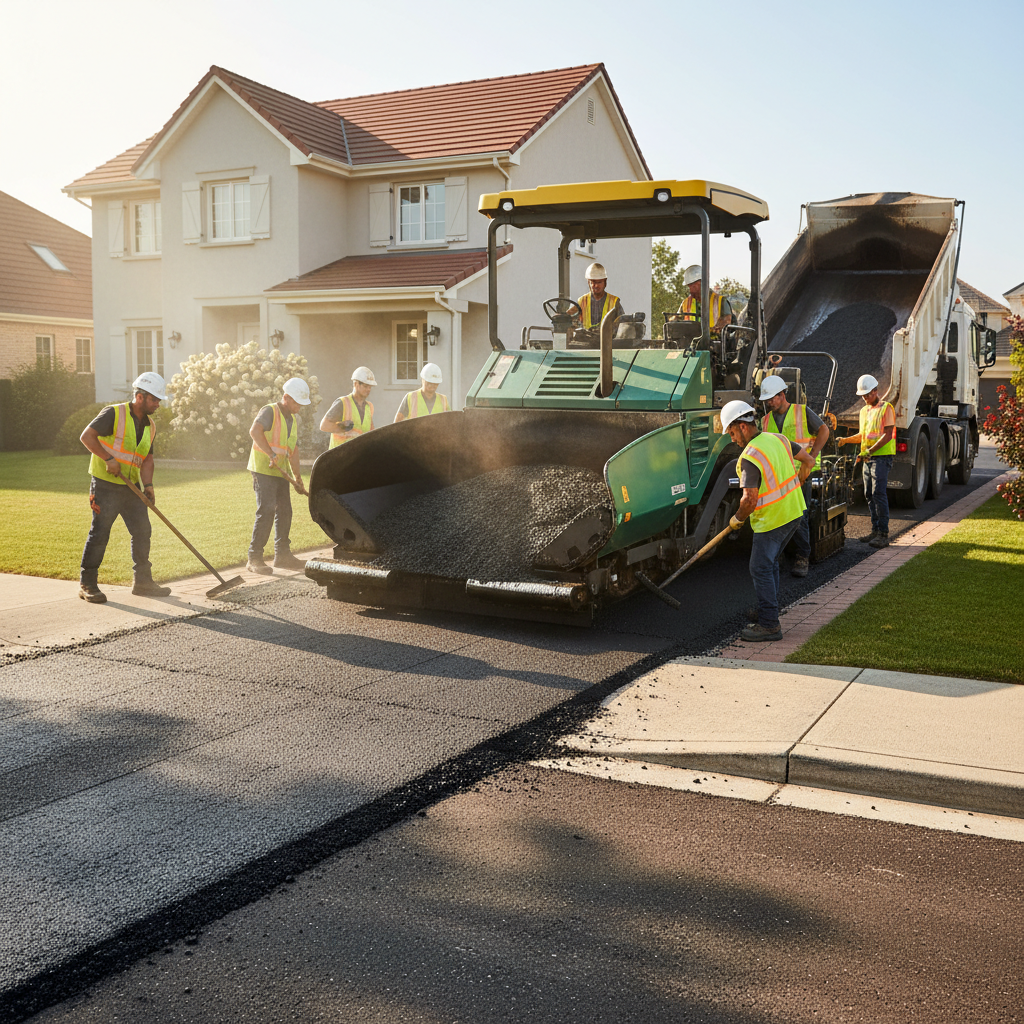
Driveway paving options and costs in Canyon Meadows
Canyon Meadows, Alberta is where a lot of Calgary homeowners want a driveway that looks sharp but also survives the real winter: freeze–thaw cycles, spring thaw traffic, and winter maintenance with plows and salt. With 7,435 residents in the 2021 Census (Statistics Canada, 2021 Census), it’s a smaller, concentrated community—so contractors tend to stay busy when the weather cooperates. Most private driveways here are tied to single-detached homes, and that means projects are usually straightforward in shape, but they still demand correct base depth, proper slope, and strong edge restraint to keep water from migrating under the asphalt or pavers.
In Calgary’s cold continental climate, frost can penetrate to about 1.2 m (4 ft). That’s why driveway pricing isn’t just about surface square footage—quotes swing with excavation depth, granular base thickness, and drainage corrections. Also, Calgary’s paving season is compressed: hot-mix asphalt generally needs air temperatures above about 10°C, so timing in late spring and summer can affect availability and unit pricing. If you’re located near Westview or around the Canyon Meadows/Ring Road access points, contractors often see especially tight scheduling because those areas draw consistent demand from the broader Calgary market.
Use the comparison table below as a realistic planning range for Canyon Meadows so you can talk numbers with your contractor before site conditions narrow the final quote.
| Material |
Lifespan |
Maintenance |
Best For |
Price per sq ft |
| Asphalt (new installation, proper base) |
15–25 years |
Sealcoat every 3–5 years; crack repair as needed |
Lowest upfront cost with good overall performance |
$12 – $20 |
| Asphalt (overlay on existing gravel base) |
12–20 years |
Sealcoat every 3–5 years; may need patching sooner |
When you have usable base and want a faster upgrade |
$13 – $22 |
| Interlocking concrete pavers |
25–35 years |
Re-sand joints; spot repairs without full replacement |
Curb appeal and easy localized repairs |
$18 – $30 |
| Poured concrete (broom finish) |
25–30 years |
Occasional crack sealing; recoat if needed |
Clean look and durable “one-time” surface |
$15 – $25 |
| Exposed aggregate concrete |
25–30 years |
Crack sealing; minor patching over time |
Slip resistance and premium appearance |
$18 – $28 |
| Gravel / crushed stone (budget option) |
3–8 years |
Top-up annually; raking and edge maintenance |
Short-term solution or low-budget staging |
$6 – $12 |
Prices are estimates only and vary by project scope, site access and material selection.
What affects the price of paving in Canyon Meadows
It’s common to see the same “driveway paving” scope come in 30–50% apart across the Calgary region. The reasons usually aren’t mysterious—they’re mostly about what’s happening below the surface: excavation volume, base thickness, drainage fixes, and disposal. Even when two quotes list asphalt within the same $12–$20 range, one contractor may be rebuilding a weak granular base properly while the other assumes you have suitable material in-place.
In Alberta, frost line depth and freeze–thaw cycles are decisive cost factors. Calgary’s freeze–thaw environment pushes contractors to use well-graded aggregates and to build a deeper, well-compacted granular base so water can’t move and expand under the pavement. Practically, that means many residential driveways in Calgary end up needing thicker base and careful subgrade prep than in milder climates. When the weather tightens the paving season, crew availability and equipment scheduling also concentrate demand—so spring/summer timelines can make even small projects feel more expensive.
Two examples from Canyon Meadows: (1) if your driveway ties into a sloped lot or downspout runoff area, you may need grading and drainage corrections before asphalt goes down—otherwise you’ll fight water-related failure. (2) if your driveway apron area has older, broken concrete leading to soft spots, tear-out and re-compaction add labour and disposal. Those steps can move a job from the lower end of the $12–$20 asphalt band toward the higher end, while pavers can justify their $18–$30 range when you want the ability to lift and reset sections after future settling or utility work.
Think of paving as a system: base, drainage, and edge support are what keep your surface flat through winter and spring thaw, not just the top layer.
| Price Factor |
Why It Matters |
Cost Impact |
| Driveway area in sq ft |
The surface area sets material quantity and production time |
Often the largest swing factor; small increases can change mobilization math |
| Base depth required |
Frost conditions drive granular thickness and compaction requirements |
More excavation and thicker base can add substantial labour/material costs |
| Grading and drainage work |
Correct slopes and positive drainage prevent water migration under pavement |
Can add excavation, form/grade adjustments, and extra base material |
| Tear-out of existing surface |
Breaking/hauling concrete or ripping old asphalt impacts disposal and time |
Higher disposal + longer equipment hours typically increase totals |
| Edge restraints and curbing |
Prevents paver spread and keeps asphalt from creeping or raveling |
Adds materials and labour, especially on irregular edges |
| Sealing requirement |
Asphalt needs sealcoat within the first 6–12 months, then periodically |
May increase initial cost but reduces long-term deterioration |
| Site access |
Narrow driveway widths or limited turnaround slow equipment and limit staging |
More labour time and smaller production can raise unit pricing |
| Asphalt mix specifications |
Freeze–thaw-rated mix and proper design improve durability in Alberta winters |
Higher material specifications can move asphalt closer to the upper band |
Permits & regulations in Alberta
In Alberta, paving a private driveway within your own property typically doesn’t require a building permit. In practice, most homeowners in Canyon Meadows can proceed with private-scope work—like asphalt paving, concrete placement, paver installation, or rebuilding a driveway surface—without applying for a permit, as long as you’re not changing municipal infrastructure.
Where approvals often come in is when the work touches the municipal right-of-way or alters how drainage runs. For example, a permit/approval is commonly required for things like new curb cuts/apron adjustments, changes to boulevard landscaping, modifications to storm drainage, or any work that impacts how water flows between the road and your lot. If your driveway ties into an existing municipal apron or you need an adjustment to the curb line, you should confirm the municipality’s requirements before excavation.
Before you hire anyone, build a simple verification checklist:
- Ask the contractor for their Alberta licence information and verify they are properly registered for the work they’re doing (check online licensing registries).
- Request a current Certificate of Insurance showing general liability coverage (and ensure it includes your address/jobsite if possible).
- Confirm WSIB/WCB coverage for workers (ask for a clearance letter or proof of coverage from the contractor).
- Call utility locates—Alberta One-Call—so excavation doesn’t damage buried services.
- Ask about lot-grading rules and how close to property lines hard surfaces may be, since some municipalities restrict grading and runoff control details.
Step one is confirming the scope: if it stays fully on private property, permitting is usually minimal; if it changes the municipal interface or drainage, approval requirements can apply.
Asphalt vs pavers vs concrete for Canyon Meadows driveways
For Canyon Meadows homeowners, the “best” driveway material usually comes down to how you want to balance upfront cost, appearance, and long-term maintenance through Alberta’s freeze–thaw winters. Asphalt is typically the lowest upfront option and is often chosen when budgets are tighter or when you want a smooth, dark surface. It does require sealcoating every few years; without it, asphalt binder ages faster and raveling can show up sooner, especially near where plows push sand and salt.
Interlocking concrete pavers cost more up front (often within the $18–$30 range), but they’re the most homeowner-friendly for repairs. If a section settles or you ever need access for utilities, pavers can be lifted and reset without tearing out the whole driveway. That’s a real advantage in Calgary areas where soil variability can create localized movement.
Poured concrete is usually mid-range ($15–$25) and looks clean, but it must be air-entrained in cold climates to handle freeze conditions. Concrete that isn’t detailed well—especially with proper base prep and joints—can crack as the ground cycles. Exposed aggregate offers great traction and a higher-end finish, while permeable or drainage-grid solutions can help manage water—though they still rely on correct granular base design.
In real pricing terms: if a 400 sq ft driveway came in at roughly $12–$20 per sq ft for asphalt and $18–$30 for pavers, the paver premium can be justified if curb appeal is a priority and you want repairability instead of full replacement. If the subgrade is already solid and you’re disciplined about sealcoating, asphalt can be the better value.
Across Calgary’s winter maintenance routine (plowing, sanding, and salt exposure), all three materials can perform well when the base and drainage are built for frost, but asphalt’s longevity depends heavily on routine sealing and timely crack repair.
| Material |
Frost Resistance |
Curb Appeal |
Repair Method |
Lifespan |
Price Band |
| Asphalt (sealed regularly) |
Good with proper base and sealcoat discipline |
Medium (clean, uniform look) |
Patch and re-surface sections; sealcoat to blend |
15–25 years |
$12 – $20 |
| Interlocking concrete pavers |
Excellent when base is engineered and edges are restrained |
High (wide colour/pattern options) |
Lift/reset individual units or sections |
25–35 years |
$18 – $30 |
| Poured concrete (air-entrained) |
Good with correct mix, joints and air entrainment |
Medium–High (broom finish or upgrades) |
Crack repair and patching; full replacement if extensive failure |
25–30 years |
$15 – $25 |
| Exposed aggregate concrete |
Good with proper base and finishing |
High (textured, premium appearance) |
Patch with matched mix; spot repairs where feasible |
25–30 years |
$18 – $28 |
| Permeable pavers (drainage grid) |
Excellent water management when installed over designed base |
Medium–High (clean, functional patterns) |
Spot replace paver blocks; address drainage layers if needed |
20–30 years |
$20 – $35 |
| Chip seal / tar-and-chip |
Fair to good; more sensitive to maintenance and wear |
Lower (texture-focused, not architectural) |
Spot blotch/patch and re-surface eventually |
7–15 years |
$10 – $18 |
How to choose a paving contractor in Canyon Meadows
Start by verifying the contractor meets Alberta expectations for working on your site. Ask for their Alberta licence details (and confirm the registration online where applicable), a Certificate of Insurance for general liability, and proof of WSIB/WCB coverage. In many jobs, the cleanest way to check WSIB/WCB is to request a clearance letter or direct documentation showing active coverage—don’t rely on verbal assurance.
Next, get 2–3 itemised written quotes. You want a breakdown that separates labour and materials, not a single “lump sum” number. Look for line items like excavation and disposal, granular base supply and compaction, geotextile use (if needed), asphalt or concrete supply, curb/edge restraint, and any required drainage or grading corrections. Clarify what’s excluded: is permit/municipal approval included if the work touches the right-of-way? Is topsoil replacement included? Is old asphalt/concrete disposal included, or will you be billed separately?
Warranty matters in cold climates. Ask for a clear workmanship warranty length, whether it covers base preparation and settlement-related issues, and whether the manufacturer warranty on asphalt/concrete products is included or transferable. Finally, manage payment: never pay more than 10–15% upfront, and use a holdback until the driveway is complete and cleanup is done. Get the start date and estimated completion in writing—especially since Canyon Meadows projects often depend on tight spring weather windows.
- Confirm Alberta licence and appropriate trade registration for the scope.
- Verify general liability insurance with a current certificate.
- Request WSIB/WCB proof (clearance letter/documentation).
- Demand itemised labour + material pricing, not just totals.
- Check how many inches of base are specified and how it will be compacted.
- Confirm drainage plan: slope targets and water direction.
- Clarify tear-out scope and disposal fees for old asphalt/concrete.
- Ask whether geotextile is included for weak or variable soils.
- Verify edge restraint details and materials (especially pavers).
- Ask about asphalt mix design for freeze–thaw conditions.
- Read warranty coverage details and what voids it (e.g., sealcoating neglect).
- Set payment schedule: max 10–15% upfront; holdback until final walkthrough.
Red flags I watch for in Canyon Meadows: vague scopes (“we’ll prep properly”), quotes that don’t specify base depth or drainage corrections, refusal to provide insurance/WSIB proof, payment demands above 10–15% upfront, and no written start/completion timeline during the short paving season.
Frequently asked questions — paving in Canyon Meadows
How do I prepare for a paving project?
Preparation in Canyon Meadows starts with reducing surprises for the contractor. Clear the driveway route of vehicles, trailers, and stored materials for at least the scheduled workday(s), and flag any sprinkler heads, light fixtures, or post anchors so they can be protected or adjusted. If you know of soft spots, pooling water, or downspout runoff that hits the driveway, tell your contractor—those details affect grading and drainage design. Plan for utility locates through Alberta One-Call before excavation, even if you think the driveway is “simple.” Finally, review whether your job stays within your property lines or if you need work near the boulevard/curb area; work in municipal right-of-way may require approvals, which can delay scheduling during the short late-spring to early-fall window.
How do I compare paving quotes fairly?
To compare quotes fairly in Alberta, look past the total price and compare the scope line-by-line. Asphalt within the common $12–$20 range should still include the same base depth, compaction method, drainage fixes, and edge restraint details—those items drive true cost. Ask each contractor to itemise excavation/disposal, granular base quantity, any geotextile, and the surfacing material (including asphalt mix specifications for freeze–thaw). Confirm whether sealing is included for asphalt (often within 6–12 months) and whether warranty terms differ. If one quote includes curb/edge work and tear-out while another doesn’t, the lower number usually isn’t directly comparable. Your goal is “same inputs, same deliverables,” not just the lowest sticker price.
Can asphalt be laid in cold weather in Canyon Meadows?
In Canyon Meadows, cold weather can make asphalt performance unreliable. Asphalt production and placement require conditions that allow proper compaction and curing; crews generally need warm-enough air temperatures (commonly above about 10°C) and a surface that isn’t excessively wet or frozen. If it’s too cold, you risk inadequate compaction, poor bonding, and accelerated wear during the next freeze–thaw season. Because Calgary’s paving season is compressed, many homeowners plan for late spring through early fall so the contractor can achieve correct temperature and moisture conditions. If you’re aiming for fall work, ask your contractor how they manage temperature and whether they’ll push back to maintain proper quality. In cold weather, “getting it done” can cost more later.
What is a driveway apron and do I need one in Canyon Meadows?
A driveway apron is the transition area that connects your driveway to the street/curb line, including the section that receives the vehicle approach. In many Canyon Meadows setups, the apron is either existing or handled as part of the curb/municipal interface. Whether you “need” a new apron depends on the condition and how your driveway meets the road—settled concrete, broken curb surfaces, or drainage issues can warrant an upgrade. If any work involves changing the municipal right-of-way (for example, adjusting the curb line, driveway access, or storm drainage), approvals are often required. If your contractor tells you they’ll modify the apron area, ask what municipal process they follow and whether permits/approvals are included. If your work is purely within your property, the process is usually simpler.
How do I maintain my driveway through Canyon Meadows winters?
Winter maintenance in Canyon Meadows is about protecting the surface from water and abrasion. Start with plowing practices: avoid scraping the edge restraint or paver joints, and don’t over-apply salt. Salt and sand can accelerate deterioration, especially on asphalt surfaces where binder aging leads to surface raveling if sealcoat is neglected. After heavy snowfall, remove debris early so meltwater doesn’t linger on the driveway. For asphalt, plan for sealcoating every 3–5 years (and ideally within the first year after installation) to slow aging from freeze–thaw stress. For concrete, keep the surface as dry as practical and address new cracks promptly with appropriate crack sealant. Finally, if you see recurring pooling or water tracks, that points to a grading/drainage issue—fixing the root cause is more cost-effective than patching.
Is it worth sealing a new driveway right away in Canyon Meadows?
In most cases in Canyon Meadows, sealing is worth planning—and timing matters. Asphalt generally needs a sealcoat after the pavement has cured, often within about 6–12 months of installation, depending on weather and product used. Sealing earlier than the right cure window can trap moisture or weaken the long-term bond, while waiting too long allows binder aging and faster surface breakdown during freeze–thaw cycles. If your contractor offers a sealing plan, ask about when they recommend it and what it includes (crack prep, cleaning, and application method). Sealing and repair are typically priced in the $400–$1,500 band depending on driveway size and condition, so it’s a small fraction of a full replacement and can extend service life. Treat it as part of lifecycle cost, not an optional add-on.