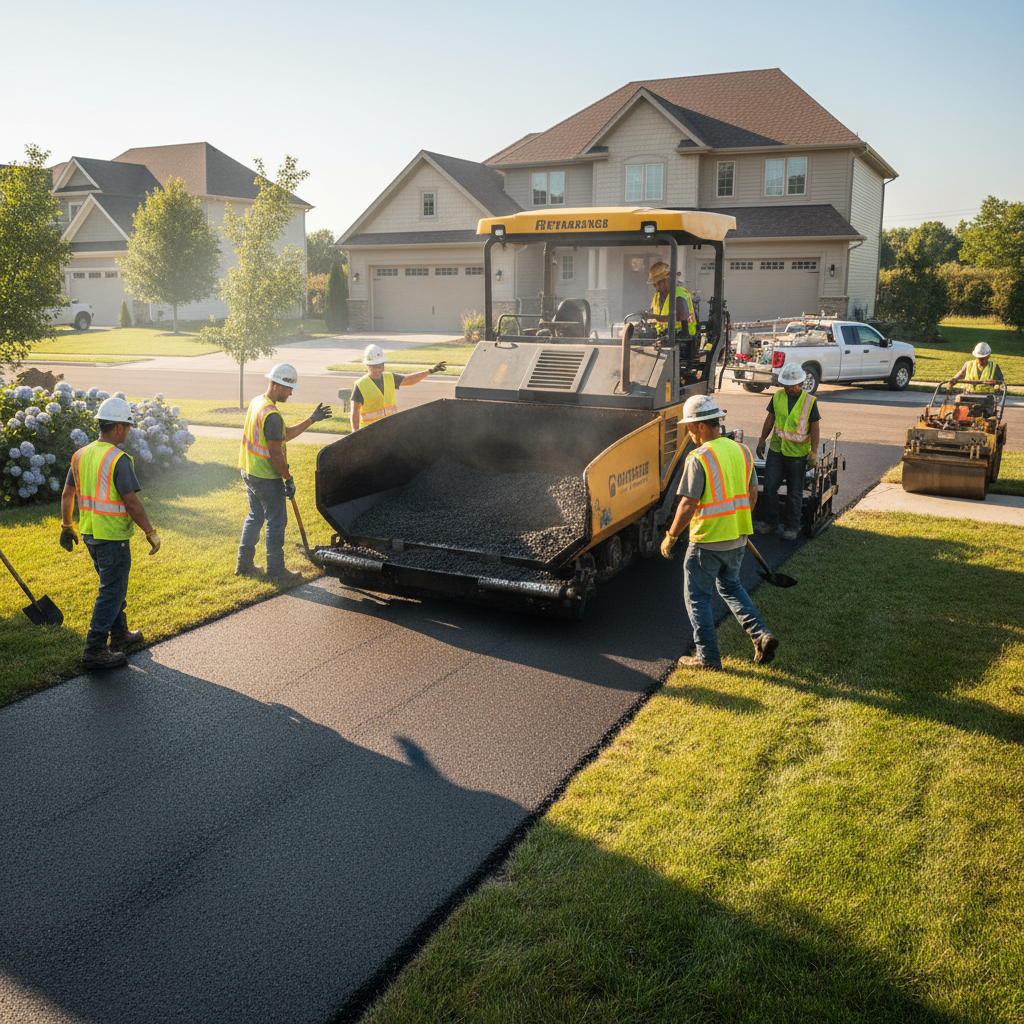
Driveway paving options and costs in McKenzie Lake
In McKenzie Lake, Alberta, homeowners typically choose among asphalt, interlocking concrete pavers, or concrete based on budget, curb appeal, and how well the surface handles Calgary’s freeze–thaw winter. With a population of 13,290 (Statistics Canada, 2021 Census), there’s a steady mix of growing residential lots and established properties—so contractor availability and scheduling can swing through the season. Most private driveways here serve single-family homes, which means consistent demand for driveway-sized projects, especially around community hubs and busier subdivisions like the McKenzie Towne area where residents often renew curb appeal and winter performance at the same time as landscaping updates.
Pricing in Calgary’s region is strongly affected by frost penetration and drainage. Frost routinely drops to about 1.2 m (4 ft), and repeated thaw cycles move water in and out of the subgrade. That’s why contractors price proper granular base thickness, compaction, and edge support before they ever apply asphalt or concrete. In peak spring and early summer, the shorter paving window also tightens scheduling—hot-mix asphalt needs warm enough air and ground conditions, so crews and equipment are in higher demand.
The table below shows realistic lifespan expectations and typical cost ranges for driveway materials in McKenzie Lake. Use it as a starting point, then compare quotes that include the same base depth, drainage plan, and disposal scope—otherwise “cheap” bids can cost more over the next few winters.
| Material |
Lifespan |
Maintenance |
Best For |
Price per sq ft |
Price Range |
| Asphalt (new installation, proper base) |
15–25 years |
Seal 3–5 years after install; crack fill as needed |
Lower upfront cost with strong performance when drainage is right |
$3.00–$5.00 |
$12,000–$20,000 |
| Asphalt (overlay on existing gravel base) |
10–18 years |
Seal every 3–5 years; more frequent crack maintenance |
Budget upgrade when base is stable and well-graded |
$2.50–$4.50 |
$10,000–$16,000 |
| Interlocking concrete pavers |
25–40 years |
Joint sand top-ups; occasional panel-level resets |
Maximum curb appeal and easier localized repairs |
$5.50–$8.50 |
$15,000–$24,000 |
| Poured concrete (broom finish) |
25–35 years |
Seal optional; patching and sealing hairline cracks |
Clean, simple look with good longevity |
$5.00–$7.50 |
$14,000–$22,000 |
| Exposed aggregate concrete |
25–35 years |
Sealer recommended every 4–7 years |
Higher traction and premium appearance |
$6.50–$10.00 |
$18,000–$28,000 |
| Gravel / crushed stone (budget option) |
3–7 years (varies by traffic and drainage) |
Regrade and top up annually; weed control; winter raking |
Temporary or low-budget solutions |
$1.50–$2.50 |
$4,000–$8,000 |
Prices are estimates only and vary by project scope, site access and material selection.
What affects the price of paving in McKenzie Lake
In McKenzie Lake and across Calgary’s surrounding communities, two quotes for the “same” driveway can differ by 30–50% because the hidden part of the job is the site prep: excavation, base thickness, drainage correction, and the disposal of unsuitable material. In a cold continental climate with frost penetration around 1.2 m (4 ft), subgrade conditions matter—bad soil or poor drainage forces contractors to overbuild the base and tighten compaction, which costs more in labour and aggregate.
Frost line depth and freeze–thaw cycles are decisive cost factors. Deeper frost requires a thicker compacted granular base (commonly 6–12 inches in Ontario/Alberta-style builds, depending on soil and engineering assumptions) to prevent heaving, cracking, and surface raveling. If water can’t drain away from the subgrade, it expands during freeze events and pushes the surface upward—then you pay for repairs later. The paving season is also compressed: hot-mix asphalt requires warm air and suitable ground conditions (often above 10°C for placement and compaction), so spring and early summer demand spikes. That concentration of work can raise per-square-foot pricing, particularly for smaller driveways that still require full mobilization.
Concrete costs can also move based on mix design and detailing. For example, in McKenzie Lake, deeper frost and winter salting typically mean air-entrained concrete and sound jointing to reduce freeze damage. Another cost driver is whether your driveway is on a raised or sloped lot; if grading needs correction to shed water, expect extra groundwork. If your home is older and the existing slab has failed, a full tear-out can add thousands—whereas replacing only limited distressed areas may keep you closer to the asphalt band of roughly $12–$20 for many residential driveway scenarios.
For planning, it helps to compare apples to apples: an asphalt installation in the $12–$20 range may be the most economical upfront, while pavers often land higher (commonly in the $18–$30 range) when the base and edge restraint are properly built for long-term freeze–thaw performance.
| Price Factor |
Why It Matters |
Cost Impact |
| Driveway area in sq ft |
Most materials and labour scale directly with surface area. |
High impact (often 50–70% of total project cost) |
| Base depth required |
Frost-related movement control depends on granular thickness and compaction. |
High impact (+$1,000 to +$6,000 depending on soil and thickness) |
| Grading and drainage work |
Slope corrections and sub-drainage prevent water from freezing under the slab. |
Medium to high impact (+$800 to +$5,000) |
| Tear-out of existing surface |
Breaking, loading, and hauling concrete or old asphalt adds labour and disposal. |
Medium impact (+$1,200 to +$7,000) |
| Edge restraints and curbing |
Prevents paver spreading and asphalt edge failure during freeze–thaw movement. |
Medium impact (+$500 to +$3,500) |
| Sealing requirement |
Asphalt sealer protects against oxidation and water infiltration. |
Low to medium impact (+$400 to +$1,500 total lifecycle) |
| Site access |
Narrow lots slow equipment movement and can require more handwork. |
Medium impact (+$300 to +$2,500) |
| Asphalt mix specifications |
Freeze–thaw-rated mixes can cost more but improve durability. |
Low to medium impact (+$300 to +$1,800) |
Permits & regulations in Alberta
In Alberta, paving a private driveway within your own property usually does not require a building permit. Most homeowners only need municipal approval when the work affects something in the municipal right-of-way—such as a new or changed curb cut, modifications to the boulevard, or changes to storm drainage patterns that influence municipal catchments. Some areas also have lot-grading expectations that restrict how close a hard surface can sit to certain property boundaries and how water should be routed.
Before any excavation, call for utility locates through Alberta One-Call. Even if you “know where the lines are,” locates help protect you and your contractor from costly strikes and delays. It’s also smart to confirm any lot-grading bylaw requirements with the municipality or your local permit office, particularly if your driveway ties into existing swales or if you’re changing the drainage direction.
To verify your contractor in McKenzie Lake, homeowners should check three things step by step. First, confirm the company’s Alberta licence/registration through the appropriate online public listings and verify the contractor is active (not a temporary crew with no local record). Second, request a current certificate of insurance showing general liability coverage (and ensure it names you as a certificate holder where applicable). Third, confirm workers’ compensation coverage: ask for proof of WCB/WSIB-style coverage for their workers and subcontractors; if they use subcontractors, you want documentation that those parties are covered too. Finally, keep a copy of any clearance letter or coverage confirmation provided—your quote package should include it.
Asphalt vs pavers vs concrete for McKenzie Lake driveways
For McKenzie Lake driveways, the freeze–thaw reality is the deciding factor: water management and base construction determine whether your surface stays smooth after years of winter plowing, salting, and spring thaws. Asphalt typically offers the lowest upfront cost and a straightforward look, but it needs sealing every 3–5 years to limit oxidation and reduce water infiltration. If the base and drainage are done well, asphalt can still perform strongly in Calgary’s climate.
Interlocking concrete pavers usually cost more up front, but they’re repair-friendly. When one section suffers from settlement or edge issues, contractors can lift and reset individual units rather than replacing the entire driveway. That’s a big advantage in neighbourhoods where soil conditions can vary lot-to-lot. Poured concrete sits in the middle for pricing and delivers a clean, durable surface, but it can be susceptible to cracking if it’s not air-entrained and properly jointed for freeze–thaw movement. Exposed aggregate can be a premium concrete option with better traction, while permeable drainage-grid pavers can help with water shedding when paired with a proper sub-base design.
Base prep depth is the foundation for all three. With frost routinely penetrating to about 1.2 m (4 ft), contractors commonly require a thicker compacted granular base (often in the 6–12 inch range, depending on soil and drainage) and positive drainage slopes so the subgrade doesn’t stay wet. Salt and sand from plows accelerate deterioration on poorly protected edges and joints, which is why edge restraints and proper elevations matter.
Dollar example: if an asphalt driveway quote lands in the $12–$20 per sq ft band but the paver quote lands nearer the $18–$30 band, the extra upfront cost can be justified when you want long-term curb appeal and the ability to repair localized failures without full replacement—especially valuable if you expect future landscaping changes or if your yard drainage is being tuned.
| Material |
Frost Resistance |
Curb Appeal |
Repair Method |
Lifespan |
Price Band |
| Asphalt (sealed regularly) |
Good with proper base and freeze–thaw-rated mix |
Moderate (clean, dark finish) |
Patch and seal; address cracks with fills |
15–25 years |
$12–$20 |
| Interlocking concrete pavers |
Excellent with reinforced base and edge restraint |
High (design variety and neat borders) |
Lift-and-reset paver sections |
25–40 years |
$18–$30 |
| Poured concrete (air-entrained) |
Very good when air-entrained and properly jointed |
Moderate to high (broom finish or upgrades) |
Crack repair and patching (limited sections) |
25–35 years |
$15–$25 |
| Exposed aggregate concrete |
Very good with correct mix and curing |
High (textured, premium look) |
Patch with matching finish where feasible |
25–35 years |
$18–$28 |
| Permeable pavers (drainage grid) |
Excellent for water infiltration control (when designed right) |
High (modern drainage concept) |
Localized replacement of affected grid/pavers |
20–35 years |
$20–$34 |
| Chip seal / tar-and-chip |
Moderate; best for low-speed, light-traffic driveways |
Low to moderate |
Spot patch; recoat as surface ages |
7–15 years |
$10–$16 |
How to choose a paving contractor in McKenzie Lake
Choosing the right contractor matters as much as the material in McKenzie Lake. Start by verifying Alberta licensing/registration and making sure the company can show you insurance and coverage documentation before work begins. Ask for a current certificate of liability insurance (general liability) and confirm the coverage is active for the job dates. Then request proof of workers’ compensation coverage (WCB-style coverage) for the contractor and any subcontractors they use. If they can’t provide clear documentation, that’s a warning sign.
Next, get 2–3 itemised written quotes—not a single lump-sum number. You want a line-by-line breakdown showing labour and materials, including excavation depth, base type and thickness, geotextile use if applicable, asphalt/concrete thickness, and joint/crack treatment. Confirm what’s excluded: permit pulls (if any), utility locates, disposal, grading beyond a certain slope, topsoil/seed restoration, and any work required to fix drainage deficiencies.
Warranty should be specific. Ask for the workmanship warranty length and whether product/manufacturer warranty applies to the mix or units. If the installer sells a system (like pavers with polymeric sand or asphalt with specified mix), ask whether warranties are transferable if you sell your home.
For payment, never pay more than about 10–15% upfront. Use a holdback until the job is fully complete and inspected. Also request a start date and estimated completion timeline in writing—because Calgary-area scheduling and curing conditions can shift quickly in spring.
- Confirm Alberta business registration and request their proof of registration/licence.
- Ask for a certificate of liability insurance and verify coverage limits.
- Verify workers’ compensation coverage for the contractor and subcontractors.
- Get 2–3 itemised quotes showing excavation, base thickness, and surfacing materials.
- Require stated compaction targets and base gradation (not just “base” as a vague item).
- Ensure drainage plan is written: slopes, tie-ins, and water management notes.
- Check whether disposal and hauling of removed concrete/asphalt is included.
- Ask who performs utility locates and whether it’s included in the price.
- Confirm edge restraint details (especially for pavers) and border construction.
- Clarify sealing: asphalt first seal timing and any included sealer cost.
- Read warranty terms: labour coverage duration, exclusions, and transferable status.
- Use a payment schedule with a holdback until final grade and cleanup are accepted.
Red flags I see in McKenzie Lake include: contractors who won’t provide insurance/WCB documentation, quotes that skip base thickness and drainage details, promises like “no need to seal asphalt,” vague warranty language with no start date, and bids that exclude disposal/tear-out cleanup while assuming you’ll handle it.
Frequently asked questions — paving in McKenzie Lake
How deep should the base be for McKenzie Lake's frost?
In McKenzie Lake (and the wider Calgary region), frost routinely penetrates to around 1.2 m (4 ft), so the driveway base can’t be “thin and hope for the best.” Base depth is driven by your soil conditions, groundwater, and drainage, but most well-built residential driveways in Alberta are built with a thicker compacted granular base—often in the 6–12 inch range for typical installs—so water doesn’t freeze under the pavement and start heaving. The best way to set depth is with a contractor-led assessment of subgrade stability and how water flows away from your driveway. If your quote only mentions surface thickness (asphalt inches or concrete thickness) but doesn’t specify base depth and compaction, that’s usually where failures start.
How often should I seal my asphalt driveway?
For asphalt in Alberta, sealing timing is important. A common approach is to wait until the new asphalt has cured (often about 6–12 months), then seal at that point if recommended by the installer, and follow up every 3–5 years depending on sun exposure, oil/fuel use, and traffic patterns. In McKenzie Lake, winter plowing and salt can accelerate surface wear, which makes sealing more valuable because it helps limit water infiltration. If your driveway is in the asphalt price band (often roughly $12–$20 per sq ft), budgeting for sealing in the lifecycle still keeps you ahead of more frequent repairs. If a contractor offers sealing but can’t tell you the timing or product type, ask for their written plan.
Why does my driveway crack and heave in winter?
Cracks and heaving in Alberta typically come from water and movement—freezing and thawing expands water in the subgrade. When the driveway base is too shallow, poorly graded, or doesn’t drain well, moisture collects and then freezes repeatedly. Calgary’s cold continental climate intensifies this, especially after spring thaws when water sits near the surface. Another common cause is weak edge support: if pavers or asphalt edges aren’t restrained, the surface can spread slightly and trap water. In older driveways near sloped lots or areas where downspouts discharge toward the driveway, you may also see accelerated distress because water loads the base. The repair focus should be drainage and base correction first; otherwise you’re just patching the symptom.
Do I need a permit to pave my driveway in Alberta?
In most cases in Alberta, paving within your own property footprint doesn’t require a building permit. However, if your work changes something in the municipal right-of-way—such as a new or altered curb cut, changes to the boulevard, or modifications to storm drainage—municipal approval is typically required. Some municipalities also have lot-grading rules that limit how you manage runoff and how close hard surfaces are to certain boundaries. For your McKenzie Lake driveway, the practical step is to call Alberta One-Call before excavation, then confirm the municipality’s lot-grading and right-of-way requirements with your contractor or the local office. Ask your contractor whether any permit/approval work is included and get it in writing so there are no surprises.
How long before I can drive on new asphalt?
Fresh asphalt needs time to cool and reach adequate strength before vehicle traffic. Many contractors schedule light rolling/curing so you can usually drive on it relatively soon after placement, but exact timing depends on weather, lift thickness, and the mix design. In McKenzie Lake’s climate, cool, wet evenings in spring can slow curing. A good contractor will specify “wait time” on the paperwork and may restrict heavy loads longer than light residential traffic. If you’re comparing bids in the asphalt $12–$20 per sq ft range, don’t just compare the price—ask what they include for curing time, edge finishing, and cleanup. Also follow their guidance on markings and turning movements to avoid early deformation.
What causes potholes and how are they repaired?
Potholes usually start with water infiltration. In winter and spring around McKenzie Lake, water enters small cracks or weak seams, freezes and expands, then the pavement breaks down under repeated traffic. Potholes can also appear after plowing damage when chips or edge deterioration lets moisture move into the base. A proper repair isn’t just “fill and hope”—it typically includes cleaning the failure area, removing loose material, and compacting a stable base section before placing asphalt patch material to the correct depth. For asphalt repairs, good patching blends into existing grade and often includes crack sealing nearby to prevent repeat failures. If your driveway is still in its early years and the contractor recommends sealing as part of the maintenance plan, it’s usually cheaper than emergency pothole repairs.