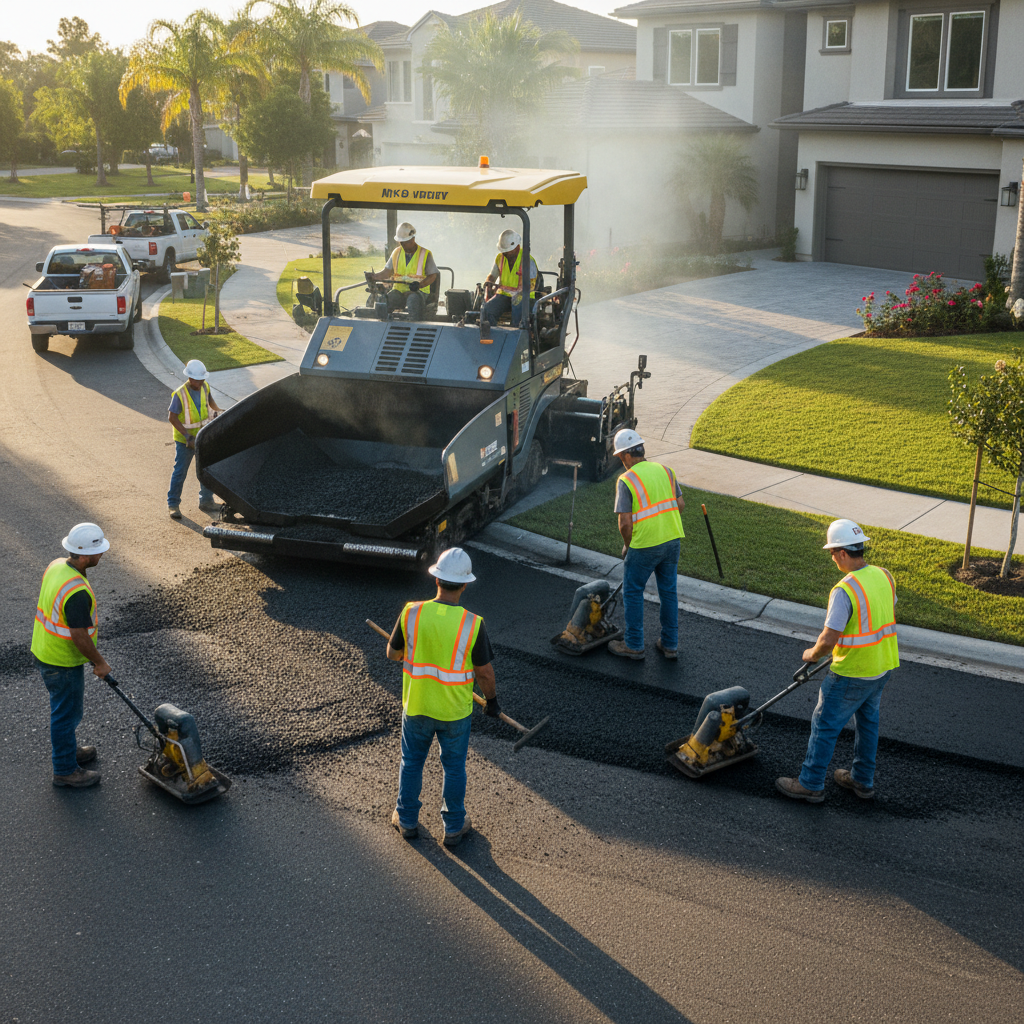
Driveway paving options and costs in Bon Accord
In Bon Accord, Alberta, homeowners typically pave driveways that match the look and durability of the attached homes around them—given that single-detached houses make up 85.6% of dwellings and 470 homeowner households represent 84.7% of all households (Statistics Canada, 2021 Census). That matters because most private driveway projects are full-surface builds (not just patching) once the existing base starts to pump during Edmonton-area freeze-thaw cycling.
Edmonton-area pricing is shaped less by the paving “brand” and more by frost protection and drainage design. In central Alberta, contractors commonly plan for frost depth of about 1.5 m or more. Practically, that means deeper, well-graded granular base and careful slope/drainage so water can’t sit in the structure. Freeze-thaw cycling—water freezing and expanding, then thawing and weakening the pavement—drives the extra excavation, hauling, drainage stone, and compaction time that shows up in bids.
In Bon Accord, trade demand is especially strong in established residential pockets where older homes (63.1% built before 1981) often have dated drainage and shallow foundations for driveways. If your driveway in areas like the more mature residential sections near the community core is showing heaving, rutting, or edge breakdown, you’ll usually see the best value when quotes include full-depth base review rather than “top-coat only.” Below is a clear comparison to help you discuss options with contractors before you request a detailed, itemised quote.
| Material |
Lifespan |
Maintenance |
Best For |
Price per sq ft |
Price Range |
| Asphalt (new installation, proper base) |
15–25 years |
Seal every 3–5 years; patch as needed |
Cost-conscious driveways with good grading |
$4.50–$8.50 |
$7,000 – $15,000 |
| Asphalt (overlay on existing gravel base) |
10–18 years (depends on base) |
Seal every 3–5 years; more frequent patching if base is weak |
When the existing base is solid and drain-safe |
$4.25–$7.75 |
$6,500 – $13,500 |
| Interlocking concrete pavers |
25–40 years |
Replace individual pavers; re-sand lines as needed |
High curb appeal and easier localized repairs |
$9.00–$16.00 |
$12,000 – $28,000 |
| Poured concrete (broom finish) |
20–35 years |
Crack monitoring; sealant optional (varies by finish) |
Clean, low-maintenance look with strong subgrade |
$7.25–$13.50 |
$9,000 – $22,000 |
| Exposed aggregate concrete |
20–35 years |
Reseal if you want stain/ice-salt resistance; patch only as needed |
Better traction and premium curb appeal |
$8.50–$15.75 |
$10,500 – $26,000 |
| Gravel / crushed stone (budget option) |
3–8 years (varies with drainage) |
Top up and re-grade; manage washouts |
Short-term solution or seasonal use |
$2.00–$4.25 |
$3,000 – $7,000 |
Prices are estimates only and vary by project scope, site access and material selection.
What affects the price of paving in Bon Accord
In Bon Accord, you can see 30–50% differences between quotes for the “same” driveway because the scope behind the finish matters. One contractor might be paving over an assessed, drain-safe base; another might be assuming a shallow base can be left in place. The real cost drivers are what’s happening below the surface: excavation depth, hauling, frost protection, drainage corrections, and how many machine hours it takes to bring the site to spec.
Frost line depth and freeze-thaw cycles are decisive in the Edmonton economic region. Colder central Alberta typically needs a thicker compacted granular base—often in the 6–12 inch range (or more depending on conditions and design) rather than thinner assemblies used in warmer areas—so water can’t sit in the structure and expand when frozen. Freeze-thaw cycling also concentrates risk into the spring: a base that’s marginal in February can become weak by April, which is why contractors price time for proper compaction and drainage stone. Asphalt is air-temperature sensitive; hot-mix asphalt generally requires air temperatures above about 10°C, so scheduling pressure during the short workable season can add labour and mobilization premiums.
Concrete can swing too. If your driveway base is poor, poured concrete may cost more up front than a simple asphalt resurfacing because it often requires more reconstruction for a stable slab. Conversely, if you already have good drainage and depth, an asphalt overlay might land nearer the lower end of the $7,000–$15,000 range, while a paver install might still push toward $12,000–$28,000 because restraint and edging are critical for long-term performance.
| Price Factor |
Why It Matters |
Cost Impact |
| Driveway area in sq ft |
Most costs scale directly with square footage of removal and new surface |
High (major driver) |
| Base depth required |
Frost protection depends on local freeze conditions and how much existing material can be reused |
High (often the difference between a small and full rebuild) |
| Grading and drainage work |
Proper slope and sub-surface drainage prevent water from pooling and freezing |
Medium to high |
| Tear-out of existing surface |
Breaking, loading, and hauling old asphalt or concrete adds labour and disposal |
Medium to high |
| Edge restraints and curbing |
Interlock and concrete edges prevent spreading and keep lines true through winter movement |
Medium |
| Sealing requirement |
Asphalt performs best with sealing after the initial cure window to slow water/oxidation damage |
Low to medium (recurring) |
| Site access |
Narrow lanes and long pushes increase labour time and machine repositioning |
Low to medium |
| Asphalt mix specifications |
Freeze-thaw-rated mixes and proper thickness help prevent early raveling and cracking |
Medium |
Permits & regulations in Alberta
For Bon Accord homeowners, paving a private driveway on your own property typically does not need a building permit. In most cases, you can proceed with private-site work as long as you’re staying within the usual property boundaries and you’re not altering municipal infrastructure. Where things change is when you touch the municipal portion of the street or boulevard area.
Work that typically DOES require municipal approval includes: new or modified curb cuts, changes to the boulevard, alterations that affect storm drainage patterns, or any work that involves municipal right-of-way. Some municipalities also have lot-grading expectations or bylaws that restrict how close hard surfaces can be to property lines and how surface water should be managed. If your driveway ties into a curb inlet or you’re changing drainage swales, get clarification from the municipality before excavation.
Step-by-step, verify your contractor the way you would for any Alberta trade:
- Ask for their Alberta contractor licensing number (if applicable to their trade category) and confirm it through the appropriate provincial registry resources.
- Request a certificate of liability insurance naming you as additional insured where possible.
- Confirm WSIB/WCB coverage details (and that coverage is active for workers on-site).
- Request a clear scope and confirmation that utility locates will be performed before digging.
- Check that they can provide a COI/clearance letter before mobilization.
Also, call for utility locates via Alberta One-Call before any excavation. That’s a key safety step in Bon Accord, especially around older neighbourhoods where buried services may be irregular.
Asphalt vs pavers vs concrete for Bon Accord driveways
For Bon Accord’s freeze-thaw winters and the Edmonton-area winter maintenance routine (plowing, sand, and de-icing practices), asphalt, interlocking pavers, and concrete can all work—if the base and drainage are engineered correctly. The biggest difference is how each surface handles movement and how repair is handled after the first winter cycles.
Asphalt is usually the lowest upfront cost and is a common fit when you want a smooth, quiet driveway and you’re comfortable with sealing regularly (typically every 3–5 years). However, if drainage is poor or the base is thin, Edmonton’s winter can accelerate cracking and rutting; with proper frost protection, asphalt holds up well. Interlocking concrete pavers cost more to install (often in the $12,000–$28,000 band for typical projects) but are easier to repair because damaged units can be lifted and reset. That’s a practical advantage when occasional base settling happens over time. Poured concrete sits in the mid-range (commonly $9,000–$22,000) but needs air-entrainment and a stable base to reduce freeze-thaw cracking.
Base prep for central Alberta frost protection matters across all three. If your home is older (63.1% built before 1981), there’s a higher chance the existing driveway base and drainage are not aligned with current frost protection best practices—so contractors may need deeper excavation rather than “overlay and hope.” A good example: spending the extra to build the right base under asphalt can prevent early breakdown that would otherwise push repairs toward the “sealing & repair” reality. If you’re paying for a full-depth build, pavers can be justified when you want long-term, section-by-section repairs instead of resurfacing the whole driveway later.
| Material |
Frost Resistance |
Curb Appeal |
Repair Method |
Lifespan |
Price Band |
| Asphalt (sealed regularly) |
Good with proper base + drainage + freeze-thaw rated mix |
Medium (clean, uniform finish) |
Patch and re-seal localized failures |
15–25 years |
$7,000 – $15,000 |
| Interlocking concrete pavers |
Very good when installed on a properly compacted base and restraints |
High (styles and borders) |
Lift/replace individual pavers; re-sand joints |
25–40 years |
$12,000 – $28,000 |
| Poured concrete (air-entrained) |
Good with air-entrainment and stable frost-protected base |
Medium to high (finish options) |
Crack repair and patching; slab issues may require localized replacement |
20–35 years |
$9,000 – $22,000 |
| Exposed aggregate concrete |
Good with proper mix design and base stability |
High (texture, premium look) |
Patch in sections; sealing decisions affect long-term staining |
20–35 years |
$10,500 – $26,000 |
| Permeable pavers (drainage grid) |
Excellent for water management when designed correctly |
High (modern design) |
Replace modules; clear drainage pathways as needed |
20–35 years (design-dependent) |
$14,000 – $32,000 |
| Chip seal / tar-and-chip |
Fair to good; more maintenance in heavy wear areas |
Low to medium |
Top-up applications and patching |
7–12 years |
$6,000 – $12,000 |
How to choose a paving contractor in Bon Accord
Choosing a contractor in Bon Accord comes down to proof: who they are, how they plan to build for frost protection, and whether the scope is clear enough to compare quotes. In Alberta, start by verifying licensing requirements that apply to their trade category, then confirm insurance and worker coverage before anything is delivered to your site.
For Alberta coverage verification, ask for:
- Certificate of insurance (liability) and confirm it’s active for the project period.
- WSIB/WCB clearance (or equivalent worker coverage documentation) for active staffing.
- Any licence number they carry for their business/trade category, then check it through the applicable online registry resources.
Next, get 2–3 itemised written quotes that separate labour and materials: excavation, base materials, compaction, drainage stone, asphalt or concrete thickness, removal/disposal, and edge restraints. Avoid “lump sum only” quotes—especially in the Edmonton region, where deeper base and drainage corrections can swing costs by thousands.
Read exclusions and inclusions carefully: Is permit pull included if your project affects municipal right-of-way? Is disposal of old asphalt/concrete included? Are utility locates included? Make sure workmanship warranty length is stated, and ask whether the product/manufacturer warranty applies and is transferable to you if you sell the home.
Payment should be reasonable: never pay more than 10–15% upfront. Use a holdback until the job is complete and surface/line quality is acceptable. Also request a written timeline with a start date and completion estimate—spring mobilization depends heavily on weather windows.
- Verify licence/trade registration details before signing.
- Confirm active liability insurance and ask about additional insured wording.
- Confirm WSIB/WCB clearance for workers on the project.
- Request an itemised scope: excavation, base, drainage, surface thickness.
- Ask for base design explanation (how they’re handling frost protection).
- Confirm disposal/hauling is included or clearly priced.
- Check whether slope and drainage corrections are in the scope.
- For asphalt, confirm sealing timing and whether sealing is included.
- Confirm edge restraints/curbing plan to prevent paver/edge movement.
- Ask about compaction method (and that it’s included, not assumed).
- Make sure warranty terms for workmanship are written and specific.
- Set payment schedule with a holdback for final grading/clean-up.
Red flags in Bon Accord include: quotes that don’t discuss base thickness or drainage, “overlay only” assumptions without base assessment, no written warranty terms, missing or expired insurance/clearance documentation, and vague scope wording like “standard prep” without measurements.
Frequently asked questions — paving in Bon Accord
Do I need a permit to pave my driveway in Alberta?
In Bon Accord and across Alberta, paving a private driveway within your own property usually doesn’t require a building permit. Where you should be careful is anything that affects municipal property or infrastructure—like a new curb cut, changes to the boulevard, or adjustments that alter storm drainage. If your driveway work involves the municipal right-of-way, municipal approval is typically required, and you may need lot-grading or drainage alignment. Before excavation, also ensure utility locates are done using Alberta One-Call. A good contractor will tell you clearly whether your plan stays fully on private property and whether you need municipal sign-off, rather than assuming it’s “all fine.”
How long before I can drive on new asphalt?
For new asphalt in Bon Accord, you generally can drive on it once it has cooled sufficiently and set—often the same day after placement, but that depends on temperature, thickness, and whether the contractor uses rollers and proper compaction. Many contractors recommend limiting turns and heavy loads immediately to avoid surface tracking. If the job includes paving and then later sealing, remember that sealing typically happens after the asphalt has cured—often within a 6–12 month window, depending on weather and product requirements. If you’re budgeting, asphalt projects commonly fall in the $7,000–$15,000 range for properly built driveways, and planning for sealing is part of keeping that lifespan realistic in Edmonton-area freeze-thaw conditions.
What causes potholes and how are they repaired?
Potholes in the Edmonton region are usually caused by a process: water enters a weak area through cracks or loosened edges, freezes and expands, then thaw cycles weaken the base. Heavy traffic—like frequent turning at the garage—can worsen this. When the base loses support, the pavement breaks into a pothole. Repair usually involves more than “filling the hole”: a contractor should cut out to remove deteriorated asphalt and any unstable material, then re-compact the base and re-lay asphalt to match thickness and compaction standards. In Bon Accord, if potholes repeat in the same spots, it often points to a drainage or frost protection issue that should be addressed during the next scheduled repair or resurfacing.
How do I prepare for a paving project?
Preparation starts with access and information. Clear the driveway area so equipment can work safely—remove vehicles, bins, and loose landscaping stones. Make sure contractors know where utilities and sprinkler lines are, but also expect that they will do formal utility locates through Alberta One-Call before any digging. If you’re in an older residential area—remember 63.1% of homes in the Bon Accord profile were built before 1981—you may have older drainage layouts, so ask the contractor to review whether water currently ponds and where it flows during spring melt. Finally, request the itemised scope in writing: excavation, base depth, drainage stone, disposal, surface thickness, and whether sealing is included (asphalt) and when.
How do I compare paving quotes fairly?
To compare quotes fairly in Bon Accord, avoid using only the total price—because scope differences can drive 30–50% changes. Instead, line up the specifics: driveway square footage, base depth, whether tear-out and disposal are included, and how grading/drainage corrections are handled. Confirm whether the asphalt mix is freeze-thaw rated and whether compaction steps are included. For asphalt, compare sealing plans after cure time, and ask what maintenance is expected for the next few years. For pavers or concrete, check restraints/edging and base design assumptions. A quote that lands near the $9,000–$22,000 band might still be incomplete if it skips proper frost protection, while a higher bid may be justified by drainage rebuild and deeper excavation.
Can asphalt be laid in cold weather in Bon Accord?
Asphalt placement in Alberta is highly weather-dependent. Hot-mix asphalt generally requires air temperatures above about 10°C, and crews also need safe conditions for compaction and curing. In Bon Accord, early spring and late fall freeze-thaw swings can make asphalt installation risky if you’re pushing the schedule. If temperatures aren’t right, contractors may be forced to use short-term fixes that can lead to early raveling or cracking, especially when water infiltrates and refreezes. The best approach is to schedule during the workable window and insist the contractor follows temperature and cure requirements for the mix design. Ask how they handle scheduling around Edmonton-area demand, because crew availability and mobilization can affect timing and pricing.