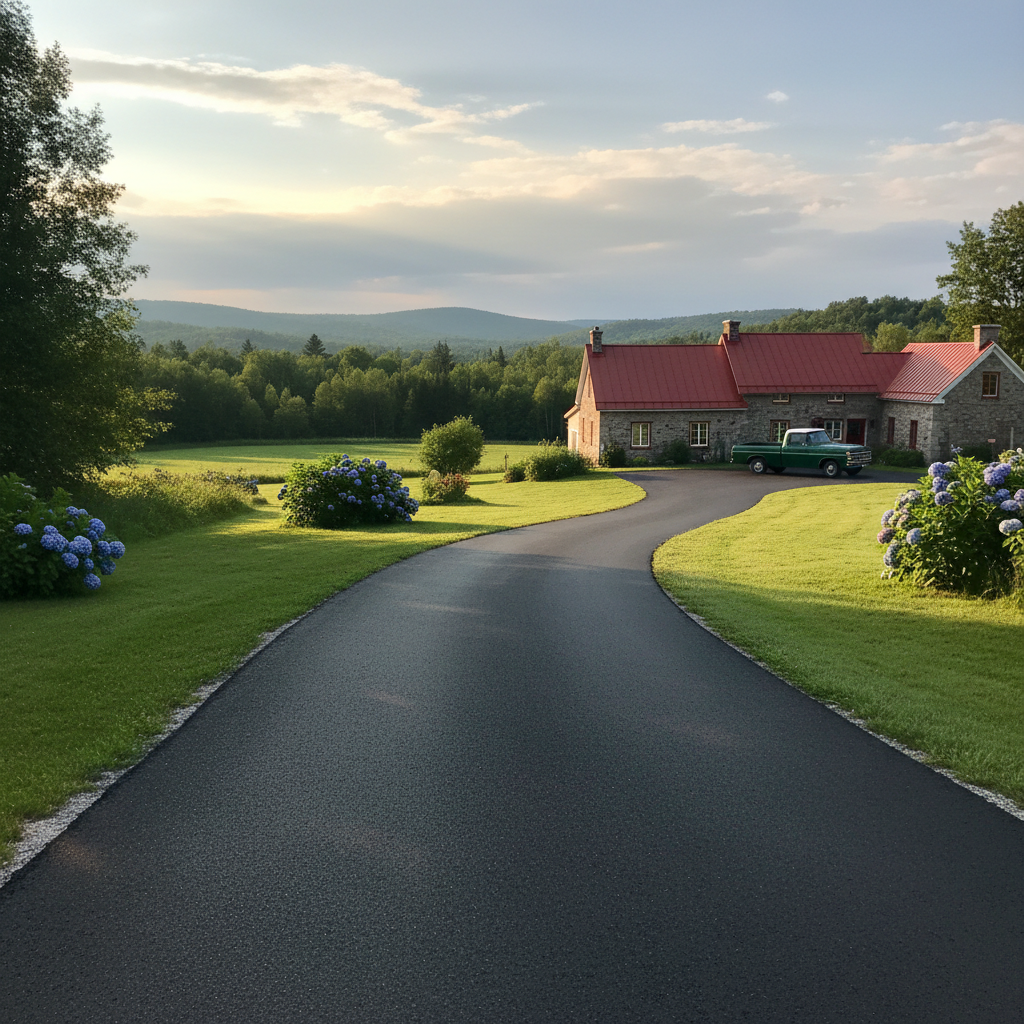
Driveway paving options and costs in Olds
Olds, Alberta sits in a cold continental climate where driveways see long winter freeze–thaw cycles, so the “right” material is really a mix of budget, maintenance comfort, and how your site drains. With 61.2% of dwellings in Olds being single-detached homes (Statistics Canada, 2021 Census), most private driveways here are part of the typical detached-house lot footprint—often with tight access, variable soil, and a need for a durable edge support system. Local homeowner households are also predominantly owners, with 72.4% of households owning (Statistics Canada, 2021 Census), which is why you’ll see many upgrades rather than short-term repairs.
In Calgary’s broader market, frost can penetrate roughly 1.2 m (about 4 ft). That reality pushes contractors toward deeper, well-compacted granular bases and stronger drainage details—choices that show up directly in your quote. On top of that, the paving season is compressed: hot-mix asphalt typically needs warm conditions to place and compact properly (often above about 10°C air temperature), so spring and summer schedules can tighten and mobilization costs rise for smaller jobs in the Olds area.
In town, demand tends to spike in established residential areas close to main corridors where driveways are older and often require tear-out plus base correction—commonly where homeowners are updating aging surfaces built before 1981 (34.9% of homes, Statistics Canada, 2021 Census). If your asphalt is failing or your gravel has started pumping, the decision usually comes down to asphalt versus pavers versus concrete. Use the table below to compare typical starting points by option and service life, then you can dial in the details with a site visit.
| Material |
Lifespan |
Maintenance |
Best For |
Price per sq ft |
| Asphalt (new installation, proper base) |
15–25 years |
Sealcoat every 3–5 years; crack repair as needed |
Lowest upfront cost with good performance when built on strong base |
$12,000 – $20,000 |
| Asphalt (overlay on existing gravel base) |
10–18 years |
Sealcoat every 3–5 years; more frequent monitoring of edge drainage |
Budget refresh when base can be corrected without full replacement |
$9,500 – $16,000 |
| Interlocking concrete pavers |
25–40 years |
Occasional panel realignment; joint sand top-ups |
Best curb appeal and easy localized repairs (no full re-surface) |
$16,000 – $28,000 |
| Poured concrete (broom finish) |
20–30 years |
Crack filling when needed; consider curing and air-entrainment |
Clean, uniform look; simple snow-plow routine |
$14,000 – $24,000 |
| Exposed aggregate concrete |
20–30 years |
Sealer optional; crack maintenance as needed |
Slip resistance and premium look |
$17,000 – $27,000 |
| Gravel / crushed stone (budget option) |
3–8 years |
Annual regrading; top-ups and weed control |
Lowest upfront cost while you decide on a long-term surface |
$5,000 – $10,000 |
Prices are estimates only and vary by project scope, site access and material selection.
What affects the price of paving in Olds
In Olds, two driveways that look similar on the street can land 30–50% apart once you price what’s happening underground. The biggest reason is that Calgary-region freeze–thaw conditions punish weak bases and poor drainage. With frost penetrating to about 1.2 m, the contractor typically has to build deeper and better-graded granular layers than in milder climates. In practice, that means you’re not just buying asphalt or concrete—you’re paying for compacted base, proper grading, and water control to prevent heaving, cracking, and surface raveling.
Another driver is the compressed paving season. Asphalt placement depends on warm conditions (often above 10°C) to achieve compaction and proper curing, so spring and early summer schedule pressure can increase mobilization and per-unit pricing, especially for smaller lots that require equipment setup but don’t reach full crew productivity. Mix design matters too; you need a freeze–thaw-rated asphalt approach for long Alberta winters, and that can shift costs compared with generic mixes.
Local examples in Olds that move the price up or down include: (1) a driveway that’s draining toward the garage slab usually needs regrading and sub-drain work before surfacing, which adds labour and materials; (2) older homes built before 1981 often have inconsistent base layers and unknown fill, so tear-out and rebuild are common; and (3) if your approach is long and narrow, equipment moves slower, which increases the day rate impact. If you’re choosing between bands, an asphalt new installation may start around the mid-teens per square foot equivalent, while pavers are typically higher upfront because of base and bedding thickness—yet pavers can reduce future disruption because you can lift and replace only the failed sections rather than re-surfacing the whole driveway.
| Price Factor |
Why It Matters |
Cost Impact |
| Driveway area in sq ft |
More surface area means more material, more saw-cutting, and more base tonnage |
Major driver of total cost |
| Base depth required |
Frost line depth and freeze–thaw demand thicker, well-compacted granular thickness |
Often the #2 cost driver |
| Grading and drainage work |
Proper slope and positive drainage reduce water pooling and subgrade pumping |
Can add significant labour and aggregate |
| Tear-out of existing surface |
Breaking and hauling concrete or old asphalt plus disposal costs increase scope |
Common reason for higher bids |
| Edge restraints and curbing |
Stops paver spread and helps asphalt resist lateral movement |
Moderate to high depending on layout |
| Sealing requirement |
Asphalt performance in Alberta improves when sealed after initial curing and then maintained |
Adds a recurring maintenance line item |
| Site access |
Narrow lots slow equipment movement and can require smaller delivery methods |
May increase mobilization/time |
| Asphalt mix specifications |
Freeze–thaw rated mix design supports longer-term durability |
Can raise material cost |
Permits & regulations in Alberta
For most homeowners in Olds, paving a private driveway entirely within your own property typically doesn’t require a building permit. What does change the approval picture is when your work affects the municipal right-of-way. That can include new curb cuts, modifying the boulevard, altering storm drainage that ties into municipal systems, or changes that affect how runoff leaves the property. In those cases, you should expect municipal approval before any excavation begins.
Regardless of permits, utility locates are non-negotiable. Before any digging, call Alberta One-Call to mark buried utilities and then verify the marks on-site. This is especially important when you’re replacing base or installing drainage corrections where trenches might be needed. After that, confirm any lot-grading bylaws and setbacks that could restrict how close hard surfaces sit to property lines or affect how water is directed.
To verify your contractor in Alberta, do three checks step-by-step: (1) Licence status—use the appropriate online registry for Alberta and confirm the contractor is in good standing for the work scope they’re advertising; (2) Liability insurance—ask for a current certificate of insurance showing coverage amounts and that it names you as the client/owner where required; and (3) WSIB/WCB coverage—request documentation that indicates the contractor’s workers are covered. If they can’t provide clear proof, or they dodge providing a certificate, treat that as a serious warning sign and request it in writing before scheduling.
Asphalt vs pavers vs concrete for Olds driveways
Choosing between asphalt, interlocking pavers, and concrete in Olds comes down to how each material behaves under Alberta freeze–thaw and how you maintain it through winter. Asphalt usually has the lowest upfront cost, but it needs a disciplined sealcoat program—typically every 3–5 years—to protect it from moisture infiltration that accelerates cracking. Interlocking concrete pavers cost more up front, yet they’re highly repairable: if one area heaves or breaks due to localized drainage or subgrade movement, you can lift and reset sections without replacing the entire driveway. Poured concrete sits in the middle on price and can look great for snow-plow traffic, but it’s susceptible to cracking if air-entrainment and base preparation aren’t right for the freeze–thaw regime. In practice, the proper base build and drainage design often matter more than the surface choice.
For Calgary-area frost conditions, all options need a properly compacted granular base and positive drainage. If water sits or runs under the slab, you’ll see movement. With asphalt, that movement often shows up as edge failure or alligatoring; with concrete, it can show up as cracks that open and close seasonally. If you plan to salt regularly, air-entrainment and good mix design become essential for concrete durability.
A practical example: if asphalt installation is in the lower band (often around the mid-teens per square-foot equivalent), and pavers land in the higher band, the extra upfront cost can be justified when you expect future spot problems or you want curb appeal that stays consistent. If your site has variable soils or you anticipate drainage changes, pavers’ localized repair strength can outweigh their higher starting price.
| Material |
Frost Resistance |
Curb Appeal |
Repair Method |
Lifespan |
Price Band |
| Asphalt (sealed regularly) |
Good when built on strong base and sealed |
Standard to mid |
Patch, then seal the affected area |
15–25 years |
$12,000 – $20,000 |
| Interlocking concrete pavers |
Very good with correct edge restraint and bedding |
High |
Lift/reset pavers and replace joint sand as needed |
25–40 years |
$18,000 – $30,000 |
| Poured concrete (air-entrained) |
Good when air-entrained and properly reinforced if needed |
Mid to high |
Crack fill and patch; sometimes localized slab repair |
20–30 years |
$15,000 – $25,000 |
| Exposed aggregate concrete |
Good when sealed/finished correctly and base is stable |
High |
Localized patch and refinishing of the surface area |
20–30 years |
$17,000 – $27,000 |
| Permeable pavers (drainage grid) |
Good with engineered underdrain performance |
Mid to high |
Lift/reset sections; clean stone layer and underdrain |
25–40 years |
$20,000 – $34,000 |
| Chip seal / tar-and-chip |
Fair to good; depends heavily on base and maintenance |
Low to mid |
Spot chip fill and recoat when needed |
6–12 years |
$6,500 – $12,000 |
How to choose a paving contractor in Olds
Start with Alberta compliance and proof. First, ask for their Alberta licence information (and confirm it online if a public registry is available). Next, request a certificate of liability insurance—then check the dates and coverage limits, and ensure the certificate matches the company name you’re dealing with. For worker coverage, ask for WSIB/WCB documentation or clearance as applicable in Alberta, because paving is labour-intensive and involves cutting, hauling, and sometimes excavation. If any of this is missing, the risk lands on you as the homeowner.
Then get 2–3 itemised written quotes. The best quotes break out labour and materials (base prep, grading, compaction, geotextile if used, asphalt/concrete quantities, saw-cutting, disposal). Avoid “one number” quotes that don’t explain what’s excluded. Ask whether the price includes permit pull if required for right-of-way work, whether disposal is included for tear-out debris, and whether drainage corrections are part of the scope.
Warranty matters too: confirm the workmanship warranty length, what it covers (settlement, cracking, adhesion), and whether the product/manufacturer warranty applies and is transferable to you. Agree on a schedule: never pay more than 10–15% upfront, and hold back a reasonable amount until the work is complete and cleaned up.
Finally, insist on a written timeline with a start date and an estimated completion window, understanding that Alberta’s weather can compress the schedule. In Olds, the crew’s availability can make a difference in asphalt curing quality—so date accuracy is part of quality control.
- Ask for Alberta licence details and confirm in the online registry.
- Verify liability insurance certificate (coverage amount, effective dates, correct legal name).
- Confirm WSIB/WCB coverage documentation/clearance letter.
- Get 2–3 itemised quotes with labour + material breakdowns (not lump sums).
- Ensure tear-out and disposal are clearly listed (who hauls, where it goes).
- Confirm base depth, granular type, and compaction expectations.
- Check how drainage and slope are handled (positive drainage away from the house).
- Confirm edge restraint method (paver locking system or proper asphalt edge support).
- Clarify whether geotextile and/or reinforcement is included (if site conditions need it).
- Ask who supplies and applies joint sand for pavers and how often top-ups are recommended.
- Review warranty terms in writing and what “exclusions” apply (de-icing damage, poor drainage).
- Use a payment plan with 10–15% max upfront, then holdback until completion.
Red flags I see around Olds: contractors who won’t show proof of Alberta licensing/insurance, quoting without measuring your driveway area, skipping base prep in favour of “thin asphalt,” vague warranties (no workmanship terms), and proposals that don’t address drainage or edge restraint—these are the usual starters for early failure.
Frequently asked questions — paving in Olds
Is it worth sealing a new driveway right away in Olds?
In Olds, sealing right away is usually not the best move. Asphalt needs time to cure so the sealant can bond properly, and the cold Alberta winters can slow that curing if the surface is sealed before it’s ready. As a rule of thumb, many homeowners plan for a first sealcoat after the asphalt has had time to cure and dry thoroughly—often within the window that installers recommend for your specific mix and weather conditions. Then you build a maintenance cycle of sealcoat every 3–5 years, which is one of the most cost-effective ways to slow moisture penetration that leads to cracking and raveling. If you’re budgeting, compare sealing as part of the lifecycle rather than as an “extra”—especially when asphalt is priced in the lower-to-mid bands (for many driveways, asphalt options commonly sit around the $12–$20 range per sq ft equivalent).
What is a chip seal driveway and is it suited to Olds?
Chip seal (also called tar-and-chip) is a surface treatment where a binder is sprayed onto prepared asphalt, then aggregate chips are broadcast and rolled in. It’s typically less expensive than full asphalt paving or concrete, and it can be suitable for some semi-rural or lower-traffic drive approaches—particularly when you want a budget-friendly, quickly finished surface. In Olds and the wider Calgary area, chip seal durability depends heavily on the base, drainage, and whether winter maintenance (plowing and traction sand/salt) is consistent. If water isn’t controlled, freeze–thaw can break down the binder faster. As a general comparison, chip seal sits on the lower end of typical paving budgets—often aligned with the lower band (roughly $6,500–$12,000 for many driveways, depending on size). For homeowners who want a long, low-hassle lifespan, asphalt or pavers are usually the better long-term fit.
How much does driveway crack repair cost in Olds?
Crack repair in Olds varies based on crack width, length, whether water is tracking under the surface, and whether it’s a “surface-only” crack or part of a deeper movement issue. For hairline cracks, sealing and crack filling can be a smaller ticket item. For wider cracks or areas where the base has shifted, you may need more than filling—sometimes patching, edge correction, or localized base work. In practical terms, homeowners often see crack repair as a mid-range maintenance line rather than a full replacement: within the broader sealing and repair band, many contractors budget repairs somewhere in the $400–$1,500 range depending on scope. The best approach is to treat the cause: if drainage is poor or the driveway slope directs runoff toward the house, you can pay for repair and still see recurrence after the next freeze–thaw cycle.
What base thickness do I need for pavers in Olds?
For pavers in Olds, base thickness should be engineered for frost depth and the site’s drainage—not guessed from a “typical” number. Because frost can penetrate to around 1.2 m in the Calgary region, contractors commonly build a deeper, well-compacted granular system with proper slope and positive drainage to prevent subgrade movement. In residential driveways, that usually means a significant base layer (often several inches to more, depending on soil conditions, required grading corrections, and whether any removal of unsuitable fill is necessary), plus a bedding layer designed for leveling. If your soil is marginal or there’s evidence of pumping after thaw, the base build needs to increase and compaction requirements tighten. The key is that pavers are only as good as the base. A contractor who won’t explain the proposed granular thickness and drainage plan is likely leaving you exposed to heaving and settlement.
How do I get the most accurate paving quote in Olds?
To get an accurate paving quote in Olds, start by making sure the contractor measures your driveway area and reviews site conditions on location (not just estimates from photos). Ask for an itemised quote that separates base prep, grading/drainage correction, tear-out, disposal, the surface material, and finishing details. Confirm whether the scope includes saw-cutting, edge restraints, and—if you choose asphalt—whether sealing is part of the plan (first seal timing and subsequent maintenance). Also request specifics on base depth and compaction expectations, because frost penetration and freeze–thaw cycles make “thin base” shortcuts expensive later. Finally, verify contractor credentials before signing: Alberta licence details, liability insurance certificate, and WSIB/WCB coverage/clearance. Better documentation usually means fewer change orders and a cleaner understanding of what you’re paying for.
How much does it cost to pave a driveway in Olds?
Driveway paving costs in Olds depend mainly on area, base preparation needs, drainage corrections, and whether there’s tear-out. For asphalt new installation with a proper base, many homeowners land in a typical band that aligns with the region’s $12–$20 per sq ft pricing approach—meaning total project costs commonly fall into the mid-range when you include mobilization, removal, and compaction work. If you choose pavers, pricing usually sits higher upfront because of base, bedding, edge restraints, and more detailed installation—often corresponding to the $18–$30 band. Concrete tends to fall between, commonly referenced around $15–$25 depending on finish type. If your driveway is older (and in Olds, 34.9% of homes were built before 1981), you may also face added costs for rebuilds rather than simple overlays. A solid quote should break these items out so you can compare options fairly.