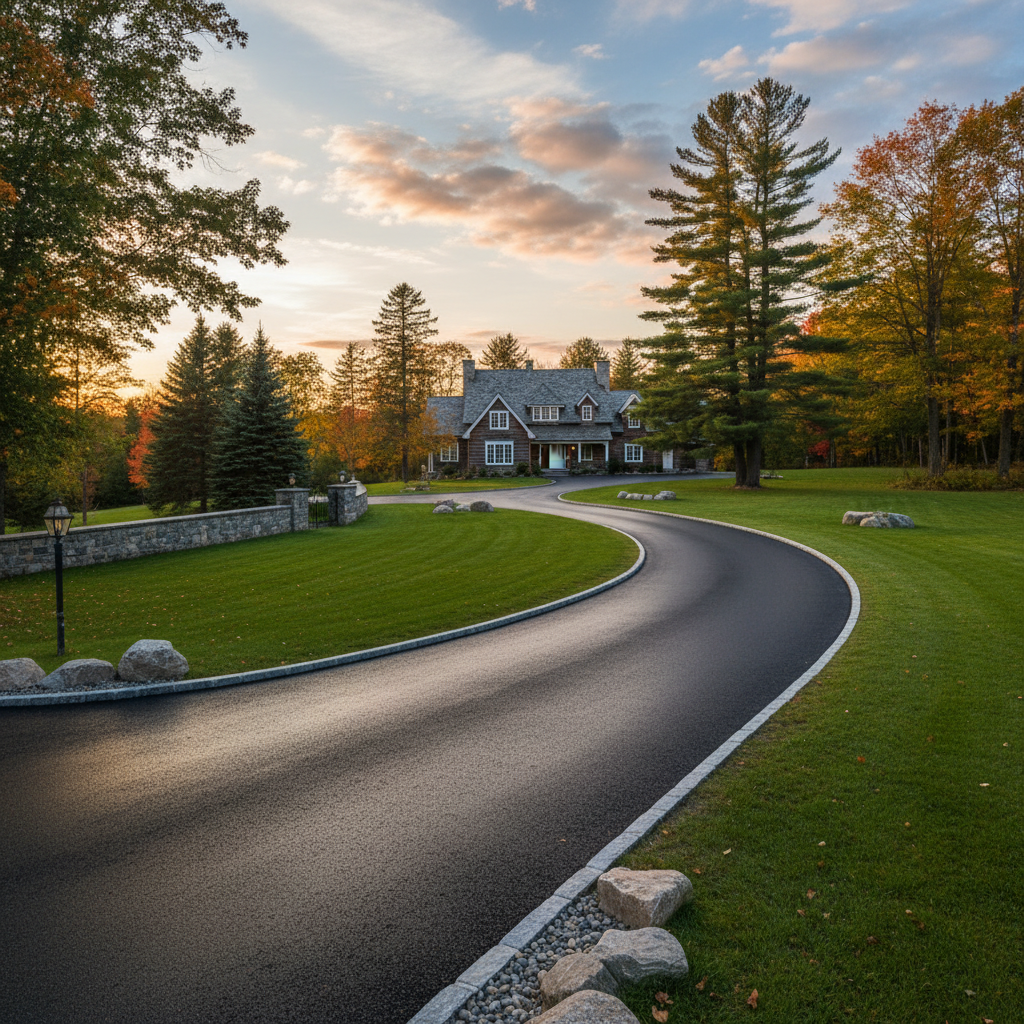
Driveway paving options and costs in Altadore
In Altadore, Alberta, homeowners typically choose between asphalt, interlocking pavers, and concrete based on winter performance and curb appeal. With a population of 7,290 in the area profile (Statistics Canada, 2021 Census), demand here is steady because many properties are owner-occupied and cared for year-round—driveways get used heavily, and they’re exposed to Calgary’s freeze–thaw cycles. In a community like Altadore (Calgary’s inner-city core), the majority of private driveway projects are tied to single-family homes, so you’ll see lots of driveway replacements, overlays, and base upgrades rather than large commercial pours.
Calgary’s cold continental climate is the big cost shaper. Frost in this region can penetrate to about 1.2 m (4 ft), and repeated freezing and thawing moves water in the ground. That means contractors build deeper, well-graded granular bases and focus on positive drainage to prevent heaving, cracking, and surface raveling—especially where soils are variable. The paving season is also compressed; hot-mix asphalt placement and compaction require sustained above-freezing conditions and warm air temperatures (typically above about 10°C). In practice, that tight window concentrates scheduling and can raise pricing for smaller jobs, particularly when crews are busy and equipment is in high demand around Calgary.
Trade demand is especially common around older, mature residential streets off 1 Avenue SW and along the main neighborhood corridors where driveways often show age-related cracking and drainage issues. Once you’ve selected a material, the next step is understanding typical price ranges—see the comparison table below.
| Material |
Lifespan |
Maintenance |
Best For |
Price per sq ft |
| Asphalt (new installation, proper base) |
15–25 years |
Sealcoat every 3–5 years; crack filling as needed |
Lowest upfront cost with good longevity if drainage is corrected |
$12–$20 |
| Asphalt (overlay on existing gravel base) |
8–15 years |
Sealcoat as above; monitor settlement; targeted repairs |
Budget-friendly upgrade when the existing base is sound |
$10–$16 |
| Interlocking concrete pavers |
20–30 years |
Sweep/clean; replace individual stones if needed |
Curb appeal and easy localized repairs without full replacement |
$18–$30 |
| Poured concrete (broom finish) |
20–30 years |
Crack monitoring; seal if desired (often every 5–10 years) |
Simple, durable surface with clean lines |
$15–$25 |
| Exposed aggregate concrete |
20–30 years |
Seal for stain/water resistance; crack control joints matter |
Improved traction and a premium look |
$20–$32 |
| Gravel / crushed stone (budget option) |
3–8 years |
Regrade and top up; weed control; border edging |
Short-term solution or overflow parking |
$6–$12 |
Prices are estimates only and vary by project scope, site access and material selection.
What affects the price of paving in Altadore
It’s common to see quotes for the “same” driveway in Calgary vary by 30–50%, even when the surface material looks similar. The hidden drivers are usually what’s happening under the pavement: how much base needs to be rebuilt, whether drainage must be corrected, and how extensive the tear-out and disposal will be. Two contractors can both quote “asphalt,” but one may price only the asphalt placement while the other includes granular base replacement, compacted lifts, edge support, and proper slope to keep water moving away from your home.
In Altadore, frost line depth and freeze–thaw cycles are decisive cost factors. With frost penetration around 1.2 m (4 ft), crews need deeper, well-compacted granular bases so the subgrade doesn’t pump water during spring melt and winter freezing. That typically means building granular base in the range of about 6–12 inches for many residential installations where conditions require additional stabilization (thicker where soils are poor or drainage is challenging). In warmer climates, contractors sometimes get away with less, but Calgary’s recurring freeze–thaw stresses the pavement structure and can turn minor water issues into major failure.
Concrete examples in the local market: if your driveway ties into a garage approach with uneven settlement, a contractor may need to remove and re-profile sections rather than patching. Also, if de-icing salt routinely hits the slab edges, air-entrained concrete and proper jointing become more important—both can raise material costs but prevent quicker spalling. For asphalt, the market price band of $12–$20 per sq ft tends to increase when a job needs full base replacement and more liner drainage work; overlays can fall nearer the lower end, but only if the existing structure is truly stable.
| Price Factor |
Why It Matters |
Cost Impact |
| Driveway area in sq ft |
More square footage means more asphalt/concrete, base, and compaction time |
Highest overall driver; typically 40–70% of total cost swings with size |
| Base depth required |
Frost movement demands thicker compacted granular layers and stabilization |
Can add material and labour; commonly a major premium if poor soils are found |
| Grading and drainage work |
Proper slope and outlet locations prevent water pooling and subgrade saturation |
Often significant; includes excavation, re-profiling, and hauling |
| Tear-out of existing surface |
Breaking, hauling away debris, and disposing properly adds time and equipment |
Frequently increases costs meaningfully versus “overlay” scenarios |
| Edge restraints and curbing |
Edges hold pavers in place and keep asphalt from migrating or pavers from spreading |
Moderate-to-high; essential for longevity in Calgary winters |
| Sealing requirement |
Asphalt needs sealcoat to protect from oxidation, water entry, and winter wear |
Typical add-on at the 6–12 month mark; reduces longer-term failure risk |
| Site access |
Narrow lots, stairs, or limited machine access can slow production |
Can raise labour/equipment costs and affect scheduling |
| Asphalt mix specifications |
Freeze–thaw-rated mixes resist deterioration better in cold winters |
Small-to-moderate premium; can be the difference between 8–15 years vs 15–25 years |
Permits & regulations in Alberta
For most Altadore homeowners, paving a private driveway within your own property usually does not require a building permit. In Alberta, the permit requirement typically becomes relevant when you’re changing things in the municipal right-of-way—such as installing or changing a curb cut, altering boulevard areas, or modifying storm drainage that ties into municipal systems. If your work involves boulevard grading near the street, drainage routing, or adjustments around any city infrastructure, you should expect municipal approval steps before the contractor excavates.
Here’s a practical way to think about it. Work that typically does not require a permit: repaving within your property footprint, replacing your driveway surface, adding base where the driveway sits, and installing a new surface so long as you’re not altering municipal infrastructure. Work that often does require approval: changes to the curb opening, any stormwater/drainage modifications connected to the public system, or lot-grading changes that affect how water leaves your property.
Step-by-step, verify your contractor the Alberta way before excavation:
- Request their Alberta licence details (and confirm they’re in good standing) through the provincial contractor/licensing search where applicable.
- Get a current certificate of insurance (liability) showing jobsite coverage and coverage limits.
- Confirm WSIB/WCB clearance (or equivalent coverage proof) so you’re not exposed if a worker is injured.
- Ask for the clearance letter or direct proof and match the date to today’s period.
- Ensure the quote reflects disposal and any required waste handling so there are no “surprise” site requirements.
Asphalt vs pavers vs concrete for Altadore driveways
For Altadore driveways, asphalt, interlocking pavers, and concrete each have a “best fit” based on winter stress, drainage, and how you want repairs handled after a few cold seasons. Asphalt is usually the lowest upfront cost and—when it’s built on a solid, well-graded base and sealed properly—performs well through Calgary’s freeze–thaw cycle. The catch is that asphalt needs sealing regularly (often every 3–5 years), otherwise water gets in and accelerates raveling and cracking.
Interlocking concrete pavers typically cost more up front, but they shine in Calgary because individual stones can be lifted, the base corrected, and then reinstalled without tearing out the entire driveway. That repairability is valuable when frost and water management issues show up at specific spots near garage approaches or low drainage corners.
Poured concrete is mid-range and can last decades if it’s air-entrained, properly jointed, and finished to resist scaling and freeze damage. Concrete can still crack from movement, but good base prep and correct joint layout control where cracking occurs. De-icing habits matter too—frequent salt on the surface and edges can worsen deterioration if the mix and finishing weren’t designed for cold exposure.
In a typical Altadore scenario, if your driveway is around 500 sq ft, moving from asphalt at roughly $12–$20 per sq ft to pavers at $18–$30 per sq ft can mean an extra several thousand dollars. That price difference is often justified when curb appeal is a priority or when you anticipate drainage adjustments and want easier spot repairs over the long term—especially on older properties where subsurface conditions aren’t always predictable.
| Material |
Frost Resistance |
Curb Appeal |
Repair Method |
Lifespan |
Price Band |
| Asphalt (sealed regularly) |
Good when built on a thicker, compacted granular base and properly sealed |
Medium (smooth black finish) |
Mill/patch or crack fill; localized re-surfacing |
15–25 years |
$12–$20 |
| Interlocking concrete pavers |
Very good with well-drained base and edge restraint |
High (varied patterns/colours) |
Lift-and-reset individual pavers or panels |
20–30 years |
$18–$30 |
| Poured concrete (air-entrained) |
Good-to-very good with air entrainment and correct jointing |
Medium (clean, solid look) |
Patch small areas; larger repairs may need panel section work |
20–30 years |
$15–$25 |
| Exposed aggregate concrete |
Good when correctly finished and sealed for water resistance |
Very high (textured premium finish) |
Specialty patching to match texture/colour |
20–30 years |
$20–$32 |
| Permeable pavers (drainage grid) |
Excellent drainage performance when installed with the right base layers |
High (modern drainage look) |
Targeted stone replacement; clean out as needed |
20–30 years |
$22–$38 |
| Chip seal / tar-and-chip |
Moderate; depends on oil content and aggregate quality |
Low-to-medium (more utilitarian look) |
Re-chip/seal overlays; less “refinishing” flexibility |
7–12 years |
$10–$16 |
How to choose a paving contractor in Altadore
Choosing the right contractor in Altadore is mostly about verifying capability and protecting yourself on the paperwork. In Alberta, confirm the contractor’s licensing status (where applicable), then request liability insurance and proof of workers’ compensation coverage. How to check: ask for a current certificate of insurance (you want the certificate to be dated and show your jobsite address or at least the scope), then ask for a WSIB/WCB clearance letter (or equivalent proof) and ensure it’s current for the period when work will be completed.
Next, get 2–3 itemised, written quotes—not lump sums. You want a labour + materials breakdown that shows what’s included for base excavation depth, granular type and lift thickness, compaction testing (if offered), drainage corrections, line item disposal, and the surface course thickness. Pay close attention to exclusions: some quotes exclude permit work, equipment downtime, saw-cutting, removal of unsuitable soils, or disposal fees. In Calgary-area residential work, those omissions can easily shift the final total.
For warranty, ask what’s covered for workmanship and for how long, whether it includes settlement or base failure, and whether the warranty is transferable if you sell your home. For payment scheduling, never pay more than 10–15% upfront; hold back a portion until the job is complete and cleanly finished.
Finally, demand a written timeline: start date, anticipated number of weather-dependent days, and an estimated completion date for each stage (base prep, curing/compaction, surface placement).
- Verify Alberta licence status (and confirm it applies to the scope you’re hiring for).
- Request and review a current certificate of liability insurance.
- Confirm WSIB/WCB coverage and obtain the clearance letter/proof.
- Insist on itemised quotes (base, drainage, tear-out, asphalt/concrete thickness).
- Ask who is responsible for utility locates and confirm they’ll call before digging.
- Confirm whether disposal/hauling is included in the price.
- Make sure edge restraints/curbing are included where pavers/asphalt require support.
- Ask about compaction process and whether granular lifts are built to specification.
- Clarify warranty: workmanship term, exclusions, and what triggers coverage.
- Get a start date and a written completion estimate (weather adjustments included).
- Confirm the sealcoat timing for asphalt (typically after curing, often within 6–12 months).
- Set payment terms: 10–15% max upfront; holdback until final acceptance.
In Altadore, red flags I’d watch for include: (1) no proof of WSIB/WCB or liability coverage, (2) vague “we’ll do the base” wording without depth/materials, (3) offering an asphalt overlay without inspecting whether the base is truly stable, (4) skipping drainage corrections and edge restraint, and (5) demanding full payment before completion or refusing to put scope and timeline in writing.
Frequently asked questions — paving in Altadore
When is the best time of year to pave in Altadore?
The best time in Altadore is typically late spring through early fall, when ground conditions are suitable for compaction and the surface course can cure properly. In Calgary’s cold continental climate, asphalt placement generally needs air temperatures above about 10°C, and crews avoid pouring or compacting when the base is frozen or too wet. Winter freeze damage risk is high if water gets trapped underneath or if the base can’t be compacted to spec. If you want asphalt, plan for the main paving window, then schedule crack filling or sealcoat timing afterward (often the following season or within a 6–12 month window depending on the contractor’s curing plan). For concrete, the same seasonal logic applies: avoid cold nights that can interfere with finishing and curing.
How deep should the base be for Altadore's frost?
Base depth depends on your soil and drainage, but Calgary’s frost penetration around 1.2 m (4 ft) is why contractors build conservative, well-graded granular bases in Altadore. In many residential driveway rebuilds, that often means roughly 6–12 inches of compacted granular base where conditions require added stabilization, and more where soils are weak or water is problematic. The goal is to limit water movement so freeze–thaw doesn’t cause heaving and cracking. A reputable contractor will assess your site (and often excavate to see what’s actually under the existing driveway) before prescribing base depth. Skipping base depth is one of the fastest ways to end up paying again after winter movement shows up.
How often should I seal my asphalt driveway?
For asphalt in Alberta, sealcoating is usually recommended every 3–5 years, with timing influenced by traffic, weather exposure, and whether your contractor built the base and surface correctly. If your driveway is getting lots of tire load from a garage approach or has water pooling at edges, you’ll typically see wear sooner. The first sealcoat is commonly done after the asphalt has cured—often within the 6–12 month timeframe—so the material has time to lock in before you apply protective coatings. Keeping up with sealing helps reduce oxidation, keeps water from migrating into cracks, and can stretch pavement life so you don’t have to pay for full replacement as early. If you’re budgeting, that sealing line item is worth planning for alongside the initial install, which often falls in the $12–$20 per sq ft band depending on scope.
Why does my driveway crack and heave in winter?
Cracking and heaving are usually a moisture and base-prep problem amplified by Calgary’s freeze–thaw cycle. Frost can push water out of saturated subgrade and cause movement, especially where drainage is poor or where the base wasn’t thick enough for local conditions. Common causes in Altadore include low spots that trap runoff, missing or inadequate edge restraints, and untreated voids under the asphalt or concrete slab. If the existing base wasn’t compacted in lifts, settlement can happen first, then water infiltrates and expands in freeze periods. De-icing salt can also speed surface deterioration, particularly on concrete edges. The fix is typically not just “patch and hope”—it’s correcting slope, re-establishing base thickness and compaction, and addressing drainage so winter movement has nowhere to develop.
Do I need a permit to pave my driveway in Alberta?
Most of the time in Alberta, paving within your own property footprint (like repaving or replacing a driveway surface) doesn’t require a building permit. However, you may need municipal approval if your project affects the municipal right-of-way—for example, new or changed curb cuts, boulevard grading tied to drainage, or stormwater work connected to municipal systems. In Altadore, the practical step is to confirm whether any work crosses into boulevard or right-of-way areas before digging. Also, utility locates should be called before excavation to prevent service strikes. A good contractor will ask about drainage routing and will clearly state in the quote whether any municipal approvals are included or excluded, so you don’t get surprised mid-project.
How long before I can drive on new asphalt?
Driving time depends on the specific mix design, weather, and how the contractor manages curing, but many asphalt driveways are ready for light traffic the same day after placement. That said, heavier vehicle use and sharp turning can damage the surface before it cools and stabilizes, so most contractors provide a “no heavy loads for X hours/days” guideline based on temperature and thickness. In Calgary’s shoulder conditions, crews are cautious: if it’s cool or windy, cool-down takes longer. If you’re comparing options, asphalt often comes at a lower initial cost than pavers or exposed aggregate concrete (frequently in the $12–$20 per sq ft range for proper installations). To protect your investment, follow the contractor’s curing instructions and avoid sealing until the asphalt is sufficiently cured (often within 6–12 months for the first coat plan).