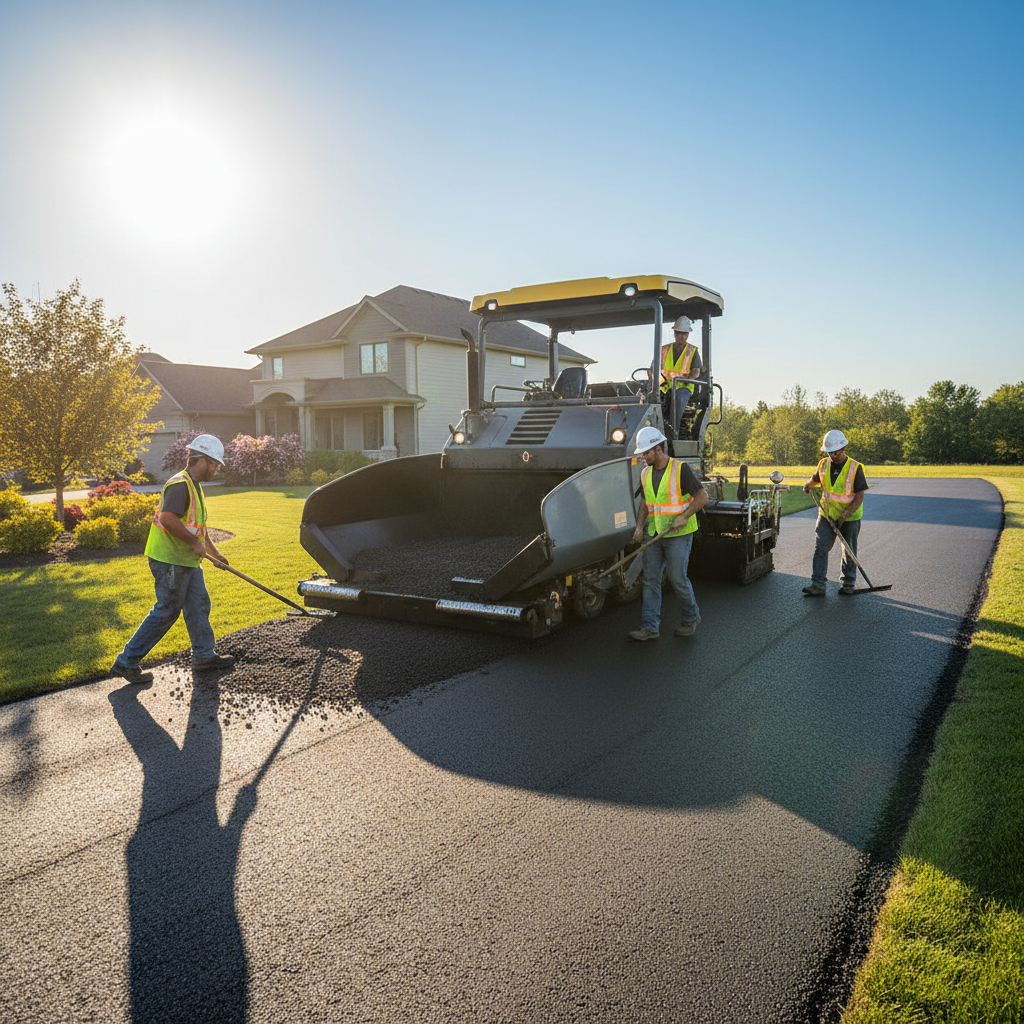
Driveway paving options and costs in Heritage Pointe
Heritage Pointe, Alberta is a smaller community (Population 2,075 according to the 2021 Census, Statistics Canada), and most private driveways here serve detached homes where traffic loads are moderate but freeze–thaw damage is relentless. In a lot of neighbourhood pockets, you’ll see driveways that get graded in spring, then suffer winter heaving and surface raveling by January—especially where drainage isn’t corrected at the base. Calgary-area seasonality also affects pricing: hot-mix asphalt can’t be properly placed and compacted when air temperatures are too cold (practically, most work runs late spring through early fall). That compressed schedule concentrates labour and equipment demand, so smaller jobs can see less pricing flexibility during peak months.
Because frost can penetrate to roughly 1.2 m in this cold continental climate, the real “cost engine” is the base build: deeper, well-graded granular layers and positive drainage add material and compaction time, even before the asphalt or concrete is installed. If you’re paving near areas with heavier neighbourhood traffic flow—like the busier approach corridors within Heritage Pointe—you’ll also notice contractors factoring in tighter access, additional saw-cutting, and careful edge support to protect curbs and landscaped edges.
Below is a practical cost comparison of driveway paving options that are commonly quoted in Calgary and surrounding communities for Heritage Pointe homeowners. Use it to sanity-check your next quote before you sign.
| Material |
Lifespan |
Maintenance |
Best For |
Price per sq ft |
Price Range |
| Asphalt (new installation, proper base) |
15–25 years |
Seal every 3–5 years; crack fill as needed |
Best value, smooth ride, fastest install |
Varies by thickness and base |
$12–$20 |
| Asphalt (overlay on existing gravel base) |
10–20 years |
Seal and patch more often if base is unstable |
Budget upgrade when drainage is corrected |
Lower base excavation cost if existing is sound |
Varies by stabilization needs |
$10–$17 |
| Interlocking concrete pavers |
25–35+ years |
Replace individual stones/sections; re-sand as needed |
Curb appeal and easy localized repairs |
Labour and edge restraints drive cost |
Varies by pattern and borders |
$18–$30 |
| Poured concrete (broom finish) |
25–30 years |
Minor patching; consider sealing if weathering occurs |
Clean, modern look with long straight runs |
Air-entrained concrete helps in freeze–thaw |
Varies by thickness and steel/rebar |
$15–$25 |
| Exposed aggregate concrete |
25–30 years |
Sealer top-up every few years (as recommended) |
Slip resistance and decorative surface |
Cost driven by finish labour and curing |
Varies by finish depth and prep |
$18–$28 |
| Gravel / crushed stone (budget option) |
3–8 years (depends on gradation and drainage) |
Re-grade and top up annually; weed control |
Short-term solution or low budget |
Lowest material cost, but ongoing maintenance |
Varies by depth and hauling distance |
$6–$12 |
Prices are estimates only and vary by project scope, site access and material selection.
What affects the price of paving in Heritage Pointe
If two homeowners in the Calgary region get quotes for “the same” driveway size, it’s common to see 30–50% differences once base build, drainage corrections, and tear-out/disposal are accounted for. The biggest reason is that frost depth and freeze–thaw cycling here are decisive cost factors: with frost routinely penetrating to about 1.2 m, contractors need a thicker, properly compacted granular base and a well-graded aggregate system to limit subgrade movement. When the base is too thin or drainage is poor, water expansion in winter leads to heaving, cracking, and accelerated surface raveling—each of which means more labour and repairs later.
Seasonality also drives pricing. Asphalt placement needs suitable temperatures (practically above 10°C air temps for reliable paving and compaction), so the paving season is shorter in colder regions, concentrating demand into late spring through early fall. That pushes scheduling pressure, and smaller projects often carry higher per-unit labour and mobilization costs. For asphalt, the mix design matters too: Calgary-area work typically requires a freeze–thaw-rated asphalt mix, which can land at the higher end of the $12–$20 asphalt band when a full-depth base and proper tack/prime are included.
In Heritage Pointe specifically, costs can rise with additional examples like: (1) removing and replacing weak topsoil that pumps under compaction, (2) reworking slopes so runoff drains away from the garage area instead of toward it, and (3) rebuilding edges where curbs or landscape borders limit machine access. As a rough way to think about it, a driveway that needs full tear-out and granular base correction often ends up closer to the mid-to-upper end of $18–$30 interlocking paver pricing—mostly due to base and edge restraint—not just the visible surface.
| Price Factor |
Why It Matters |
Cost Impact |
| Driveway area in sq ft |
Most materials and labour scale directly with square footage |
Largest variable; typically the first number in your quote |
| Base depth required |
Frost line affects granular thickness to prevent heaving and cracking |
Can add significant material, hauling, and compaction time |
| Grading and drainage work |
Slope and runoff control prevent water from pooling in winter |
Often adds excavation and extra granular/pipe work |
| Tear-out of existing surface |
Breaking and hauling old asphalt or concrete adds disposal and labour |
Usually one of the biggest “hidden” line items |
| Edge restraints and curbing |
Prevents paver spread and asphalt edge failure |
Increases materials and layout time |
| Sealing requirement |
Asphalt benefits from sealcoating to slow oxidation and water intrusion |
Regular maintenance cost; not a one-time “install” |
| Site access |
Narrow lots slow equipment movement and may require more hand work |
Raises labour hours and may limit compactors |
| Asphalt mix specifications |
Freeze–thaw-rated mix supports Calgary cold-weather performance |
Can move the job toward the upper end of the asphalt band |
Permits & regulations in Alberta
In Alberta, paving a private driveway on your own property typically does not require a building permit. Where things change is when the work touches municipal infrastructure or alters storm management—because that impacts how water flows through the public right-of-way. For Heritage Pointe homeowners, the items that usually do require municipal approval include: new or changed curb cuts, modifications to a boulevard or approach within the municipal right-of-way, and any changes to storm drainage patterns that could affect neighbours or catch basins. If your contractor is proposing to redirect runoff, adjust inlets, or change the boulevard grading, ask what municipal approval (if any) is required and who applies.
Before excavation, always call for utility locates (Alberta One-Call) and ensure the site is properly marked. Step-by-step, you can also verify your paving contractor’s credentials:
- Check licensing/registration details online (confirm they’re in good standing for paving/contracting work in Alberta).
- Request a current Certificate of Insurance (liability) naming you as a certificate holder if applicable.
- Confirm WSIB/WCB coverage for the contractor and subcontractors—ask for clearance documentation or proof of coverage.
- Ask for written confirmation of disposal handling and protection of any existing landscaping/boulevard areas.
- Get everything in writing: scope, base thickness, drainage corrections, and warranty terms.
This combination—utilities located, municipal approvals handled when needed, and proof of coverage—protects you if frost-related settlement or workmanship issues show up after the first winter.
Asphalt vs pavers vs concrete for Heritage Pointe driveways
For Heritage Pointe’s cold continental freeze–thaw routine, all three driveway options can work well if the base and drainage are built correctly, but they behave differently under winter stress and how you maintain them over time. Asphalt is usually the lowest upfront cost and offers a smooth ride, but it depends on sealing to slow oxidation and water penetration. In a climate where frost can penetrate deeply (about 1.2 m), a well-built, well-drained granular base is what keeps asphalt from cracking and raveling—then sealcoat every 3–5 years to protect the surface.
Interlocking concrete pavers typically have the highest upfront price, yet they’re often the best long-term choice for homeowners who want repair flexibility. If a section of subgrade moves, pavers can be lifted, the base corrected, and stones reset—without replacing the entire driveway. That matters in Heritage Pointe where winter maintenance (ploughing, sand, and salt) can reveal weak edges first.
Poured concrete lands in the mid-range. It’s strong and durable with correct thickness, but freeze–thaw cracking is a real risk if concrete isn’t air-entrained and finished properly. De-icing salt and repeated melt/refreeze can worsen surface scaling if the concrete mix and curing weren’t right.
Concrete examples: if you’re comparing asphalt at roughly $12–$20 per sq ft versus pavers at $18–$30, the price difference can be justified when you expect frequent localized repairs or you want standout curb appeal. If your driveway has straightforward drainage and stable soils, asphalt can be the smarter value; if your soil is variable or you want easy patching, pavers often win.
| Material |
Frost Resistance |
Curb Appeal |
Repair Method |
Lifespan |
Price Band |
| Asphalt (sealed regularly) |
Good with deep granular base and proper drainage |
Medium (clean, dark finish) |
Patch/overlay sections; crack fill and seal |
15–25 years |
$12–$20 |
| Interlocking concrete pavers |
Very good; more forgiving of localized movement |
High (patterns, borders, custom looks) |
Lift and reset individual units or sections |
25–35+ years |
$18–$30 |
| Poured concrete (air-entrained) |
Good when properly air-entrained and cured |
Medium (clean broom finish or decorative options) |
Patch spalls; consider sealing; crack repair as needed |
25–30 years |
$15–$25 |
| Exposed aggregate concrete |
Good; durable surface texture |
High (decorative finish) |
Patch with matching mix/finish; limited spot blending |
25–30 years |
$18–$28 |
| Permeable pavers (drainage grid) |
Very good when designed with correct base and underdrain |
High (modern look) |
Lift/reset; clean and maintain joints/underdrain |
20–30+ years |
$22–$34 |
| Chip seal / tar-and-chip |
Fair to good; performance varies with winter wear |
Lower (more rustic finish) |
Spot patch; periodic maintenance surface works |
7–15 years |
$10–$18 |
How to choose a paving contractor in Heritage Pointe
Choosing a contractor in Heritage Pointe comes down to verification plus transparency. First, confirm Alberta coverage and responsibility: ask for their current Alberta licensing/registration details, a Certificate of Liability Insurance (and ensure it covers driveway/construction work), and proof of WSIB/WCB coverage for workers and any subcontractors. If anything is unclear, a reputable contractor will provide documentation quickly—no chasing, no vague “we’re covered” answers.
Next, request 2–3 itemised written quotes, not lump sums. A solid quote breaks down: excavation/removal, base granular type and depth, compaction testing (if offered), geotextile where used, drainage/grading changes, edge restraints, the paving material, and cleanup/disposal. Confirm whether a permit pull is included if work touches municipal right-of-way (curb cuts, boulevard changes, or altered storm drainage). Ask what’s excluded: sometimes the quote doesn’t include replacing topsoil/landscaping restoration beyond a defined area—get that boundary clear.
Warranty matters in a freeze–thaw climate. Ask for (1) the workmanship warranty length and what it covers, (2) manufacturer product warranty details (for pavers/asphalt mix where applicable), and (3) whether any warranty is transferable to future owners.
For payment, never pay more than about 10–15% upfront. Use a holdback until completion and final grading verification are done, and get a start date plus an estimated completion window in writing.
- Confirm Alberta registration/licensing and ask for proof.
- Request Certificate of Liability Insurance and verify dates.
- Verify WSIB/WCB coverage (and subcontractor coverage).
- Ask for 3 recent driveway references around Calgary/nearby communities.
- Require an itemised quote (labour, materials, and disposal separated).
- Ask for base thickness and what it’s based on (drainage + frost considerations).
- Confirm drainage correction plan and slope targets.
- Ensure edge restraints/curb support is included where needed.
- Clarify tear-out scope: what gets removed and where debris goes.
- Get a written schedule: start date, cure time, and completion.
- Review warranty terms in writing, including workmanship and exclusions.
- Set a payment schedule with small upfront payment and a completion holdback.
Red flags I see in Heritage Pointe-style residential work: contractors who won’t provide insurance/coverage paperwork, quotes that skip granular base depth and drainage details, pressure to pay large deposits up front, vague warranty language (“we’ll fix it if it fails”) with no timelines, and proposals that don’t discuss how they’ll protect curbs, sidewalks, and landscaped edges during compaction and paving.
Frequently asked questions — paving in Heritage Pointe
Asphalt vs interlocking pavers vs concrete — which is best in Heritage Pointe?
In Heritage Pointe and the broader Calgary cold continental climate, the “best” choice usually depends on how much drainage and base correction your site needs. Asphalt is the best value when the contractor builds a proper granular base and you’re willing to seal regularly; many driveways land around $12–$20 per sq ft, but only if the base is right. Interlocking pavers cost more, typically $18–$30, yet they offer easier localized repairs if you get minor settlement after freeze–thaw cycles. Poured concrete is solid when air-entrained concrete is used and the finish/curing are done correctly—however, it can crack if drainage and curing aren’t handled carefully. For homes with variable soils or known drainage challenges near the garage/approach area, pavers often prove more forgiving.
How long does a paved driveway last in Heritage Pointe?
With correct base build and drainage, asphalt driveways commonly last 15–25 years, but performance depends heavily on maintenance. If you seal on a 3–5 year cycle and keep up with crack filling before water gets in, you slow surface oxidation and reduce freeze–thaw damage. Interlocking pavers often reach 25–35+ years because sections can be lifted and repaired rather than replacing the whole surface. Poured concrete typically lasts 25–30 years when air-entrained mix is used and the contractor includes appropriate thickness and finish; still, concrete can show cracking patterns under movement from frost if the base isn’t stable. The biggest life-shorteners in Heritage Pointe are pooled runoff and edge failure—both start at the subgrade, not the top layer.
When is the best time of year to pave in Heritage Pointe?
For Heritage Pointe, plan work from late spring through early fall. Asphalt requires workable temperatures for proper placing and compaction—hot-mix asphalt generally needs warm air and stable conditions, practically above 10°C for reliable results. Concrete also needs suitable curing temperatures to reduce early-age damage and shrinkage issues. If you’re aiming for the best weather for compaction and drainage performance, contractors typically prefer conditions after spring thaw but before prolonged summer heat spikes. Scheduling is also tighter in peak months, so booking early often saves you money (or at least avoids last-minute mobilization premiums).
How deep should the base be for Heritage Pointe's frost?
Because frost penetration in this region is roughly 1.2 m, base depth isn’t a one-size number—it’s determined by subgrade condition and drainage. A proper driveway build typically involves a thicker, well-graded granular base than you’d use in milder climates, with compaction done in lifts and drainage addressed so water doesn’t sit under the pavement. In practice across Alberta, contractors often design base thicknesses in the range of 6–12 inches (or more) depending on soil strength and how much excavation is required to reach firm material. The key is that the quote should name the base materials, thickness, and how they will confirm compaction—if the contractor can’t explain that, assume you’re not getting frost-resilient construction.
How often should I seal my asphalt driveway?
As a rule for Calgary-area conditions and Heritage Pointe driveways, sealcoat is usually applied after the asphalt has cured, then re-applied every 3–5 years depending on traffic, sun exposure, and how much sand/salt gets tracked onto the surface. If you get heavy de-icing use or you’re parked and plowed aggressively close to the edges, earlier sealing can prevent oxidation and reduce the chance of water intrusion. When you budget, remember sealing isn’t just cosmetic—it’s part of protecting the asphalt surface layer against winter freeze–thaw. If your quote included asphalt at around $12–$20 per sq ft, ask whether sealing is part of the initial scope or an upcoming maintenance item. Expect to plan maintenance so you don’t lose the value of the base investment.
Why does my driveway crack and heave in winter?
Cracking and heaving in Heritage Pointe almost always trace back to the subgrade and water movement, not just age. Freeze–thaw cycles cause water expansion, and if water can’t drain away, it builds pressure under the pavement. Common causes include insufficient granular base depth, poor compaction, weak or frost-susceptible soils, and grading that slopes toward the garage instead of away from it. Edge failure is another frequent trigger: if edges aren’t restrained, pavement can lose lateral support, then lift during winter. Over time, sealcoat that’s skipped (or delayed) lets water penetrate, accelerating damage. If your driveway shows first movement near low spots or along the sides, it’s usually a drainage/base issue that needs correction, not just surface patching.