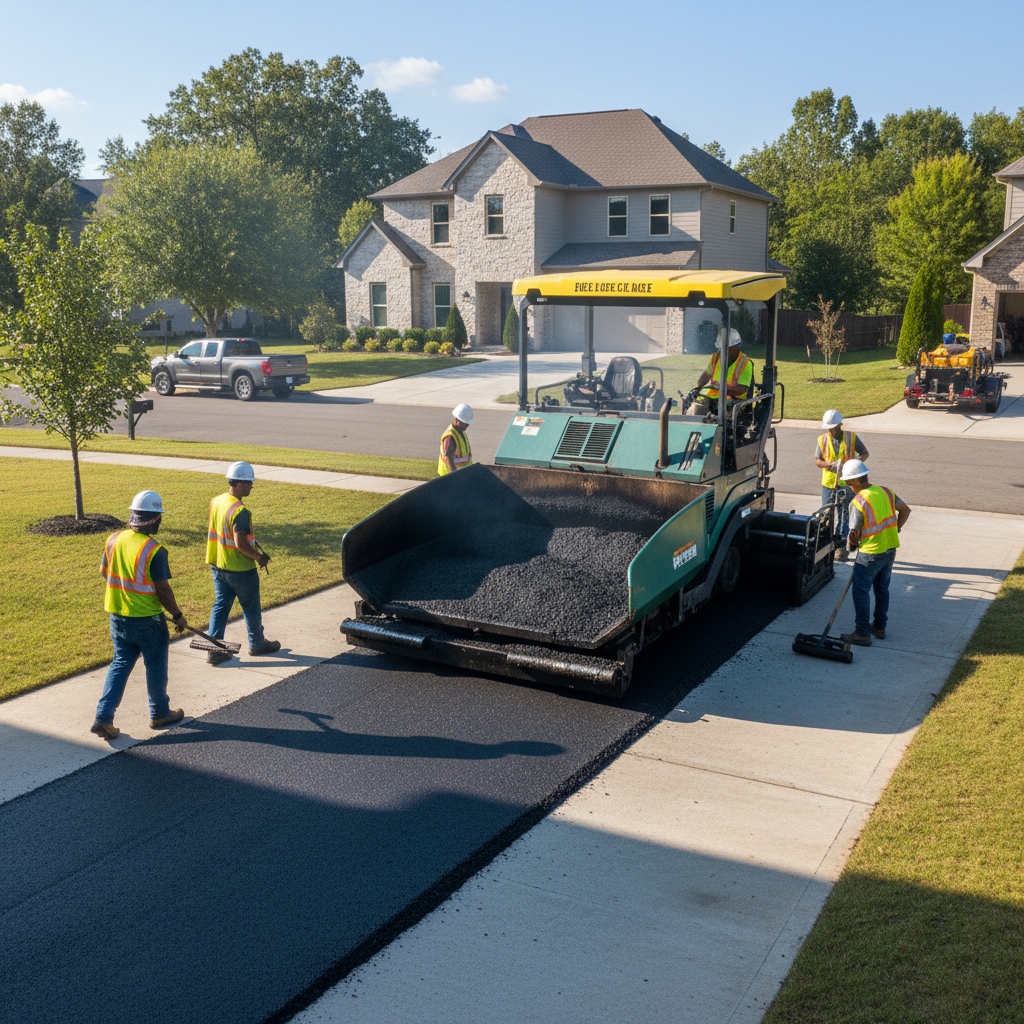
Driveway paving options and costs in Albert Park/Radisson Heights
In Albert Park/Radisson Heights, Alberta, driveway paving choices usually come down to asphalt, interlocking concrete pavers, or concrete—each tuned to how our Calgary-region frost and winter upkeep behave. With a local population of 6,740 (Statistics Canada, 2021 Census), there’s a steady mix of homeowners making improvements each year, and most private driveways are tied to single-detached neighbourhood lots. That matters because small access roads and older parcels often mean tighter staging for equipment and a bigger emphasis on drainage and edge support.
Calgary-area paving costs are strongly influenced by freeze–thaw. Frost can penetrate to about 1.2 m (4 ft), so contractors must build deeper, well-graded granular bases and ensure positive surface runoff—otherwise you see heaving, cracking, and raveling sooner. The paving season is also compressed, and hot-mix asphalt needs suitable air temperatures (typically above 10°C) for proper placement and compaction. In peak spring/summer months, scheduling pressure can affect both labour availability and total project pricing.
In Albert Park/Radisson Heights—particularly around higher-traffic residential pockets and older streets with more existing gravel or dated asphalt—demand tends to spike for overlays and full rebuilds as homeowners address rutting, standing water, and winter washboarding.
Below is a practical cost comparison you can use to sanity-check your quote before we talk about what changes pricing for your exact site.
| Material |
Lifespan |
Maintenance |
Best For |
Price per sq ft |
| Asphalt (new installation, proper base) |
15–25 years |
Seal every 3–5 years; crack fill as needed |
Value-focused homes with good drainage |
$12 – $20 |
| Asphalt (overlay on existing gravel base) |
10–18 years (depends on base condition) |
Seal every 3–5 years; monitor edges and low spots |
When you want to pave without full tear-out (if base is solid) |
$10 – $17 |
| Interlocking concrete pavers |
25–35 years |
Weed barrier as required; re-level individual blocks if needed |
Curb appeal + easier localized repairs |
$18 – $30 |
| Poured concrete (broom finish) |
20–30 years |
Joint maintenance; patching and resurfacing when needed |
Low maintenance look with good jointing |
$15 – $25 |
| Exposed aggregate concrete |
20–30 years |
Sealer optional; patching as needed |
Slip-resistance and textured appearance |
$18 – $28 |
| Gravel / crushed stone (budget option) |
3–7 years (varies by traffic and drainage) |
Re-grade and re-top up seasonally; control weeds |
Temporary solution or very low-budget installs |
$6 – $12 |
Prices are estimates only and vary by project scope, site access and material selection.
What affects the price of paving in Albert Park/Radisson Heights
If two neighbours in Calgary ask for quotes on “the same driveway,” you’ll often see 30–50% differences. The biggest reason isn’t the asphalt or concrete itself—it’s the foundation engineering (base thickness, gradation, and drainage), how much tear-out is required, and how tight the job is to access and compact safely during the short season.
In this cold continental climate, frost line depth and freeze–thaw cycles are decisive cost factors. Calgary-region frost can reach about 1.2 m (4 ft), which means you typically need a deeper, more carefully compacted granular base to prevent movement and water-related heaving. Contractors generally build thicker base layers in Alberta than in milder regions. When drainage is off—even a small low spot—water freezes and expands, accelerating cracking and surface failures. That’s why you’ll see reputable quotes include grading corrections, underdrains where needed, and well-graded aggregates.
Timing also matters. Asphalt placement requires air temperatures typically above 10°C, so spring and summer scheduling pressure can raise labour-day rates and equipment time. Material design is another variable: asphalt mixes must be freeze–thaw rated for our conditions, which can affect cost versus a “generic” mix.
Concrete examples that commonly raise costs in Albert Park/Radisson Heights include heavier saw-cut jointing and air-entrainment for durability in our winter freeze conditions. Exposed aggregate can also cost more due to finishing time and additional curing attention.
To connect this to real dollars: an “economy” asphalt job might align with the $12–$20 per sq ft band when the base is ready and drainage is straightforward, while a full rebuild with tear-out, drainage correction, and deeper base can push totals toward the upper end—especially when mobilization time is higher for smaller lots in demand areas. Likewise, pavers typically sit in the $18–$30 per sq ft range because labour and labour time are higher, even though repairs can be localized.
| Price Factor |
Why It Matters |
Cost Impact |
| Driveway area in sq ft |
All paving is priced on production area plus base and forms |
Largest driver—often determines the whole budget |
| Base depth required |
Frost protection depends on properly compacted granular thickness |
Higher base depth increases aggregate, hauling, and compaction time |
| Grading and drainage work |
Controls water pooling and freeze–thaw expansion |
Can add major labour/material time if re-slope or drainage is required |
| Tear-out of existing surface |
Removing old asphalt/concrete and hauling away debris affects labour |
Breaking, loading, disposal, and replacement materials increase cost |
| Edge restraints and curbing |
Prevents paver spread and asphalt edge failure in thaw cycles |
Adds concrete/stone, extra labour, and formwork |
| Sealing requirement |
Asphalt needs sealcoating to slow oxidation and raveling |
Often 2 coats or scheduled within the first year; affects lifecycle cost |
| Site access |
Narrow driveways and tight staging slow equipment movement |
Higher downtime and more manual handling |
| Asphalt mix specifications |
Freeze–thaw-rated mixes resist our winter stressors |
Improves durability but can increase material cost |
Permits & regulations in Alberta
For Albert Park/Radisson Heights homeowners, paving a private driveway within your own property usually does not require a building permit. In practical terms, most projects like replacing asphalt, pouring a new slab, or installing pavers on your lot fall under private property work.
Permits and municipal approvals typically come into play when your work touches municipal infrastructure. That means the steps that usually DO require approval include new or modified curb cuts, changes to the boulevard, alterations to storm drainage (for example, adjusting how runoff ties into existing systems), or any work that impacts the city-maintained right-of-way. Also, some municipalities apply lot-grading rules that restrict how close hard surfaces and grading changes can be relative to property lines and drainage features.
Here’s a simple homeowner verification process before you sign anything:
- Call utility locates (Alberta One-Call) before any excavation—ask your contractor to provide the locate ticket number.
- Confirm lot-grading and any right-of-way requirements with your municipality before scheduling.
- Verify contractor licensing in Alberta via the provincial registry relevant to the work they’re performing.
- Request a current certificate of insurance (general liability) naming you/your property as appropriate.
- Ask for WSIB/WCB clearance documentation and ensure it’s valid for the timeframe of the job.
Doing these checks upfront avoids delays in the short spring-to-fall window and reduces the risk of work being paused after excavation begins.
Asphalt vs pavers vs concrete for Albert Park/Radisson Heights driveways
Choosing between asphalt, interlocking concrete pavers, and concrete in Albert Park/Radisson Heights comes down to freeze–thaw performance, repair strategy, and how you want your driveway to look. All three can be durable in Calgary-area winters when the base and drainage are built correctly—but winter maintenance routines (plowing, sand/salt, and thaw water) expose weak base preparation quickly.
Asphalt is typically the lowest upfront cost and is well-suited for homeowners who want a smoother ride and are comfortable maintaining it. In this region, you’ll usually plan on sealing every 3–5 years; skipping that step accelerates raveling and oxidation. Interlocking concrete pavers cost more up front, but they’re the most forgiving when something shifts: you can lift and re-level affected sections rather than replacing the entire surface. Poured concrete sits mid-range on cost, but freeze–thaw and de-icing products require the right air-entrainment and proper jointing; otherwise you can see cracking where water finds a path.
For Calgary’s frost conditions (deep frost penetration and repeated freeze–thaw), base preparation and drainage design are the real “make or break” items. Asphalt and concrete both benefit from a stable, well-compacted granular base with correct slope and positive runoff. Pavers add edge restraints and consistent bedding so individual blocks don’t pump under traffic.
A quick dollar reality check: if asphalt in your quote lands near the $12–$20 per sq ft range, a paver option commonly lands nearer the $18–$30 per sq ft range. The extra cost is justified when you want curb appeal, prefer modular repairs, or have a driveway area prone to localized settlement.
| Material |
Frost Resistance |
Curb Appeal |
Repair Method |
Lifespan |
Price Band |
| Asphalt (sealed regularly) |
Good with proper base, drainage, and freeze–thaw-rated mix |
Moderate |
Patch and crack seal; sometimes localized mill/overlay |
15–25 years |
$12 – $20 |
| Interlocking concrete pavers |
Very good when base is compacted and edges are restrained |
High |
Lift, re-bed, and re-install affected paver sections |
25–35 years |
$18 – $30 |
| Poured concrete (air-entrained) |
Good with air-entrainment and correct jointing |
Moderate to high |
Patch and seal; larger sections may need resurfacing |
20–30 years |
$15 – $25 |
| Exposed aggregate concrete |
Good when properly cured and protected from early freeze |
High |
Patch with matching mix; may be less seamless to repair |
20–30 years |
$18 – $28 |
| Permeable pavers (drainage grid) |
Excellent for water management if soils drain well |
High |
Replace individual pavers; keep media clean to maintain flow |
20–30 years (system dependent) |
$22 – $36 |
| Chip seal / tar-and-chip |
Moderate; depends heavily on base and maintenance |
Low to moderate |
Spot patch; periodic re-surface |
7–12 years |
$10 – $16 |
How to choose a paving contractor in Albert Park/Radisson Heights
Choosing the right contractor matters a lot in Albert Park/Radisson Heights because our winter conditions punish poor base prep and sloppy drainage. Start with Alberta-focused verification: ask for their Alberta licence number (for the scope they’re performing), a current certificate of general liability insurance, and proof of WSIB/WCB coverage. How to check: (1) request the documents and confirm the dates are current, (2) match the company name on the insurance and coverage to the one on the contract, and (3) if anything looks out of date or inconsistent, ask for an updated clearance letter before work starts.
Next, get 2–3 itemised written quotes. You want labour and materials broken out, including excavation depth, base course thickness, compaction type, and whether disposal is included. Make sure the quote specifies the asphalt mix requirements for freeze–thaw performance or, for concrete, air-entrainment and jointing details. If they only provide a lump sum, you can’t fairly compare apples-to-apples.
Read scope exclusions carefully: Is permit/municipal approval work included if a curb cut or right-of-way impact is required? Is tear-out disposal included? Are edge restraints included (especially for pavers and exposed asphalt edges)? For warranties, confirm both workmanship and product/manufacturer coverage, the length of the workmanship warranty, and whether it transfers if you sell your home.
Finally, manage payment responsibly. A good rule is never paying more than 10–15% upfront. Use a holdback until the job is complete and items like sealing timelines are confirmed. Ask for a start date and estimated completion in writing—winter protection and curing windows are real in Alberta’s short paving season.
- Ask for a site walk and written base thickness specification before pricing.
- Confirm drainage approach (slope, tie-in points, and low-spot corrections).
- Require utility locate proof (Alberta One-Call ticket) before excavation.
- Check insurance certificate dates and that coverage matches the contract name.
- Verify WSIB/WCB coverage with a clearance document, not just a policy number.
- Request the exact asphalt mix specification or concrete mix notes (air-entrained).
- Ensure disposal/hauling is clearly included or excluded.
- Confirm edge restraints/curbing plans to prevent spread and edge breakdown.
- For asphalt, ask about tack coat, compaction testing, and joint/crack plan.
- For pavers, confirm geotextile/bedding details and joint sand approach.
- Get a written schedule: start date, curing/settlement expectations, and completion.
- Understand warranty terms: who honours it and what triggers it.
Red flags I’d take seriously in Albert Park/Radisson Heights include: refusing to put base thickness and drainage details in writing, quoting a “same price regardless of tear-out” (without a site assessment), missing or outdated insurance/WSIB/WCB paperwork, promising full install during unsuitable cold snaps without discussing asphalt temperature requirements, and pushing large upfront payments without holdback or a clear completion checklist.
Frequently asked questions — paving in Albert Park/Radisson Heights
What causes potholes and how are they repaired?
Potholes are usually caused by water getting under the surface and expanding during freeze–thaw. In Alberta, small cracks let moisture reach the granular base; when ice forms, it lifts and breaks the pavement structure, then traffic accelerates the damage. The underlying problem is often drainage (a low spot or inadequate slope) or a base that wasn’t compacted to the right specification. Repairs typically start with locating the failing area, removing loose material down to solid base, and rebuilding with properly compacted aggregate before repaving/patching. For asphalt, a good contractor will also address nearby cracks (crack fill) so water doesn’t keep migrating. If you’re seeing frequent failures, you may need an overlay rather than repeated patching—especially if your driveway is already near the low end of the $12 – $20 per sq ft band and the base is questionable.
How do I prepare for a paving project?
Preparation in Albert Park/Radisson Heights starts with access and protection. Clear vehicles, landscaping items, and stored materials from the driveway path so equipment can work safely. If the contractor needs to excavate, ensure any planned storage is moved—tear-out and hauling create staging needs. Expect utility locates (Alberta One-Call) before digging and confirm pets and kids are kept away from the work zone. Provide site details like where water currently runs during spring melt and where snowmelt pools after storms; that helps drainage design. If you have existing asphalt, ask whether the job is a full rebuild or an overlay—overlay work depends on base condition. Finally, confirm scheduling in the short paving season and ask about curing and any temporary limitations on driving immediately after placement. Being ready for mobilization helps keep labour costs closer to the estimate and reduces day-rate surprises.
How do I compare paving quotes fairly?
To compare quotes fairly in Alberta, insist on apples-to-apples scope. Ask for itemised line items: excavation depth, base course thickness, aggregate type/gradation, compaction approach, disposal/hauling, edge restraints, and surface finish details. For asphalt, confirm the mix is freeze–thaw rated and that sealing is included in the plan (asphalt typically needs sealing after about 6–12 months). For concrete, ensure air-entrainment and jointing details are included. Also check whether the quote assumes overlay on existing material or requires full tear-out. If one quote is near the $12 – $20 per sq ft asphalt band and another is much higher but includes drainage corrections and thicker base, the difference can be justified. Watch for “allowances” with unclear amounts, and don’t compare only totals—compare production rates, materials, and what’s excluded.
Can asphalt be laid in cold weather in Albert Park/Radisson Heights?
In Albert Park/Radisson Heights, you shouldn’t assume asphalt can be laid whenever temperatures are “a bit above freezing.” Hot-mix asphalt placement generally needs adequate air temperatures—commonly above 10°C—so it can be produced, delivered, and compacted properly. If the mix cools too quickly, compaction suffers and the asphalt can become less durable under freeze–thaw stress. A reputable contractor will check forecast conditions, base temperature, and wind/chill, and will explain what happens if weather drops. If someone promises asphalt work during consistently cold conditions without discussing placement temperature and compaction controls, that’s a major quality risk. In the Calgary region’s compressed season, it’s normal to wait for workable weather rather than rushing—because the cost of premature failure is far higher than the scheduling inconvenience.
What is a driveway apron and do I need one in Albert Park/Radisson Heights?
A driveway apron is the reinforced transition area at the street-side or near the garage approach—essentially the portion that helps the driveway connect cleanly to the curb line or boulevard area and manage runoff/edge stresses. In Albert Park/Radisson Heights, whether you “need” an apron depends on your current drainage pattern, any curb/boulevard situation, and how your driveway ties into the right-of-way. If your driveway edge is vulnerable to plow impacts, or if vehicles create a high-load transition area, an apron can reduce cracking and raveling at the weakest point. It may also be required where a new curb cut or right-of-way adjustment is approved by the municipality. If your quote mentions apron work, verify whether it’s within your property limits or involves right-of-way—right-of-way changes may require municipal approval.
How do I maintain my driveway through Albert Park/Radisson Heights winters?
Winter maintenance in Alberta is about preventing water intrusion and keeping the surface intact. For asphalt, avoid heavy scraping that removes aggregate; use careful plowing with appropriate blade height and avoid gouging edges. After thaw cycles, remove loose debris and keep an eye on low spots where water pools—those areas fail first. Sand is usually safer than excessive salt for protecting the surface, but you still need to control meltwater. In most cases, plan sealing on a 3–5 year rhythm for asphalt; if you’re scheduling a budget, sealing is commonly in the $400 – $1,500 range depending on driveway size and condition. For concrete, monitor joint edges and patch small spalls quickly. For pavers, keep joint sand topped up and remove weeds early. The earlier you address minor cracks or edge breakdown, the less likely you’ll face a full overlay or rebuild later.