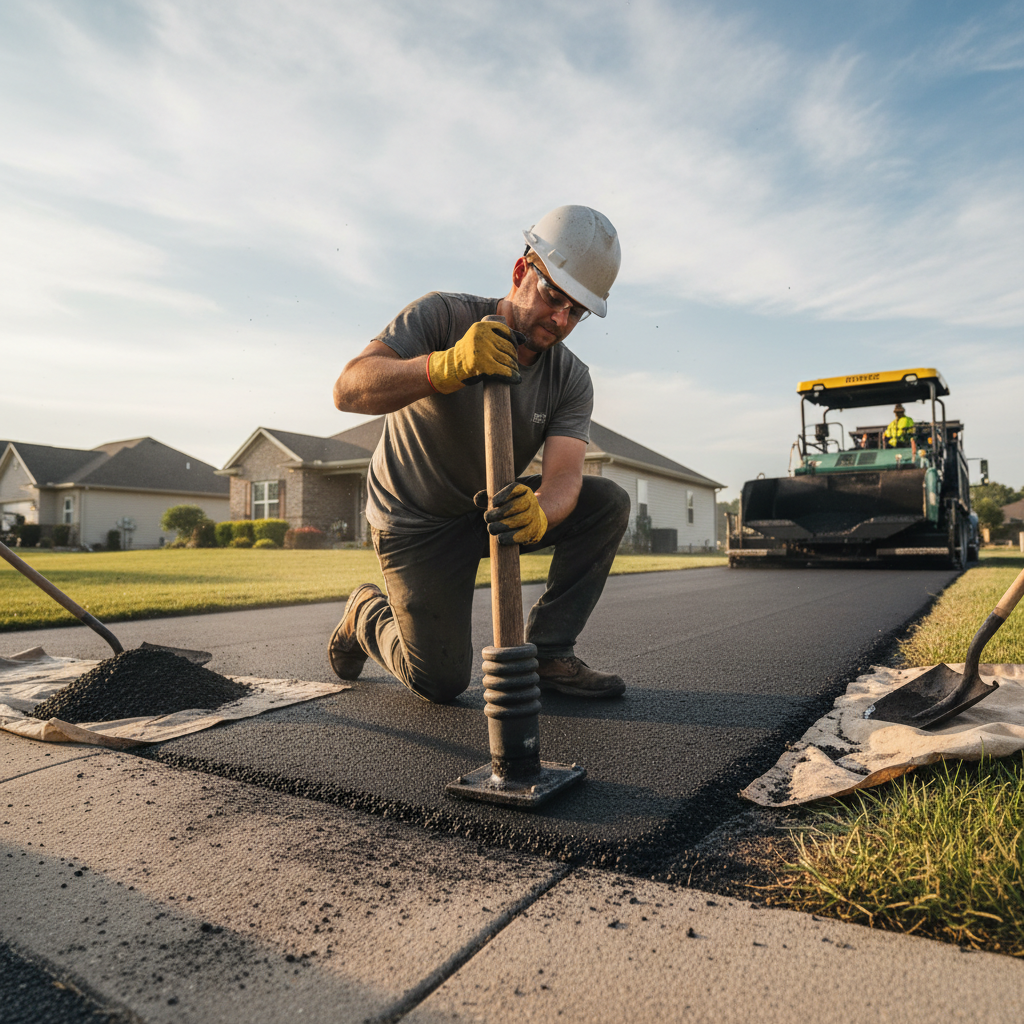
Driveway paving options and costs in Mahogany
In Mahogany, Alberta, homeowners typically choose from asphalt, interlocking pavers, or concrete—mostly because most driveways serve attached-to-the-house single-detached homes, and the area’s look and winter durability matter. With Mahogany’s population at 13,860 (Statistics Canada, 2021 Census), there’s steady local demand that stays concentrated in the warmer months, so scheduling can tighten when weather permits start to roll in. Calgary’s cold continental climate also plays a big role in cost: frost can penetrate to around 1.2 m, and freeze–thaw cycles push water and movement into the subgrade. That means contractors must build deeper, well-compacted granular bases and pay close attention to drainage and edge support. In practical terms, a “low bid” that skimp on base depth, grading, or pipe/drainage corrections often ends up costing more later through rutting, cracking, and premature surface raveling.
In Mahogany, demand is especially strong around the busier residential pockets near the lake/amenity side and the main access corridors where homeowners want clean lines, strong apron transitions, and good curb runoff control. If you’re planning a new install or replacing an older driveway, you’ll usually see quotes vary by material and how much removal and base reconstruction is required. Use the table below as a realistic pricing guide for Mahogany—then we’ll break down why the numbers move so much in this part of Calgary’s market.
| Material |
Lifespan |
Maintenance |
Best For |
Price per sq ft |
| Asphalt (new installation, proper base) |
15–25 years |
Sealcoat every 3–5 years; crack repair as needed |
Best all-round value with a smooth, quiet driving surface |
$12–$20 |
| Asphalt (overlay on existing gravel base) |
10–18 years |
Sealcoat 3–5 years; monitor settlement and patch early |
When gravel base is stable and drainage is already good |
$10–$16 |
| Interlocking concrete pavers |
25–35 years |
Spot replace stones as needed; occasional re-sanding of joints |
High curb appeal and easier repairs without full replacement |
$18–$30 |
| Poured concrete (broom finish) |
25–30 years (when air-entrained and properly detailed) |
Limited upkeep; crack patching and joint maintenance |
Low-sheen, long-wearing surface with predictable maintenance |
$15–$25 |
| Exposed aggregate concrete |
25–30 years |
Sealer upkeep 5–8 years depending on product |
Slip resistance and upgraded texture/appearance |
$18–$28 |
| Gravel / crushed stone (budget option) |
3–8 years before major regrading |
Regrade and add stone every 2–4 years |
Short-term solution or low-traffic areas |
$6–$10 |
Prices are estimates only and vary by project scope, site access and material selection.
What affects the price of paving in Mahogany
Even when neighbours in Calgary request “the same driveway,” quotes can swing by 30–50%—mostly because the work behind the surface differs: base reconstruction, drainage corrections, haul distance, and how much tear-out is needed. In cold continental conditions, frost line depth and freeze–thaw cycles are decisive cost factors in the Calgary area. Because frost can reach roughly 1.2 m, contractors typically design for deeper compacted granular bases and well-graded aggregates so water doesn’t mobilize fines and expand with freezing. When the base is underbuilt, you often see cracking, heaving, and edge breakdown sooner—so the “cheap” option can become a repeat repair cycle.
The paving season is also compressed: hot-mix asphalt placement generally requires warm conditions (commonly above 10°C air temperature), which concentrates demand into late spring through early fall. When crews and equipment are booked, smaller jobs can cost more per square foot due to mobilization and priority scheduling. Asphalt mix design matters too—freeze–thaw rated mixes cost more than standard mixes, but they resist moisture-related damage better in Alberta winters.
Two concrete examples from Mahogany drive cost up or down. First, if your existing driveway has soft subgrade or standing water after a rain, you may need additional base and drainage grading—this pushes you toward the mid-to-upper asphalt band (around $12,000–$20,000 for many typical-sized residential replacements, depending on scope). Second, if access is tight and a full tear-out is required, disposal and regrading can add several days of equipment time, moving projects closer to higher interlocking pricing levels (often $18–$30 per square foot for pavers). Home age can also matter: newer builds may already have better grading and utilities coordination, while older surfaces often hide thinner base and settlement that must be rebuilt.
| Price Factor |
Why It Matters |
Cost Impact |
| Driveway area in sq ft |
Materials and production rates scale mostly by surface area |
High—often the largest driver |
| Base depth required |
Frost line determines granular thickness and compaction requirements |
High—can change the whole rebuild scope |
| Grading and drainage work |
Slope corrections and drainage routing prevent water pooling |
Medium to high—adds labour and sometimes pipe work |
| Tear-out of existing surface |
Breaking asphalt/concrete and hauling waste affects time and disposal |
Medium to high—especially for older, thicker slabs |
| Edge restraints and curbing |
Prevents paver spread and asphalt edge ravelling in freeze–thaw |
Medium—often necessary for long service |
| Sealing requirement |
Asphalt needs sealcoat after curing to slow oxidation and moisture damage |
Low to medium—budget it for year 1 to 5 |
| Site access |
Narrow lots slow equipment movement and can increase labour hours |
Medium—mobilization and staging costs |
| Asphalt mix specifications |
Freeze–thaw rated mixes cost more but reduce moisture-related failure |
Low to medium—often worth it for long-life |
Permits & regulations in Alberta
In Alberta, paving a private driveway within your own property typically does not require a building permit. However, if your driveway work touches municipal assets or changes how stormwater is handled, you may need municipal approval. Examples of work that usually does require municipal authorization include new or modified driveway apron areas in the municipal right-of-way, creating or changing a curb cut, altering boulevard grading, connecting or modifying storm drainage, and any changes that affect how water flows from your property toward the road system.
Work that typically does not require a permit is confined to the hard-surface placement within your lot: removing existing driveway material, excavating and rebuilding your on-lot base, and installing asphalt, pavers, or concrete on your property—assuming no changes are being made to municipal drainage infrastructure.
Step one for homeowners in Mahogany: call for utility locates before excavation. In Alberta, use Alberta One-Call to mark services so your contractor can dig safely. Step two: verify your paving contractor’s Alberta licence status (where applicable for the scope of work), and confirm they carry proper liability insurance and current WSIB/WCB coverage where required for their workers. Ask for a current certificate of insurance and a WSIB/WCB clearance letter. You can also request their insurance directly and review expiry dates before the job starts—don’t rely on “it’s on file.”
Finally, confirm lot-grading bylaws with your municipality, because restrictions on hard-surface placement and how near you can grade to property lines can affect base thickness and edge restraint design.
Asphalt vs pavers vs concrete for Mahogany driveways
For Mahogany driveways, the right choice usually comes down to winter performance, repair approach, and how much curb appearance you want to invest in. Asphalt is often the lowest upfront option (in the general Mahogany tier, asphalt paving commonly lands around $12–$20 per square foot depending on scope), but it needs a disciplined maintenance cycle: sealcoat after the initial cure window and then every 3–5 years. Interlocking concrete pavers cost more initially (often $18–$30 per square foot), yet they’re very forgiving when repairs are needed—individual stones can be lifted and reset without replacing the whole driveway. Poured concrete typically sits mid-range (often $15–$25), but in Calgary’s freeze–thaw environment it must be air-entrained and correctly detailed with joints, otherwise cracking can occur sooner.
In cold continental conditions with frost reaching about 1.2 m, all three options rely on strong base prep and positive drainage. In asphalt and concrete, thicker granular support and correct slopes help prevent water from migrating under the surface where it can freeze and create movement. For pavers, the same idea applies, but edge restraints and joint sand are especially important; if runoff is poorly directed, paver edges can loosen and rutting can follow.
How they hold up to local winter routines matters too. In Mahogany, homeowners commonly use plowing and apply sand and sometimes de-icing chemicals. Asphalt that’s sealed and maintained tends to resist moisture damage better, while pavers can tolerate localized impact with minimal cosmetic disruption. Concrete generally performs well when air entrainment and curing are done right, but de-icing salts can accelerate surface wear on lower-quality mixes.
A practical dollar example: if your driveway is around 500 sq ft, a well-prepped asphalt install might land closer to the lower-to-mid asphalt band, while switching to pavers could add roughly 20–40% for material and base detailing. That price difference is often justified if you value curb appeal, foresee utility access needs, or want “repairable sections” rather than full-surface replacement later.
| Material |
Frost Resistance |
Curb Appeal |
Repair Method |
Lifespan |
Price Band |
| Asphalt (sealed regularly) |
Good when base and drainage are engineered for freeze–thaw |
Medium (clean black surface) |
Patch and overlay sections as needed |
15–25 years |
$12–$20 |
| Interlocking concrete pavers |
Very good with proper base, restraints, and joint sand |
High (custom colours/patterns) |
Remove and replace individual pavers |
25–35 years |
$18–$30 |
| Poured concrete (air-entrained) |
Good when air-entrained and joints are correctly placed |
Medium to high (finish dependent) |
Crack patching and resurfacing/repair sections |
25–30 years |
$15–$25 |
| Exposed aggregate concrete |
Good with correct mix design and curing |
High (textured, premium look) |
Limited—typically patching and cosmetic blending |
25–30 years |
$18–$28 |
| Permeable pavers (drainage grid) |
Very good when engineered for infiltration and stability |
Medium to high (eco-feature and tidy look) |
Spot replacement; maintain drainage layer |
20–30 years |
$20–$35 |
| Chip seal / tar-and-chip |
Fair to good depending on base and product |
Low to medium |
Re-treat sections when worn |
8–15 years |
$10–$15 |
How to choose a paving contractor in Mahogany
Start with proof, not promises. For Alberta coverage, ask for the contractor’s current liability insurance certificate and a WSIB/WCB clearance letter for their workers (where required). You can also verify licensing/registration status through the appropriate online registries for Alberta business practices. Make sure the certificate matches the legal business name and includes effective dates—then keep copies for your records.
Next, get 2–3 itemised written quotes, ideally with labour and materials breakdown rather than a single lump sum. Itemisation matters because two “$18 per sq ft” quotes can still differ if one includes full tear-out, proper granular base depth, edge restraints, compaction testing, and disposal. Read the scope carefully: what is excluded (for example, lifting/relocating garden edging, restoring sod, or correcting drainage)? Ask whether a permit is included if the project affects the municipal right-of-way, and confirm whether waste disposal and hauling are priced in.
Warranty should be specific. Ask for the workmanship warranty length, what it covers (e.g., base settlement, cracking, raveling), and whether it’s transferable if you sell your home. For payment, a common homeowner-friendly schedule is not paying more than 10–15% upfront; hold a portion back until the job is complete and cleaned up to standard. Finally, request a start date and completion estimate in writing—Mahogany schedules can slip when the late spring thaw exposes subgrade, so timelines should be clear.
- Ask for itemised quotes (materials, labour, equipment, disposal) for apples-to-apples comparisons.
- Confirm base depth and compaction method (and whether they provide test/verification).
- Require a drainage and grading description (slope, swales, runoff direction).
- Get written details on tear-out scope and what gets replaced vs reused.
- Check they include edge restraints/curbing where required for your chosen material.
- Ask about protection of landscaping and how topsoil/stripping will be handled.
- Confirm utility locate coordination and who is responsible for site marking before excavation.
- Verify liability insurance and WSIB/WCB clearance letter before work begins.
- Review warranty terms: workmanship duration, exclusions, and transferability.
- Set a payment schedule with a holdback until final grading and clean-up are done.
- Request start and completion dates (and what happens if weather delays curing).
- Ask for a sample schedule for sealcoating (asphalt) or joint sand maintenance (pavers).
Red flags in Mahogany include “we can start anytime” without site assessment, quotes that omit base depth or drainage details, no written warranty or vague coverage, missing insurance/WSIB/WCB documents, and a pricing structure that demands large upfront payments (beyond about 10–15%) without a clear completion plan.
Frequently asked questions — paving in Mahogany
How do I prepare for a paving project?
For Mahogany, start by clearing the driveway area and ensuring landscaping boundaries are marked so crews don’t over-excavate. Arrange access for equipment (measure gate widths and note any overhead power lines). Before any digging, confirm your contractor will call for utility locates through Alberta One-Call and will not excavate until services are marked. If you have older asphalt or concrete, remove vehicles and store seasonal items so the crew can complete tear-out and base prep without rushing. Also decide up front whether you’re upgrading drainage—standing water and poor slope are common in freeze–thaw areas, and fixing them can be the difference between a driveway that lasts 15 years and one that holds longer. Finally, plan for the compressed paving season in Alberta: schedule around realistic late spring to early fall windows.
How do I compare paving quotes fairly?
Compare quotes the way you’d compare products in the store: item by item. In Mahogany, ask each contractor to list base depth, granular type, compaction approach, and whether drainage/grading corrections are included. Make sure the scope includes tear-out, haul/disposal, and edge restraints—those items often explain why one quote is 30–50% higher. For asphalt, confirm that the mix design meets freeze–thaw needs and that sealcoat is addressed (usually after curing, and then every 3–5 years). For concrete, ensure it’s air-entrained and jointing is specified. If your estimate is sitting in the asphalt range (for example, around $12–$20 per sq ft), it should include proper base work; otherwise you’re comparing surface-only pricing.
Can asphalt be laid in cold weather in Mahogany?
In Alberta winters, cold-weather asphalt placement is the main cause of premature failure, so contractors typically aim for periods when temperatures allow proper placement and compaction. In practice, hot-mix asphalt needs adequate air temperature to achieve compaction and proper curing; many crews target conditions commonly above 10°C air temperature. If you try to place asphalt too late or when the subgrade is chilled, you risk weak mat density and early moisture damage—especially in a freeze–thaw environment like Calgary where frost can reach about 1.2 m. Mahogany homeowners should plan for the paving window from late spring through early fall. If the contractor proposes “cold weather paving” without a documented process, curing plan, and temperature controls, that’s a serious concern.
What is a driveway apron and do I need one in Mahogany?
A driveway apron is the transition section at the curb/roadside area—often where a driveway meets the roadway or municipal boulevard. In Mahogany, whether you need an apron depends on your driveway geometry and whether a curb cut or boulevard work is involved. If the project includes new or modified access in the municipal right-of-way, it usually requires municipal approval and may affect how water drains at the connection. Aprons also help reduce the “lip” effect where plows and vehicles contact the edge. If your scope is purely on-lot paving, you may not need to touch the apron; but if you’re rebuilding the interface, ask the contractor whether apron work is included and whether the required approvals are being handled. This is one reason quotes must clearly define the boundary between your lot and the right-of-way.
How do I maintain my driveway through Mahogany winters?
Winter maintenance in Mahogany is mainly about minimizing surface damage and keeping water from working under the pavement. For asphalt, use plows carefully and avoid scraping the surface edge; use sand rather than aggressive de-icers when possible, and patch small cracks early to stop moisture migration. For pavers, remove snow with plastic blades when feasible and keep joint sand in place so stones don’t loosen after freeze–thaw. For concrete, avoid direct salt runoff onto weaker edges and address small cracks quickly with appropriate repair products. Regular sweeping in late fall helps reduce grit buildup that can turn into abrasive spots under traffic. Also schedule maintenance while the temperature allows proper repairs—sealcoat and crack work are easier earlier in the season rather than trying to “fix later” after water has already penetrated.
Is it worth sealing a new driveway right away in Mahogany?
Usually, sealing a new asphalt driveway is worth it—but timing matters. In Mahogany and the broader Calgary area, sealcoat is commonly applied after the asphalt has cured (often after the initial period so water doesn’t get trapped under the surface). Many owners plan it in the first year window, then re-seal every 3–5 years depending on traffic and winter maintenance habits. Sealing helps slow oxidation and moisture-related damage, which is critical in a freeze–thaw region where frost can drive movement and water expansion under the surface. If your contractor included the cost for sealing in the initial quote, you’ll often see more stable long-term performance than on unsealed asphalt. Budget for sealing/repair as part of lifecycle cost; local estimates for sealing & repair commonly fall in the range of $400–$1,500 depending on area and condition.