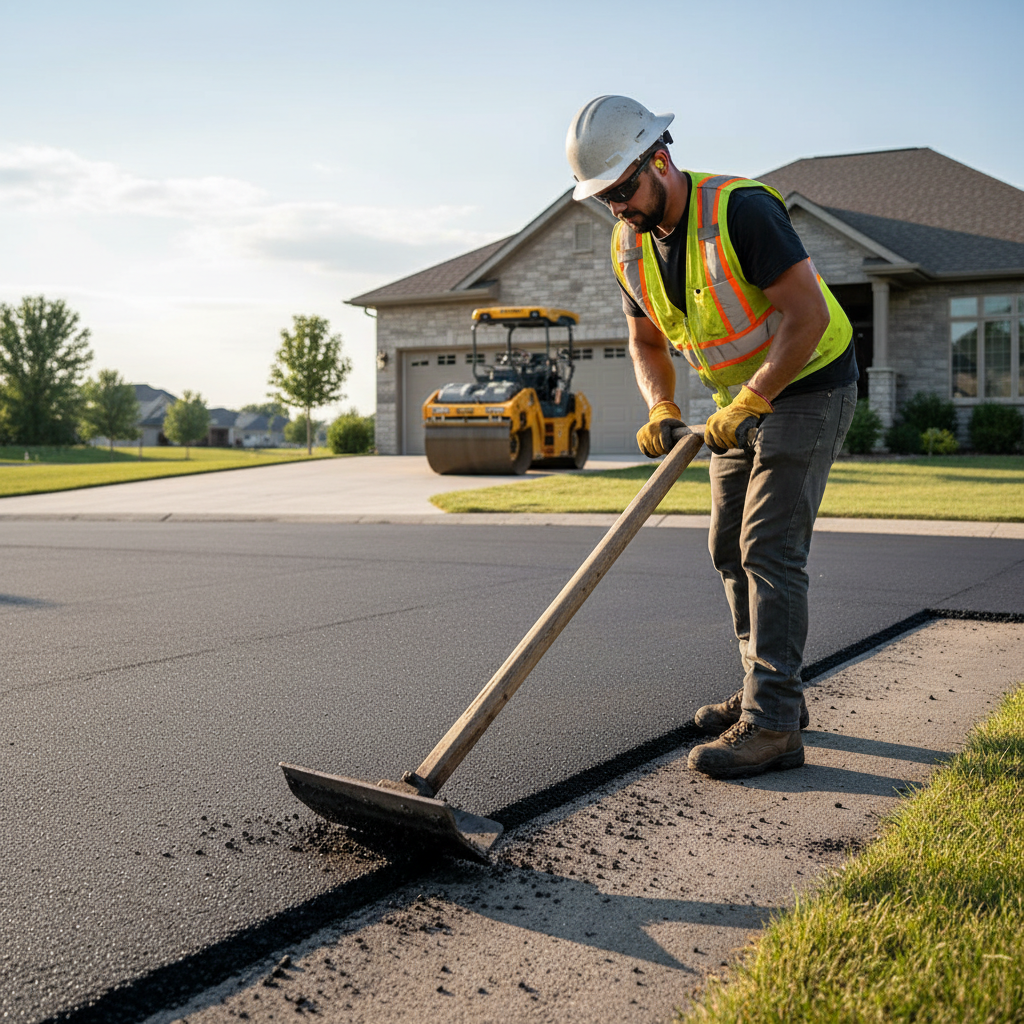
Driveway paving options and costs in Rocky Mountain House
Driveway paving in Rocky Mountain House, Alberta is a little different than in milder parts of Canada because you’re dealing with aggressive freeze–thaw cycles and a frost depth that demands a properly built granular base. In 2021, Rocky Mountain House had 6,765 residents, and most homes are owner-occupied—homeowner households made up 70.7% of households (Statistics Canada, 2021 Census). That matters because driveways are a long-term investment for many detached homes; single-detached dwellings account for 60.4% of the housing stock (Statistics Canada, 2021 Census). Practically, that’s why driveway work is consistently in demand around the city core and established residential pockets like Riverside Drive and the Sylvan Lake Road corridor.
In the Banff–Jasper–Rocky Mountain House region, quotes can land in a wide range because frost depth forces deeper excavation and tighter compaction than people expect. The short paving season also compresses scheduling: hot-mix asphalt typically needs air temperatures above about 10°C, so crews prioritize weather windows and overtime/mobilization can creep into spring and early summer. Asphalt mix design also needs to be freeze–thaw rated, which slightly increases material cost. On the flip side, if your site has good drainage and you already have an acceptable base, overlays and targeted repairs can reduce cost.
Below is a practical comparison of the main driveway surfaces you’ll see local contractors recommend, with realistic lifespan and maintenance expectations for Rocky Mountain House’s winter routine (ploughing, sand, and occasional salt around roads).
| Material |
Lifespan |
Maintenance |
Best For |
Price per sq ft |
| Asphalt (new installation, proper base) |
15–25 years (typical when built on deep, well-graded base) |
Sealcoat every 3–5 years; patch as needed |
Most cost-effective full-surface upgrade |
$9 – $18 |
| Asphalt (overlay on existing gravel base) |
10–18 years (depends on base condition) |
Sealcoat every 3–5 years; more frequent patching if base is weak |
When the footprint stays the same and base tests well |
$11 – $20 |
| Interlocking concrete pavers |
25–40 years |
Occasional panel lifting/reset; joint sand re-top-up |
Premium curb appeal and easier localized repairs |
$18 – $45 |
| Poured concrete (broom finish) |
20–30 years (air-entrained mix improves freeze–thaw durability) |
Seal if desired; patch spalls with matching repair |
Clean, low-fuss surface when properly designed |
$15 – $30 |
| Exposed aggregate concrete |
25–35 years |
Seal as recommended; spot repairs as needed |
Slip resistance and upgraded appearance |
$20 – $35 |
| Gravel / crushed stone (budget option) |
3–8 years (varies heavily with drainage and grading) |
Re-grade and add stone every 1–3 years |
Short-term solution or steep-drainage areas |
$4 – $10 |
Prices are estimates only and vary by project scope, site access and material selection.
What affects the price of paving in Rocky Mountain House
In Rocky Mountain House and across the Banff–Jasper–Rocky Mountain House corridor, the same “driveway paving” job can come in 30–50% apart from one quote to the next. The biggest reason isn’t the surface—it’s how each contractor builds the base, manages drainage, and handles excavation and disposal. Because frost penetration can be deep in central and northern Alberta, you can’t just lay asphalt over mediocre subgrade and hope it survives; deeper, well-graded granular base and careful compaction are what prevent heaving, cracking, and rutting.
Two other local pressures stretch budgets. First, the paving season is short, so crews often work late spring through early fall; hot-mix asphalt generally needs air temperatures above 10°C, which concentrates demand and raises scheduling pressure. Second, freeze–thaw-rated asphalt mix design (and correct compaction targets) costs more than “generic” mix, but it’s typically cheaper than premature failure.
Here are a few real-world examples of how site conditions change cost in Rocky Mountain House: if your driveway is on a slope and doesn’t drain, contractors may need additional grading, a swale, or improved subdrainage—often pushing an asphalt project closer to the upper end of the local $9 – $18 per sq ft band. If you have older asphalt with failed edges, tear-out and haul-away of broken pavement can add cost and move you toward the higher total range. If your property already has a firm, compacted base with good slope and clean margins, you might be able to pave within the lower part of the market.
| Price Factor |
Why It Matters |
Cost Impact |
| Driveway area in sq ft |
Materials and equipment time scale directly with square footage |
High—often the largest single line item |
| Base depth required |
Frost line conditions demand deeper compacted granular thickness |
High—adding inches of base can significantly increase excavation and aggregate |
| Grading and drainage work |
Slope corrections and drainage reduce water sitting under pavement |
Medium–high depending on how far the site needs to be corrected |
| Tear-out of existing surface |
Breaking, loading, and hauling concrete or old asphalt adds labour and disposal |
Medium–high; can materially change the quote |
| Edge restraints and curbing |
Prevents paver spread and keeps asphalt edges from raveling |
Medium—especially important on wider driveways |
| Sealing requirement |
Asphalt sealing after installation helps protect the binder from winter oxidation |
Low upfront, but important ongoing—typically a separate scheduled cost |
| Site access |
Narrow entrances or tight turns slow equipment movement and increase labour time |
Medium—mobilization and careful traffic control can add cost |
| Asphalt mix specifications |
Freeze–thaw-rated mix and correct binder/gradation improve durability |
Low–medium per sq ft, but can push totals toward higher bands |
Permits & regulations in Alberta
In Alberta, paving a private driveway within your own property typically does not require a building permit. However, work that affects the municipal right-of-way (the area between your property line and the travelled portion of the road) usually does require municipal approval. In Rocky Mountain House, that can include creating or modifying curb cuts, changing boulevard grading, or altering storm drainage patterns so runoff doesn’t end up draining onto a neighbouring lot or pooling near your foundation.
Another issue homeowners sometimes run into is lot grading. Some municipalities have bylaws that restrict how close a hard surface can be to property lines or how drainage must be handled, especially where swales or ditch lines exist. Because requirements can vary, it’s smart to confirm with the City of Rocky Mountain House before demolition if your driveway ties into the boulevard or changes how water runs.
For utilities, always request locates before excavation. In Alberta, use Alberta One-Call to mark buried services; contractors generally won’t start digging until locates are complete. To verify your contractor in Rocky Mountain House, ask for three things up front: (1) their Alberta business licence/registration details (many contractors publish it publicly), (2) a current certificate of insurance with liability coverage and (3) WSIB/WCB clearance coverage for workers. A clear certificate of insurance showing active coverage and a clearance letter for WCB/WSIB are the best evidence you’re protected if something goes wrong.
Asphalt vs pavers vs concrete for Rocky Mountain House driveways
For Rocky Mountain House driveways, the best material comes down to your budget, how you maintain it, and how repairable you want the surface to be after Alberta winters. Asphalt is usually the lowest upfront option and typically holds well when built on a deep, well-graded granular base; in this freeze–thaw environment, planning for sealing every 3–5 years is what helps extend service life. Interlocking concrete pavers cost more at the start, but they’re very repair-friendly—one damaged section can be lifted and reset without tearing up the whole driveway. Poured concrete lands in the middle on cost, but it is more sensitive to freeze–thaw performance when it’s not air-entrained or when water gets trapped; cracking can show up earlier if drainage is off or de-icing practices are aggressive near edges.
Because frost depth in central Alberta can be significant, base prep is where all three options are won or lost: contractors should excavate to reach stable material, then rebuild with engineered granular layers and proper compaction. Drainage design matters just as much as surface choice—good slope and positive water shedding reduce heaving and keep repairs from repeating. In terms of winter maintenance, most homeowners in Rocky Mountain House will see plough contact and occasional sand and salt use near road edges; pavers often tolerate localized impacts better, while asphalt depends heavily on timely crack patching and scheduled sealcoat to protect the binder.
A practical dollar example: if asphalt paving is quoted around $9 – $18 per sq ft for full installation, pavers can land in the $18 – $45 per sq ft range depending on thickness, base, and edge restraints. That extra spend is justified if you want curb appeal and the ability to repair small failures without full replacement.
| Material |
Frost Resistance |
Curb Appeal |
Repair Method |
Lifespan |
Price Band |
| Asphalt (sealed regularly) |
Good when base is properly built and sealed on schedule |
Moderate (clean black finish) |
Cold patch or cut-and-repair sections |
15–25 years |
$9 – $18 |
| Interlocking concrete pavers |
Excellent with correct base and edge restraint |
High (varied colours/patterns) |
Lift/reset individual paver panels and re-sand joints |
25–40 years |
$18 – $45 |
| Poured concrete (air-entrained) |
Good with air-entrained mix and good drainage control |
Moderate (clean, uniform look) |
Crack repair and patching; larger areas may require resurfacing |
20–30 years |
$15 – $30 |
| Exposed aggregate concrete |
Good with proper finish timing and base compaction |
Very high (textured premium surface) |
Spot patching; colour matching is critical |
25–35 years |
$20 – $35 |
| Permeable pavers (drainage grid) |
Very good where design captures runoff without saturating base |
High but more design-dependent |
Lift/reset localized areas; maintain infiltration components |
20–35 years |
$20 – $50 |
| Chip seal / tar-and-chip |
Moderate; benefits from strong drainage and maintenance |
Low–moderate |
Surface recoat; localized patching |
7–12 years |
$7 – $15 |
How to choose a paving contractor in Rocky Mountain House
Choosing the right paving contractor in Rocky Mountain House starts with verifying coverage and then comparing quotes in a way that reflects real construction costs in Alberta. First, ask each contractor for current proof of: liability insurance (certificate showing the coverage limits and active status), and WSIB/WCB clearance or similar proof that they have coverage for their workers. To check, look for the certificate expiry dates, confirm you’re listed correctly (many certificates name additional insured), and make sure the clearance letter is current rather than “previously held” coverage. If a contractor can’t provide these documents promptly, treat it as a major warning.
Next, request 2–3 itemised written quotes. You want a breakdown that shows labour, materials (including asphalt thickness, base thickness, and granular type), and disposal/tire-out costs if applicable—rather than a single lump sum. Read the scope line by line: what’s excluded (topsoil, gravel, regrading, culvert work, removal of old material), is permit work included if the job touches right-of-way, and is haul-away included? Warranty matters too: ask for the workmanship warranty length, whether it covers the base prep and settlement issues, and whether it’s tied to the product manufacturer or strictly contractor labour. Payment should be staged—never more than 10–15% upfront for typical residential work, with a holdback until completion and final grade.
Finally, get a written timeline that includes the proposed start date and completion window. In this region, crews can’t pave if nights get cold early or if weather interrupts curing, so a clear schedule helps you plan for spring and early fall weather windows.
- Ask for licence/business registration details and verify them before signing.
- Request a current certificate of liability insurance (with expiry date visible).
- Confirm WSIB/WCB clearance for workers (current letter/certificate).
- Get 2–3 itemised quotes showing base thickness, asphalt/concrete thickness, and aggregate type.
- Ensure disposal and haul-away of old asphalt/concrete is explicitly included or excluded.
- Confirm edge restraints/curbing details (especially for pavers) and who supplies them.
- Ask how drainage and slope will be corrected to prevent water pooling under the pavement.
- Verify compaction targets and how they’ll confirm density (no “guessing” base prep).
- For asphalt, ask when sealcoat will be applied (and whether it’s a recommended separate step).
- Request workmanship warranty terms in writing (what is covered and for how long).
- Clarify payment schedule and holdback amount until final inspection and cleanup.
- Get start/completion dates and understand what happens if weather changes.
Red flags I commonly see in Rocky Mountain House: contractors who won’t show insurance/WCB documentation, quotes that ignore base thickness or drainage corrections, “asphalt overlay only” suggestions without any base assessment, vague warranty language (“up to”) without timelines, and pressure to take the job date without a weather/curing plan.
Frequently asked questions — paving in Rocky Mountain House
How long before I can drive on new asphalt?
In Rocky Mountain House, Alberta, most new asphalt driveways are ready for light traffic within about 24–48 hours, depending on air temperature, wind, and how thick the lift is. Heavier vehicle traffic (and tight turns) typically needs longer—often closer to 48–72 hours—so the surface can cool and firm up without rutting. If the contractor applied a tack coat or did multiple lifts, drying and cooling time can be extended. Also, try not to bring sharp loads like trailers onto the driveway before it’s fully cooled. Your best guide is the contractor’s written guidance for your specific pour date, because the short paving season means timing is tightly managed for weather windows.
What causes potholes and how are they repaired?
Potholes usually start where water gets in. In the Banff–Jasper–Rocky Mountain House corridor, freeze–thaw cycles expand and break up weak pavement and base. Common causes include failed edges, inadequate drainage, and poor base compaction that lets water migrate during spring melt. Once the base softens, the asphalt can’t support loads from vehicles or plough contact, and you get a depression that grows. Repair typically involves cutting back to stable material, removing loose asphalt and weak base, re-compacting with granular material, then paving in a patch section. A good fix also addresses the source—grading/slope or drainage—so the pothole doesn’t come back in the same spot next winter.
How do I prepare for a paving project?
Start by clearing the driveway and marking anything the contractor should protect (downspout locations, manholes, irrigation lines, shrubs). Ensure your gate and access route allow equipment movement—tight access is a real cost driver in Rocky Mountain House because it slows setup and hauling. If you’re replacing older asphalt or concrete, confirm who is responsible for removing debris and what the contractor includes in disposal. For utilities, request locates before any excavation work (Alberta One-Call). Finally, plan for the weather window: asphalt needs suitable conditions (often daytime warmth) to place and compact properly, and curing needs time before regular use. If sealing is part of the plan, ask when it will happen relative to paving—sealcoat is typically scheduled after installation, not the same day.
How do I compare paving quotes fairly?
To compare quotes fairly in Alberta, don’t just compare the total price—compare what’s included. Make sure each quote specifies base thickness and granular materials, asphalt or concrete thickness, and whether drainage/grading corrections are included. Ask about tear-out scope: does the price include breaking and hauling old asphalt/concrete? Also confirm edge restraints or curbing details. For asphalt, a lower quote might mean thinner base or less robust freeze–thaw-rated mix, which can shorten lifespan in our freeze–thaw climate. Use the local pricing bands as a reality check: typical asphalt driveway paving often lands around $9 – $18 per sq ft depending on scope and base work. For a premium material like pavers, quotes commonly fall into $18 – $45 per sq ft when edges and proper base are done right.
Can asphalt be laid in cold weather in Rocky Mountain House?
Asphalt can’t be reliably laid in cold conditions—too cold and compaction won’t achieve the density needed for long-term freeze–thaw durability. In Rocky Mountain House, crews generally need temperatures that allow proper placement and compaction, and hot-mix asphalt typically requires air temperatures above about 10°C (varies with product and conditions). If nights turn cold early in the season, contractors may delay paving to protect quality. Also, if the subgrade or granular base is frozen or overly wet, you’ll get weak bonding and early cracking. The right approach is to respect the weather window and build the base correctly. A contractor should discuss timing, staging, and what happens if the forecast shifts—because asphalt installed outside proper conditions can cost more to fix later.
What is a driveway apron and do I need one in Rocky Mountain House?
A driveway apron is the section that transitions between your driveway surface and the street edge or sidewalk area, often built to handle vehicle loads and reduce impact at the boundary. Whether you need one in Rocky Mountain House depends on how your driveway ties into the road and whether there’s a curb cut, boulevard transition, or drainage structure. If the job involves changes near the municipal right-of-way—like a new curb cut or modifications to how runoff is handled—municipal approval may be required, and an apron is commonly part of that solution. Even where permits aren’t required, an apron can reduce edge break-up by providing a reinforced transition that ploughs and tires can’t “chop” at. Your contractor should propose apron details based on your grades and drainage, not on a one-size-fits-all assumption.