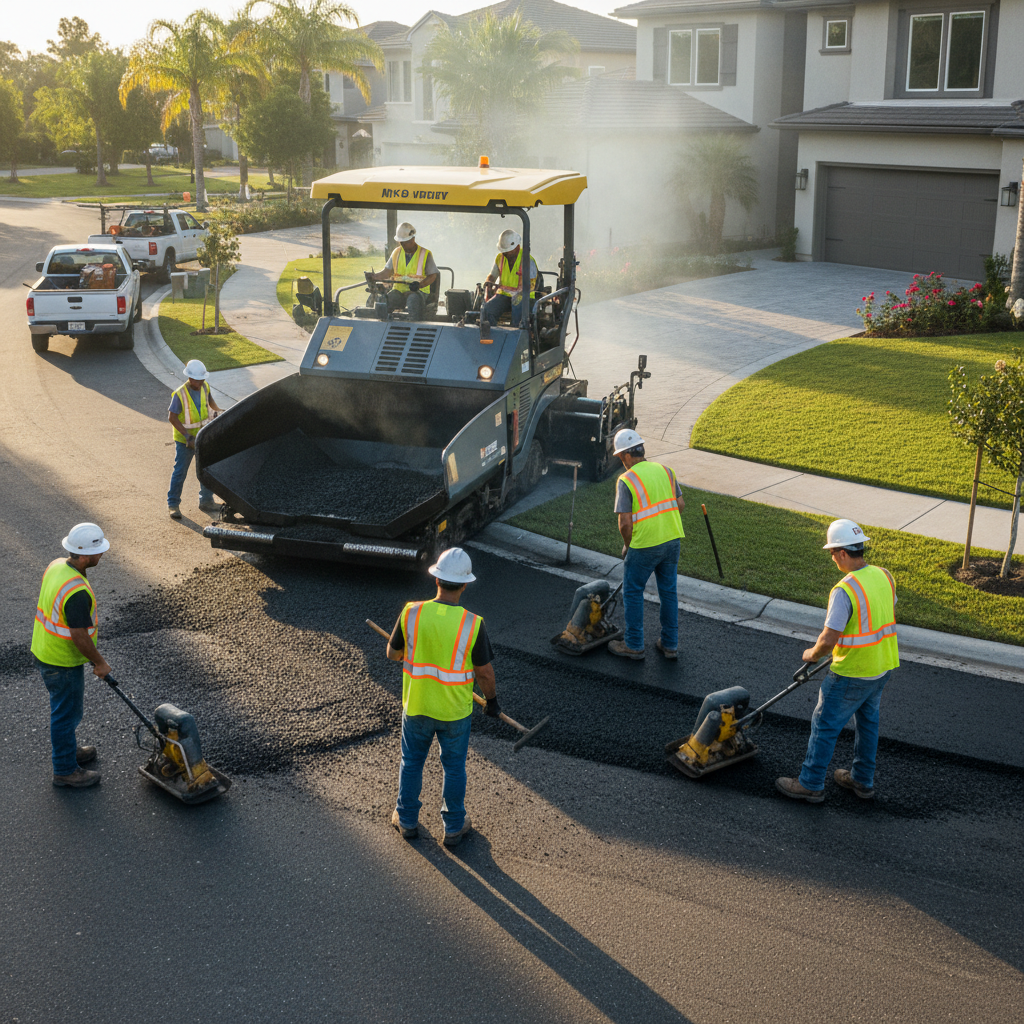
Driveway paving options and costs in Kenora
Kenora homeowners typically have three main driveway paths—asphalt, interlocking concrete pavers, and concrete—and the right choice comes down to your budget, how long you want the surface to last, and how your driveway handles Kenora’s freeze–thaw winters. With single-detached houses making up 77.1% of dwellings (Statistics Canada, 2021 Census), most private driveways are tied to detached properties, so demand is steady around areas like Lakeside/Waterfront and the downtown core where vehicle access is frequent and snow storage is tight. That matters because tight access increases labour time and equipment set-up, which shows up in your quote.
In Northwestern Ontario, pavement design is shaped by deep frost penetration and repeated freeze–thaw cycles. Contractors generally plan for a thicker compacted granular base and strong drainage so water doesn’t sit under the surface and create pumping during thaws. The shorter paving window—from late spring through early fall—also raises costs: hot-mix asphalt must be placed and compacted when air temperatures are high enough (commonly above 10°C), and concrete needs careful cold-weather curing. If your site is clay-heavy or poorly drained, expect additional base and grading work.
For a homeowner comparing materials, a typical Kenora driveway ends up in the region’s established price bands. Use the table below to sanity-check quotes for your square footage, then we’ll dig into why the same job can land 30–50% apart across contractors in this region.
| Material |
Lifespan |
Maintenance |
Best For |
Price per sq ft |
Price Range |
| Asphalt (new installation, proper base) |
15–25 years |
Seal every 3–5 years; crack filling as needed |
Good value, smooth ride, faster install |
$7–$14 |
$7 – $14 |
| Asphalt (overlay on existing gravel base) |
10–20 years |
Seal every 3–5 years; monitor edge settlement |
Upgrading a gravel approach without full rebuild |
$8–$15 |
$8 – $15 |
| Interlocking concrete pavers |
25–30+ years |
Replace individual stones; re-level joints if needed |
Curb appeal; repairs without full demolition |
$18–$35 |
$18 – $35 |
| Poured concrete (broom finish) |
20–30 years |
Seal occasionally; manage cracks with jointing |
Low visual complexity; easy snow-plow upkeep |
$14–$28 |
$14 – $28 |
| Exposed aggregate concrete |
20–30 years |
Seal to maintain finish; patch spalls if they occur |
Slip resistance and decorative look |
$17–$32 |
$17 – $32 |
| Gravel / crushed stone (budget option) |
3–7 years |
Re-grade and top up yearly or as needed |
Lowest upfront cost; temporary or partial driveways |
$4–$8 |
$4 – $8 |
Prices are estimates only and vary by project scope, site access and material selection.
What affects the price of paving in Kenora
In Kenora and the broader Northwest Ontario market, two contractors can quote the same driveway and still be 30–50% apart because the “hidden scope” differs: base thickness, drainage repairs, disposal of old material, and how much labour time is lost to tight access or heavy equipment staging. Even when you choose the same finish—say asphalt—one quote may assume a full granular rebuild while another treats the job as a simple resurfacing.
Frost protection is decisive here. With deep frost penetration and aggressive freeze–thaw cycles, deeper frost drives thicker compacted granular base designs—often in the 4 feet range as a practical minimum in northern Ontario guidance, with colder zones sometimes requiring deeper build-ups and upgraded materials to limit heaving and cracking. Practically, that means more stripping, hauling and compaction. It also means the paving season is shorter: hot-mix asphalt needs suitable air temps for proper placement and compaction, commonly above 10°C, so spring schedules tighten and crews may price the job higher to secure capacity.
Concrete and asphalt also need mix discipline to handle the freeze–thaw environment. For example, if your driveway is clay or drains poorly, expect extra grading and upgraded base to control water movement; that typically pushes asphalt toward the upper part of the region’s $7–$14 range. If your driveway is wide and easily accessed, you might land closer to the middle of the $14–$28 concrete band. If you have a lot of tear-out—old asphalt, deteriorated concrete, or frozen subgrade that requires additional excavation—your costs can swing upward quickly because excavation and disposal are labour- and equipment-intensive.
| Price Factor |
Why It Matters |
Cost Impact |
| Driveway area in sq ft |
Most material and labour scale with surface area |
Major driver (largest share of total cost) |
| Base depth required |
Frost line and soil type determine granular thickness to prevent heave |
Major driver; deeper base can add substantial tonnage |
| Grading and drainage work |
Fixing slope, crown, and away-from-structure drainage reduces water under pavement |
Medium to major impact depending on site issues |
| Tear-out of existing surface |
Breaking, hauling, and sometimes replacing subbase are expensive |
Medium to major impact |
| Edge restraints and curbing |
Edges hold pavers and asphalt integrity against freeze expansion and traffic loads |
Medium impact; especially important for pavers |
| Sealing requirement |
Asphalt needs sealing after installation (often within 6–12 months) to protect from drying and water ingress |
Medium impact (ongoing maintenance cost) |
| Site access |
Narrow lots and limited staging slow equipment movement and increase labour time |
Medium impact |
| Asphalt mix specifications |
Freeze–thaw-rated mixes and appropriate binders cost more but improve performance |
Small to medium impact per sq ft; can prevent early failure |
Permits & regulations in Ontario
In Ontario, paving a private driveway within your own property usually does not require a building permit. What changes that is when the work touches the municipal right-of-way or municipal infrastructure—because then you’re altering public systems. In Kenora, the work that typically does require municipal approval includes: creating or changing a driveway curb cut in the boulevard, altering drainage tied to the road allowance or ditch system, changing stormwater flow in a way that affects the public system, and any modification that requires the municipality to approve grading or access location.
Work that typically does not require a permit is limited to paving within your lot footprint—e.g., installing new asphalt or concrete on your property, replacing the surface on your driveway, or adding interlocking pavers where no boulevard/ditch connection is being modified. Even then, some municipalities have lot-grading bylaws that can affect how close a hard surface sits to property lines or how runoff is managed.
Before any excavation, call for utility locates through Ontario One Call (before you dig, always). Then verify the contractor properly: check their Ontario business and paving authorization (where applicable) via the provincial registry search tools, request a current certificate of insurance naming you as the additional insured if your contract requires it, and confirm WSIB/WCB coverage for their workers. A clear clearance letter and a COI that matches your job address are what you want to see.
If a contractor can’t provide documentation on request, that’s a risk you should treat seriously—especially when you’re dealing with underground utilities near a driveway.
Asphalt vs pavers vs concrete for Kenora driveways
For Kenora’s freeze–thaw climate, all three main materials can work—if the base and drainage are designed for northern conditions—but they behave differently under winter maintenance. Asphalt is usually the lowest upfront option and tends to install quickly, which is helpful in the short paving season. The trade-off is upkeep: asphalt should be sealed after installation (often in the first 6–12 months) and re-sealed roughly every 3–5 years, particularly in freeze–thaw and plowing-heavy driveways.
Interlocking concrete pavers cost more up front, yet they’re the most flexible when something goes wrong. If the subgrade settles at a spot (a common issue when drainage is off or a clay pocket is present), you can lift and re-lay sections rather than breaking the whole surface. In northern winters where salt and sand are used and plows hit edges, proper edge restraints and bedding layers matter.
Poured concrete usually lands mid-range in price and offers a solid, smooth surface for snow removal, but it can crack if the base isn’t thick enough or if contraction/joint spacing isn’t planned for freeze cycles. Air entrainment is essential for freeze resistance, and salt exposure can accelerate surface scaling if the mix and finishing aren’t right.
Here’s a realistic example: if your driveway is priced near $7 – $14 for asphalt, and pavers come back at $18 – $35, the extra cost can be justified if you value long-term curb appeal and easy spot repairs—especially for older homes where yard settling is more likely. If your priority is staying within budget and you’re willing to maintain seal coats, asphalt is often the better value in Kenora.
| Material |
Frost Resistance |
Curb Appeal |
Repair Method |
Lifespan |
Price Band |
| Asphalt (sealed regularly) |
Good when base is thick and drainage is correct; needs sealing to limit water ingress |
Medium |
Crack fill, patching, and seal coat cycles |
15–25 years |
$7–$14 |
| Interlocking concrete pavers |
Excellent with proper bedding and restraint; withstands minor movement better than monolithic slabs |
High |
Lift-and-relay individual units or small sections |
25–30+ years |
$18–$35 |
| Poured concrete (air-entrained) |
Good if air-entrained and properly jointed over a frost-protected base |
Medium |
Patch spalls/sections; crack repair depends on cause |
20–30 years |
$14–$28 |
| Exposed aggregate concrete |
Good to excellent with correct finishing and sealing; texture helps with traction |
High |
Localized patching where feasible; finishing match varies |
20–30 years |
$17–$32 |
| Permeable pavers (drainage grid) |
Good where designed correctly; reduces water trapped under the surface |
High |
Lift-and-relay units; maintain joint infill and edge stability |
25+ years with proper maintenance |
$20–$40 |
| Chip seal / tar-and-chip |
Moderate; performs best on properly prepared bases and with correct aggregate |
Low to medium |
Top dress and re-chip; localized patching |
6–12 years typical |
$6–$10 |
How to choose a paving contractor in Kenora
Choosing a contractor in Kenora isn’t just about the lowest number—it’s about getting the base, drainage, and documentation right. Start with Ontario licensing: ask the contractor to provide their Ontario business details and confirm any trade authorization relevant to the work they’re doing. Next, verify liability insurance: request a current certificate of insurance and confirm it includes driveway paving scope, with the policy active during your scheduled dates. Then check WSIB/WCB coverage: in Ontario, you should confirm their workers are covered appropriately and request a clearance letter if they provide one—if they can’t show proof, it’s a red flag.
Get 2–3 itemised written quotes. You want labour and materials broken out, not just a lump sum. Ask what’s included for excavation depth, base material type, compaction testing method (what they measure and how), drainage corrections, and whether tear-out disposal is included. Confirm whether a municipal approval is handled if the job impacts a boulevard/ditch—don’t assume it’s part of “the paving.”
Warranty matters for workmanship: ask for the length, what exactly is covered (material failures vs settlement vs cracking due to drainage issues), and whether coverage transfers if you sell the property. A sensible payment schedule keeps risk low: never pay more than about 10–15% upfront, then use holdback until completion and final walk-through. Finally, insist on a written timeline: start date, curing/setting period expectations, and a completion estimate.
- Ask for previous Kenora projects with photos showing winter performance (crack patterns and edge behaviour).
- Confirm the base design thickness and the reason for it based on soil and drainage.
- Request compaction details (roller type, passes, and how they confirm density).
- Get disposal listed separately or clearly included for asphalt/concrete tear-out.
- Ensure edge restraints/curbing plans are written in the scope (especially for pavers).
- Verify sealing timing for asphalt and whether it’s included or recommended (often 6–12 months after install).
- Check who supplies and places geotextile or drainage products, if required.
- Confirm measures for winter readiness if weather shifts (cold-weather concrete practices, protection, curing).
- Request a written schedule for crew arrival and how they’ll manage short paving windows.
- Make sure the quote includes utility locate responsibility and protection of buried services.
- Insist on product/manufacturer info for binders, paver base materials, and concrete admixtures.
- Document everything: change orders in writing with price impacts and schedule impacts.
Red flags I see in Kenora include: refusing to provide a certificate of insurance or WSIB/WCB proof; quoting without discussing frost protection depth or drainage; giving only a lump-sum without itemised base, excavation, and disposal; starting late or “waiting for the weather” without a firm written timeline; and proposing a too-thin base to hit a low price.
Frequently asked questions — paving in Kenora
How do I get the most accurate paving quote in Kenora?
For the most accurate quote in Kenora, ask contractors to visit your site, confirm soil conditions, and measure the driveway area and grades. Provide details about drainage (where runoff goes in spring) and whether you have clay or standing water. A good quote should include excavation scope, base type and thickness, compaction steps, and whether they’re designing for deep frost penetration with a frost-protected granular base. Also ask if tear-out and hauling/disposal are included. If you’re comparing asphalt, request a frost-resilient mix specification and ask about seal timing—many owners underestimate this ongoing step. Finally, require 2–3 itemised quotes rather than lump sums, so differences in base depth and drainage work don’t surprise you later.
How much does it cost to pave a driveway in Kenora?
Cost depends mainly on driveway size, base depth, tear-out, and drainage work. In the Northwest Ontario market, typical asphalt driveway paving is commonly estimated around $7 – $14 per sq ft when the base is properly built for freeze–thaw conditions. Concrete pricing often lands in the $14 – $28 per sq ft range, depending on finish (broom finish vs exposed aggregate) and how much base reconstruction is required. Interlocking pavers generally run higher, commonly $18 – $35 per sq ft because of materials and labour time. If your driveway needs significant excavation due to older, pre-1981 housing stock and drainage issues, expect the higher end. Ask for an itemised breakdown so you can see what’s driving the number.
Asphalt vs interlocking pavers vs concrete — which is best in Kenora?
In Kenora’s freeze–thaw climate, “best” depends on your tolerance for maintenance and how you expect the driveway to perform under snow-plow traffic and salt/sand. Asphalt is usually the most budget-friendly upfront, but it performs best when the base is thick enough and you seal regularly after installation (often within 6–12 months, then about every 3–5 years). Interlocking concrete pavers typically cost more, but they shine in repairs—if a section settles due to a drainage spot, you can lift and re-lay without demolishing the whole surface. Poured concrete can be a strong mid-range option when it’s air-entrained and properly jointed over a frost-protected base. If your priority is curb appeal and easy spot fixes, pavers are hard to beat; if budget and smooth snow-plow movement matter most, asphalt or concrete often fit better.
How long does a paved driveway last in Kenora?
With proper base design and drainage, a paved driveway in Kenora can last a long time, but longevity depends on what’s under the pavement. Asphalt commonly lasts around 15–25 years when you seal on schedule and address cracks early. Concrete is often in the 20–30 year range with air entrainment and correct jointing. Interlocking pavers can go 25–30+ years because repairs can be local—provided edge restraints and bedding layers are installed correctly. The biggest threat to lifespan is water under the slab or under the asphalt—during thaws, water can lead to pumping and early failure. This is especially important given Kenora’s colder winters and older housing stock; many driveways need more base reconstruction than owners expect. A contractor who can explain your base thickness and drainage plan is the one most likely to deliver long service life.
When is the best time of year to pave in Kenora?
The best time is during late spring through early fall, when crews can achieve proper compaction and (for asphalt) when air temperatures are high enough for hot-mix placement. In Northwestern Ontario, the paving season is shorter, so late spring scheduling is competitive and winter shutdowns can affect timelines. For asphalt, contractors commonly avoid paving when weather would compromise compaction temperature and placement conditions—because that’s how you get premature raveling and cracking. For concrete, timing matters for finishing and curing; cold snaps can require protection and cold-weather methods. If you’re planning work for the season, book early rather than waiting for “ideal weather,” since mobilization and overtime premiums can increase when crews are compressed into a short window. Ask your contractor for written start and completion dates.
How deep should the base be for Kenora's frost?
Base depth should be designed for Kenora’s freeze–thaw conditions, not guessed. In northern Ontario experience, practical frost protection depths are often around 4 feet as a minimum, with some colder zones and challenging sites requiring deeper or upgraded build-ups (plus drainage corrections). For driveway base, that usually means thicker compacted granular layers than you’d see in milder climates and careful attention to subgrade compaction and separation layers if soils are clay-prone. If your driveway subgrade is unstable or poorly drained, the “effective base depth” increases because you may need excavation and replacement rather than simply adding gravel. During your quote, insist the contractor explain the base thickness they’re planning and why—tie it to your soil and drainage observations. This is one of the most important factors in preventing heaving and cracking.