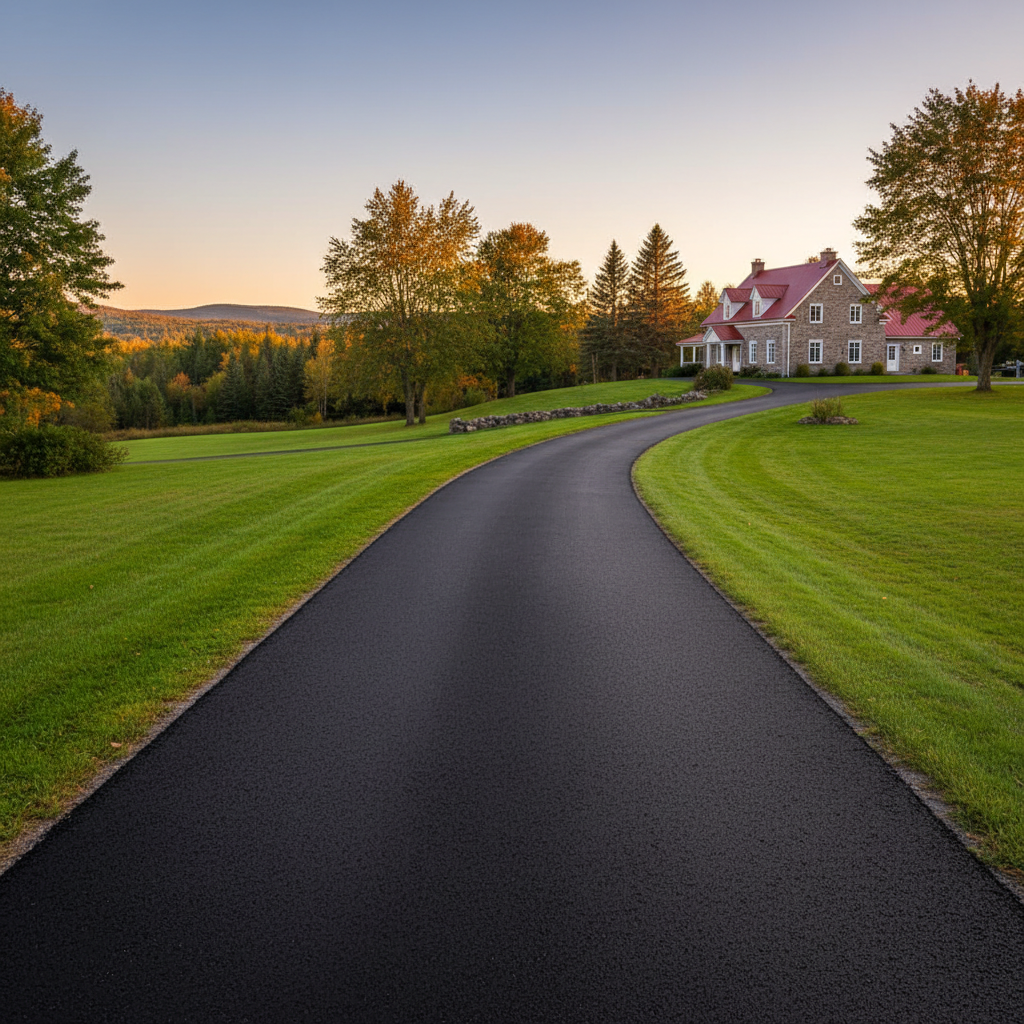
Driveway paving options and costs in Agincourt North
Agincourt North, Ontario is one of those Toronto-area neighbourhoods where driveways get tested hard by winter: you have real freeze–thaw movement, and you also have lots of established properties where homeowners want a cleaner look without constant patching. With a local population of 29,113 (Statistics Canada, 2021 Census), there’s steady demand for contractor work in and around areas like Agincourt Village and the Fairview/Lawrence corridor. Most private driveways here are attached to single-family housing, and that means many projects are expansions, re-grades, or overlays to match how the house and garage sit on the lot.
In the Toronto economic region, frost depth and freeze–thaw cycles are primary cost drivers. Local frost line studies in Toronto point to roughly 3–4 feet of ground freezing, so the difference between a “cheap” quote and a quote that lasts is often the granular base depth, subgrade compaction, and drainage detailing that stop water from sitting under the pavement. Work also clusters into late spring through early fall because hot-mix asphalt placement depends on air/soil temperatures, and that tighter schedule can push prices up for prime dates.
Below is a practical comparison of the main driveway materials you’ll see quoted in Agincourt North, with typical installed ranges per driveway job. Use it as a starting point, then your site plan (dimensions, slope, tear-out needs, access, and drainage) will determine where you land.
| Material |
Lifespan |
Maintenance |
Best For |
Price per sq ft |
| Asphalt (new installation, proper base) |
15–25 years |
Seal 6–12 months after paving, then every 3–5 years |
Value + smooth ride; good when base and drainage are done right |
$8–$14 |
| Asphalt (overlay on existing gravel base) |
10–18 years |
Seal and patch; expect more monitoring at edges and low spots |
Budget refresh when old base is sound enough to support overlay |
$6–$11 |
| Interlocking concrete pavers |
25–35 years |
Weed-control polymer/sand, re-leveling of minor settlements |
High curb appeal and easy spot repairs without replacing the full surface |
$15–$25 |
| Poured concrete (broom finish) |
25–35 years |
Crack monitoring; reseal if desired; keep drainage flowing |
Low visual maintenance; works well with air-entrained mix and joints |
$12–$19 |
| Exposed aggregate concrete |
25–35 years |
Reseal occasionally; clean salt residue promptly |
Premium look with excellent traction and wear resistance |
$15–$25 |
| Gravel / crushed stone (budget option) |
3–8 years |
Re-grade and top up annually; edging to keep stone in place |
Temporary solution or areas needing permeable, quick upgrades |
$4–$7 |
Prices are estimates only and vary by project scope, site access and material selection.
What affects the price of paving in Agincourt North
Even when two homeowners describe the same “standard driveway,” quotes in Toronto can differ by 30–50%. The driver isn’t just material choice—it’s what’s happening under the pavement: how much excavation is needed, how deep and how well the granular base is built, whether drainage has to be corrected, and whether the contractor has to break and haul an old surface. Labour rates and scheduling matter too, because the paving season is effectively late spring through early fall, and prime dates get booked quickly in the Toronto economic region.
In Agincourt North, frost line depth and freeze–thaw cycles are decisive cost factors. With ground freezing roughly 3–4 feet in Toronto, you generally need a thicker, well-compacted granular base (often more like 6–12 inches depending on your subgrade condition) than what you’d budget in milder areas. The goal is to prevent water from migrating under the driveway and freezing, which is what causes heaving and premature cracking. Asphalt mix design also matters: a freeze–thaw-rated mix costs more, but it helps resist rutting and surface breakdown.
Concrete pricing can swing based on jointing and air-entrainment quality—if the mix is right and drainage is controlled, poured concrete can hold up for decades; if not, freeze–thaw and de-icing can shorten its life. For context, an asphalt driveway commonly lands in the $3,500–$8,000 range, while interlocking pavers are often $9,000–$20,000 depending on geometry and base prep.
Finally, local housing-stock and site layout influence cost. Many properties in established pockets of Agincourt North have older grades, narrow access, or buried service lines—if excavation reveals weak subgrade, your base depth and import material quantities rise, and so does your installed total.
| Price Factor |
Why It Matters |
Cost Impact |
| Driveway area in sq ft |
All materials and most labour scale directly with surface area |
High (often the biggest single line item) |
| Base depth required |
Frost line determines granular thickness to prevent heaving |
High (extra inches can mean major material volume) |
| Grading and drainage work |
Slope correction and drainage fixes prevent water pooling |
Medium to high (utilities and rework can escalate) |
| Tear-out of existing surface |
Breaking and hauling concrete or old asphalt adds disposal and labour |
Medium to high (varies by thickness/access) |
| Edge restraints and curbing |
Prevents paver spread and asphalt edge failure |
Medium (small perimeter, meaningful stability) |
| Sealing requirement |
Asphalt needs sealing after curing to reduce moisture damage |
Low to medium (timing affects what’s included) |
| Site access |
Narrow lots slow equipment movement and increase handling time |
Medium (more labour, more setup time) |
| Asphalt mix specifications |
Freeze-thaw-rated mixes cost more but hold up better |
Low to medium (worth it for Ontario conditions) |
Permits & regulations in Ontario
In Ontario, paving a private driveway within your own property usually does not require a building permit—if you’re simply replacing the surface, improving the base, or re-grading your driveway inside the boundaries of your lot. However, work that affects the municipal right-of-way can trigger approvals. That includes new or modified curb cuts, changes to boulevard grading, alterations to storm drainage, or any connection changes that run through the street allowance. If your project touches those areas in Agincourt North, the municipality may require approval before any excavation begins.
Practical step-by-step for homeowners: first, request a written scope from your contractor that clearly identifies what is “on-lot” versus what is “within the right-of-way.” Then call for utility locates through Ontario One Call before any digging—marking gas, hydro, and telecom lines protects you and the crew. Next, confirm lot-grading requirements with your local municipality to ensure the hard surface and runoff direction comply with drainage expectations.
To verify an Ontario contractor, don’t rely on verbal assurances. Check their Ontario licence details through the appropriate online registry for contractors (or the company’s stated licence information), review their Certificate of Insurance for general liability (and ask if it includes property damage), and confirm they have workers’ compensation coverage (WSIB). Ask for a clearance letter or proof document, not just “we’re registered.” If the contractor is subcontracting, ensure the paperwork still traces back to the responsible employer.
Asphalt vs pavers vs concrete for Agincourt North driveways
For Agincourt North driveways in the Toronto freeze–thaw climate, the best material is the one that’s supported by a properly designed base and drainage plan. Asphalt usually wins on upfront cost and smooth driving comfort, but it depends on sealing (typically after curing) and on the base being built to resist moisture movement. Interlocking concrete pavers cost more at the start, yet they perform well here because the system is designed to flex slightly under movement while still staying neat; if a section settles or needs repair, you can lift and relay a confined area instead of replacing the whole driveway. Poured concrete sits in the middle to higher range; the key is air-entrained mix design, correct jointing, and proper slope/drainage so freeze–thaw and de-icing don’t accelerate cracking.
With Toronto’s frost depth (roughly 3–4 feet freezing), all three options require a dependable compacted granular base and controlled runoff. Drainage design—especially where the driveway meets the lawn and garage apron—is what prevents water from feeding frost heave. In winter maintenance routines common in Agincourt North (plowing and salt/sand), pavers generally tolerate localized wear well, asphalt holds up if sealed and patched promptly, and concrete benefits heavily from quality air entrainment plus good crack-control joints.
Example: if your driveway is quoted at $5,500 for asphalt versus $13,500 for interlock, the price gap is often justified when curb appeal is a priority and you want easier long-term repair—especially if you expect utility work or suspect future settling. If you mainly want low initial cost and can commit to sealing on schedule, asphalt frequently delivers the best value.
| Material |
Frost Resistance |
Curb Appeal |
Repair Method |
Lifespan |
Price Band |
| Asphalt (sealed regularly) |
Good when base + drainage are engineered for freeze–thaw |
Medium (clean, modern finish with good edging) |
Patch and re-level localized areas; seal system-wide |
15–25 years |
$3,500–$8,000 |
| Interlocking concrete pavers |
Very good; system can tolerate movement with proper bedding |
High (varies by pattern and edging) |
Lift/re-lay and replace only the affected section |
25–35 years |
$9,000–$20,000 |
| Poured concrete (air-entrained) |
Good with correct mix, joints, and drainage |
Medium (broom finish) to High (stamped/exposed options) |
Crack repair and patching; full replacement only if widespread |
25–35 years |
$6,000–$15,000 |
| Exposed aggregate concrete |
Good; performance depends on mix and curing |
Very High (textured premium look) |
Targeted repairs; reseal/patch as needed |
25–35 years |
$10,000–$18,000 |
| Permeable pavers (drainage grid) |
Very good for water management when designed correctly |
High (modern designs) |
Replace affected units; maintain aggregate/suction bed |
20–30 years |
$11,000–$22,000 |
| Chip seal / tar-and-chip |
Moderate; best for specific applications |
Low to Medium (texture varies) |
Surface maintenance and spot recoating |
8–15 years |
$3,000–$7,000 |
How to choose a paving contractor in Agincourt North
Choosing the right contractor in Agincourt North is mostly about verifying paperwork and getting a scope that matches Toronto’s freeze–thaw reality. In Ontario, confirm the contractor’s licence status for the work they’re doing (ask them to provide their licence information), review their Certificate of Insurance for general liability, and verify workers’ compensation coverage through WSIB by requesting proof such as a clearance letter. If you’re hearing “we don’t need that,” that’s a major concern—always insist on documentation before work starts.
Next, get 2–3 itemised written quotes. You want a breakdown that separates labour and materials and specifies key items: excavation, base depth, compaction method, geotextile (if used), asphalt thickness/mix spec or paver bedding, edge restraints, and any sealant or jointing. Ask whether disposal is included in the price, whether permits/approvals are handled (if the job touches right-of-way drainage or curb cuts), and what the quote excludes.
Warranty matters too. Look for a clear workmanship warranty length for labour (not just “materials are guaranteed”), and ask how long the product/manufacturer warranty lasts and what conditions void it. Also ask whether the warranty is transferable if you sell your home.
Payment schedules should protect you: never pay more than 10–15% upfront, and request a holdback until the job is complete and inspected. Get the start date and estimated completion time in writing so the contractor can’t delay past weather windows, which is critical in Ontario’s short paving season.
- Ask for an itemised quote (labour + materials), not a single lump-sum number.
- Confirm base thicknesses and compaction requirements in the written scope.
- Verify drainage plan: slopes, swales, and how water will be directed away.
- Check if utility locates are included in the process before excavation.
- Ensure tear-out and disposal are explicitly stated (concrete/asphalt hauling costs add up).
- Confirm edge restraints/curbing are included for pavers and asphalt edges.
- Ask about asphalt mix specifications for freeze–thaw resistance.
- For asphalt, confirm sealing timeline and whether it’s included or billed separately.
- For concrete, confirm air-entrained mix and joint/control plans.
- Request proof of general liability insurance and workers’ compensation (WSIB clearance/proof).
- Get the warranty details in writing: workmanship term, product term, exclusions, and transferability.
- Use a payment schedule with a maximum 10–15% upfront and a holdback until completion.
Red flags I commonly see with paving contractors in Agincourt North: (1) vague scopes with no base thickness or drainage details, (2) refusing to provide insurance/WSIB proof, (3) quoting asphalt “cheap” but skipping required sealing or curing windows, (4) promising concrete “no cracking” instead of discussing air entrainment and jointing, and (5) pressuring you for large upfront deposits without a signed written contract.
Frequently asked questions — paving in Agincourt North
What base thickness do I need for pavers in Agincourt North?
In Agincourt North, the safe answer depends on your existing subgrade condition and how water drains off your lot, but Toronto’s freeze–thaw climate generally demands a deeper, well-compacted granular build than in milder regions. A typical approach for driveways is to remove unsuitable material, compact the subgrade, then install a compacted base layer (often in the range of about 6–12 inches of granular base depending on soil/conditions), followed by the paver bedding sand. Because the frost depth in the Toronto area can be significant (roughly 3–4 feet), drainage and slope corrections are just as important as the numbers. If you’re seeing ruts, soft spots, or standing water, expect a higher base depth and more excavation, which usually pushes your project toward the higher end of interlocking pricing (commonly $9,000–$20,000 for a full driveway).
How do I get the most accurate paving quote in Agincourt North?
To get an accurate quote in Ontario, insist on a site visit and a written scope that reflects what the contractor will actually build. Provide driveway dimensions, include photos of any current issues (cracks, depressions, pooling water), and ask them to measure elevations so they can design the slope for drainage. The most accurate quotes include: excavation and disposal, confirmed base thickness, compaction steps, edge restraints, and (for asphalt) the sealing plan after curing. For concrete, ask about air-entrained mix and joint/control plan. Compare quotes on scope, not just total cost—two contractors might both say “asphalt driveway,” but one may be assuming an overlay while the other includes full base rebuild. If your asphalt estimate is near the low end (around $3,500–$8,000), verify what’s included so you aren’t paying later for missing base or drainage work.
How much does it cost to pave a driveway in Agincourt North?
For Agincourt North homeowners, driveway costs typically fall into the established Toronto market bands. Asphalt driveway paving commonly lands around $3,500–$8,000, depending on area (square footage), whether tear-out is required, and how much base/drainage correction your site needs. Interlocking concrete pavers often run $9,000–$20,000 because the base system, edging, and materials are more detailed. Poured concrete typically sits around $6,000–$15,000, with air-entrainment and jointing affecting the final price. Gravel/crushed stone is a budget alternative but needs regrading and top-ups and usually won’t last as long as asphalt or concrete. The big cost swing in Toronto is frost-driven base and drainage engineering: when frost protection and water management are done properly, you can avoid repeated repairs, even if the upfront number is higher.
Asphalt vs interlocking pavers vs concrete — which is best in Agincourt North?
In Agincourt North’s freeze–thaw climate, “best” depends on what you value most: upfront cost, curb appeal, or long-term repair flexibility. Asphalt is usually the best pick for lowest upfront investment within the $3,500–$8,000 range, especially if the contractor builds the granular base correctly and you seal on schedule every 3–5 years. Interlocking pavers are a top choice when curb appeal is important and you want the ability to repair small sections without replacing the whole driveway—this often places the project in the $9,000–$20,000 band. Poured concrete can be a strong mid-range option ($6,000–$15,000) if you choose air-entrained mix design and proper control joints, because cracking risk increases when drainage or jointing isn’t addressed. For winter maintenance habits (plowing and salt), base quality and drainage outperform material brand—so prioritize the engineering details first.
How long does a paved driveway last in Agincourt North?
Typical driveway lifespans in Ontario vary with base design, drainage, and maintenance—not just the surface material. When properly installed with frost-protective base and reliable drainage, asphalt often lasts about 15–25 years, but sealing is important to prevent moisture damage; plan for sealing after curing and then every 3–5 years. Interlocking concrete pavers commonly last 25–35 years because spot repairs are feasible if a localized settlement occurs. Poured concrete and exposed aggregate concrete are often 25–35 years with correct air-entrained mix, curing, and jointing. If your driveway sees standing water, poor slope, or untreated low spots, lifespan drops for any material because freeze–thaw will keep stressing the system. Maintenance also matters: minor crack repairs, prompt patching of asphalt, and keeping edges restrained help the driveway survive Toronto winters longer.
When is the best time of year to pave in Agincourt North?
The best time to pave in Agincourt North is late spring through early fall, when air and base temperatures support proper placement and compaction. Asphalt is temperature-sensitive—hot-mix paving generally requires air temperatures above about 10°C—so scheduling usually concentrates in a shorter Ontario window. Concrete placement also benefits from favourable weather and predictable curing conditions; avoid periods where you’d risk premature freeze. Weather can change quickly near Toronto, so a contractor’s scheduling discipline matters: you want work done when they can complete base prep, install, and—if asphalt—apply sealing at the right time after curing. If your goal is to lock in prime dates, start quote discussions earlier in the season, especially if the driveway needs tear-out and deeper base work that can extend the schedule.