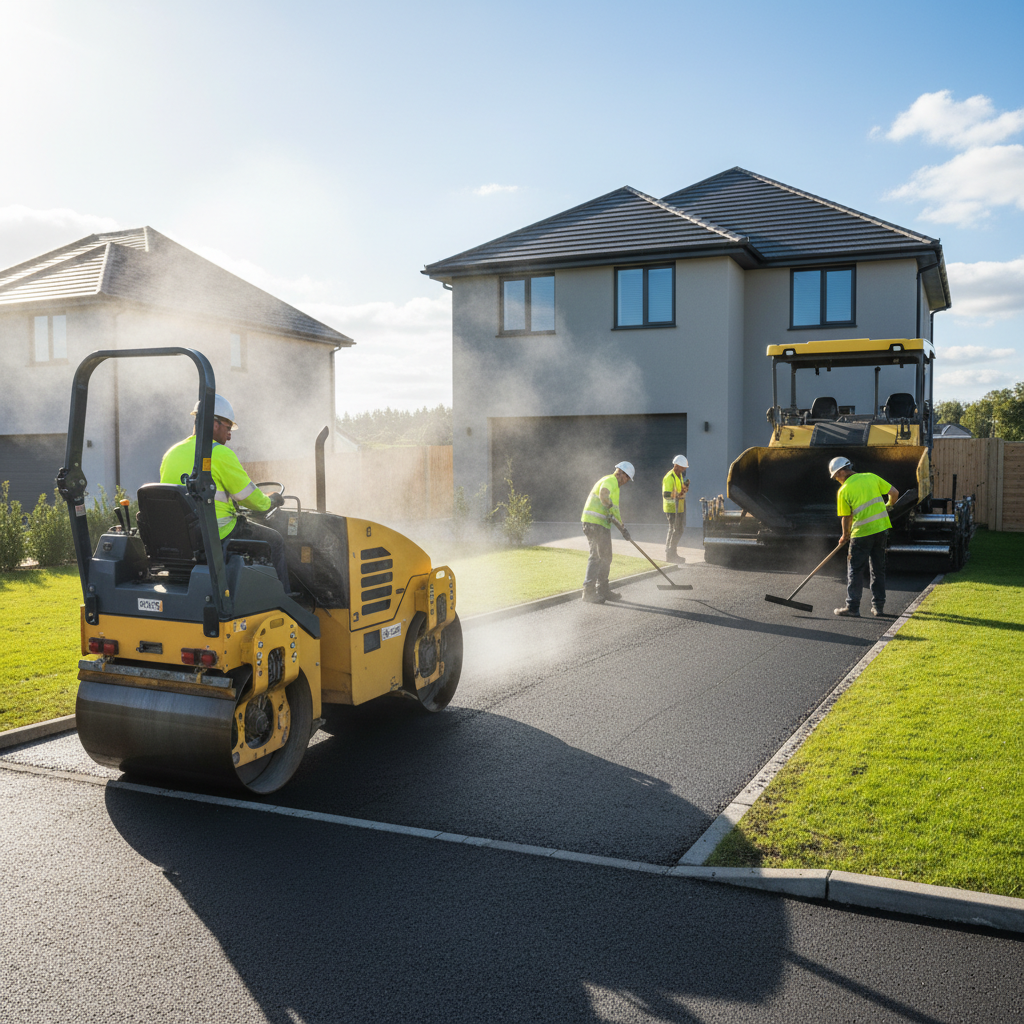
Driveway paving options and costs in Surrey
Surrey homeowners usually have three main driveway paving routes: asphalt, interlocking pavers, or concrete. In Surrey, the market is heavily driven by detached housing—single-detached homes make up about 32.8% of dwellings—so many private driveways need durable surfaces that can handle frequent wet weather and the local freeze–thaw zone near the frost line. With Surrey’s population at 568,322 (Statistics Canada, 2021 Census), contractor demand is strong in high-traffic areas, and availability can affect scheduling and price. The Lower Mainland–Southwest climate also matters: frost penetration is relatively shallow compared with Interior or Northern BC, but repeated freeze–thaw around that assumed ~18-inch sensitivity zone, plus clay-heavy soils in parts of the Fraser Valley, makes drainage and proper granular base preparation the real cost driver. That’s why two bids for “the same driveway size” can still differ substantially if one contractor plans for deeper excavation, more granular thickness, and improved slope/drainage. In Surrey, this trade is especially busy around areas like Newton and Guildford, where older lots and mature landscaping often require additional tear-out, regrading, and careful base work near property lines.
Below is a practical cost comparison you can use as a starting point when you’re comparing materials and scopes. Once you choose a material, your final price typically tightens up after site measurement, soil/base evaluation, and whether you need tear-out or drainage correction.
| Material |
Lifespan |
Maintenance |
Best For |
Price per sq ft |
Price Range |
| Asphalt (new installation, proper base) |
15–25 years |
Seal every 3–5 years; spot patching as needed |
Best value with smooth ride; suits wet drainage needs when base is done right |
~$3.75–$6.75 |
$12,000–$20,000 |
| Asphalt (overlay on existing gravel base) |
10–18 years |
Seal every 3–5 years; repairs if base movement appears |
When the existing base is solid and excavation is limited |
~$3.25–$6.00 |
$10,500–$16,500 |
| Interlocking concrete pavers |
25–35 years |
Weed control; joint sand top-ups; individual stone replacement |
Curb appeal and flexible repairs without redoing the whole driveway |
~$6.50–$13.00 |
$20,000–$40,000 |
| Poured concrete (broom finish) |
20–30 years |
Minor crack sealing; limited re-surfacing options |
Low maintenance look; good for heavier traffic if designed properly |
~$5.00–$10.00 |
$18,000–$35,000 |
| Exposed aggregate concrete |
20–30 years |
Sealer as recommended; crack sealing |
Decorative finish with better texture for traction |
~$6.50–$12.50 |
$22,000–$42,000 |
| Gravel / crushed stone (budget option) |
5–10 years |
Re-grade; add top-up annually or seasonally |
Short-term solution or utility access where aesthetics are secondary |
~$2.00–$4.00 |
$4,000–$9,000 |
Prices are estimates only and vary by project scope, site access and material selection.
What affects the price of paving in Surrey
If you’ve received quotes for what sounds like the same Surrey driveway, it’s common to see differences of 30–50% across the Lower Mainland–Southwest and elsewhere in BC. The spread isn’t just “contractor markup”—it comes from how much excavation is planned, how drainage is handled, and what thickness/spec mix is being used to survive repeated wet winters. Frost line depth and freeze–thaw cycles are decisive cost factors in coastal BC too, even though the frost penetration is shallower than in Ontario or Alberta. Local practice still assumes a sensitivity zone on the order of 18 inches for exposed areas, so contractors protect against heaving and cracking by using properly compacted granular base (often around the 6-inch range for typical residential driveways, with more in weaker or saturated subgrade). In colder regions, the paving season is shorter because hot-mix asphalt requires air temperatures above 10°C, and in the Lower Mainland the schedule can tighten during spring and early fall shoulder storms—so crews may price for booked time and logistics.
Concrete costs also swing with local conditions. For example, if your lot has clay-heavy soil or visible water pooling, contractors may recommend deeper excavation and additional granular layers—pushing poured concrete from the lower end of the $18–$35 band toward the top end. If you have mature trees, narrow access on the side yard, or steep approach grades, excavation and regrading can add hours (and truck time). Conversely, a straight, flat driveway with easy access and good drainage might keep asphalt closer to the $12–$20 band. Older homes in Surrey—about 19.6% of homes built before 1981 (Statistics Canada, 2021 Census)—often come with legacy grading and drainage issues, which can cost more to correct before any new surface is laid.
| Price Factor |
Why It Matters |
Cost Impact |
| Driveway area in sq ft |
Material and compaction time scale directly with surface area |
Largest driver; commonly 50–70% of total cost |
| Base depth required |
Frost line and subgrade conditions determine granular thickness to prevent movement |
Can add major excavation and trucking costs |
| Grading and drainage work |
Correct slope and outlet placement reduces ponding and future freeze–thaw damage |
Often increases cost when drainage corrections are needed |
| Tear-out of existing surface |
Breaking and hauling old asphalt/concrete adds labour and disposal fees |
Can move a project into a higher price tier |
| Edge restraints and curbing |
Prevents paver spread and stabilizes asphalt edges under wet seasons |
Moderate cost, high payoff for long-term performance |
| Sealing requirement |
Asphalt needs sealing after installation (typically 6–12 months) to protect binder |
Adds a recurring maintenance line item |
| Site access |
Narrow lots slow equipment movement and require more manual handling |
Labour and equipment time increases |
| Asphalt mix specifications |
Freeze–thaw-rated mixes can cost more but resist rutting and cracking |
Small-to-moderate increase; often worth it |
Permits & regulations in British Columbia
In British Columbia, paving a private driveway on your own property usually does not require a building permit. Where you may need municipal approval is work done in the municipal right-of-way—this includes new curb cuts, changes to boulevard areas, or alterations to storm drainage patterns (for example, redirecting runoff from the driveway surface so it doesn’t discharge improperly). Some municipalities also have lot-grading bylaws that limit how close hard surfaces and drainage changes can be to property lines, and they may require that runoff is directed appropriately. If you’re doing anything that affects the curb, sidewalk, boulevard, or storm system, assume you’ll need to coordinate first.
Step-by-step for Surrey homeowners: (1) Identify whether your project touches the boulevard/curb or changes drainage. If yes, contact the City of Surrey permitting/building or development services to confirm what approval is required. (2) Before excavation, always arrange utility locates through BC 1 Call so crews know where gas, power, telecom, and water/sewer lines are. (3) Ask your contractor to provide proof of their British Columbia business registration/licensing (as applicable), current liability insurance, and WSIB/WCB coverage documentation. (4) Verify insurance directly on the certificate of insurance—ensure the coverage is active and that the address/project location matches your scope. (5) If your contractor provides a clearance letter or coverage confirmation, keep it for your records.
Asphalt vs pavers vs concrete for Surrey driveways
For Surrey driveways, asphalt, interlocking pavers, and concrete can all work—what changes is upfront cost, how each material tolerates Surrey’s wet winters, and how repairs are handled when freeze–thaw and water challenge the base. Asphalt is typically the lowest upfront option (often in the $12–$20 driveway band when base prep is done properly). It relies on a smooth, well-drained granular base and benefits from sealing every 3–5 years; in Surrey’s rainy shoulder seasons, that seal helps protect the binder against moisture intrusion. Interlocking concrete pavers usually cost more upfront (often in the $20–$40 band), but they have the advantage of localized repairs—if a section settles or gets damaged, you can lift and re-bed only that portion. Poured concrete falls in the middle of the cost range (often $18–$35), but it’s more vulnerable to cracking if not properly air-entrained and if joints and subgrade support aren’t designed for freeze–thaw movement and moisture.
Across the Lower Mainland–Southwest, the “best” material depends heavily on base preparation and drainage rather than just the surface thickness. Most residential driveways need the granular base installed and compacted to the right depth to support the surface through freeze–thaw around the sensitive zone, especially in clay-leaning soils where water retention can worsen movement. If you plan winter maintenance with plowing, de-icing sand, and occasional salt, asphalt and concrete should be protected by good drainage and appropriate mix design; pavers generally handle traffic and minor edge movement better because individual units can be corrected.
Example: if your driveway is about 600 sq ft, moving from a standard asphalt install (often near the $12–$20 band) to pavers (often near the $20–$40 band) can be justified if you value curb appeal and want repair flexibility—especially if your home has older grading near the garage approach or frequent access changes. If your priority is straightforward, cost-controlled maintenance, asphalt with proper sealing and drainage correction is usually the most cost-effective long-term choice.
| Material |
Frost Resistance |
Curb Appeal |
Repair Method |
Lifespan |
Price Band |
| Asphalt (sealed regularly) |
Good when base is compacted and drained; relies on sealing to reduce moisture |
Medium (clean, modern look when freshly finished) |
Cut-and-patch; resurfacing/overlay if needed |
15–25 years |
$12–$20 |
| Interlocking concrete pavers |
Very good due to modular units and flexible bedding, provided edges are restrained |
High (colour/style options and crisp lines) |
Lift/replace individual pavers or small sections |
25–35 years |
$20–$40 |
| Poured concrete (air-entrained) |
Good with air-entrained mix and proper support; cracks may still occur |
Medium to high (depending on finish) |
Crack sealing; possible resurfacing later |
20–30 years |
$18–$35 |
| Exposed aggregate concrete |
Good with correct mix and drainage; crack control is still important |
Very high (textured, decorative finish) |
Crack sealing; replacement is often section-based |
20–30 years |
$22–$42 |
| Permeable pavers (drainage grid) |
Excellent for managing stormwater on-site when designed with underdrains |
Medium to high (depends on pattern/grid visibility) |
Replace individual units; maintain drainage system |
20–30 years (varies with maintenance) |
$28–$50 |
| Chip seal / tar-and-chip |
Moderate; can age faster if drainage is poor or traffic is heavy |
Low to medium (functional finish) |
Re-surface with additional chip seal or patching |
7–12 years |
$10–$18 |
How to choose a paving contractor in Surrey
Choosing the right contractor in Surrey starts with verifying coverage and licensing status in British Columbia. Liability insurance: ask for the current certificate of insurance, and confirm it’s active and covers paving/excavation activities (not just “general liability”). WSIB/WCB: in BC, coverage is typically handled through WCB/worker protection channels—request proof of coverage clearance or current policy documentation for your contractor and any subcontractors. You should also confirm the contractor is properly registered to do business in BC and that their crew and equipment match the scope (saw cutting for concrete, compaction equipment, and proper asphalt paving spreader/roller setup).
Next, get 2–3 itemised written quotes, not one lump total. A fair quote breaks down labour and materials (excavation, granular base, asphalt or pavers, edge restraints/curbs, disposal, and compaction). Read the scope carefully for exclusions: is permit/municipal approval included if your curb cut is involved? Is disposal included for broken concrete/asphalt? Is topsoil restoration included? Ask how drainage correction is addressed—especially in Surrey where wet-season runoff can undermine weak subgrades.
Warranty matters too: request the workmanship warranty length (often 1–3 years for asphalt workmanship, longer for specific paving products where offered) and whether it’s transferable if you sell the home. Payment schedule should be conservative—never more than 10–15% upfront, then set milestones with a holdback until the job is fully complete and clean-up is done. Finally, get an estimated start date and completion timeframe in writing.
- Ask for proof of insurance (liability) and confirm the certificate is current.
- Request WCB/worker protection coverage documentation or clearance.
- Verify BC business registration details and review customer references in Surrey.
- Get 2–3 itemised quotes with separate line items for base, surface, and drainage.
- Confirm thickness: granular base depth and asphalt/paver/concrete thickness.
- Clarify tear-out scope and disposal (haul-away fees are often overlooked).
- Ask who supplies and compacts bedding sand/joint sand (for pavers) to spec.
- Confirm edge restraints/curbing for pavers and proper asphalt edge finishing.
- For asphalt, confirm sealing timing (typically 6–12 months after installation) and cost.
- Review warranty terms in writing: what’s covered, exclusions, and duration.
- Confirm payment schedule with a holdback until final inspection/finish.
- Ask for the schedule: start date, weather contingencies, and completion estimate.
Red flags in Surrey include: quoting a “paved over anything” approach without discussing base/drainage, refusing to provide itemised scope (especially base thickness and disposal), pushing for large upfront payments, starting without utility locates, and offering no clear warranty or only verbal promises.
Frequently asked questions — paving in Surrey
Do I need a permit to pave my driveway in British Columbia?
In most cases, paving a private driveway on your own property in British Columbia does not require a building permit. However, Surrey homeowners should watch for work that touches the municipal right-of-way. If your project includes a new curb cut, changes to the boulevard/sidewalk area, or alterations to storm drainage that affect how water flows, you typically need municipal approval before excavation. Also check any lot-grading rules that limit how close hard surfaces and grading changes can be to property lines. The safest approach is to tell your contractor exactly what you’re changing (especially around the curb/approach) and confirm the requirement with the municipality before the first dig. Utility locates through BC 1 Call should be done regardless, because buried services are common near garage approaches.
How long before I can drive on new asphalt?
For new asphalt in Surrey, driving access depends on temperature and job conditions. In practice, most residential driveways are ready for light vehicle traffic after the asphalt has cooled and compacted—often within about 24 hours in mild, dry weather. If it’s cooler or the weather is damp from Lower Mainland–Southwest rainfall, contractors may extend that period to protect the surface from ruts. Full curing is longer, which is why sealing is typically recommended after installation—commonly after 6–12 months—to protect the binder. If you expect plowing or heavy use soon after install, discuss it at the quote stage so the crew schedules you appropriately. A well-prepared base and correct mix design also improve the chance that the surface performs well through winter freeze–thaw.
What causes potholes and how are they repaired?
Potholes usually develop when water gets into weak spots below the asphalt, loosens the base, and then expands during freeze–thaw cycles near the frost-sensitive zone. In Surrey, shoulder-season rain can accelerate this if drainage and base compaction weren’t handled correctly. Common causes include poor edge support, thin or poorly graded granular base, and lack of sealing (binder aging lets water penetrate). Repair typically starts with saw-cutting to remove failed asphalt back to stable material, then re-compacting and restoring the base before placing fresh asphalt. For isolated damage, cut-and-patch is standard. If you have widespread breakdown, an overlay or full replacement may be more economical than repeated patching. A reputable contractor should evaluate base condition, not just fill holes on top.
How do I prepare for a paving project?
Preparation is one of the easiest ways to reduce surprises and cost overruns in Surrey. Clear the driveway and nearby areas so equipment can access the job—move vehicles, garden items, and temporary barriers. Trim back shrubs and protect anything you want kept, especially if the plan includes tear-out of old asphalt or concrete. Because utility lines are frequently near driveway edges and garage approaches, ensure utility locates are done before excavation (your contractor should handle BC 1 Call, but it helps to confirm). If your driveway slopes toward a drainage path, ask how runoff will be managed so water doesn’t pond against foundations. Finally, plan for timing: Surrey paving scheduling can tighten around heavy rain periods. If sealing is part of your asphalt plan, set aside maintenance timing after the initial install.
How do I compare paving quotes fairly?
To compare quotes fairly in Surrey, start by ignoring the headline total and focus on scope. Request itemised pricing so you can see excavation, granular base thickness, asphalt/paver/concrete thickness, compaction requirements, edge restraints/curbs, and disposal/haul-away. Confirm whether the contractor includes drainage corrections—grading and slope changes can justify higher pricing. Compare warranties and payment schedules too: reputable work is typically tied to milestone completion, and upfront payments are usually modest. Use local price bands as a reality check: for asphalt driveway paving, a reasonable range is often around $12–$20 per sq ft equivalent pricing in Surrey depending on thickness and base prep, while pavers and decorative concrete commonly land higher (and sealing & repair is often a smaller line item around $2–$6 depending on what’s being done). Beware quotes that promise “the same finish” but propose different base preparation.
Can asphalt be laid in cold weather in Surrey?
Asphalt placement in Surrey is possible later in the season, but there are clear limitations. Hot-mix asphalt generally requires air temperatures above about 10°C, and crews also consider wind, surface moisture, and how quickly the mat can be compacted. Because Surrey sees extended rainfall and spring/fall shoulder storms, contractors often schedule paving for drier windows and avoid placing asphalt if conditions can compromise compaction or adhesion. If the temperature is too low, the asphalt can cool too fast and lead to weak compaction—then the pavement is more vulnerable to moisture intrusion and freeze–thaw deterioration in the winter. If you’re hoping to pave in shoulder season, ask the contractor how they manage temperature and weather contingencies and whether the mix design meets local freeze–thaw expectations. A good crew will tell you what conditions must be met before they proceed.