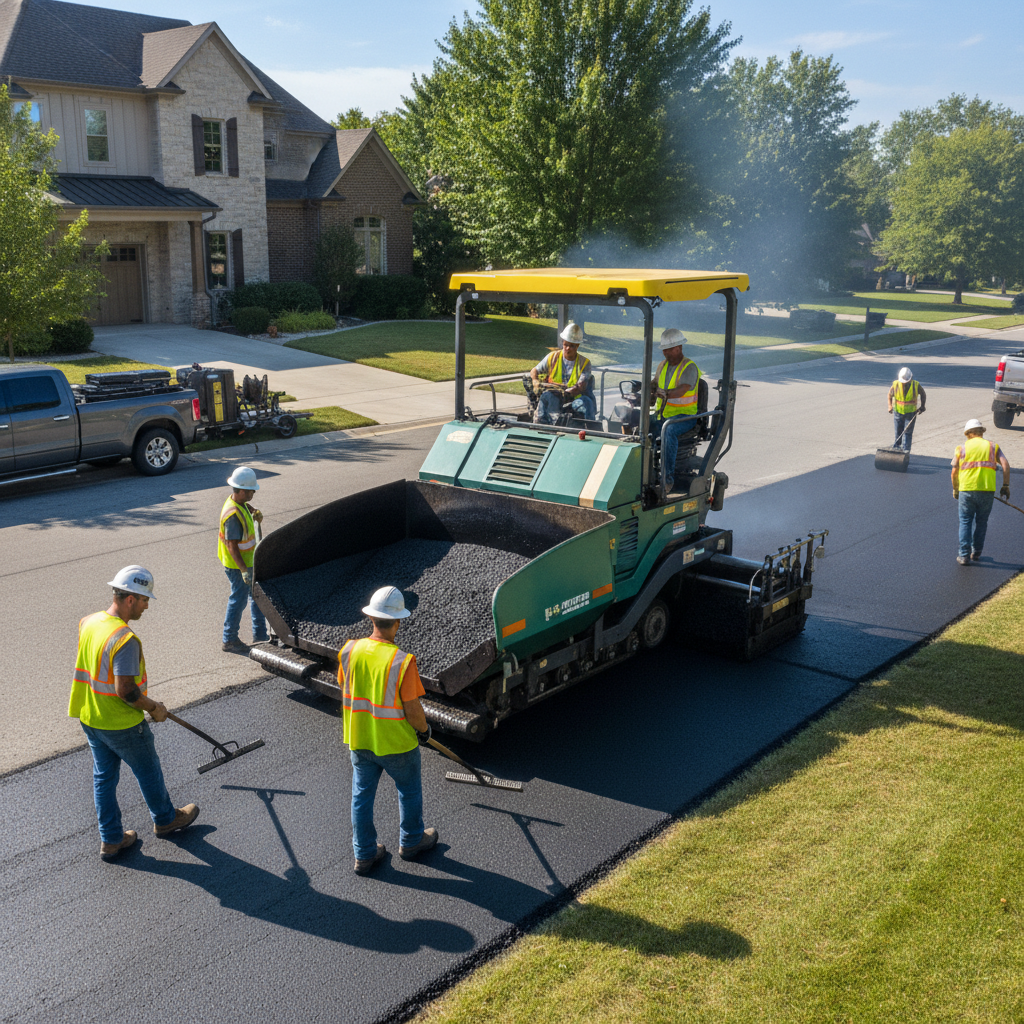
Driveway paving options and costs in Brentwood Park
Brentwood Park homeowners have a few solid driveway paving paths—each priced differently—whether you’re upgrading a long gravel approach or refreshing an older asphalt pad. With a population of about 10,500 people (Statistics Canada, 2021 Census), the area is still largely residential, and most private driveways are tied to single-detached homes, which makes driveway work a steady, neighbourhood-by-neighbourhood demand. In the Lower Mainland–Southwest, pricing is shaped more by intense rainfall and drainage than by deep frost, but the regional frost line assumption still matters for base thickness. That means contractors typically focus on excavation, granular base installation, and compaction quality to prevent rutting and cracking caused by saturated subgrade, especially where clayey soils show up around the Fraser Valley. Scheduling also affects cost: while asphalt can be placed for longer parts of the year in coastal BC, heavy winter rain and shoulder-season storms compress workable windows, so crews may charge more when calendars tighten—particularly in busy pockets like North Brentwood Park where many driveways connect to busier local streets.
Below are realistic cost ranges per typical project scopes in Brentwood Park, including common base requirements. Use this as a starting point, then compare apples-to-apples once you get itemised quotes.
| Material |
Lifespan |
Maintenance |
Best For |
Price per sq ft |
Price Range |
| Asphalt (new installation, proper base) |
15–25 years |
Seal every 3–5 years |
Best balance of cost and performance |
$12–$20 |
$2,400–$6,800 |
| Asphalt (overlay on existing gravel base) |
10–18 years |
Seal every 3–5 years; monitor edges |
When you have sound base and minimal grading |
$10–$17 |
$2,000–$5,400 |
| Interlocking concrete pavers |
25–40 years |
Occasional leveling; replace individual pavers as needed |
Curb appeal and repairability |
$20–$40 |
$4,000–$12,500 |
| Poured concrete (broom finish) |
20–30 years |
Minimal; manage surface sealing if desired |
Straightforward, low-maintenance surface |
$18–$35 |
$3,600–$11,200 |
| Exposed aggregate concrete |
20–30 years |
Light cleaning; occasional sealer |
Slip resistance and premium look |
$20–$38 |
$4,000–$12,300 |
| Gravel / crushed stone (budget option) |
3–8 years |
Top up 1–2 times per year in wet zones |
Temporary or minimal-impact upgrade |
$6–$12 |
$1,200–$3,500 |
Prices are estimates only and vary by project scope, site access and material selection.
What affects the price of paving in Brentwood Park
Even when you’re comparing the same driveway size and material, quotes in Brentwood Park (and across the Lower Mainland–Southwest) can swing by 30–50% because the “hidden” work differs—especially around drainage, base depth, and disposal. Contractors are also responding to a regional reality: intense rainfall can saturate subgrade, and crews still price in the need for properly compacted granular layers to withstand freeze–thaw movement around the assumed frost line. In colder parts of Canada, deeper frost often forces 6–12 inches of compacted granular base for exposed applications; coastal BC typically uses less than that, but you generally still need a sound base thickness and drainage strategy because the soil can lose strength when it stays wet. Asphalt mix design matters too: while Lower Mainland winters are milder, hot-mix asphalt placement still depends on workable temperatures (commonly air temps above 10°C), so scheduling pressure in late spring and summer can raise labour costs.
Concrete costs can move up or down based on how they handle crack control, dowels, and air-entrainment. For example, if your driveway ties into a garage slab or requires saw-cut control joints, expect more labour than a simple open pour. Similarly, if clay-heavy soil needs deeper excavation to remove saturated material and replace it with engineered base, both asphalt and concrete rise in price—sometimes by hundreds of dollars just for haul/disposal and added compaction passes. It’s why a straightforward asphalt job that falls near the $12–$20 per sq ft band can jump toward the high end if base and grading are extensive, while pavers that start around the $20–$40 band can become closer to the top end when edge restraints, bedding sand, and tight access require more crew time. For homeowners budgeting on a tighter timeline, that’s the main reason costs escalate: drainage and base quality can’t be rushed in wet conditions.
| Price Factor |
Why It Matters |
Cost Impact |
| Driveway area in sq ft |
Most material and equipment time scales with total surface area. |
Often 50–70% of the total cost |
| Base depth required |
Frost line assumptions and weak/soft soils determine granular thickness and compaction. |
Can add 10–30% if extra excavation is needed |
| Grading and drainage work |
Slope corrections, crowned profiles, and drainage channels prevent water pooling. |
Commonly +$500–$2,500 depending on complexity |
| Tear-out of existing surface |
Concrete breaking, asphalt milling, hauling and disposal add labour and equipment costs. |
Often +$1,000–$4,000 |
| Edge restraints and curbing |
Pavers need restraints to stop lateral movement; asphalt needs clean edges and termination. |
Typically +5–15% for materials and install time |
| Sealing requirement |
Asphalt benefits from sealing after installation to reduce moisture and oxidation. |
Budget +$250–$900 per sealing cycle |
| Site access |
Narrow lanes, long carries, or limited equipment access increase man-hours. |
Can add +$300–$1,500 |
| Asphalt mix specifications |
Freeze–thaw and coastal moisture conditions may require higher-spec mixes. |
Often +3–10% on material costs |
Permits & regulations in British Columbia
In British Columbia, paving a private driveway within your own property usually does not require a building permit. Where permits and approvals come into play is typically tied to anything that affects the municipal right-of-way or storm drainage infrastructure. In Brentwood Park, for example, you generally do need municipal approval if your project involves a new or modified curb cut, any work in the boulevard (the grass strip between sidewalk/road and your property), changes to drainage patterns that impact municipal systems, or alterations to stormwater flows near the street. Also check whether there are lot-grading rules that limit how close hard surfaces can be to property lines and how runoff must be handled—these can affect design even if no “paving permit” is required.
Step-by-step, a homeowner should also verify three basics before excavation: (1) Contractor licensing/registration where applicable in BC—confirm credentials through the appropriate provincial online registry; (2) liability insurance—ask for a current certificate of insurance listing you as an additional insured for the work; and (3) worker coverage—ensure the contractor has the required coverage for their workers and can provide documentation (and clearance letter/coverage verification upon request). Finally, always request utility locates through BC 1 Call (and/or the standard locator process in your area) before the first dig, and make sure the contractor documents the location marks on site.
Asphalt vs pavers vs concrete for Brentwood Park driveways
For Brentwood Park driveways, asphalt, interlocking pavers, and concrete all can perform well—but they serve different homeowner priorities under Lower Mainland–Southwest moisture and drainage conditions. Asphalt is usually the lowest upfront option, typically landing around the $12–$20 per sq ft band for new installs with proper base, but it needs regular sealing every 3–5 years to slow oxidation and moisture intrusion. Interlocking concrete pavers cost more upfront (often in the $20–$40 per sq ft range), yet they’re the easiest to repair: if a section settles or a subgrade area fails, contractors can lift and re-lay only the affected stones without replacing the whole driveway. Poured concrete is generally mid-range, with many jobs falling near the $18–$35 per sq ft band; however, it is more sensitive to cracking if the base isn’t engineered and properly drained, and it must be air-entrained for winter conditions and wet freeze–thaw movement.
Because coastal BC has milder freezing than Interior regions, you may see shallower frost penetration than in Ontario or Alberta, but you still need proper granular base and drainage design to avoid water staying trapped under the slab or mat. In practice, the option that holds up best to a typical Brentwood Park winter—rain-driven saturation, occasional freeze–thaw, and routine plowing/sanding—depends on how well the contractor builds the base and manages runoff. For a concrete example of where price differences are justified: if you’re comparing asphalt at roughly $14–$18 per sq ft versus pavers at $28–$36 per sq ft, the extra $3,000–$6,000 on a 200 sq ft driveway can make sense if you want long-term curb appeal and the ability to spot-fix localized settlement instead of resurfacing every time.
| Material |
Frost Resistance |
Curb Appeal |
Repair Method |
Lifespan |
Price Band |
| Asphalt (sealed regularly) |
Good with proper base and drainage |
Medium |
Mill & overlay or patch |
15–25 years |
$12–$20 per sq ft |
| Interlocking concrete pavers |
Very good; resilient to localized movement |
High |
Lift/replace individual pavers; re-level sand |
25–40 years |
$20–$40 per sq ft |
| Poured concrete (air-entrained) |
Good when properly air-entrained and reinforced |
Medium–High |
Patch/spall repair; control joints required |
20–30 years |
$18–$35 per sq ft |
| Exposed aggregate concrete |
Good with correct base drainage |
High |
Limited patching; typically repair sections |
20–30 years |
$20–$38 per sq ft |
| Permeable pavers (drainage grid) |
Very good for wet-soil management |
High (varies by layout) |
Replace stones/grids; clean system |
20–35 years |
$28–$55 per sq ft |
| Chip seal / tar-and-chip |
Moderate; relies heavily on base condition |
Low–Medium |
Spot repairs or re-chip |
7–15 years |
$10–$18 per sq ft |
How to choose a paving contractor in Brentwood Park
Start by confirming the contractor you’re hiring is properly set up for BC work and understands your exposure to wet weather and drainage requirements. Ask for proof of liability insurance—your homeowner policy shouldn’t be the one covering jobsite risks. For worker coverage, request documentation showing the contractor has the required coverage for their workers and can provide a clearance letter or verification when asked. If they can’t produce current documents, that’s a red flag. Next, get 2–3 written, itemised quotes—not just a lump sum—so you can see labour versus materials (excavation, granular base, asphalt/pavers/concrete, compaction, edge restraints, disposal, and clean-up). Ensure the quote clearly states what’s included and what’s excluded (for example, whether permit/municipal approvals are included if needed, and whether disposal of old asphalt/concrete is part of the scope).
Warranty matters. Look for a workmanship warranty length for installation and ask whether the manufacturer provides a separate product warranty. Clarify whether warranties are transferable if you sell your home. For payment schedule, never pay more than about 10–15% upfront. Hold back a portion until the job is complete and you’ve confirmed grading, compaction, and final finish. Finally, insist on a written timeline: a start date, daily work window, and a completion estimate based on weather and material lead times.
- Provide BC insurance certificate (and additional insured wording where applicable).
- Show worker coverage verification/clearance documentation.
- Confirm project lead time and asphalt/paver/concrete ordering schedule.
- Ask for site photos of similar Brentwood Park installations.
- Require a detailed scope: excavation depth, base type, compaction passes.
- Confirm drainage treatment (slope, ties into existing drains, runoff direction).
- Check whether traffic control/neighbor protection is included.
- Verify edge restraints/termination details (especially for pavers and asphalt).
- Ask about disposal and hauling inclusion for old materials.
- Request a written warranty statement for workmanship and product coverage.
- Confirm curing/sealing steps (asphalt sealing timing, concrete curing approach).
- Use progressive payments: small deposit, then staged releases at milestones.
Red flags in Brentwood Park include: refusing to itemise labour/materials, quoting only “thickness” without stating compaction and base engineering, starting without utility locates, guaranteeing a low price while skipping drainage/grading corrections, and requesting large upfront payments without a contract schedule.
Frequently asked questions — paving in Brentwood Park
How long before I can drive on new asphalt?
In Brentwood Park and across BC’s Lower Mainland–Southwest, you’ll usually be able to drive on new asphalt after it cools and gains enough stability the same day or within 24–48 hours, depending on weather, mat thickness, and contractor practices. If the crew rolled the surface properly and you’ve got good drainage, normal light driveway use often starts quickly, but avoid heavy loads and turning stress for the first few days. If the installation is thicker or temperatures were cooler, it may take closer to 48 hours. If your quote includes a sealcoat, remember asphalt sealing is typically scheduled after curing—often around 6–12 months—so plan your timeline accordingly when coordinating garage doors, parking, and deliveries.
What causes potholes and how are they repaired?
Potholes usually form when water infiltrates through cracks or weak joints, then undermines the granular base. In Brentwood Park’s rainy season, saturated subgrade can lose strength; a freeze–thaw movement at the frost line can widen the problem even though coastal frost is relatively shallow. Asphalt patches are then placed over a failing foundation, which may lead to “come-back” potholes if the base wasn’t stabilized. Repair is typically a proper cut-out (to remove loose asphalt), base inspection and re-compaction, then patching with appropriate hot-mix. For stubborn repeats, a small patch may not be enough and an overlay may be recommended. A fair quote should explain whether they’re doing a base repair versus surface-only patching.
How do I prepare for a paving project?
Preparation starts with access and approvals. Clear the driveway area (vehicles, planters, portable basketball hoops) and ensure downspouts and drainage are not blocked so runoff can be managed during construction. If your scope includes tear-out, confirm where waste will be hauled and whether any permits/municipal approvals are required—work in the boulevard or changes to curb cuts typically needs municipal approval in BC. Before excavation, confirm utility locates are done through the standard BC utility locating process so the contractor can excavate safely. Also, ask your contractor to protect landscaping and to outline the staging area for materials. If you’re replacing asphalt that sits near garden edges, make sure the grading plan won’t leave water flowing toward your foundation.
How do I compare paving quotes fairly?
Compare quotes like an engineer: look for itemised scope and engineering details, not just totals. A fair asphalt quote in Brentwood Park should specify excavation depth, granular base thickness, compaction method, asphalt thickness, tack coat, and disposal. For pavers, check bedding sand thickness, jointing sand, edge restraints, and base preparation. For concrete, confirm air-entrainment, crack control joints, and curing approach. Also verify whether sealing is included (for asphalt, sealing is often recommended after 6–12 months) and whether tear-out and haul-away are included. If one contractor’s number lands closer to the lower $12–$20 per sq ft asphalt band while others sit higher, ask what base or drainage step they’re reducing—often it’s compaction or drainage corrections, which can shorten lifespan.
Can asphalt be laid in cold weather in Brentwood Park?
In Brentwood Park, asphalt placement is possible longer than in Northern BC, but cold weather still limits when crews can produce and place hot-mix asphalt. Hot-mix asphalt requires workable temperatures—commonly air temperatures above about 10°C for consistent placement and compaction—so late fall rains or cold snaps can delay work. Contractors should also consider surface temperature; paving over a damp or cold base can reduce compaction quality and may lead to early raveling. If a quote claims “we can pave anytime,” that’s not realistic. A credible contractor will schedule based on forecast conditions, confirm base readiness, and explain any cold-weather adjustments. Your quote should include how weather impacts timing and whether it includes a reseal or additional protection steps when delays occur.
What is a driveway apron and do I need one in Brentwood Park?
A driveway apron is the section of driveway that transitions from the street/curb region to your driveway surface, often involving a curb cut and a properly formed approach area. In Brentwood Park, whether you “need” an apron depends on your existing curb condition, how runoff drains, and whether your driveway ties into a sidewalk/curb area that’s already sloped or undermined. If the project includes a new or changed curb cut or work in the boulevard, municipal approval is typically required in BC, and the apron/approach design becomes part of the approved plan. Even when not strictly required by code for a surface change inside your property, many homeowners add an apron because it improves drainage at the transition and reduces settlement and edge breakdown. A contractor should show photos or measurements and explain the drainage tie-in.