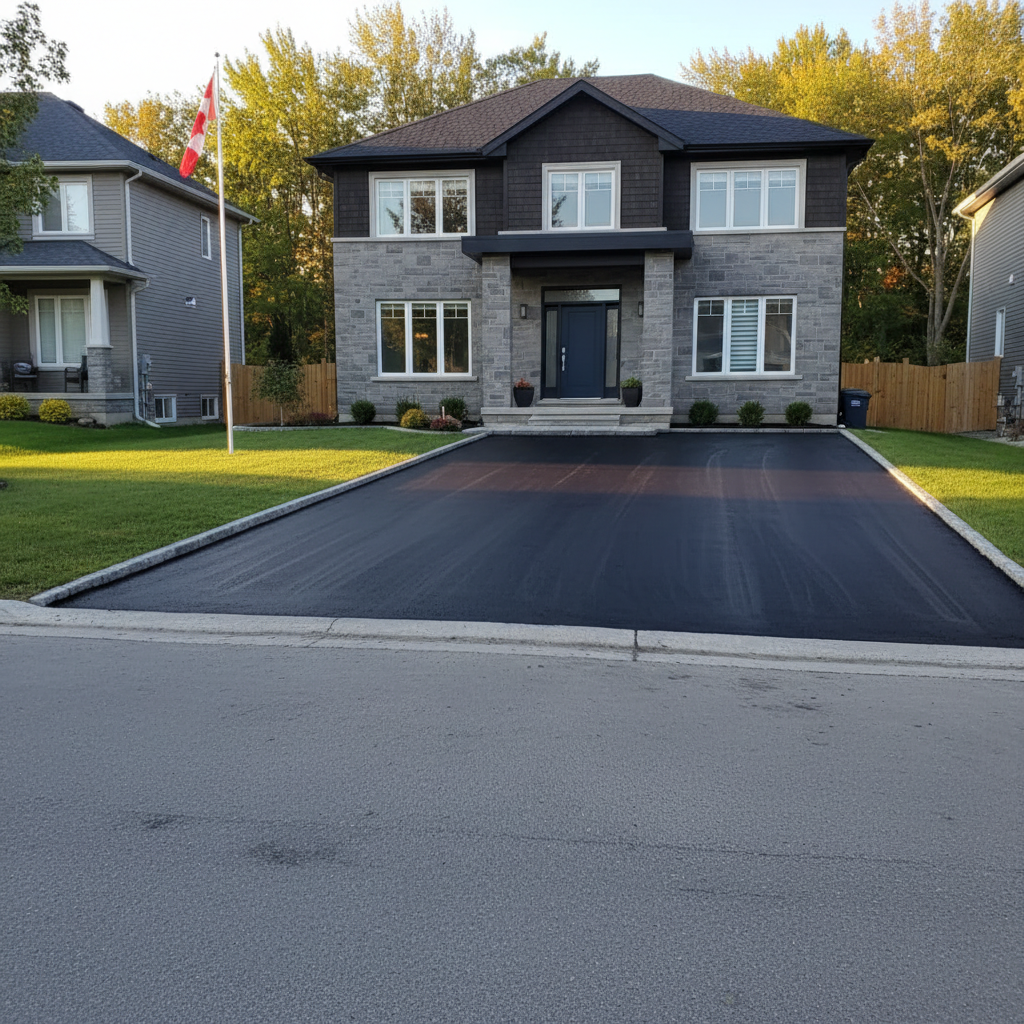
Driveway paving options and costs in Harrison Hot Springs
In Harrison Hot Springs, driveway paving decisions usually start with one thing: your home type and how much wear your driveway gets. With single-detached houses making up about 65.0% of dwellings, most private driveways are attached to detached homes, which means the market is heavily tuned to practical, family-friendly surfaces that can handle heavy rain and wet fall/spring conditions. The area also has an established housing stock—18.1% of homes were built before 1981—so many driveways are due for upgrades from older gravel, patched asphalt, or uneven slabs.
In the Lower Mainland–Southwest (including Harrison Hot Springs), paving costs are shaped less by deep, penetrating frost and more by repeated freeze–thaw at relatively shallow frost depth and by drainage quality. Contractors price drainage and compacted base carefully because the Fraser Valley can include clay-heavy pockets that stay saturated. Even when frost penetration is relatively shallow, freeze–thaw cycles can still cause heaving, rutting, and top-surface cracking if the base isn’t built and drained correctly. Scheduling also matters: the season is longer than in Northern BC, but intense rainfall and shoulder-season storms can compress workable windows and affect crew availability.
If your driveway is in the core residential areas near the lakefront and along the main approaches into town, demand is especially consistent because vehicle access and curb alignment often need tight, clean finishing. Below is a side-by-side cost comparison to help you translate those site conditions into a realistic budget before you request quotes.
| Material |
Lifespan |
Maintenance |
Best For |
Price per sq ft |
| Asphalt (new installation, proper base) |
15–25 years |
Seal every 3–5 years; crack-fill as needed |
Cost-effective, smooth ride with good drainage |
$12 – $20 |
| Asphalt (overlay on existing gravel base) |
10–18 years |
Seal every 3–5 years; monitor weak subgrade |
When base can be stabilized without full rebuild |
$10 – $17 |
| Interlocking concrete pavers |
25–40 years |
Spot replace units; re-level bedding if needed |
Maximum curb appeal and easy repairs |
$20 – $40 |
| Poured concrete (broom finish) |
20–30 years |
Minor crack sealing; joint maintenance |
Clean look and straightforward long-term upkeep |
$18 – $35 |
| Exposed aggregate concrete |
20–30 years |
Seal periodically; crack/joint upkeep |
Textured finish for traction and style |
$22 – $40 |
| Gravel / crushed stone (budget option) |
3–10 years (varies widely) |
Re-grade and top up as it migrates |
Lowest upfront cost and temporary solution |
$6 – $12 |
Prices are estimates only and vary by project scope, site access and material selection.
What affects the price of paving in Harrison Hot Springs
In Harrison Hot Springs and across the Lower Mainland–Southwest, two quotes for what looks like the “same driveway” can differ by 30–50% because the hidden work is different. The biggest swing factors are excavation depth, base preparation, drainage corrections, disposal, and how far down the contractor must go to reach stable ground. Labour demand also plays a role: when crews are booked during clearer spring/early summer windows, scheduling pressure and equipment availability can tighten pricing. Mix design and workmanship details (like freeze–thaw-rated asphalt) add cost even before you purchase a single ton of material.
Frost line depth and freeze–thaw cycles are decisive in this region. While coastal BC typically doesn’t require the same base thickness as deeper-frost provinces, local practice still assumes a frost line on the order of 18" for sensitive infrastructure and exposed applications. That means good drives generally need compacted granular base thickness in the range of about 6–12 inches depending on soil conditions, plus proper drainage. In Ontario/Alberta you often hear 6–12 inches as a standard rule for many exposed uses, whereas coastal BC may lean closer to 4–6 inches in easier sites—yet Harrison Hot Springs can push jobs higher when the subgrade is saturated or clay-heavy.
Here are a few concrete examples that commonly move costs up or down in Harrison Hot Springs. If the existing asphalt is delaminating and the base is pumping under tires, removal and rebuild can push an asphalt project toward the mid-to-upper end of the $12 – $20 per sq ft band. If, instead, you have a solid compacted gravel base and only need a stabilized overlay, pricing can sit closer to the lower end. On the concrete side, a broom-finish driveway in the $18 – $35 per sq ft band may become more expensive when jointing, edge forms, and subdrainage adjustments are required to handle runoff from intense rainstorms.
| Price Factor |
Why It Matters |
Cost Impact |
| Driveway area in sq ft |
Most material and labour scale directly with surface area |
Major driver (often 40–70% of total) |
| Base depth required |
Frost-prone soils and drainage needs control granular thickness |
Can add 10–30% depending on excavation |
| Grading and drainage work |
Correct slope and ditching prevent water pooling and freeze–thaw damage |
Often 5–25% if site is uneven |
| Tear-out of existing surface |
Breaking concrete/old asphalt plus hauling increases disposal and equipment time |
Commonly 8–25% |
| Edge restraints and curbing |
Pavers need firm containment to prevent spreading; asphalt needs clean edges |
Usually 3–15% |
| Sealing requirement |
Asphalt performance depends on sealing after initial curing |
Usually adds 1–4% in year-one planning; more over life |
| Site access |
Narrow lots slow trucks/rollers and may require smaller equipment |
Often 2–12% |
| Asphalt mix specifications |
Freeze–thaw-rated mixes cost more but reduce premature cracking |
Can add 5–15% |
Permits & regulations in British Columbia
In British Columbia, paving a private driveway within your own property generally does not require a building permit, especially when you’re replacing an existing surface and keeping the same basic grading. The work that often does require municipal approval is anything that touches the municipal right-of-way or changes drainage patterns. That can include new curb cuts, alterations to boulevard areas, changes that affect storm drainage (like redirecting runoff toward a culvert), or significant lot-grading changes that alter how water flows during heavy rain.
To stay compliant in Harrison Hot Springs, verify whether you need approval based on your scope:
- Typically does NOT need a permit: replacing asphalt/pavers/concrete on your property footprint, patching, and re-surfacing where grading at the property line doesn’t materially change.
- Often DOES require municipal approval: work in the boulevard/right-of-way (new approach/curb cut), drainage modifications, or lot-grading changes that impact runoff or the ditch system.
Before excavation, homeowners should ensure utility locates are called in BC using BC 1 Call. For contractor qualifications, ask for and verify:
- Licence: check the contractor’s business registration/credentials as listed on provincial/industry registries or the contractor’s official profile.
- Liability insurance: request a current certificate of insurance and confirm it lists you as an interested party if your contract requires that.
- Worker coverage (WSIB/WCB): confirm coverage status with a current clearance letter where applicable; keep it in your project file.
Asphalt vs pavers vs concrete for Harrison Hot Springs driveways
For Harrison Hot Springs, the “best” driveway material depends on how you want to balance upfront cost, drainage responsibility, and long-term appearance through Lower Mainland–Southwest winters. Asphalt is usually the lowest upfront cost and provides a smooth surface, but it relies on proper base drainage and needs sealing every 3–5 years to protect against water intrusion. Interlocking concrete pavers typically cost more upfront, yet they’re repairable unit-by-unit—meaning if a subgrade area settles, a contractor can lift, re-compact, and reset only the affected section rather than replacing the whole driveway.
Poured concrete sits in the middle on many budgets, often landing in the $18 – $35 per sq ft band, but it’s sensitive to freeze–thaw and drainage issues if it isn’t air-entrained and properly jointed. In Harrison Hot Springs, the freeze–thaw cycles at shallow frost depth can still encourage cracking where water pools. Plowing and winter maintenance also matter: repeated tire tracks and sand/salt can expose weak spots faster when the base is underbuilt or edges aren’t contained.
Base preparation is the equal-opportunity “winner” here—regardless of finish, the driveway needs a well-compacted granular base and a drainage plan that avoids runoff pooling. In many residential drives, asphalt commonly uses roughly 6" of compacted granular base plus about 2.5–3" asphalt, while pavers typically use about 6" base gravel plus bedding sand with 2.5–3.5" pavers. Those numbers rise when soils are saturated.
Dollar example: if your plan is a 500 sq ft driveway, asphalt at the lower end of $12 – $20 per sq ft can look dramatically cheaper than pavers at $20 – $40. But in a high-visibility area—say where the driveway slope and curb line are tricky—pavers can be justified because localized repairs preserve the look and avoid costly full-surface replacement.
| Material |
Frost Resistance |
Curb Appeal |
Repair Method |
Lifespan |
Price Band |
| Asphalt (sealed regularly) |
Good with proper drainage and freeze–thaw-rated mix |
Medium (clean, blacktop finish) |
Patch or overlay; crack-fill between cycles |
15–25 years |
$12 – $20 |
| Interlocking concrete pavers |
Very good when base is compacted and edges are contained |
High (wide colour/pattern options) |
Lift-and-reset affected units; re-level bedding |
25–40 years |
$20 – $40 |
| Poured concrete (air-entrained) |
Good with air entrainment and correct joints |
Medium-High (broom finish, clean lines) |
Seal cracks; localized patching where feasible |
20–30 years |
$18 – $35 |
| Exposed aggregate concrete |
Good if properly cured and jointed |
Very high (textured premium look) |
Spot repairs, but finish matching takes care |
20–30 years |
$22 – $40 |
| Permeable pavers (drainage grid) |
Excellent for water management; depends on subgrade |
High (modern drainage solution) |
Lift/reinstall sections; inspect drainage layers |
20–35 years |
$28 – $50 |
| Chip seal / tar-and-chip |
Moderate (surface wears; needs maintenance plan) |
Low-Medium (function-first look) |
Re-surface or localized patching |
7–15 years |
$10 – $18 |
How to choose a paving contractor in Harrison Hot Springs
Choosing a paving contractor in Harrison Hot Springs is mostly about verifying the paperwork and the process. In British Columbia, you should confirm the company has the right credentials for paving work, carries current liability insurance, and has worker coverage appropriate to their employees. Practically, you’ll check it like this: ask for a current certificate of insurance (COI) showing coverage limits and effective dates; request a clearance letter demonstrating workers are covered; and keep copies with your contract. If a contractor can’t provide these documents promptly, that’s a warning sign.
Next, get 2–3 itemised written quotes—not one lump sum. You want a breakdown for excavation, granular base and compaction, asphalt/pavers/concrete supply, forms/edge restraint, line painting or sealing, and disposal. Confirm what’s excluded: does the quote include tree root removal, ramping for slope, utility locates, permit/municipal approval support if needed, and hauling away waste? Ask how they will handle saturated subgrade and whether they’ll add base depth or drainage rather than “paving over” the problem.
For warranty, require two parts in writing: a workmanship warranty (how long they stand behind compaction, base prep, and installation) and any product/manufacturer warranty. Also ask whether the warranty is transferable to future owners. Payment should be controlled: never pay more than 10–15% upfront, and use a holdback until the job is complete and final cleanup is done. Finally, get the start date and completion estimate in writing so scheduling pressure doesn’t turn into extra cost.
- Provide licence/credentials and contact info that match the quote paperwork.
- Show current COI for liability insurance (effective dates, limits).
- Provide a worker coverage clearance letter (WSIB/WCB as applicable) or equivalent proof.
- Use itemised pricing: excavation/base/materials/finish/disposal.
- State compaction standards and base thickness in inches.
- Explain drainage: slope, ditch tie-ins, and how water will be directed.
- List what tear-out includes (haul away, breaking, and disposal site).
- Clarify edges: restraints/curbing for pavers; clean saw-cut lines for concrete.
- Confirm sealing plan for asphalt (typically after cure, then every 3–5 years).
- Include warranty details in the contract, not just in conversation.
- Set a payment schedule with a holdback for completion and punch-list items.
- Put start date, weather contingency plan, and completion target in writing.
Red flags I see around Harrison Hot Springs: “we’ll pave over it” without assessing base saturation, vague wording like “includes grading” with no measurements, refusal to provide COI/clearance proof, quotes that omit disposal or base depth, and schedules that demand large upfront payments before forms and prep work are documented.
Frequently asked questions — paving in Harrison Hot Springs
How often should I seal my asphalt driveway?
In Harrison Hot Springs, sealing is mainly about water protection and slowing down oxidation so the surface resists winter rain and freeze–thaw cycles. Most homeowners are on a practical schedule of sealing every 3–5 years after the driveway has cured—then adjusting based on traffic volume and weather exposure. If your asphalt is new, plan to wait until it’s properly cured before applying sealcoat. If the driveway is already showing fine surface cracking, sealing can help, but it won’t fix a failing base. As a budgeting reference, many local repair/seal work packages run in the $2 – $6 per sq ft range, depending on prep and material choice.
Why does my driveway crack and heave in winter?
Cracking and heaving in British Columbia’s coastal freeze–thaw conditions usually come from water movement and weak foundation layers. Even though frost penetration is relatively shallow here, repeated freeze–thaw around that shallow zone can lift weak, saturated soils. Common causes include inadequate granular base depth, poor compaction, missing or incorrect slope, and edges that can’t contain movement. In some Fraser Valley areas, clay-heavy pockets hold moisture, so drainage fixes (ditches, ties-in, and proper grading) become cost-critical. Also, asphalt mix design matters—using a mix that isn’t suited for local freeze–thaw performance can lead to faster surface breakdown.
Do I need a permit to pave my driveway in British Columbia?
Often, replacing a driveway surface within your own property footprint in British Columbia does not require a building permit. However, permit/approval needs can change if your work affects the municipal right-of-way or storm drainage. In Harrison Hot Springs, watch for scopes like new curb cuts, changes to boulevard areas, or drainage modifications that redirect runoff toward ditches/culverts. Some municipalities also have lot-grading by-laws that restrict how close a hard surface can come to property lines or how grading can be altered. The safest approach is to confirm your scope with the municipality before you schedule excavation, especially if you’re touching curb/ditch areas.
How long before I can drive on new asphalt?
Typically, you should expect short wait times depending on weather, but for household use it’s usually safe to plan for a full curing period before heavy traffic. In practice, reputable Lower Mainland contractors apply asphalt and manage traffic control until the surface is stable enough for cars. Rain is the big variable—if intense rainfall hits during early cure, surface damage or premature wear can occur. Your contractor should specify the number of hours/days for light vehicle access versus heavier loads. If you choose asphalt at typical Lower Mainland pricing of $12 – $20 per sq ft (for properly built drives), the schedule and protection steps they follow in the first days are part of what you’re paying for.
What causes potholes and how are they repaired?
Potholes usually start when water gets under the asphalt or through cracks, softening the base. Under tire loads, that weakened area collapses, creating a pothole. In coastal BC, shoulder-season storms and repeated freeze–thaw can accelerate the process because water repeatedly expands and contracts at shallow depths. Repairs should address both the surface and the underlying cause. That means cutting back to sound material, re-compacting base if it’s failed, then placing new hot-mix asphalt and compacting properly. Quick surface “fill-only” patches may look fine initially but can reappear if the drainage or base issue isn’t fixed.
How do I prepare for a paving project?
Preparation is what keeps costs down and reduces schedule surprises in Harrison Hot Springs. Start by clearing the driveway area (cars, trailers, landscaping obstacles) and marking any utilities/lines you already know about—then confirm your contractor calls BC 1 Call before digging. Review access constraints: narrow gates, overhead lines, and steep slopes can slow equipment and impact pricing. Get 2–3 itemised quotes so you understand exactly what’s included for excavation, drainage/grading corrections, tear-out, disposal, and base thickness. Ask about warranty terms and the payment schedule—never rush into large deposits. Finally, coordinate with your contractor on weather-day planning because intense rainfall can delay installation and affect cure times.