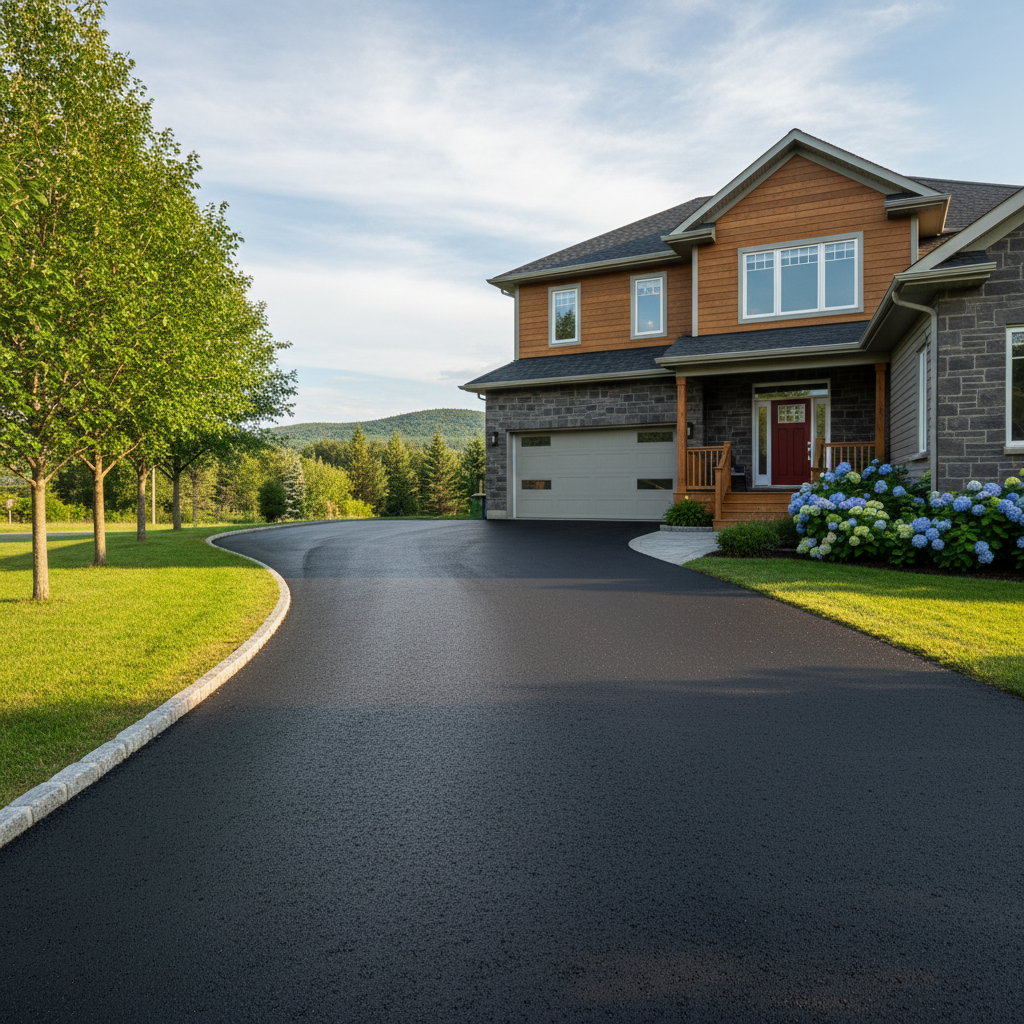
Driveway paving options and costs in Oliver
Driveway paving in Oliver is a little different than what you may have seen on the coast. Oliver has a high proportion of detached homes—single-detached houses make up about 66.5% of dwellings—so most driveways here are attached to private residences and designed to handle long, cold winters and repeated freeze–thaw cycles. With 1,805 homeowner households (78.1% of households own), there’s a steady demand for durable surfaces that won’t heave or crack after the first couple of seasons.
In the Thompson–Okanagan, pricing is driven by frost protection, drainage, and the thickness of compacted granular base. Even though the BC Building Code frost line for structures is commonly cited around 18" in parts of the interior, paved surfaces and slabs see more moisture and traffic loading. That’s why contractors typically build driveways with a more robust granular section—often around the 8.5–9" total structure range for asphalt/pavers—rather than a minimum “thin” section.
Seasonality matters too. Hot-mix asphalt needs adequate air temperatures (often above 10°C), so crews focus paving into the warmer months, which increases scheduling pressure and mobilization costs. In Oliver, this trade is especially active around the downtown-core and along Okanagan Avenue/Highway 97 area where access and grading adjustments are common.
Below is a practical comparison of common driveway choices and what you can generally expect to pay before you line up a site measure for exact quantities.
| Material |
Lifespan |
Maintenance |
Best For |
Price per sq ft |
Price Range |
| Asphalt (new installation, proper base) |
15–25 years |
Seal 3–5 years after placement; crack-fill as needed |
Best value, smooth drive, good frost-resistance with adequate base |
$5.50 – $8.50 |
$4,500–$9,000 |
| Asphalt (overlay on existing gravel base) |
12–20 years |
Seal 3–5 years after; monitor for edge breakdown |
When the base is stable and you want a lower upfront cost |
$5.00 – $7.75 |
$4,250–$8,250 |
| Interlocking concrete pavers |
20–30 years |
Resand joints periodically; replace individual stones if needed |
Curb appeal and easy localized repairs |
$10.00 – $16.00 |
$6,500–$14,000 |
| Poured concrete (broom finish) |
20–35 years |
Minor patching; consider joint maintenance |
Long-term durability and a clean, simple look |
$9.00 – $14.00 |
$7,000–$15,000 |
| Exposed aggregate concrete |
20–35 years |
Seal if desired for stain resistance; repair spalls individually |
Slip resistance and a premium finish |
$10.50 – $16.50 |
$7,500–$16,500 |
| Gravel / crushed stone (budget option) |
3–10 years |
Top up and re-grade; manage washouts |
Short-term/lowest cost; easiest to stage upgrades |
$2.00 – $4.50 |
$2,500–$5,500 |
Prices are estimates only and vary by project scope, site access and material selection.
What affects the price of paving in Oliver
In Oliver, you can see the same basic driveway “on paper” priced 30–50% apart depending on how contractors build the frost-resistant section, handle drainage, and what they include (or exclude) in the quote. The Thompson–Okanagan interior market also has tighter seasonal windows—hot-mix asphalt placement typically requires air temperature conditions above about 10°C—so mobilization and weather risk tend to raise costs versus more forgiving climates.
Frost line depth and freeze–thaw cycles are decisive. To prevent heaving, rutting, and early cracking, deeper frost protection requires thicker compacted granular base. While coastal BC can get away with thinner sections more often, Oliver driveway assemblies are usually built with about 6" of compacted base as a minimum target, plus granular drainage layers and proper compaction testing. That “section thickness” is one of the biggest reasons asphalt projects commonly land in the $4,500–$9,000 band here, and why overlays can be cheaper only when the existing base is truly stable.
Concrete pricing can jump too. For example, an older lot with clayey sub-grade or poor drainage may require deeper excavation, additional granular replacement, and more robust formwork. Conversely, if your property already has good drainage and a firm sub-base, poured concrete can stay closer to the $7,000–$15,000 range. With homes built before 1981 making up 43.7% of the housing stock, it’s common to see older drainage patterns that need correcting before any new surface is installed—often adding cost but protecting your new pavement.
| Price Factor |
Why It Matters |
Cost Impact |
| Driveway area in sq ft |
Most labour and material quantities scale directly with surface area. |
High (typically the biggest line-item swing) |
| Base depth required |
Freeze–thaw protection depends on granular thickness and compaction. |
High (can change the job by thousands) |
| Grading and drainage work |
Correct slope and keep water out of the structure to reduce cracking and heave. |
Medium to high |
| Tear-out of existing surface |
Breaking, loading and hauling concrete or old asphalt increases time and disposal. |
Medium (higher if reinforced or tightly confined) |
| Edge restraints and curbing |
Pavers need restraints to resist lateral movement from plows and snow piles. |
Medium |
| Sealing requirement |
Asphalt performance in winter depends on keeping water out via timely sealing. |
Low to medium (plus timing for a future reseal) |
| Site access |
Narrow lots or long pushes slow equipment movement and increase labour hours. |
Medium |
| Asphalt mix specifications |
Freeze–thaw-rated mixes and binder choices cost more but perform better. |
Low to medium (often worthwhile) |
Permits & regulations in British Columbia
In British Columbia, paving a private driveway within your own property typically does not require a building permit. Most homeowners in Oliver simply need to work under standard municipal rules (and follow any lot-grading conditions), because you’re improving a surface that’s already on-site. That said, certain driveway-related work does trigger municipal approvals—especially when it affects the area used by the municipality for services and drainage.
Work that often does require municipal approval includes: (1) changing the driveway apron/curb cut where it meets municipal right-of-way, (2) altering boulevard grading or reshaping drainage swales that tie into storm infrastructure, and (3) any changes that modify storm drainage patterns (for example, redirecting surface water toward/away from a neighbour’s property or into a different drainage path). Even when a permit isn’t required, municipalities can have lot-grading bylaws that limit how close hard surfaces can be to property lines and how water must be managed.
For utilities, always call for locates before excavation using BC 1 Call. Then, when hiring, verify contractor credentials. Ask for a certificate of insurance showing liability coverage and confirm they have the appropriate provincial worker coverage (WSIB/WCB status depending on their setup). To verify: check the contractor’s online business/licensing info where applicable, request their clearance/coverage letter in writing, and keep a copy of their insurance certificate showing your address and coverage dates. Finally, ensure their crew understands winter-safe excavation and drainage restoration.
Asphalt vs pavers vs concrete for Oliver driveways
For Oliver driveways, asphalt, interlocking pavers, and concrete all can work—if the base and drainage are built for Thompson–Okanagan freeze–thaw conditions. Asphalt is typically the lowest upfront option and gives a smooth, quiet ride, but it relies on a proper granular section and needs sealing every 3–5 years to keep water from weakening the surface and base. Interlocking concrete pavers cost more to install, but they’re the most forgiving for local repairs: individual units can be lifted and reset without replacing the entire driveway—an advantage if a utility repair or a small edge failure happens. Poured concrete sits in the middle on price and can last decades when air-entrained and properly finished, but freeze–thaw movement and de-icing salt can contribute to cracking or surface scaling if jointing and drainage aren’t done correctly.
In this interior climate, all three options need the same fundamentals: correct grading so water drains away, restrained edges to handle plough/snow loads, and enough compacted granular base to resist heaving. If you’re comparing budgets, a realistic example is that asphalt often lands in the $4,500–$9,000 band, while pavers commonly fall into the $6,500–$14,000 range. The extra cost is justified when you want curb appeal and the ability to repair a localized area rather than resurface the full driveway—especially common where Oliver driveways see seasonal patching pressure from ice and snow traffic.
For most homeowners here, the “best” choice depends on whether you value lowest upfront cost (asphalt), long clean lines with joint strategy (concrete), or maximum repair flexibility and appearance (pavers).
| Material |
Frost Resistance |
Curb Appeal |
Repair Method |
Lifespan |
Price Band |
| Asphalt (sealed regularly) |
Good with proper base and sealing against moisture intrusion |
Good (clean, dark finish) |
Patch and seal; occasional resurfacing |
15–25 years |
$4,500–$9,000 |
| Interlocking concrete pavers |
Very good; individual unit replacement helps maintain integrity |
Excellent (wide style/colour selection) |
Lift-and-reset individual pavers; re-level and re-sand joints |
20–30 years |
$6,500–$14,000 |
| Poured concrete (air-entrained) |
Good to very good when air-entrained and jointed |
Medium to good (finish dependent) |
Patch small areas; larger cracking may require overlay/coating |
20–35 years |
$7,000–$15,000 |
| Exposed aggregate concrete |
Good when finished and sealed appropriately |
High (textured premium look) |
Patch carefully; otherwise minor resurfacing/coatings |
20–35 years |
$7,500–$16,500 |
| Permeable pavers (drainage grid) |
Very good where site drainage/soil allows infiltration |
High (modern look) |
Replace affected units; maintain aggregates and catch basins |
20–30 years |
$8,000–$16,000 |
| Chip seal / tar-and-chip |
Moderate; better for low-traffic areas and thicker maintenance cycles |
Low to medium |
Spot re-chip or re-surface when worn |
7–12 years |
$3,500–$7,500 |
How to choose a paving contractor in Oliver
Choosing the right contractor in Oliver starts with proof of coverage and clear documentation. In British Columbia, verify the contractor’s business licensing (where applicable), request their liability insurance certificate, and confirm their worker coverage status (WSIB/WCB depending on their arrangement). Ask for the certificate of insurance showing your job site address and coverage effective dates, then request their clearance/coverage letter so you know they’re compliant before they ever excavate. If they can’t provide current documents immediately, that’s a major warning sign.
Next, request 2–3 itemised written quotes—labour and materials broken out (excavation, hauling/disposal, base materials, paving, compaction testing where applicable, and any surface restoration). Make sure you understand exclusions: is permit/grading approval included (when needed), is disposal included, and will they replace topsoil/landscaping disturbed during prep? A reputable crew will also outline the sequence and what “complete” means.
Warranty should be specific: workmanship warranty length, whether product/manufacturer warranties apply, and whether coverage is transferable if you sell the house. Payment matters too: don’t pay more than about 10–15% upfront. Use a holdback until the driveway is finished, cleaned, and (for asphalt) sealing timing is scheduled. For timeline, get a start date and completion estimate in writing, acknowledging that cold snaps can affect paving windows.
- Provide a detailed, itemised scope (no vague “paving only” language).
- Confirm granular base thickness and compaction expectations for frost protection.
- Ask who handles utility locates and how locates are verified on-site.
- Request liability insurance certificate and clearance letter before work begins.
- Check warranty terms in writing (workmanship and any materials) and how claims are handled.
- Verify edge restraint design (curbs/restraints) for paver projects.
- Ensure drainage/grading is included: slope, tie-ins, and keeping water off the base.
- Ask about disposal/hauling: where old material goes and whether fees are included.
- Confirm whether permit/municipal approvals (right-of-way impacts) are included when required.
- Insist on weather-risk wording and the plan if temperatures drop mid-job.
- Use a schedule: start date, staged milestones, and completion targets in the contract.
- Keep a payment plan with holdback and final completion inspection.
Red flags to watch for: (1) they propose a “thin base” without discussing frost protection, (2) they won’t provide insurance/coverage proof or clear documentation, (3) they quote lump-sum without itemising excavation, base, and disposal, (4) they start without utility locates, and (5) they pressure you for large upfront payments or won’t commit sealing/maintenance expectations for asphalt.
Frequently asked questions — paving in Oliver
How do I prepare for a paving project?
Start by marking what stays and what moves: vehicles, sheds, planters, edging, and any buried items you know about. In Oliver, freezing conditions mean excavation and grading need to happen efficiently, so plan to clear the driveway access for equipment and confirm pickup times if waste hauling is included. Ask the contractor to call BC 1 Call for utility locates before digging and to include that step in the schedule. Also, review your lot drainage: if you have low spots, puddling, or water running toward the garage, tell the contractor upfront—fixing drainage during paving is far cheaper than “chasing” cracks later. Finally, if your home is older (43.7% of homes were built before 1981), expect you may need extra base replacement or re-grading to correct old drainage patterns (Statistics Canada, 2021 Census).
How do I compare paving quotes fairly?
Compare quotes using the same scope and the same section build-up. Ask each contractor to list excavation depth (or “cut” depth), base thickness, material type/gradation, compaction steps, and whether drainage corrections are included. For asphalt, confirm freeze–thaw-rated mix design and whether edge restraints are part of the plan. For concrete/pavers, check jointing and restraint details. Also compare what you get for the price: tear-out and disposal, haul distance, and topsoil/landscape reinstatement. If one quote is in the $4,500–$9,000 asphalt band and another is higher, the difference should usually show up as thicker base, better drainage work, or added restraints—not just a higher unit rate. Don’t ignore maintenance: sealing is commonly needed after 6–12 months for asphalt, then about every 3–5 years.
Can asphalt be laid in cold weather in Oliver?
In Oliver and the Thompson–Okanagan interior, cold snaps can be a deal-breaker for asphalt placement quality. Hot-mix asphalt typically requires adequate air temperatures (often above about 10°C) and suitable paving conditions so the mix compacts properly and achieves good bond/finish. If temperatures drop quickly or the ground is frozen, you can get weak compaction, accelerated raveling, or early cracking. That’s why local paving schedules concentrate on the warmer, drier months. A good contractor will check weather forecasts, discuss contingency planning, and may postpone work rather than “rush” production. If you’re planning asphalt, ask how they define acceptable weather conditions in their contract and what happens if the crew must pause due to temperature or moisture.
What is a driveway apron and do I need one in Oliver?
A driveway apron is the paved section that transitions between your driveway and the curb/road area (often around the curb cut). In Oliver, whether you “need” an apron depends on how your driveway meets the municipal right-of-way and whether water is currently shedding toward or away from the structure. If your apron/curb cut is damaged or the approach is causing pooling, contractors may recommend an apron replacement or reconfiguration as part of drainage corrections and to protect the driveway edge. Work that changes the apron/curb cut or affects storm drainage typically needs municipal approval even when a building permit isn’t required for private property paving. Ask your contractor to clarify whether they’re restoring the apron as part of the scope and confirm what approvals (if any) are required before excavation.
How do I maintain my driveway through Oliver winters?
Maintenance in Oliver’s freeze–thaw winters is mostly about protecting the structure from water and avoiding surface damage. For asphalt, keep up with timely sealing: it helps prevent water from getting into the binder/base and reduces moisture-driven heaving and cracking. Plan to crack-fill small failures early so water doesn’t get under the surface. For pavers, ensure joints stay filled with proper sand—washed-out joints can allow movement under plow/snow traffic. Use sensible snow clearing: avoid scraping into edges and restraints, especially on pavers where edge stability matters. If you use sand/salt, do it carefully—de-icing chemicals aren’t the main cause of failure, but aggressive use combined with poor drainage can speed surface deterioration, particularly for concrete.
Is it worth sealing a new driveway right away in Oliver?
For asphalt in Oliver, “right away” usually means the right timing, not immediate sealing the day it’s paved. Most reputable contractors recommend waiting until the asphalt has cured and the surface is ready—commonly after about 6–12 months—so the sealer bonds properly and you don’t trap moisture. Sealing is typically cost-effective compared to resurfacing later, because it reduces water infiltration during winter cycles. If your estimate is in the $4,500–$9,000 asphalt band, sealing is a relatively small additional investment but can protect your base by slowing moisture damage and raveling. Ask your contractor what sealer they use, whether they recommend a re-seal cycle (often about every 3–5 years), and how they handle sealing if the job is late-season due to temperature constraints.