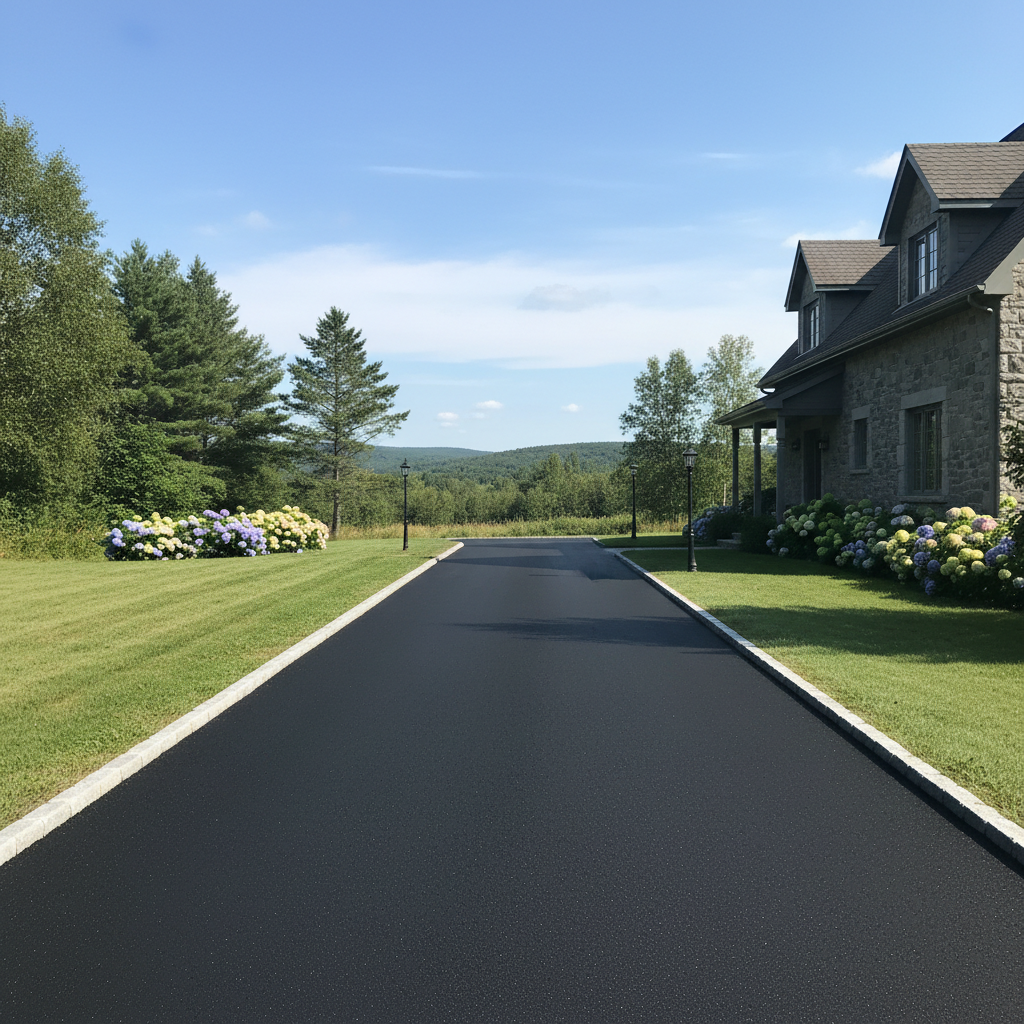
Driveway paving options and costs in Kaslo
Kaslo driveways are mostly built for detached homes—single-detached dwellings make up 84.9% of housing in town, and owner households are 72.4% (Statistics Canada, 2021 Census). That matters because most paving work here is residential and site access is often tight: short runs, steep drive grades, and older yards that shed water differently than newer subdivisions.
In the Kootenay region, frost depth and repeated freeze–thaw cycles are a major cost driver. In practice, that means your driveway needs a deeper, well-compacted granular base (commonly 6–10 inches, sometimes more on weaker or clayey soils) and reliable drainage away from the surface. If water sits under the asphalt, it becomes a freeze-heave risk—one of the fastest ways to see cracking or premature patching. The other pricing factor is the shorter paving season inland: hot-mix asphalt is typically placed when daytime conditions stay warm enough (often above 10°C). Scheduling pressure in late spring to early fall can affect availability and mobilization rates.
In Kaslo, demand is especially steady around Lakeside Drive and the tighter lanes near the downtown core, where homeowners often want a clean, quiet-finish driveway that also holds up to plough traffic and spring melt. Once you know the material options and the base requirements, it’s easier to compare quotes apples-to-apples—see the table below for typical cost ranges and performance expectations.
| Material |
Lifespan |
Maintenance |
Best For |
Price per sq ft |
Price Range |
| Asphalt (new installation, proper base) |
15–25 years |
Seal coat every 3–5 years; crack repair as needed |
Most common choice when you want a strong, smooth finish |
$7.50–$13.00 |
$7,000–$13,000 |
| Asphalt (overlay on existing gravel base) |
10–18 years |
Seal coat every 3–5 years; patching may be needed earlier |
When the old surface is mostly gravel and base condition is good |
$6.50–$11.50 |
$6,500–$11,500 |
| Interlocking concrete pavers |
20–30+ years |
Spot-repair replacing only affected units; joint re-sand occasionally |
Curb appeal and easier repairs without full replacement |
$10.50–$17.00 |
$9,000–$16,000 |
| Poured concrete (broom finish) |
20–30 years |
Minor patching; seal optional depending on finish and water exposure |
Long-lasting slab for heavier use when engineered for frost |
$11.00–$18.00 |
$11,000–$18,000 |
| Exposed aggregate concrete |
20–30 years |
Occasional cleaning; sealing sometimes used to reduce staining |
Non-slip texture and premium look |
$13.00–$20.00 |
$12,500–$19,500 |
| Gravel / crushed stone (budget option) |
3–10 years (varies widely) |
Top-ups, regrading, weed control |
Temporary surfacing or areas where you’re not ready for paving |
$4.00–$7.50 |
$3,500–$7,500 |
Prices are estimates only and vary by project scope, site access and material selection.
What affects the price of paving in Kaslo
In Kaslo, you can see the same “new driveway” scope come in 30–50% apart between contractors, even within the same week’s quote window. The biggest reasons aren’t just the asphalt or paver material—it’s what’s underneath. Two contractors can quote different base thicknesses, different excavation quantities, and different drainage fixes, and those changes directly reflect Kootenay frost risk and disposal/haul distances. Labour scheduling also matters in a shorter paving season: once the calendar tightens, mobilization and weather staging can add cost.
Frost line depth and freeze–thaw cycles are decisive in the Kootenay region. Deeper frost requires a thicker compacted granular base to prevent heaving and cracking. Coastal BC projects often get away with thinner granular layers because freeze action is less severe, but inland sites are commonly built with more structure—think 6–10 inches of compacted granular base in many driveway builds. In practice, that means heavier excavation and more imported road base, especially for older lots where the original fill may be unsuitable. Also, asphalt mix design must be freeze–thaw rated; a better-performing mix can cost more up front but reduces patching.
Concrete pricing can swing as well. For example, broom-finished slabs cost less than exposed aggregate, while air-entrainment (important in freeze–thaw areas) and reinforcement detailing can change the final number. If your driveway needs significant grading so water sheds away from the slab, that can add labour and trucking. On older homes built before 1981—58.1% of dwellings in Kaslo—hidden drainage issues and soft subgrade are more common, and that’s why an “easy” 500 sq ft job can move from the lower asphalt band toward the higher end, while paver projects can climb past the $9,000–$16,000 range.
| Price Factor |
Why It Matters |
Cost Impact |
| Driveway area in sq ft |
Materials and paving time scale directly with surface area |
Usually the largest variable (can change totals by thousands) |
| Base depth required |
Frost conditions determine granular thickness to prevent heave |
More excavation/imports can add significant cost |
| Grading and drainage work |
Slope correction and drainage routing control water under the surface |
Often adds labour and extra hauling/disposal |
| Tear-out of existing surface |
Breaking, loading, and hauling concrete/old asphalt costs time and equipment |
Can push a “simple” job into a higher quote tier |
| Edge restraints and curbing |
Pavers need tight edging to prevent lateral movement/spread |
Adds material plus layout labour |
| Sealing requirement |
Asphalt relies on seal coats to slow oxidation and water intrusion |
Impacts long-term cost planning (service often required) |
| Site access |
Narrow driveways slow equipment movement and require more staging |
Increases labour hours and may require smaller equipment |
| Asphalt mix specifications |
Freeze–thaw-rated mix costs more and needs correct handling |
Can move pricing upward within the asphalt bands |
Permits & regulations in British Columbia
In British Columbia, paving a private driveway within your own property usually does not require a building permit. That said, work that affects the municipal right-of-way often does require approval—this includes creating or changing a curb cut, altering boulevard features, or modifying storm drainage that impacts how water flows off the roadway. Some municipalities also regulate lot grading, which can limit how close a hard surface can be installed to property lines or how much you can change grades toward neighbouring parcels.
Before anyone digs in Kaslo (or anywhere in BC), you should ensure utility locates are completed. Call BC 1 Call (and confirm the marked locations on-site) so the contractor excavates safely around buried services. If your driveway requires excavation for a thicker base or improved drainage, locates become especially important because deeper digging increases the chance of striking utilities.
To verify a contractor in BC, ask for three things in writing and check them online where possible: (1) their BC paving-related licence/registration details (as applicable for their business category), (2) proof of liability insurance, and (3) coverage for workers (WSBC/WCB clearance or equivalent proof). For insurance, request a current certificate of insurance showing limits and the policy status. For clearance, ask for a letter or clearance document you can confirm—don’t accept “we’re covered” statements without paperwork. Finally, confirm any required municipal approval with the contractor’s plan: if they need a right-of-way permit, that should be clearly identified in the quote and schedule.
Asphalt vs pavers vs concrete for Kaslo driveways
For Kaslo’s freeze–thaw climate, the “best” driveway material depends on how you balance upfront cost, long-term repairs, and how much you want curb appeal. Asphalt is usually the lowest upfront option in this market, but it performs best when it’s built on the right granular base and sealed regularly—typically every 3–5 years. If the driveway is exposed to frequent meltwater in spring or uses substandard base, asphalt will show cracking earlier and repairs can become a recurring line item.
Interlocking concrete pavers cost more up front, but they shine in cold-climate practicality: individual stones can be lifted and reset if drainage or subgrade issues ever occur. That’s valuable in an older housing stock area (58.1% built before 1981) where unknown conditions sometimes show up after excavation. Paver projects often land in the $9,000–$16,000 range depending on driveway size and edge restraints.
Poured concrete sits in the middle of the three for typical cost and can last a long time if air-entrained and properly detailed for frost. However, concrete slabs can crack if base prep or drainage isn’t engineered—especially where de-icing practices or water pooling occurs. Exposed aggregate gives a higher-end look and traction but can cost more than broom finish.
Base preparation for all options should address Kootenay frost depth risk (commonly 6–10 inches of compacted granular base, sometimes thicker). Drainage—proper slope, intercepted surface water, and free-draining base—often matters as much as the top surface. If you want a simple example: choosing pavers at the $9,000–$16,000 level may be worth it when you expect future utility work or want easy, targeted repairs. If your goal is lowest first cost and you’re disciplined about sealing, asphalt in the $7,000–$13,000 band is often the better value.
| Material |
Frost Resistance |
Curb Appeal |
Repair Method |
Lifespan |
Price Band |
| Asphalt (sealed regularly) |
Good with proper base and freeze–thaw-rated mix |
Medium (clean, modern black finish) |
Patch or mill-and-overlay section |
15–25 years |
$7,000–$13,000 |
| Interlocking concrete pavers |
Very good when bed sand and base are correct |
High (varied colours/patterns) |
Remove/replace affected units |
20–30+ years |
$9,000–$16,000 |
| Poured concrete (air-entrained) |
Good with engineered drainage and air-entrainment |
Medium (depends on finish) |
Crack repair/patch; larger issues may require re-slab |
20–30 years |
$11,000–$18,000 |
| Exposed aggregate concrete |
Good with proper mix and base |
High (textured premium appearance) |
Patch colour-matched sections when needed |
20–30 years |
$12,500–$19,500 |
| Permeable pavers (drainage grid) |
Very good when system is designed for site drainage |
High (clean modern layouts) |
Replace individual paver units; maintain infiltrating layers |
15–25+ years |
$10,000–$17,500 |
| Chip seal / tar-and-chip |
Fair to good; needs good base and surface maintenance |
Low to medium (texture/colour varies) |
Spot chip additions or re-seal |
7–12 years |
$5,500–$9,500 |
How to choose a paving contractor in Kaslo
Choosing the right contractor in Kaslo is mostly about verifying three protections: licensing/registration (where applicable for the contractor’s business category), liability insurance, and workers’ coverage. Start by requesting the contractor’s proof of current general liability insurance—ask for the certificate of insurance and ensure it shows active coverage and appropriate limits. Next, confirm workers’ compensation coverage (WSBC/WCB clearance or equivalent document) by asking for a clearance letter or proof you can keep with your paperwork.
Then compare quotes the right way: ask for 2–3 itemised written quotes that separate excavation, base materials, compaction, geotextile (if used), asphalt/paver/concrete supply, formwork/rebar (for concrete), labour, and disposal/haul. Avoid “lump sum” quotes where you can’t see what you’re paying for.
Read the scope carefully for inclusions and exclusions: is permit handling included if the job needs municipal approval for right-of-way impacts? Is the cost of tear-out and hauling included? Are edges and restraints included for pavers? If asphalt is specified, is sealing included—or is it excluded and expected as a future maintenance step?
Warranty matters too: ask for workmanship warranty length, and whether the product/manufacturer warranty applies (and how). For payment schedule, never pay more than 10–15% upfront; hold back a portion until the job is complete and you’ve confirmed proper finishing and cleanup. Get the start date and estimated completion window in writing, since Kootenay weather can shift schedules.
- Confirm insurance certificate is current (not expired) and shows liability limits.
- Request WSBC/WCB clearance proof before work begins.
- Ask for at least 3 recent local references or completed-driveway photos in BC.
- Use itemised quotes: base, excavation, drainage/grading, and paving materials listed separately.
- Confirm compaction method (thin lifts, proper compaction targets) and equipment used.
- Ensure drainage plan is documented (slope, free-draining base, where water goes).
- Check edge restraint details (paver edging/curb, asphalt transitions, cut/fill plan).
- Verify tear-out and disposal are included if any existing surface must be removed.
- Ask whether geotextile or separation fabric is used and why.
- Confirm asphalt sealing expectations (timing and whether included or future).
- Get warranty in writing: workmanship term, exclusions, and how claims are handled.
- Set a payment schedule with a holdback until final grading/cleanup is accepted.
Concrete red flags I see in Kaslo: contractors who won’t provide insurance or clearance paperwork, quotes that don’t mention base depth/compaction, “too good to be true” pricing that skips drainage work, no written scope for tear-out/disposal, and crews that try to start without confirming utility locates.
Frequently asked questions — paving in Kaslo
How long before I can drive on new asphalt?
In Kaslo, you typically can drive on new asphalt the same day once the surface cools, but you should avoid heavy loads and tight turning for a bit longer. For most residential placements, light traffic is usually acceptable after it cools and firms up, while heavier vehicles and repeated tire turns should wait until the asphalt has cured enough to resist surface pickup or minor raveling. Cool evenings and spring melt conditions can slow cooling, so the installer’s temperature and weather notes matter. If you chose asphalt in the $7,000–$13,000 band, your contractor should explain the expected cure window in your written schedule. Plan for parking elsewhere for at least the evening of install, and follow their guidance on tire marks prevention—especially with Kootenay spring weather fluctuations.
What causes potholes and how are they repaired?
Potholes in British Columbia’s interior usually start with water: it infiltrates through cracks or weak joints, softens the granular base, and then freeze–thaw cycles expand that damage into voids. In Kaslo, repeated cold snaps and spring thaw can make small failures grow quickly, especially on driveways that don’t have a well-draining base or proper slope. Repairs are generally done by removing the loose asphalt, shaping the base, compacting in thin lifts, and then placing fresh asphalt to the correct thickness and density. If the surrounding area is already brittle from older oxidation, you may need a larger patch or mill-and-overlay rather than a small “skin” repair. A thorough contractor will inspect for drainage and edge issues, not just fill the hole.
How do I prepare for a paving project?
Preparation starts with access and site readiness. Clear the driveway of vehicles, trailers, and stored items, and mark any landscaping, steps, or utilities you want protected. If you have downspouts or surface water running toward the driveway, flag it for the contractor—fixing drainage is often the difference between a long-lasting finish and recurring cracks in Kaslo’s freeze–thaw conditions. Confirm utility locates are completed before excavation by asking the contractor how they coordinate BC 1 Call markings. Also, decide ahead of time whether you’re doing only the top surface or full reconstruction with base replacement. If your quote includes tear-out and disposal, ensure there’s a safe path for haul equipment. Finally, keep pets away from the work area, and plan temporary parking for the install and curing period.
How do I compare paving quotes fairly?
To compare quotes fairly in Kaslo, insist on itemised scopes rather than “total price only.” Make sure each quote includes similar base depth, compaction approach, drainage/grading corrections, and whether tear-out and hauling are included. Confirm the product specs: for asphalt, ask about freeze–thaw-rated mix selection and whether sealing is planned later. For pavers, check that edge restraints and base preparation are clearly described—those are big performance drivers. Look at whether each contractor includes separation fabric or geotextile (if needed) and how they handle transitions near the driveway apron. Price can swing: asphalt projects often land around the $7,000–$13,000 band, while interlocking pavers are commonly $9,000–$16,000. If one quote is dramatically lower, it usually skipped excavation, base structure, or drainage work.
Can asphalt be laid in cold weather in Kaslo?
In Kaslo and the Kootenays, cold weather affects asphalt placement more than many homeowners expect. Hot-mix asphalt generally needs warm ambient conditions so it can be placed and compacted properly; many crews won’t lay when air temperatures are too low because compaction and surface set can suffer. Even if the asphalt arrives hot, evening cold snaps and damp conditions can increase the chance of poor density or early raveling. That’s one reason contractors concentrate work late spring through early fall. If you’re getting a quote now for a future window, ask the contractor how they’ll manage weather risk and what temperature thresholds they use. A well-prepared contractor may use cold-weather additives or staging when conditions allow, but it shouldn’t be treated as “lay anytime.”
What is a driveway apron and do I need one in Kaslo?
A driveway apron is the paved section at the point where your driveway meets the street or roadway—essentially the transition area that helps manage grades and controls water flow and edge wear. In Kaslo, whether you need an apron (and whether it must be built to municipal standards) depends on how your driveway connects to the right-of-way and whether you’re changing grades or curb cut geometry. Work in the municipal right-of-way—like new or altered curb cuts and storm drainage changes—typically requires municipal approval even if the driveway itself sits on private property. Your contractor should confirm this before quoting and show you whether the apron area is included in the scope. If it’s excluded, you can end up with an unfinished transition that increases cracking risk near the tie-in.