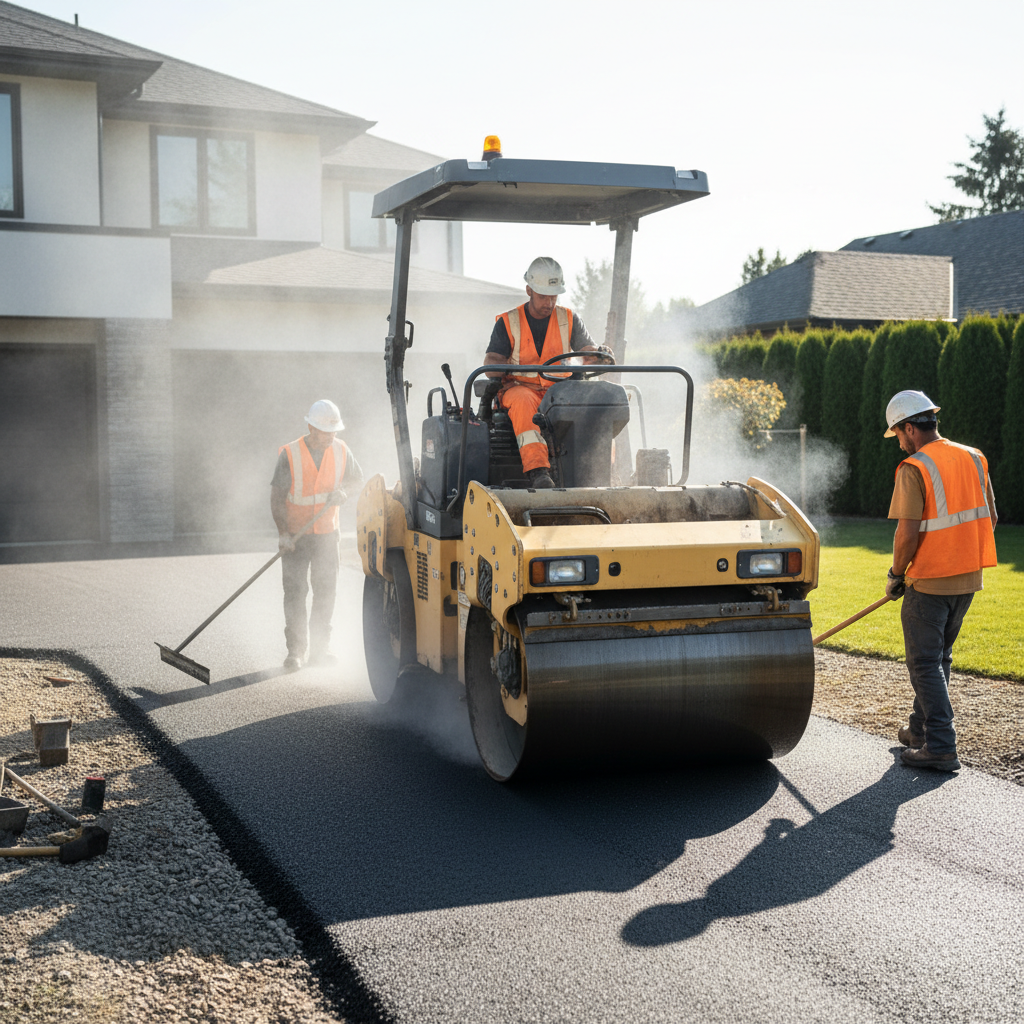
Driveway paving options and costs in Summerland
Summerland homeowners typically face the same trade-off: getting a driveway that looks sharp and stays solid through Interior freeze–thaw, while keeping costs under control. In Summerland’s housing stock, single-detached homes make up about 71.5% of dwellings, and with 82.4% of households owning their homes (Statistics Canada, 2021 Census), there’s a steady demand for private driveway work in neighbourhoods like Tesna’ábe/Erickson Flats and the broader Okanagan Lake-adjacent areas where access and drainage are top concerns. The Thompson–Okanagan region also drives pricing: repeated temperature swings stress pavements, and water management matters as much as the surface. Contractors in the area build thicker compacted granular sections than the minimums used for structures because paved surfaces experience higher moisture exposure and traffic loading. On top of that, the work season is tighter than on the coast, so mobilization and weather risk are priced into spring and summer schedules.
That’s why “same driveway, different contractor” can still come back with noticeably different totals—especially if one quote includes full base replacement, proper edge restraints, and future maintenance planning like asphalt sealing. Use the table below to sanity-check your budget across the main options you’ll see quoted in Summerland, from new asphalt installation to paver and concrete systems.
| Material |
Lifespan |
Maintenance |
Best For |
Price per sq ft |
| Asphalt (new installation, proper base) |
15–25 years |
Seal every 3–5 years; patch as needed |
Best balance of cost and durability in Interior climates |
$6.50–$11.00 |
| Asphalt (overlay on existing gravel base) |
12–20 years (depends on existing base) |
Seal every 3–5 years; more frequent patching if base is weak |
When the current base is sound but you want a paved upgrade |
$7.00–$12.00 |
| Interlocking concrete pavers |
25–30+ years |
Re-leveling joints if needed; weed control |
Curb appeal and easy localized repairs |
$12.00–$20.00 |
| Poured concrete (broom finish) |
25–30 years |
Seal selectively; monitor and address cracking |
Low-maintenance “set and forget” with good sub-grade prep |
$10.00–$18.00 |
| Exposed aggregate concrete |
25–30 years |
Seal every few years to reduce staining |
Decorative look with good skid resistance |
$12.00–$22.00 |
| Gravel / crushed stone (budget option) |
5–10 years |
Regrade and top up; weed control |
Short-term solution or very tight budgets |
$4.00–$7.00 |
Prices are estimates only and vary by project scope, site access and material selection.
What affects the price of paving in Summerland
In the Thompson–Okanagan and across British Columbia, it’s common to see the same driveway concept come back 30–50% apart. The biggest reasons aren’t “mystery markup”—they’re differences in excavation quantity, base depth, drainage corrections, disposal, and whether the asphalt or concrete mix is built for freeze–thaw performance. Even a driveway that looks level at the surface can hide clayey pockets or poor drainage that only show up when water freezes and expands, lifting joints or pumping fines. In Summerland’s freeze–thaw environment, frost-related movement pushes installers to use substantially more compacted granular base than coastal minimums.
Asphalt pricing also reflects the paving season reality. Hot-mix asphalt generally needs air temperatures above 10°C to place and compact properly, and Interior crews often run tight schedules to catch the drier weather window. That demand concentration can raise mobilization and weather-risk costs. Meanwhile, asphalt mix design matters—freeze–thaw-rated mixes and proper compaction are what help reduce early cracking and raveling, which is why quotes for new asphalt installation often land within the regional band of about $4,500 – $9,000 for typical residential driveways.
Concrete costs can move too: in Summerland, poorly draining sub-grade or a slope that funnels runoff toward the driveway can require more grading and heavier base stabilization, which nudges concrete toward the higher end of the $7,000 – $15,000 range. On the other hand, if you have solid base already and the drainage lines are clear, a thinner concrete option or a more efficient prep plan can keep costs closer to mid-band.
| Price Factor |
Why It Matters |
Cost Impact |
| Driveway area in sq ft |
Most materials and labour scale directly with surface area |
Often the largest portion of the budget |
| Base depth required |
Freeze–thaw movement drives the need for thicker compacted granular layers |
More excavation and base material; major cost swing |
| Grading and drainage work |
Proper slope and keeping water out prevents heaving and cracking |
Can add meaningful labour and material costs |
| Tear-out of existing surface |
Breaking and hauling concrete or old asphalt adds equipment time |
Usually increases cost substantially vs. “overlay” |
| Edge restraints and curbing |
Prevents pavers/asphalt from spreading and migrating under load |
More forms/rebar/base prep; cost increase but protects the finish |
| Sealing requirement |
Asphalt typically needs sealing after the first season to protect the binder |
Adds a planned maintenance cost over the years |
| Site access |
Narrow driveways slow equipment movement and increase handling |
Extra labour and possibly different equipment |
| Asphalt mix specifications |
Freeze-thaw-rated design and correct binder content improves longevity |
Higher material cost; often worth it in Interior conditions |
Permits & regulations in British Columbia
For paving a private driveway within your own property in British Columbia, a building permit is usually not required when you’re staying within your property lines and not altering major drainage systems. In Summerland, the permit conversation typically starts when your work touches the municipal interface—especially if you’re changing the curb/sidewalk area, building a new or modified curb cut, or altering how stormwater flows at the roadside. New curb cuts, changes to boulevard grading, or modifications to storm drainage commonly require municipal approval. Some municipalities also have lot-grading bylaws that restrict how close a hard surface or regrading can come to property lines and how runoff can be handled.
Before anyone digs, call for utility locates (in BC, use BC 1 Call). Confirm where water, gas, hydro, telecommunications, and any service lines run so you’re not surprised during excavation. Then verify your contractor properly:
- Licence/credentials: confirm they are legally able to contract in BC for the scope they’re doing.
- Liability insurance: request a certificate of insurance showing adequate limits and your property listed as applicable.
- Work coverage: confirm WCB coverage (or the equivalent provincial coverage status) before work starts.
- Clearance letter where applicable: some trades provide proof of clearance; ask for what’s relevant to their coverage.
Step one for homeowners: ask for these documents before signing anything, and don’t rely on a promise—get copies to review.
Asphalt vs pavers vs concrete for Summerland driveways
For Summerland’s freeze–thaw winters, base preparation and drainage design drive performance—more than the “surface name” alone. Asphalt usually offers the lowest upfront cost, but it needs planned sealing every 3–5 years to protect the binder from Interior moisture and temperature swings. Interlocking concrete pavers cost more at the start, yet they’re the most forgiving in the long run because damaged areas can be lifted, re-compacted, and reset without replacing the entire driveway. Poured concrete sits in the mid-range and can be very durable when correctly built, but it can still crack under freeze–thaw stress if joints, air entrainment, and sub-grade drainage aren’t done right.
In Thompson–Okanagan conditions, the driveway section typically needs a robust compacted base to reduce heaving and rutting. If you have drainage issues—common on sloped lots or where downspouts discharge toward the driveway—expect extra grading and more granular support, which moves the project toward the higher end of both asphalt and concrete pricing bands. For example, asphalt commonly ranges around $4,500 – $9,000, while interlocking pavers often fall around $6,500 – $14,000 in this tier. Spending toward pavers is most justified when you want curb appeal and you expect repairs later (utility access, localized settling, or you want the option to replace a section rather than the whole surface).
For winter maintenance, all three options can handle plowing and sanding, but salt use and freeze-thaw cycles are harder on unsealed asphalt and on concrete that’s not properly air-entrained. Pavers generally tolerate maintenance better because individual units and bedding layers are serviceable.
| Material |
Frost Resistance |
Curb Appeal |
Repair Method |
Lifespan |
Price Band |
| Asphalt (sealed regularly) |
Good when base is thick and sealed on schedule |
Medium |
Cut out and patch; seal after repairs |
15–25 years |
$4,500 – $9,000 |
| Interlocking concrete pavers |
Excellent with correct base and edge restraint |
High |
Lift/replace individual stones and re-sand |
25–30+ years |
$6,500 – $14,000 |
| Poured concrete (air-entrained) |
Good with air entrainment and proper joints |
Medium–High |
Crack repair/seal; panel patching if needed |
25–30 years |
$7,000 – $15,000 |
| Exposed aggregate concrete |
Good with the right mix and sealing plan |
Very High |
Localized surface repair/patching as required |
25–30 years |
$8,000 – $16,500 |
| Permeable pavers (drainage grid) |
Excellent where drainage control is prioritized |
High |
Reset bedding/surface units after maintenance |
20–30+ years |
$9,000 – $18,000 |
| Chip seal / tar-and-chip |
Fair—works best with good base and maintenance |
Low–Medium |
Spot repairs and re-coating over time |
7–12 years |
$3,500 – $7,500 |
How to choose a paving contractor in Summerland
Choosing the right contractor in Summerland is about proof, not promises. In British Columbia, you should verify that the company is properly licensed for the type of work they’re doing, carries liability insurance, and has the correct provincial work coverage in place. How to check: (1) ask for a current certificate of insurance and review that it’s active and includes your address where applicable; (2) confirm work coverage status and request a clearance letter if they typically provide it for their projects; and (3) verify their credentials through the appropriate online registries and compare the name to the one on the quote and invoice. If they can’t provide documentation quickly, that’s a red flag.
Get 2–3 written, itemised quotes rather than a lump sum. You want a labour + materials breakdown, and you want line items like excavation, base supply/compaction, drainage/grading, disposal, edge restraints, and (if asphalt) sealing after installation. Read the scope carefully: what’s excluded (rock removal, excess excavation, off-haul distances, repair of settled areas), and is permit pulling included if the job touches the municipal right-of-way? Ask whether disposal is included in the total.
Warranty matters too. Ask for workmanship warranty length, and confirm whether it covers labour only or also materials. Be cautious with “manufacturer warranty only.” Payment schedule should be conservative: never pay more than 10–15% upfront, and request a holdback until the job is complete and cleaned up. Finally, get a written start date and a completion estimate—Interior weather can compress schedules, but you should still have a clear plan.
- Ask for proof of insurance and confirm it’s current before work begins.
- Confirm work coverage status and request a clearance letter where applicable.
- Verify licensing/credentials that match the scope of paving and any excavation.
- Get 2–3 itemised quotes (excavation, base, drainage, surfacing, disposal).
- Make sure base depth and compaction requirements are stated in writing.
- Clarify drainage/grading scope (slope, swales, and where water will go).
- For asphalt, confirm sealing plan and timing (typically after initial cure).
- For pavers, confirm edge restraints and joint sand specs.
- For concrete, confirm air-entrainment and jointing plan (and where joints go).
- Confirm disposal/off-haul distance and whether rock removal is included.
- Agree on warranty terms: workmanship length, exclusions, and transferability.
- Use a payment schedule with a holdback until final completion and cleanup.
Red flags we see in Summerland: quotes that skip or understate base depth and compaction, contractors who can’t show insurance/coverage paperwork, “cheap” totals that exclude tear-out or disposal, vague scopes that don’t list sealing/jointing, and starting without a written timeline or clear warranty details.
Frequently asked questions — paving in Summerland
How long before I can drive on new asphalt?
In Summerland, you’ll typically be able to drive on new asphalt after it has cooled and compacted to a safe temperature—often the same day, depending on weather and mix type. Many crews recommend waiting until the next day for light vehicle traffic, and a longer wait for heavy vehicles. Your contractor should also explain whether there will be any tack coat and when sealing is planned. Since Interior freeze–thaw cycles are active for months, the early life of the pavement matters: avoid sharp turns, turning heavy loads, and parking on hot spots right after placement. If you’re budgeting maintenance, remember that sealing is usually scheduled after the first season, commonly every 3–5 years, which is part of staying within the expected asphalt service life.
What causes potholes and how are they repaired?
Potholes usually start when water gets into small voids—then freeze–thaw expands that moisture and breaks down the asphalt structure. In British Columbia’s Thompson–Okanagan climate, that process can repeat multiple times, especially where drainage is poor, the base is weak, or cracks weren’t sealed early. Repairs are not just “dumping asphalt”: the successful approach is cutting back to sound material, removing loose edges, cleaning and treating the area, then installing fresh asphalt to the right thickness and compacting it properly. If the damage is widespread, a contractor may recommend localized re-surface or a short section replacement rather than repeated patching. In some driveway scenarios, it’s more cost-effective to address the base/drainage first, even if the visible pothole looks small.
How do I prepare for a paving project?
Start by clearing the driveway and protecting anything that could be damaged by equipment—vehicles, landscaping, and sprinklers. If you have downspouts discharging toward the driveway, flag it for your contractor so they can confirm drainage adjustments during grading. Gather relevant site info too: any past utility work, known drainage issues, and whether the surface is asphalt, concrete, or gravel. In Summerland, winter and spring conditions can leave waterlogged areas, so don’t assume the base is fine under the top layer. Before excavation, ensure utility locates are completed (BC 1 Call) and ask how far they’ll haul spoil and how they’ll keep mud controlled. Finally, get your quotes and scope confirmed in writing—especially anything related to sealing (asphalt), jointing (concrete), or edge restraints (pavers).
How do I compare paving quotes fairly?
To compare quotes fairly in Summerland, compare like-for-like scope. Ask each contractor for itemised line items (excavation quantity, base depth, material specifications, compaction method, edge restraints/curbing, and disposal). For asphalt, confirm whether the quote includes full base preparation and a sealing plan (often after installation) instead of treating sealing as optional. For pavers, ensure the bedding layer and joint sand specs are included, and that the perimeter has restraint to prevent spreading. For concrete, confirm air entrainment and the jointing plan—these are major freeze–thaw cost controls. A quote can look cheaper by skipping base or drainage work, and then you’ll see premature cracking. As a quick reference for budgeting, typical asphalt driveway paving often lands around $4,500 – $9,000, while pavers commonly start around $6,500 – $14,000 depending on scope.
Can asphalt be laid in cold weather in Summerland?
Asphalt placement in Summerland should be planned around temperatures. Hot-mix asphalt generally requires air temperatures above about 10°C to place and compact correctly; if it’s too cold, you risk poor compaction and weak long-term performance. That’s a key issue in the Thompson–Okanagan because day-to-night temperature swings can be sharp, and moisture can return quickly. Contractors may still schedule work in borderline conditions, but it should be supported by their heating practices, mix design compliance, and a plan to protect the mat during cooling. If a contractor proposes paving late in the day when temperatures will drop below workable thresholds, ask how they’ll maintain compaction quality and whether they’ll adjust crew timing. The goal is to build a frost-resistant section that survives repeated freeze–thaw cycles, not just to finish quickly.
What is a driveway apron and do I need one in Summerland?
A driveway apron is the transition section at the driveway entry—often where the driveway meets a curb, sidewalk, or municipal roadway area. It’s used to create a smooth, durable connection, manage drainage, and reduce edge failure that can lead to raveling, cracking, or settlement at the entrance. Whether you “need” one depends on your existing conditions: if you have a curb cut, a steep entrance grade, or a spot where water flows toward the pavement edge, an apron can significantly improve longevity. In Summerland, if your work touches municipal right-of-way—like altering curb cuts or boulevard grading—municipal approval may be required, and an apron design may be part of what’s expected. Even when it’s within your property, discuss apron details with your contractor so you don’t end up with a weak transition after plowing and winter maintenance.