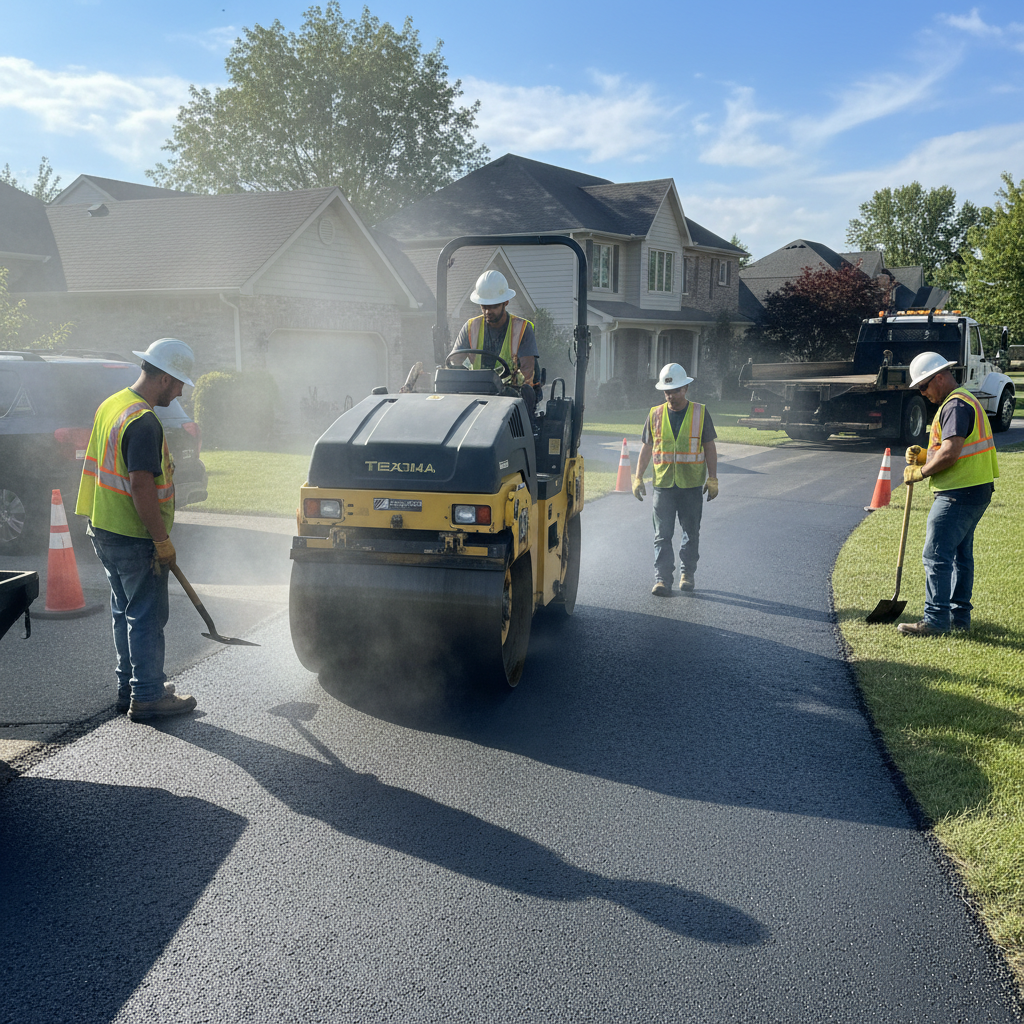
Driveway paving options and costs in Dunbar-Southlands
Dunbar-Southlands is a mature, residential neighbourhood where driveways are often established on tight parcels and long-standing grades. With a population of 21,245 in the area (Statistics Canada, 2021 Census), there’s steady demand from homeowners who want a clean, dependable surface that can handle our Lower Mainland–Southwest weather—heavy rain, frequent wetting of the base, and repeated moisture cycling through winter. Even though coastal BC has a relatively shallow frost penetration compared with Interior regions, local design and construction practice still assume freeze depth around sensitive infrastructure, so base preparation and drainage matter as much as the surface material. That focus is why you’ll see quotes in Dunbar-Southlands reflect careful excavation, compacted granular base, and proper drainage rather than “minimum depth” shortcuts.
In this part of Vancouver, projects are especially in demand around Dunbar Village and the surrounding residential blocks where vehicle access is common and curb lines are established. Pricing also responds to market capacity: in spring and early summer, crews can be booked out due to longer workable windows, while late-fall rain can delay jobs and push contractors to schedule around drainage and asphalt placement conditions. For most single-family driveways, you’ll typically plan around 6" of compacted granular base and about 2.5–3" of asphalt, with deeper excavation when soils are weak or saturated. Interlocking pavers generally start with roughly 6" base gravel plus bedding sand and then 2.5–3.5" of pavers, depending on load and edge restraint.
Use the table below as a realistic starting point for comparing options in Dunbar-Southlands before you request itemised quotes.
| Material |
Lifespan |
Maintenance |
Best For |
Price per sq ft |
Price Range |
| Asphalt (new installation, proper base) |
15–20 years |
Seal coat every 3–5 years |
Best value, smooth ride, quick installation |
$12–$20 |
$12 – $20 |
| Asphalt (overlay on existing gravel base) |
10–15 years (if base is sound) |
Seal coat every 3–5 years; monitor cracks |
Cost savings when existing base is verified |
$10–$17 |
$10 – $17 |
| Interlocking concrete pavers |
20–30 years |
Weed control, re-sanding as needed |
Curb appeal; repairs can be localised |
$20–$40 |
$20 – $40 |
| Poured concrete (broom finish) |
20–25 years |
Sealant as recommended; manage joints |
Low maintenance, tidy look, long straight runs |
$18–$35 |
$18 – $35 |
| Exposed aggregate concrete |
20–30 years |
Occasional cleaning; sealant as specified |
Slip resistance and premium finish |
$20–$38 |
$20 – $38 |
| Gravel / crushed stone (budget option) |
5–10 years |
Top-ups yearly; re-grade as needed |
Lowest upfront cost; temporary or rural driveways |
$6–$12 |
$6 – $12 |
Prices are estimates only and vary by project scope, site access and material selection.
What affects the price of paving in Dunbar-Southlands
In Dunbar-Southlands and across the Lower Mainland–Southwest, two contractors can quote the “same” driveway and still be 30–50% apart. The difference is usually not the asphalt or paver brand—it’s the hidden work that protects the surface: how much excavation is required, what the soil is like when it’s wet, how drainage is corrected, and whether the base is built to a thickness that survives our damp winters. Even though frost penetration on the coast is generally shallower than Interior or Northern BC, the region’s frost-line assumptions for sensitive construction still influence how deep the compacted granular base needs to go to reduce heaving and cracking.
Seasonality also changes pricing. Hot-mix asphalt is typically placed when air temperatures are above about 10°C, and heavy winter rains can compress workable windows in late fall and shoulder seasons. That creates scheduling pressure in spring/summer, and when crews are busy, accurate scheduling and logistics (delivery timing, crew availability, and equipment time) can add cost. Mix design matters too: freeze-thaw-rated asphalt in damp coastal conditions can cost more than generic mixes, but it helps manage moisture-related distress.
Concrete examples in Dunbar-Southlands that affect cost include: whether the contractor installs adequate base thickness and properly sequences joints (to control cracking), and whether the concrete is air-entrained for freeze-thaw durability. On pavers, cost rises quickly when curb lines require additional edge restraints or when drainage corrections demand extra regrading and underdrain work.
As a practical guide, many homeowners land in the mid-range of $12 – $20 per sq ft for asphalt when base prep is done correctly, while interlocking pavers often move into $20 – $40 per sq ft depending on excavation depth, restraints, and layout complexity.
| Price Factor |
Why It Matters |
Cost Impact |
| Driveway area in sq ft |
Most labour and material scale directly with surface area. |
Major driver; often 50–70% of the total. |
| Base depth required |
Freeze-thaw and wet subgrade performance depend on granular thickness and compaction. |
Minor change (1–2") can swing pricing noticeably. |
| Grading and drainage work |
Correct slope and drainage prevent ponding and base saturation. |
Can add significant cost if underdrains/haul-off are needed. |
| Tear-out of existing surface |
Breaking, disposal, and haul time are labour-intensive in tight lanes. |
Moderate to major depending on demolition scope. |
| Edge restraints and curbing |
Prevents paver spread and supports asphalt edges against washout. |
Usually moderate cost but essential for longevity. |
| Sealing requirement |
Asphalt performance depends on timely sealing to slow oxidation and moisture penetration. |
Adds periodic cost; impacts long-term value. |
| Site access |
Narrow lots and long equipment moves increase time and staging costs. |
Moderate; can become major for difficult access. |
| Asphalt mix specifications |
Freeze-thaw-rated mix design can cost more but improves durability in damp conditions. |
Moderate; reflects in higher per-ton pricing. |
Permits & regulations in British Columbia
In British Columbia, paving a private driveway within your own property usually does not require a building permit. In Dunbar-Southlands, most standard driveway replacement (tear-out of existing surface and rebuilding the driveway on the property side) is treated as private site work. However, you do need municipal approval when the work touches the municipal right-of-way—think new curb cuts, changes to the boulevard, or alterations that affect storm drainage or municipal drainage infrastructure.
Some municipalities also have lot-grading expectations or bylaws that restrict how close hard surfaces can be to property lines and how runoff is handled. Even when a permit isn’t required, your contractor should still confirm drainage direction and slope so you don’t end up with water running toward neighbouring foundations.
Before excavation, always have utilities located. In BC, call BC 1 Call (or use the relevant utility locate process) so services are marked prior to digging. This is essential for safe base installation and forms part of a reasonable job plan.
To verify a contractor in British Columbia, ask for: (1) their business registration/licence information and proof they are in good standing, (2) liability insurance with sufficient coverage for property damage, and (3) workers’ compensation coverage (WCB). For checks, look up the contractor via online business listings where available, review their certificate of insurance directly (ensure the certificate matches the company name), and confirm workers’ compensation coverage via the WCB clearance letter or equivalent proof they provide on request.
Asphalt vs pavers vs concrete for Dunbar-Southlands driveways
For Dunbar-Southlands driveways, the “best” material depends on how much you value upfront cost versus long-term flexibility and how the driveway drains during our rain-heavy winters. Asphalt typically has the lowest upfront cost and gives a smooth, uniform surface, but it needs sealing every 3–5 years to protect against oxidation and moisture effects. Interlocking concrete pavers have the highest upfront cost, yet they excel when you want a driveway that can be repaired locally—if a section settles or a utility line ever needs access, the pavers can be lifted and reset without replacing the entire surface.
Poured concrete sits in the middle on cost and can look crisp and permanent, but it’s more sensitive to freeze-thaw and to cracking if joints and base prep aren’t done correctly. In Lower Mainland–Southwest conditions, concrete that isn’t properly air-entrained and detailed for moisture will be more likely to show deterioration over time, especially where salt, sanding, or plowing impacts the surface. Across all three options, the real success factor is the base: installers commonly design around about 6" of compacted granular base for residential asphalt with additional excavation in weak or saturated soils, and they’ll match that philosophy for pavers with a similar granular foundation plus bedding sand. Drainage design—slope, subgrade moisture management, and keeping water from ponding—is what prevents rutting, heaving, and early cracking.
Here’s a simple pricing example: if your driveway is 600 sq ft and asphalt is quoted around $12 – $20 per sq ft, you might budget roughly $7,200–$12,000 for the asphalt surface and base work. A comparable paver install might come in around $20 – $40 per sq ft, or $12,000–$24,000; that extra cost is justified when you want higher curb appeal, better partial repairability, and a driveway that looks “fresh” for longer.
| Material |
Frost Resistance |
Curb Appeal |
Repair Method |
Lifespan |
Price Band |
| Asphalt (sealed regularly) |
Good with proper base and freeze-thaw-rated mix |
Medium (clean, smooth surface) |
Mill and overlay or patch (best when issues are local) |
15–20 years |
$12–$20 |
| Interlocking concrete pavers |
Excellent when edge restraint and bedding are correct |
High (wide style and colour choices) |
Lift-and-replace individual blocks |
20–30 years |
$20–$40 |
| Poured concrete (air-entrained) |
Good with air-entrainment and controlled joints |
Medium to High (varies by finish) |
Crack repairs or patching; full panels are harder to replace |
20–25 years |
$18–$35 |
| Exposed aggregate concrete |
Good when properly cured and sealed as needed |
High (texture and slip resistance) |
Patch and re-finish areas (colour matching can be imperfect) |
20–30 years |
$20–$38 |
| Permeable pavers (drainage grid) |
Very good for wet subgrades with the right drainage plan |
Medium to High (modern look) |
Lift-and-replace modules/units |
20+ years (system dependent) |
$24–$45 |
| Chip seal / tar-and-chip |
Moderate; surface holds up if maintained |
Low to Medium |
Re-chip or patch with maintenance cycles |
7–12 years |
$10–$18 |
How to choose a paving contractor in Dunbar-Southlands
Choosing the right contractor in Dunbar-Southlands starts with verification. In British Columbia, ask for their business details and proof of liability insurance—review the certificate of insurance and make sure it matches the company doing the work (not a different legal name). For coverage, confirm workers’ compensation coverage through their WCB clearance letter or equivalent proof. Also request proof they are insured for the scope you’re hiring for (excavation, hauling, concrete/asphalt placement). If they can’t provide documentation quickly, that’s a sign to keep shopping.
Next, get 2–3 itemised, written quotes instead of one lump-sum. A good quote breaks out labour and materials, and it lists scope items clearly: excavation depth, base thickness, compaction requirements, drainage corrections, disposal/haul-away, edge restraints, and the final surface thickness. Confirm whether permits (if any right-of-way work is involved) are included, and whether saw cutting/jointing or geotextile is part of the design when needed. Check what’s excluded—common omissions are disposal, utility locates, and any base build-up required after excavation reveals saturated subgrade.
Warranty matters too. Ask for the workmanship warranty length and whether it’s tied to surface issues (potholes/settlement) versus only material defects. Confirm if the product manufacturer warranty is included and whether it’s transferable to future owners if that matters to you.
For payment, don’t pay more than 10–15% upfront. Hold back a portion until completion and final cleanup. Finally, get a start date and completion estimate in writing—schedule delays in the Lower Mainland are real when rainfall affects base moisture and asphalt placement conditions.
- Ask for itemised quotes (labour + materials) and compare apples-to-apples scope.
- Request proof of liability insurance and confirm coverage amount matches your project risk.
- Verify WCB clearance letter / workers’ compensation proof before work begins.
- Confirm the base thickness (not just the surface thickness) and compaction method.
- Require a drainage plan: slope, ditch tie-ins, and ponding prevention measures.
- Check whether geotextile is specified for weak subgrade or clay-heavy spots.
- Confirm disposal/haul-away is included for tear-out materials.
- Verify edge restraints/curbing details—especially for pavers.
- Ask when the first seal coat for asphalt is scheduled (typically after proper curing).
- Get the warranty in writing: workmanship duration and what defects are covered.
- Confirm payment schedule and retainage (never pay full upfront).
- Ask for a site protection plan (tracking control, driveway access management, cleanup).
Concrete red flags in Dunbar-Southlands: contractors who won’t discuss base thickness and drainage; quotes that ignore tear-out/disposal details; vague timelines without weather contingencies; refusing to provide insurance/WCB proof; and offering a “too-good-to-be-true” price that assumes no saturated subgrade will be found after excavation.
Frequently asked questions — paving in Dunbar-Southlands
How much does driveway crack repair cost in Dunbar-Southlands?
In Dunbar-Southlands, crack repair typically costs from a small patch job up to partial surface rehab, depending on whether the crack is cosmetic or movement-related. For standard asphalt hairline cracking, homeowners often see minor patching and crack sealing priced in the general “sealing & repair” range of $2 – $6 per sq ft (or a minimum service call), while wider or actively moving cracks may require deeper patching that can raise the per-sq-ft figure. The key is inspection: in the Lower Mainland–Southwest, wetting and drainage issues can drive continued movement even when the crack “looks simple.” If water is ponding or the base is saturated, surface-only repair won’t last. A good contractor will check slopes, base condition after opening the crack, and then match the repair (seal + patch vs. saw-cut and re-lay sections).
What base thickness do I need for pavers in Dunbar-Southlands?
For paver driveways in Dunbar-Southlands, a common starting point is about 6" of compacted granular base, then bedding sand and the paver thickness (often 2.5–3.5"), adjusted for soil conditions. Even though coastal frost is relatively shallow, regional practice still accounts for freeze-thaw effects around a frost line assumption, and that means the granular layer and compaction matter. If your subgrade is clay-heavy or stays wet in winter, contractors typically excavate deeper and replace with suitable granular materials. Drainage corrections—proper slope and ensuring water doesn’t sit—can be just as important as the “number” on the base thickness. The most accurate approach is to excavate a test section or do a careful subgrade assessment so the contractor can confirm how much depth you actually need.
How do I get the most accurate paving quote in Dunbar-Southlands?
To get an accurate quote in Dunbar-Southlands, ask for an on-site assessment that includes verification of base conditions. Request an itemised estimate that states excavation depth, base thickness, type of granular material, compaction method, and whether drainage corrections are included. Bring photos of how the driveway performs in heavy rain—where water ponds, where it runs, and any areas that heave or rut. Also ask the contractor to confirm surface thickness (asphalt depth or paver thickness) and edge restraint details. If you’re replacing an existing driveway, ensure the quote includes tear-out, disposal/haul-away, and any subgrade repairs discovered after demolition. Finally, confirm timing: asphalt placement needs air temperature conditions, and rainy shoulder-season weather can affect scheduling and material curing.
How much does it cost to pave a driveway in Dunbar-Southlands?
Typical driveway paving costs in Dunbar-Southlands depend on material, area, and how much base and drainage work is required. For asphalt (new installation with proper base), the local price band you’ll commonly see is about $12 – $20 per sq ft. Interlocking pavers usually land around $20 – $40 per sq ft because of excavation, restraints, bedding sand, and material quantity. Concrete pricing often sits between $18 – $35 per sq ft for broom-finish to higher-end finishes depending on thickness and reinforcement details. If you only need crack sealing or small repairs, many homeowners budget in the $2 – $6 per sq ft “sealing & repair” range. Your best estimate comes from a quote that ties thickness and base prep to your soil and drainage conditions.
Asphalt vs interlocking pavers vs concrete — which is best in Dunbar-Southlands?
In British Columbia’s Lower Mainland–Southwest climate, all three can perform well when drainage and base compaction are done right, but they suit different priorities. Asphalt is often the best “value-per-dollar” option with the lowest upfront cost; it does require sealing every 3–5 years to maintain performance. Interlocking pavers are the best choice if curb appeal matters and you want the ability to repair only damaged sections without replacing the whole driveway—great for future utility access or localized settlement. Concrete can be excellent if it’s air-entrained and properly detailed with joints and base prep, but repairs to larger cracked areas can be more complex. If you want the simplest upkeep for a family schedule, asphalt or well-built concrete may fit; if you want long-term flexibility and appearance, pavers often win.
How long does a paved driveway last in Dunbar-Southlands?
With proper base construction and drainage, a paved driveway in Dunbar-Southlands commonly lasts 15–25 years depending on the material and maintenance habits. Asphalt typically ranges around 15–20 years when sealed regularly, while interlocking pavers often reach 20–30 years because individual units can be re-set if needed. Poured concrete generally targets about 20–25 years, with exposed aggregate sometimes extending similar or slightly longer life when cured and sealed appropriately. The biggest factor in our coastal freeze-thaw reality is not only frost—it’s moisture movement through the base during wet winters and freeze-thaw periods. If water ponds or the base becomes saturated, all materials can degrade sooner. That’s why “base-first” quotes and proper slope/drainage corrections are so important.