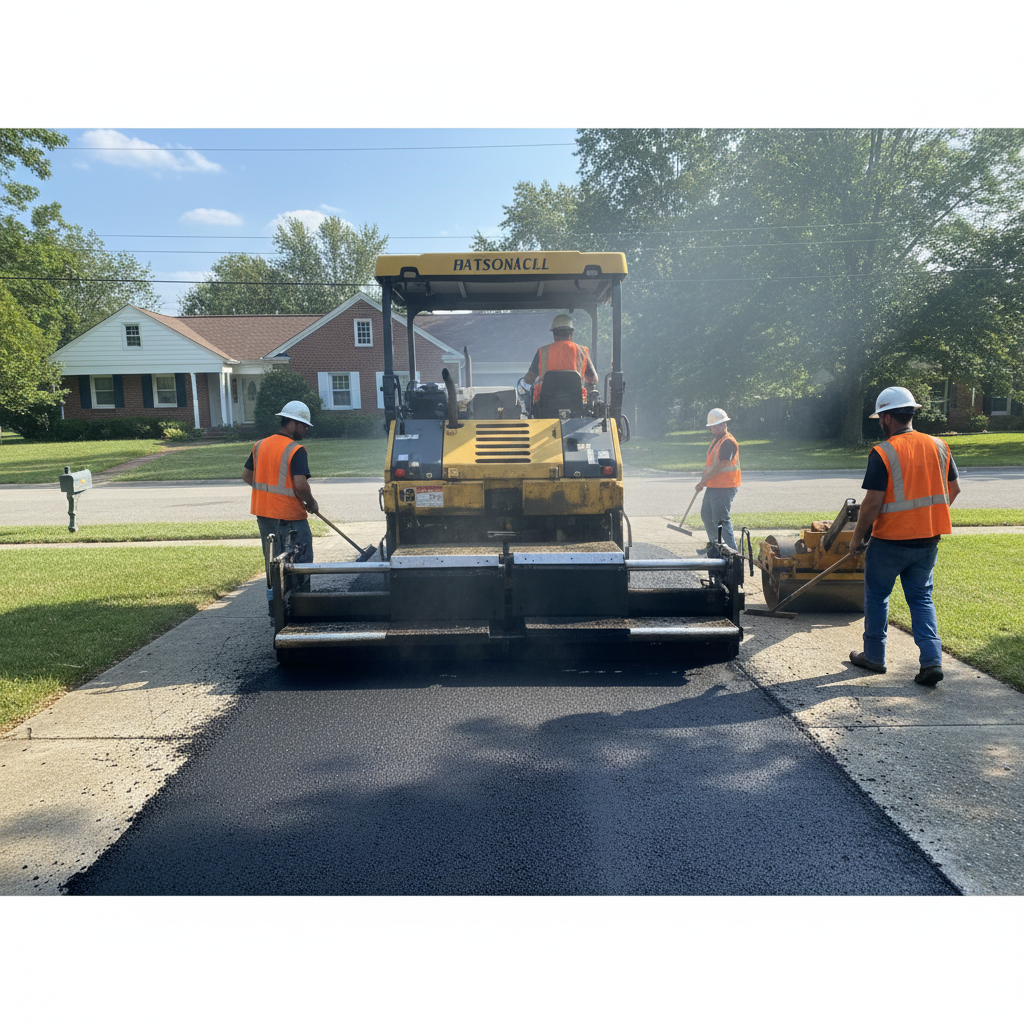
Driveway paving options and costs in Hope
Hope has a lot of driveways tied to detached homes, and with single-detached houses making up 74.0% of dwellings, most homeowners are planning a private driveway replacement or resurfacing at some point. That matters here because Hope’s housing stock is also fairly mature—about 48.0% of homes were built before 1981—so many projects start with older bases that need correction. In the Lower Mainland–Southwest, paving costs are shaped less by deep frost and more by intense rainfall, drainage design, and freeze–thaw movement near the shallow coastal frost line. Even though frost penetration is generally milder than Interior or Northern BC, the frost line assumed for good practice is still around 18 inches for exposed infrastructure, so proper granular thickness and compaction are what protect you from rutting and cracking.
In Hope, you’ll also see scheduling pressure in late spring and early summer. Hot-mix asphalt needs air temperatures typically above 10°C, and the region gets heavy shoulder-season storms. That weather pattern affects contractor availability and can shift labour and equipment mobilization costs. If your driveway drains poorly or sits in heavier clay pockets common in parts of the Fraser Valley, quotes can diverge quickly—sometimes by tens of dollars per square foot—based on base depth and drainage work.
For many homeowners near Hope North and along the main approaches where vehicles turn sharply, the “hidden” work (excavation, base, and edge restraints) is often where the value difference shows up. Use the comparison table below to anchor your budget before you request an itemized quote.
| Material |
Lifespan |
Maintenance |
Best For |
Price per sq ft |
| Asphalt (new installation, proper base) |
15–20 years |
Seal every 3–5 years |
Smoother, lower upfront cost; good value if drainage is corrected |
$12 – $20 |
| Asphalt (overlay on existing gravel base) |
10–15 years |
Seal every 3–5 years |
When the base is in solid shape and thickness correction is minimal |
$10 – $18 |
| Interlocking concrete pavers |
25–30 years |
Minimal; re-leveling of small areas as needed |
Curb appeal and repairability without full replacement |
$20 – $40 |
| Poured concrete (broom finish) |
25–30 years |
Seal occasionally if desired |
Flat, long-wearing surface with tidy finishing |
$18 – $35 |
| Exposed aggregate concrete |
25–30 years |
Seal periodically to maintain appearance |
High-end look with slip resistance |
$22 – $40 |
| Gravel / crushed stone (budget option) |
3–8 years |
Top up annually; re-grade as needed |
Temporary solution or very tight budgets |
$6 – $12 |
Prices are estimates only and vary by project scope, site access and material selection.
What affects the price of paving in Hope
In Hope and across the Lower Mainland–Southwest, you can see the same driveway quoted for noticeably different totals—often 30–50%—because paving isn’t just “laying asphalt.” Contractors price for what they must do to make the base stable and the surface stay flat under wet winters and spring runoff. In British Columbia, even when frost depth isn’t extreme like in colder provinces, the region still relies on a realistic frost line assumption for exposed work. That means the granular base and drainage have to be built to prevent heaving and cracking near the shallow freeze–thaw zone.
Quote comparisons also change because demand and scheduling pressures cluster around workable weather. Asphalt placement typically requires suitable air temperatures (commonly above 10°C). In colder regions, the paving season is tighter; in our milder coastal market the season is longer, but heavy rain and shoulder-season storms still compress usable windows. When a crew is booking late spring work tightly, mobilization and labour productivity can shift, which feeds into the per-square-foot price—whether you’re in a neighbourhood where driveways are longer or where access is tight for mini-excavation and dump trucks.
Concrete examples in Hope: (1) If your driveway ties into an existing curb line or storm outlet, drainage and apron transitions can push concrete projects toward the top end of the $18 – $35 band. (2) If your slab needs partial tear-out because settlement has already started—common in older (pre-1981) homes—expect higher disposal and replacement costs, not just material differences. (Statistics Canada, 2021 Census) shows Hope has 2,330 homeowner households, so contractors are busy and pricing often reflects how quickly crews can mobilize and how much base correction is required.
| Price Factor |
Why It Matters |
Cost Impact |
| Driveway area in sq ft |
Most material and labour scale directly with surface area |
Major driver (often 50–70% of total cost) |
| Base depth required |
Freeze–thaw movement near the frost line demands proper compacted granular thickness |
Higher base depth can add 10–30%+ |
| Grading and drainage work |
Improper slope or poor drainage accelerates rutting and cracking in wet winters |
Commonly adds 5–25% |
| Tear-out of existing surface |
Breaking, hauling and disposal raise labour and equipment time |
Often adds 10–35% |
| Edge restraints and curbing |
Edges stop pavers/asphalt from spreading and reduce washout |
Adds 3–15% depending on layout |
| Sealing requirement |
Asphalt needs sealing after curing (often within 6–12 months) to protect from water and oxidation |
Direct cost plus scheduling; usually 2–6% of job cost |
| Site access |
Narrow drives, slopes, and tight turns slow equipment movement and increase machine time |
Can add 5–20% |
| Asphalt mix specifications |
Freeze–thaw-rated mixes help durability in coastal wet conditions |
Small per-unit increase; total job can rise 2–10% |
Permits & regulations in British Columbia
In British Columbia, most private driveway paving done wholly within your own property typically does not require a building permit. That usually covers replacing asphalt or concrete on the existing driveway footprint, doing curb-to-drive transitions on your side of the lot line, and regrading within the confines of your property. However, work that affects municipal infrastructure often does require municipal approval. Common examples include creating or changing a driveway apron connection where it impacts the boulevard, modifying a curb cut, altering storm drainage, or changing how water flows into the municipal ditch system.
Step-by-step, here’s how a homeowner in Hope should verify contractor compliance: (1) Ask for the contractor’s British Columbia business details and confirm they’re properly registered to operate. (2) Request a clear Certificate of Insurance showing liability coverage that matches the job scale. (3) For workers, confirm coverage under the appropriate workplace insurance program for construction work (commonly referenced as WCB). Don’t rely on verbal confirmation—ask them to provide the certificate documents you can review before work starts. (4) Make sure the quote states who is pulling any required municipal approvals if your project touches the boulevard, and who is responsible for any drainage modifications.
Finally, verify any lot-grading rules with the municipality—some areas restrict how close a hard surface can be to property lines or how drainage must be handled. Utility locates are also essential: call before excavation so buried services are marked.
Asphalt vs pavers vs concrete for Hope driveways
For Hope homeowners, the “best” driveway material is usually a trade-off between upfront cost, appearance, and how repair-friendly you want the surface to be through wet winters. Asphalt is typically the lowest upfront option, and when it’s built on a well-compacted granular base and proper drainage, it performs very well in the Lower Mainland–Southwest. The catch is maintenance: plan on sealing every 3–5 years to protect the binder and keep water out of the system. Asphalt’s sensitivity to standing water is why base correction and grading matter more here than chasing extremely thick frost-depth numbers.
Interlocking concrete pavers usually cost the most up front (often aligning with the $20 – $40 band), but they’re the easiest to repair. If you ever have a localized settlement or a drainage issue, pavers can be lifted, the base fixed, and the surface rebuilt without replacing the whole driveway. That’s a strong fit for older homes in the region, where subsurface repairs are sometimes needed after the first few seasons. Poured concrete sits in the middle on price (often within the $18 – $35 band), looks crisp with a broom finish, and is durable, but freeze–thaw movement and surface cracking can still occur if the concrete isn’t air-entrained and the base isn’t engineered for drainage. De-icing salt and repeated freeze–thaw cycles can aggravate surface wear if the finish and mix aren’t right.
In practice, the option that holds up best to Hope’s winter maintenance routine is the one built on correct drainage and a stable base. If your driveway sees plow-style snow clearing and you tend to sand for traction, asphalt and concrete still work when properly sealed/finished. Here’s a simple cost justification example: if asphalt is quoted at about $12 – $20 per sq ft while pavers come in around the mid-to-high portion of $20 – $40, pavers can be worth it when curb appeal is a priority and you expect long-term repair flexibility rather than full resurfacing later.
| Material |
Frost Resistance |
Curb Appeal |
Repair Method |
Lifespan |
Price Band |
| Asphalt (sealed regularly) |
Good with correct base drainage and frost-aware mix |
Medium (clean blacktop look) |
Mill/patch or overlay sections |
15–20 years |
$12 – $20 |
| Interlocking concrete pavers |
Very good when edges and base are engineered |
High (varied colours/patterns) |
Lift-and-rebuild localized areas |
25–30 years |
$20 – $40 |
| Poured concrete (air-entrained) |
Good with air-entrained mix and joints/finish |
Medium-High (broom finish) |
Crack repair/seal; full replacement if extensive |
25–30 years |
$18 – $35 |
| Exposed aggregate concrete |
Good with correct air-entrainment and curing |
Very high (textured premium look) |
Localized patching; sometimes limited aesthetic matching |
25–30 years |
$22 – $40 |
| Permeable pavers (drainage grid) |
Very good for wet areas when designed correctly |
Medium-High (practical, modern look) |
Replace affected units or grid sections |
20–30 years |
$26 – $45 |
| Chip seal / tar-and-chip |
Moderate; depends heavily on base quality |
Low-Medium (textured finish) |
Spot repairs; periodic re-coating |
8–15 years |
$10 – $18 |
How to choose a paving contractor in Hope
Choosing a contractor in Hope comes down to documentation and clarity. Start with British Columbia coverage and credentials. Ask for (1) proof of liability insurance—request the Certificate of Insurance and confirm it covers driveway paving and the property value exposure. (2) Confirmation of workplace insurance coverage for workers (commonly referenced as WCB). In Canada, the easiest path is to ask for a copy of the relevant clearance/coverage document and confirm the company name matches the quote. (3) Verify they are a legitimate business by checking the company details and any online registry listings available to the public. If they can’t provide documents promptly, it’s usually a sign to keep looking.
Next, get 2–3 itemised written quotes. You want a breakdown that includes labour, excavation/tiered base (often 6 inches compacted granular base plus the specified asphalt thickness), compaction, disposal, and the surface course. Avoid quotes that are “all-in” without showing what’s included. Clarify exclusions: is permit approval included if the work touches the municipal boulevard? Is disposal included for old asphalt/concrete? Are edge restraints included for pavers? (Pavers without proper restraint often shift.)
Warranty matters, too. Ask for the workmanship warranty term (and what it covers), plus any manufacturer warranty on materials. Confirm whether the warranty is transferable if you sell your home. Payment schedule should be cautious: never pay more than about 10–15% upfront. Hold back a portion until the final surface is complete and cleaned up. Finally, require a start date and a realistic completion estimate in writing—especially in Hope where heavy rains can delay asphalt and concrete work.
- Request insurance and coverage documents before you sign anything.
- Confirm they’ll do utility locates before excavation.
- Insist on an itemized scope: excavation, base, compaction, thickness, and finishing.
- Check whether drainage corrections are included (grading/slope matters most).
- Ask what happens if the existing subbase is weaker than expected—who pays for extra base?
- Confirm disposal and tipping fees for tear-out.
- Ensure edge restraints are specified for pavers/asphalt transitions.
- Verify asphalt mix/design meets local freeze–thaw durability expectations.
- Ask for curing/seasonal constraints for asphalt and concrete placement.
- Get warranty details in writing (workmanship and materials).
- Agree on a payment schedule with a holdback until the job is complete.
- Require a written timeline with start and completion targets.
Red flags in Hope: contractors who won’t provide insurance/coverage paperwork, quotes that omit base thickness and drainage scope, “cash discount” offers that skip contracts or written scopes, promises to pour/place asphalt in unsuitable weather without scheduling flexibility, and no clear warranty terms (especially for workmanship and sealing timelines).
Frequently asked questions — paving in Hope
How do I compare paving quotes fairly?
To compare quotes fairly in Hope, ask for an itemized scope, not just a final number. Make sure the quotes specify base thickness and the work included for drainage and grading. For asphalt, confirm the planned asphalt thickness and that the contractor addresses the need for sealing within about 6–12 months after paving, then again every 3–5 years. For concrete, ask whether the mix is air-entrained and how they’ll handle joints and finish (especially with freeze–thaw movement near the shallow frost zone). Also compare tear-out/disposal and any edge restraints. If one quote includes disposal and the other doesn’t, the difference can look “too good to be true” even if the surface price is similar. Finally, check the warranty length for workmanship and whether the contractor names what triggers it.
Can asphalt be laid in cold weather in Hope?
Asphalt can sometimes be placed when temperatures are cooler, but in Hope you still need suitable conditions for proper compaction and curing. Asphalt placement commonly requires air temperatures around 10°C or higher (exact thresholds vary by mix and crew practice). If a contractor is pushing work into damp, cold, or windy conditions right before a rainy period, the surface can cool too quickly and won’t compact properly, which can lead to premature wear and early cracking. That’s why the “paving season” is more about workable weather windows than calendar dates in British Columbia. The safest approach is for you to confirm the planned start date and weather plan in writing and ask how they’ll manage curing time. If the job is delayed due to heavy rain, a reputable contractor should adjust the schedule—not compromise compaction quality.
What is a driveway apron and do I need one in Hope?
A driveway apron is the transition section that ties your driveway to the street/boulevard, typically around the curb line or the area where vehicles enter the roadway. In Hope, whether you need an apron depends on what exists today and whether your project changes the connection—especially if you’re altering a curb cut or changing how water drains from the property into municipal systems. Work that affects the municipal right-of-way (like a new or modified curb cut or drainage changes) usually needs municipal approval, even though work entirely within your own property typically does not. Ask your contractor whether they’re planning a “tie-in” at the boulevard and whether permits/approvals are included. A good apron also helps control erosion and reduces the chance of edge failures where water pools during intense rainfall.
How do I maintain my driveway through Hope winters?
Winter maintenance in Hope is mostly about controlling water and avoiding damage to the surface. For asphalt, keep on top of sealing schedules—sealing is often the key protection step before winter starts. Use sand or gravel for traction rather than aggressive de-icing methods that can accelerate surface wear over time. When snow clearing, try to avoid scraping the surface with metal edges; light contact is usually fine, but repeated gouging can create raveling. If you notice soft spots or water pooling after storms, don’t just patch the asphalt—ask about drainage and base performance because wet soils and freeze–thaw movement near the shallow frost zone can cause localized failure. For concrete, protect joints and avoid stacking heavy plough loads at the same spot repeatedly. In older housing areas (pre-1981), base settlement can show up early, so address movement quickly.
Is it worth sealing a new driveway right away in Hope?
In most cases, it’s worth sealing asphalt, but “right away” needs clarification. Asphalt typically needs time to cure so the surface can properly accept the sealer; that’s why many contractors plan sealing after the driveway has cured—often within about 6–12 months after installation—then every 3–5 years depending on traffic and rainfall exposure. In Hope’s wet winters, early sealing helps reduce water penetration that contributes to softening and base movement. Sealing also supports appearance and can slow oxidation, which is especially relevant on long driveways where water has more time to sit. Costs for sealing/repair commonly fall in the $2 – $6 range for related repair/sealing items depending on the product and scope, but the bigger value is prevention. Ask your contractor for their sealing plan and product type, plus the expected timeline for curing.
What is a chip seal driveway and is it suited to Hope?
Chip seal (also called tar-and-chip) is an asphalt binder sprayed onto a prepared surface, followed by stone chips that lock in and create a textured wearing course. It can be suited to Hope when it’s built on a stable base and drainage is handled correctly, because wet conditions and freeze–thaw movement still need a well-engineered structure underneath. The trade-off is appearance and long-term smoothness: chip seal generally requires more periodic maintenance than dense asphalt, and stone can loosen if the base isn’t compacted properly. For some properties, it’s a budget-friendly option aligned with the lower end of the paving price bands, but it’s not always the best match for driveways where you want a clean finish for everyday use. If you’re considering chip seal, ask for the base build-up thickness and whether edge restraints are included to prevent stone migration after rain events.