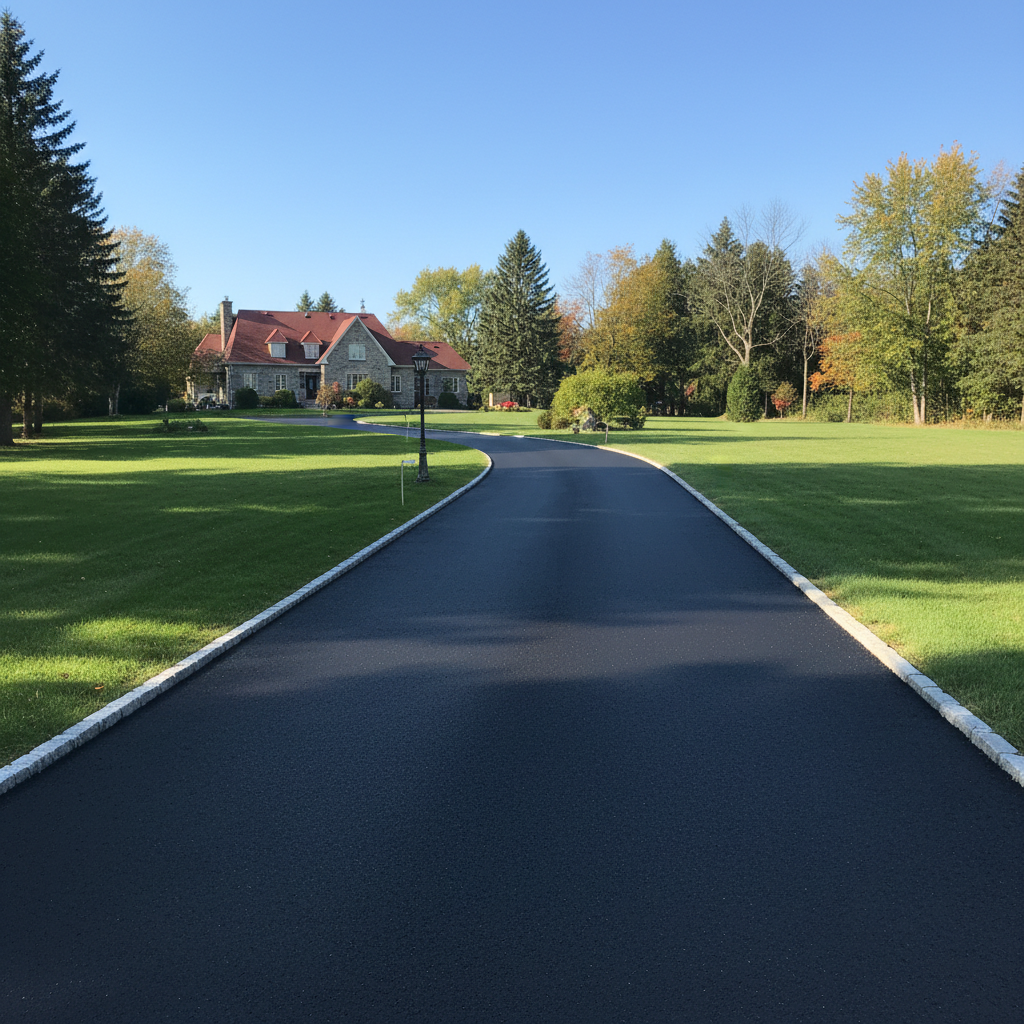
Driveway paving options and costs in Sapperton
Sapperton is a busy, mostly residential area in the Lower Mainland, and most driveway work here is tied to detached and townhouse-style properties where vehicle access is a daily need. In the 2021 Census, the Census profile shows Sapperton has a population of 6,327 (Statistics Canada, 2021 Census), and that concentration of local homes is why contractors often stay booked through the spring paving rush. Lower Mainland–Southwest pricing is shaped less by deep winter frost than by intense rainfall, drainage performance, and the way water moves through clay-heavy soils in parts of the Fraser Valley. Even with a relatively shallow coastal freeze line, good base design still matters because freeze–thaw near the assumed frost depth can cause heave, rutting, and edge failure if excavation, compaction, and slope aren’t right.
In practice, residential asphalt driveways in Sapperton are commonly built with roughly 6" of compacted granular base plus 2.5–3" of asphalt, while interlocking pavers typically use about 6" of base gravel with bedding sand and 2.5–3.5" pavers. Areas of especially strong demand tend to be around Edmonds/20th Avenue and the older lanes where lots are tighter and drainage problems show up first at the driveway edges. Contractors can also price differently depending on whether you’re doing new install versus an overlay, and whether curb/edge restraints are needed.
The table below compares typical lifespans, maintenance, and realistic price ranges for Sapperton homeowners, so you can line up quotes against apples-to-apples scope before you sign.
| Material |
Lifespan |
Maintenance |
Best For |
Price per sq ft |
| Asphalt (new installation, proper base) |
12–20 years |
Sealcoat every 3–5 years; patch as needed |
Balanced cost and durability on well-drained bases |
$12 – $20 |
| Asphalt (overlay on existing gravel base) |
8–14 years |
Sealcoat every 3–5 years; monitor for edge separation |
When you have a sound, properly graded foundation |
$10 – $18 |
| Interlocking concrete pavers |
25+ years |
Replace individual stones; re-sand joints as needed |
Repairability, curb appeal, and water-friendly detailing |
$20 – $40 |
| Poured concrete (broom finish) |
20–30 years |
Light cleaning; seal if desired; crack repair as required |
Low-maintenance, clean lines, and straightforward structure |
$18 – $35 |
| Exposed aggregate concrete |
20–30 years |
Seal periodically; repair spalls as needed |
Slip-resistant texture and premium appearance |
$22 – $40 |
| Gravel / crushed stone (budget option) |
3–8 years |
Top up and re-grade as rutting occurs |
Temporary solution or low-budget staging |
$6 – $12 |
Prices are estimates only and vary by project scope, site access and material selection.
What affects the price of paving in Sapperton
Even when two homeowners are paving the “same” driveway size, quotes across the Lower Mainland–Southwest and the wider British Columbia market can land 30–50% apart. The difference usually isn’t the asphalt or pavers themselves—it’s the depth and quality of the base, how much drainage/grading work is required, and how difficult the site is to excavate and compact. Where labour is tight and crews are mobilizing during the busiest season, contractors may also schedule heavier work earlier (or charge more for urgent turnarounds).
In this region, frost line depth and freeze–thaw cycles still drive base thickness choices. While coastal BC typically needs less granular thickness than Ontario/Alberta, workmanship in Sapperton still commonly follows a frost-line assumption of roughly 18" for exposed applications, so the granular base and subgrade preparation must be engineered to prevent heaving and cracking. Asphalt mix design also needs to meet freeze–thaw expectations, and the cost of higher-performance mix can show up as a few dollars per square foot.
Concrete pricing can swing based on whether you need thicker sections, expansion joints, and whether rebar/mesh and proper air-entrainment are specified. For example, a driveway that drains poorly often costs more than expected: correcting ponding can require extra excavation, replacing saturated clay, and adding a better slope before any finish goes down. Conversely, if your existing surface is structurally sound and properly drained, an asphalt overlay can reduce excavation and haul-away costs compared with full tear-out, especially when you’re staying within typical price bands like $12–$20 per sq ft for asphalt and $18–$35 per sq ft for concrete.
In older Sapperton homes, driveways may have been built on limited granular depth years ago. That can mean you pay to get back to modern base standards, and the “hidden” cost can show up as an extra 2–4" of base materials plus extended compaction time—often the main driver behind quote differences.
| Price Factor |
Why It Matters |
Cost Impact |
| Driveway area in sq ft |
Most items (base, asphalt, pavers) scale directly with square footage |
Major—often 50–70% of total variation |
| Base depth required |
Frost-line performance depends on compacted granular thickness and subgrade stability |
Major—extra inches can add $2–$6+ per sq ft |
| Grading and drainage work |
Slope corrections and drainage detailing prevent ponding and edge failure |
Medium–major—commonly adds $500–$2,000+ |
| Tear-out of existing surface |
Breaking and hauling asphalt or concrete increases labour and disposal costs |
Medium—often $800–$3,000+ |
| Edge restraints and curbing |
Prevents paver spread, asphalt raveling, and migration after wet winters |
Medium—can add $250–$1,500 |
| Sealing requirement |
Asphalt needs sealing after cure (commonly 6–12 months) to slow oxidation |
Low–medium—typically $2–$6 per sq ft for the added work |
| Site access |
Narrow lanes and limited turning radius slow equipment movement |
Medium—can increase labour and truck counts by 10–25% |
| Asphalt mix specifications |
Freeze–thaw-rated mix and binder selection improve long-term durability |
Low–medium—often $1–$4 per sq ft |
Permits & regulations in British Columbia
In British Columbia, paving a private driveway within your own property usually does not require a building permit. However, you may need municipal approval when the work affects the public interface—especially the municipal right-of-way. That includes installing or changing a curb cut, altering boulevard areas, changing storm drainage connections, or making modifications that change how runoff is handled. Some municipalities also have lot-grading rules (and enforcement practices) that restrict how close hard surfaces can sit to property lines or how drainage is managed across the lot.
For a Sapperton homeowner, the practical steps are straightforward. First, before excavation, always request utility locates through the BC call system (BC 1 Call). Next, confirm whether your plan touches the boulevard or right-of-way (this is usually where approvals apply), and ask the municipality whether any lot-grading form or inspection is required before base placement. If you’re unsure, your contractor should be able to indicate whether the job is “in-plot only” or involves right-of-way work.
To protect yourself, verify the contractor’s credentials before scheduling. Ask for their BC business licence details, then request a certificate of insurance showing general liability for the project and specific coverage limits. For worker coverage, confirm they carry WSBC coverage (Workers’ Compensation). Many firms can provide a clearance letter on request. Also check their online registry listing (contractor/business profile pages) to ensure the company and principals match the proposal and that coverage is active before work starts.
Asphalt vs pavers vs concrete for Sapperton driveways
For Sapperton homeowners, the “best” driveway material comes down to how you want to balance upfront cost, curb appearance, and how repairs are handled after wet winters. Asphalt is usually the lowest upfront option and performs well when it’s built on a properly compacted granular base (commonly around 6" base and 2.5–3" asphalt for standard residential drives). The trade-off is maintenance: sealing every 3–5 years helps the binder resist moisture and surface wear, and spot patching is expected in high-traffic wheel paths.
Interlocking concrete pavers cost more to install, but they’re highly repairable—individual units can be lifted, base can be corrected, and the area can be reset without replacing the full surface. That matters in the Lower Mainland–Southwest, where drainage and water management are often the difference between long-term success and early edge failure. Pavers also deliver strong curb appeal, which is why you’ll see them frequently in well-kept lanes near older neighbourhood pockets in Sapperton.
Poured concrete sits in the middle for cost and appearance. If it’s correctly air-entrained and detailed with proper joints, it can last decades. Still, concrete can crack as expected with freeze–thaw and minor subgrade movement, and de-icing salts plus freeze cycles can worsen surface wear if the mix and finish aren’t right. With typical Lower Mainland winter maintenance (light salting and plowing/clearing by residents), asphalt and concrete both benefit from good drainage and sealing/curing discipline.
Real pricing shows where differences are justified. For example, if your budget targets asphalt at about $12 – $20 per sq ft, pavers can land closer to $20 – $40 per sq ft; that premium is often worth it when you expect future drainage adjustments, want the easiest localized repairs, or care most about curb appeal and reusability of units.
| Material |
Frost Resistance |
Curb Appeal |
Repair Method |
Lifespan |
Price Band |
| Asphalt (sealed regularly) |
Good with proper base and freeze–thaw-rated mix |
Medium (clean black finish, limited colour options) |
Cut-and-patch for local failures |
12–20 years |
$12 – $20 |
| Interlocking concrete pavers |
Very good; flexible surface over stable base |
High (varied patterns and edging) |
Remove and replace individual units |
25+ years |
$20 – $40 |
| Poured concrete (air-entrained) |
Good if air-entrained and jointed correctly |
Medium (broom finish / decorative options) |
Crack repair and surface patches |
20–30 years |
$18 – $35 |
| Exposed aggregate concrete |
Good with air-entrainment and sealing |
High (textured, premium look) |
Localized surface patching |
20–30 years |
$22 – $40 |
| Permeable pavers (drainage grid) |
Very good when designed for local drainage |
Medium–high (technical detailing) |
Lift/replace affected sections |
20+ years (with proper maintenance) |
$28 – $48 |
| Chip seal / tar-and-chip |
Fair to good; depends heavily on prep and layer control |
Low–medium (more utilitarian look) |
Re-spray/re-layer where failures occur |
6–12 years |
$8 – $15 |
How to choose a paving contractor in Sapperton
Choosing a contractor is where you win or lose the outcome in Sapperton. Start by verifying they operate legally and carry the right protection. In British Columbia, confirm the company’s business registration details and ask for a certificate of insurance (general liability) that names you as the additional insured where applicable. For worker protection, request confirmation of WSBC coverage (workers’ compensation) and, if possible, a clearance letter showing it’s active for the current period. Never rely on “we’re covered” without paperwork—ask to see documents before work begins.
Next, get 2–3 itemised written quotes. You want a labour + materials breakdown (excavation, granular base, compaction, asphalt thickness, paver base and restraints, concrete thickness, joints, finishing, and disposal). A true apples-to-apples quote also lists what’s included: permit pull (if required), utility locating coordination, haul-away of old material, whether edges/curbs are rebuilt, and how drainage issues are addressed. A lot of disputes come from exclusions like “unstable subgrade” or “extra excavation if we find soft clay.”
Ask about warranty terms. A workmanship warranty should be clearly stated (often covering installation defects for a set period). Distinguish it from the manufacturer’s product warranty (the material’s coverage) and whether warranty is transferable to future owners if you sell.
Payment schedule matters. Don’t pay more than 10–15% upfront. Use a holdback until key milestones are completed (base inspection, final grade verification, and finishing). Finally, lock the timeline in writing—start date and completion estimate—because weather windows for asphalt and curing schedules for concrete are real planning constraints in the Lower Mainland.
- Verify WSBC clearance/coverage and ask for a clearance letter (not just a policy number).
- Provide a current certificate of insurance with adequate limits for paving and excavation.
- Confirm who will be on-site (crew lead) and their experience with drainage-focused prep.
- Use itemised quotes: separate excavation/base/compaction from surface materials.
- Require a written scope stating inclusions and exclusions (disposal, subgrade conditions).
- Ask for thickness specs: granular depth, asphalt inches, concrete thickness and finish.
- Confirm edge details: restraints/curbs for pavers; proper tie-ins for asphalt.
- Get a drainage plan in writing if the area ponds or is on a low spot.
- Request soil/base assumptions and what happens if saturated clay is found.
- Check warranty length and whether workmanship coverage covers labour for repairs.
- Agree on payment milestones; limit upfront to 10–15% and keep a holdback.
- Ask for a schedule: start date, cure/seasonal constraints, and final completion date.
In Sapperton, red flags include: quotes that omit base thickness and compaction requirements, “we’ll figure it out later” language about drainage, paying most of the job upfront, no written warranty for workmanship, and crews that won’t show you before/after grading details or compaction plans before paving begins.
Frequently asked questions — paving in Sapperton
What base thickness do I need for pavers in Sapperton?
In Sapperton, the safe starting point for interlocking pavers is typically about 6" of compacted granular base, with bedding sand and proper edge restraints. The exact thickness can increase if your soil is weak or if excavation reveals saturated clay—Lower Mainland rainfall and occasional wet seasons can soften subgrades even when frost is shallow. The goal is a stable, well-drained foundation that prevents settlement and joint washout. A good contractor should assess your site, confirm the slope, and describe what they’ll do if they encounter unsuitable material. If you’re replacing an old driveway, expect tear-out and base reconstruction where needed rather than trying to “pave over” unknown conditions.
How do I get the most accurate paving quote in Sapperton?
For the most accurate quote in Sapperton, request an on-site visit so the contractor can measure square footage, check drainage, and inspect the existing base/subgrade before pricing. Ask for an itemised breakdown (excavation, granular base, compaction, asphalt thickness or concrete thickness, restraints/edging, and disposal). Make sure the quote specifies whether it’s new installation or an overlay—this alone can swing costs significantly. Also ask how they handle unstable soils: will they replace saturated clay, and is that included or extra? Finally, align maintenance expectations: for asphalt, ask when sealcoat is planned, since sealing is commonly done after cure (often 6–12 months) and affects long-term performance.
How much does it cost to pave a driveway in Sapperton?
In Sapperton, typical driveway paving budgets fall into the local price bands for the Lower Mainland–Southwest. Asphalt driveway paving commonly comes in around $12 – $20 per sq ft depending on base preparation and whether it’s new installation or a limited overlay. Interlocking concrete pavers are usually higher, often $20 – $40 per sq ft, reflecting restraints, base work, and the surface system. Concrete driveways often land in the $18 – $35 per sq ft range depending on thickness, finish (broom vs exposed aggregate), and jointing. If drainage corrections are needed, those can add meaningful cost, but that work is what prevents early cracking or edge failures.
Asphalt vs interlocking pavers vs concrete — which is best in Sapperton?
There isn’t one “best” for every Sapperton driveway—each material matches different priorities. Asphalt is often best for homeowners who want the lowest upfront cost and can plan on regular sealing; it typically performs well when base and drainage are done correctly. Interlocking pavers are a strong choice when you want curb appeal and the ability to repair localized problems without replacing the whole driveway—especially useful where wet winters have caused edge settlement. Poured concrete can be a good mid-range option if it’s air-entrained and properly jointed, but cracking risk increases if the subgrade shifts or if drainage is poor. If your lot has drainage challenges or you expect future grading changes, pavers often hold up better with practical repairs.
How long does a paved driveway last in Sapperton?
With proper base preparation and drainage, asphalt driveways in Sapperton often last around 12–20 years, with sealcoating every 3–5 years helping protect the binder and surface. Interlocking pavers typically last 25+ years because individual units can be replaced if needed, which is a big advantage after wet-season performance issues. Poured concrete commonly lasts 20–30 years when air-entrainment, thickness, and jointing are correct. Lifespan isn’t only material—it’s tied to site conditions. If your driveway ponds, sits on weak clay, or lacks edge restraints, you can lose service life early due to settlement and freeze–thaw-related movement near the frost line assumption used in regional practice.
When is the best time of year to pave in Sapperton?
For Sapperton, the “best” time generally means late spring through summer when crews can keep production steady and surfaces can be placed and compacted in suitable conditions. Asphalt work needs air temperatures typically above 10°C for proper installation, and it’s also easier to manage drainage and compaction when soils aren’t saturated. Heavy winter rains and shoulder-season storms can compress workable windows, so projects booked for early spring can face delays. Concrete paving is more forgiving, but it still requires attention to curing conditions and weather exposure. If you want the smoothest scheduling, plan around the driest stretch of the year and confirm a written timeline with your contractor.