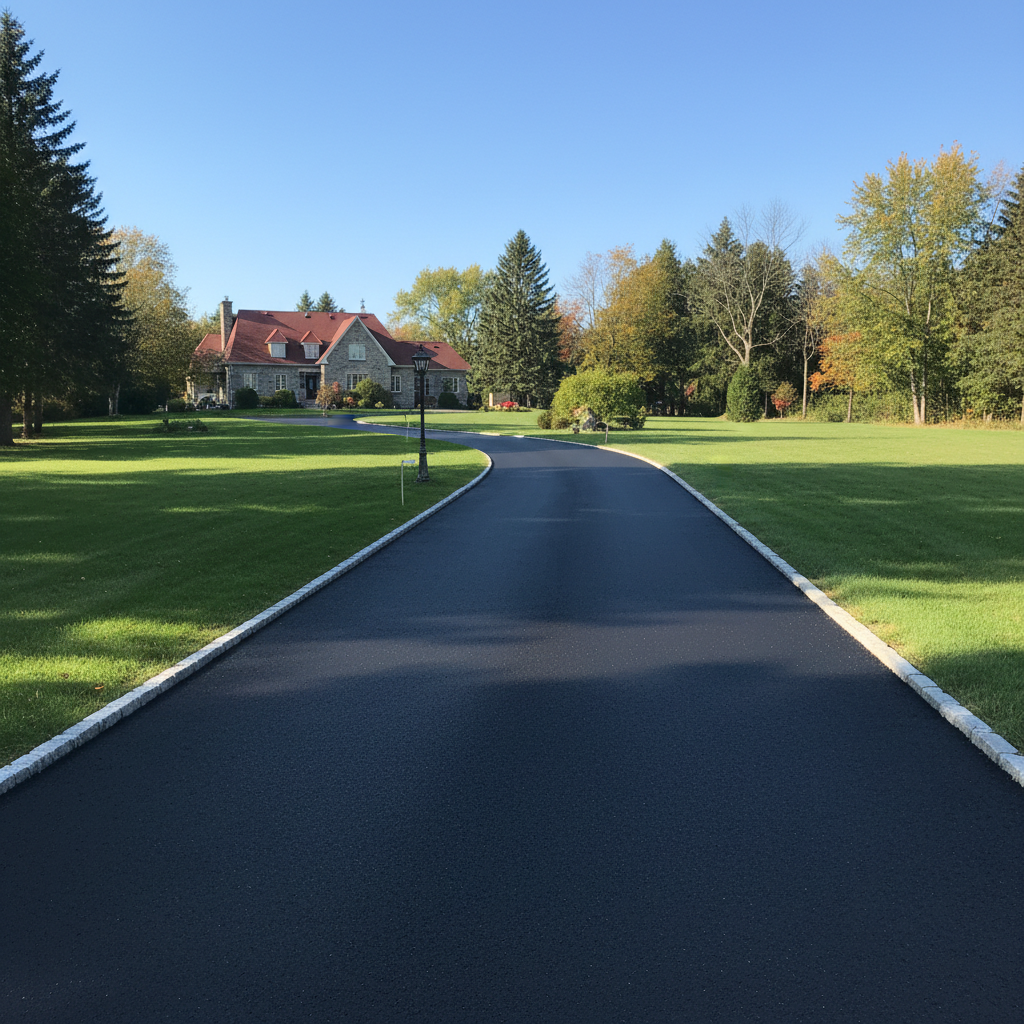
Driveway paving options and costs in Brookswood
Brookswood, in the Lower Mainland–Southwest, is a popular place for homeowners who want a driveway that looks sharp and handles wet winters well. With a total population of 13,336 (Statistics Canada, 2021 Census), there’s steady demand for both asphalt and hard-surface upgrades, especially where detached homes make up a large share of the neighbourhood housing stock. In practice, that means lots of driveways need dependable base prep, proper drainage, and a surface thickness that can stand up to frequent storms and long shoulder seasons.
In Brookswood, pricing is shaped less by deep Arctic freeze and more by intense rainfall, saturated soils, and the freeze–thaw band around the shallow frost line assumed in regional practice. Contractors plan excavations and granular base thickness to reduce heaving, rutting, and pavement movement, particularly in clay-heavy pockets of the Fraser Valley. The good news is the paving season is longer than in colder parts of Canada, but winter rain still compresses workable windows, and scheduling often tightens between late spring and early fall.
One area where we commonly see paving crews booked ahead is the Brookswood-Fernridge area, where lots of older driveways need drainage corrections before an overlay or full rebuild. From there, the choice usually comes down to asphalt for lowest upfront cost, pavers for curb appeal and easy repairs, or concrete for a longer, rigid surface—each with different base requirements and maintenance.
Use the table below to compare typical materials for a properly built driveway in Brookswood, then we can narrow it to your driveway size, access, and base condition.
| Material |
Lifespan |
Maintenance |
Best For |
Price per sq ft |
| Asphalt (new installation, proper base) |
15–25 years |
Seal every 3–5 years after installation window |
Value, smooth ride, quick turnaround |
$12–$20 |
| Asphalt (overlay on existing gravel base) |
10–18 years |
Seal within 6–12 months; re-evaluate after heavy winters |
When existing base is sound and excavation needs to be minimized |
$10–$16 |
| Interlocking concrete pavers |
25–35 years |
Spot repairs as needed; occasional leveling of minor edge settlement |
High curb appeal and repairs without full replacement |
$20–$40 |
| Poured concrete (broom finish) |
20–30 years |
Limited sealing; monitor for hairline cracking |
Straightforward, long-lasting rigid surface |
$18–$35 |
| Exposed aggregate concrete |
20–30 years |
Typically minor sealing; keep drainage maintained |
Slip resistance and decorative look |
$22–$40 |
| Gravel / crushed stone (budget option) |
5–10 years |
Top-ups and regrading; weed control |
Short-term solution or where drainage needs time to stabilize |
$6–$12 |
Prices are estimates only and vary by project scope, site access and material selection.
What affects the price of paving in Brookswood
Two quotes for the “same” driveway in Brookswood can legitimately differ by 30–50% across the Lower Mainland–Southwest and the rest of British Columbia. The biggest swing factors are site conditions (how much excavation and disposal is needed), base and drainage requirements, and the contractor’s scheduling cost in a wetter season. In the Lower Mainland, crews also price in longer hauling distances for materials on certain weekdays, plus the reality that wet weather can force pauses that still cost money to crew and equipment.
Frost line depth and freeze–thaw cycles are decisive cost factors in coastal BC, even though deep frost is usually not like Interior or Northern regions. Regional practice assumes a frost line on the order of 18" for sensitive infrastructure, so exposed driveways still require granular base built to resist movement—typically not the “thin” bases you sometimes see on budget jobs. When the base is too shallow, repeated movement around that band can show up as heaving, edge breakdown, and cracking that forces expensive partial or full repairs later.
Concrete examples: a driveway with poor slope to the street can increase labour for drainage grading and sub-drain work, pushing costs upward even if the material is mid-range like the $18–$35 concrete band. Conversely, if your existing asphalt is still strong and you only need a thin overlay, you may stay closer to the lower end of the $12–$20 asphalt range—provided the base isn’t saturated or pumping.
Asphalt mix design matters too; freeze–thaw-rated mixes cost more than basic mixes. In older Brookswood lots with clay-heavy soils, we often need deeper compacted granular base and more controlled drainage, which is why the “prep” line item can be the difference between staying in the mid-range and landing at the top of the band.
| Price Factor |
Why It Matters |
Cost Impact |
| Driveway area in sq ft |
Labour, asphalt/concrete volume, and base quantities scale with area |
Highest impact; often determines 50–70% of total cost |
| Base depth required |
Frost movement control relies on granular thickness and compaction |
Moderate to high; deeper bases add excavation and material |
| Grading and drainage work |
Correct slope and outlet locations prevent saturation and edge failure |
High when drainage corrections or sub-drain are needed |
| Tear-out of existing surface |
Breaking, hauling, and disposal time varies with thickness and access |
Moderate to high; can add significant equipment costs |
| Edge restraints and curbing |
Prevents paver spread and asphalt edge raveling |
Moderate; materials and extra labour for proper install |
| Sealing requirement |
Asphalt sealcoat protects binder from rain and UV; timing affects performance |
Low to moderate; impacts total lifecycle cost |
| Site access |
Narrow driveways slow skid steer and compaction routing |
Moderate; can increase labour hours per sq ft |
| Asphalt mix specifications |
Freeze–thaw-rated mixes improve durability in wet-cold cycling |
Moderate; higher material cost with better long-term results |
Permits & regulations in British Columbia
In British Columbia, paving a private driveway within your own property usually does not require a building permit—so if you’re replacing asphalt or concrete on the same footprint, with no changes to the boulevard, storm drainage, or curb line, approvals are typically not needed. However, work in the municipal right-of-way commonly does require municipal approval. That includes new or modified curb cuts, changes to the boulevard, alterations to storm drainage patterns, or adjustments to catch basins and outlets that affect how water moves. Some municipalities also have lot-grading bylaws that restrict how close hard surfaces can be placed to property lines and how stormwater must be handled. Before any excavation, confirm local lot-grading rules with your municipality.
For safety and compliance, you should always arrange utility locates before digging. In BC this is done through BC 1 Call (utility owners mark underground services). Then, verify your contractor’s credentials before work starts: request their British Columbia licence details (where applicable for the scope), a current certificate of liability insurance, and proof of their workers’ compensation coverage (WSBC/WCB) so you’re not exposed if an injury happens on site. Look for an up-to-date clearance letter or coverage confirmation, and ensure the certificate lists your jobsite address or at least matches the contractor’s legal name and coverage period.
Finally, get the approval/permit requirements in writing as part of your contract scope—so you know who is responsible if any right-of-way or drainage approvals are needed.
Asphalt vs pavers vs concrete for Brookswood driveways
For Brookswood driveways, the right material is the one that stays stable through wet winters, manages drainage, and resists the freeze–thaw movement band. Asphalt is usually the lowest upfront option and delivers a smooth ride, but it needs regular sealing (often every 3–5 years, depending on product and weather). If you maintain it, asphalt performs well in the Lower Mainland–Southwest; if you skip sealcoat, the binder breaks down faster under heavy rain exposure.
Interlocking concrete pavers have the highest upfront cost, commonly in the $20–$40 band, but they offer strong curb appeal and—crucially—repairs. If a section ever settles due to localized drainage or soil movement, you can lift and relay that portion instead of replacing the entire driveway.
Poured concrete sits in the middle of the spectrum, often around the $18–$35 range. With proper air entrainment, concrete handles freeze–thaw better than older non-air-entrained pours, but rigid slabs can still crack if drainage is off or the base isn’t uniformly compacted. Exposed aggregate can improve traction, yet it still depends on the same base and drainage quality to avoid movement-related cracking.
In Brookswood’s climate and typical winter maintenance (plowing, sanding, and salt use), the best overall durability usually comes from excellent base and drainage design—more than the brand name of the top surface. For example, paying the premium for pavers can be worth it when you want easier access repairs near service lines or you’re aiming for long-term curb appeal without full replacement. A driveway that costs only slightly more in labour can still save thousands over time if you avoid slab replacement or full asphalt milling.
| Material |
Frost Resistance |
Curb Appeal |
Repair Method |
Lifespan |
Price Band |
| Asphalt (sealed regularly) |
Good when base is properly compacted and drained; freeze–thaw rated mix helps |
Medium (clean blacktop look) |
Patch and seal localized failures |
15–25 years |
$12–$20 |
| Interlocking concrete pavers |
Very good with compacted base and edge restraints; joints tolerate minor movement |
High (patterns, colours, crisp edges) |
Remove and relay affected stones |
25–35 years |
$20–$40 |
| Poured concrete (air-entrained) |
Good with air entrainment and uniform base support |
Medium (broom finish; depends on formwork quality) |
Crack repair/seal; localized patching possible |
20–30 years |
$18–$35 |
| Exposed aggregate concrete |
Good with correct mix and base/drainage; traction improves winter slip resistance |
High (decorative texture) |
Surface repair/patch; difficult to “hide” than pavers |
20–30 years |
$22–$40 |
| Permeable pavers (drainage grid) |
Very good where you need infiltration control; depends on soil suitability |
High (modern looks) |
Lift and replace modules; maintain surface joints |
20–30 years |
$28–$55 |
| Chip seal / tar-and-chip |
Moderate; sensitive to poor base or heavy localized traffic turning |
Low to medium |
Rechip localized areas |
8–15 years |
$10–$18 |
How to choose a paving contractor in Brookswood
Start by verifying the basics with any contractor you’re considering for your Brookswood driveway. In British Columbia, ask for a certificate of liability insurance (active dates, correct legal company name, coverage amount). Then confirm workers’ compensation coverage under the WSBC/WCB system—request proof such as a clearance letter or coverage confirmation. Also ask about the contractor’s relevant business registration/licensing for the scope you’re hiring (for example, if additional regulated work is involved). A reputable paving crew won’t hesitate to show documents before you sign.
Next, get 2–3 itemised written quotes. Avoid “lump sum only” estimates; you want breakdowns for excavation, granular base, compaction, drainage/grading adjustments, material supply, surface thickness, tack coat (asphalt), and asphalt sealcoat. Make sure the quote states what’s excluded: permit fees, utility locates, disposal, and any engineered drainage changes if required.
Warranty matters too. Ask for the length of the workmanship warranty and what product/manufacturer coverage applies. Confirm whether the warranty is transferable if you sell your home—this can matter for resale. For payment, never pay more than about 10–15% upfront; hold back a portion until the job is complete and materials/site conditions are verified. Timing should be clear: get a written start date and a realistic completion estimate tied to weather. In Brookswood, heavy winter rain can compress workable windows, so scheduling clarity protects your driveway from sitting half-finished.
- Confirm insurance and WSBC/WCB coverage before any excavation.
- Ask for an itemised quote: base, thickness, drainage/grading, and disposal.
- Verify surface thickness and build-up (base depth and asphalt/paver/concrete thickness).
- Require a drainage plan: slope, outlet location, and how runoff won’t pond.
- Check whether utility locates are included (and who pays).
- Ensure tear-out and hauling/disposal are explicitly included or excluded.
- Ask about edge restraints/curbing and compaction testing method (or at least process).
- Confirm asphalt sealing timing (typically after 6–12 months) and whether it’s included.
- Review warranty terms in writing: duration, exclusions, and who covers labour.
- Get a clear payment schedule with a holdback after final inspection.
- Ask how they handle rain delays (rescheduling vs. additional costs).
- Request photos of similar completed driveways in the Lower Mainland–Southwest.
Specific red flags we commonly see around Brookswood: vague scope that doesn’t mention base depth or drainage corrections; no written thickness/specs for asphalt or base materials; refusing to provide insurance/WSBC proof before signing; insisting on high upfront deposits; and dismissing sealcoat for asphalt as “not needed.”
Frequently asked questions — paving in Brookswood
When is the best time of year to pave in Brookswood?
In Brookswood and the Lower Mainland–Southwest, the best paving windows are typically late spring through early fall when we have more consistent drying and workable temperatures. Asphalt production and placement are much more temperature-sensitive than concrete, and hot-mix asphalt generally needs air conditions above about 10°C. Even with a longer season than Interior BC, heavy rain and saturated base conditions can force delays—so crews prefer jobs once the site can be excavated and compacted without water pumping back up. If you’re planning new asphalt in the $12–$20 range, aim for scheduling before late October, and ask your contractor to include weather-delay terms in the contract so you know exactly how rescheduling is handled.
How deep should the base be for Brookswood's frost?
Brookswood doesn’t behave like deep-frost provinces, but regional practice still assumes a frost line band and requires a properly compacted granular base to prevent heaving and edge breakdown. For most residential driveways, that means building a compacted granular base around the common Lower Mainland pattern (often about 6" of compacted granular base under asphalt when soils are stable), and going deeper when soils are clay-heavy, saturated, or poorly draining. The key isn’t guessing—it’s inspecting how water moves on your lot. If your base is pumping or staying wet, base depth and drainage corrections may be the main cost driver, even more than the top surface. A professional quote should explain how they determined base thickness and drainage so your driveway doesn’t crack after winter.
How often should I seal my asphalt driveway?
For asphalt in British Columbia, sealing is usually done after the driveway has properly cured—commonly within about 6–12 months after installation—then reapplied every 3–5 years depending on traffic and weather exposure. In Brookswood, the wet seasons and UV exposure can accelerate surface aging if sealcoat is skipped. If you want asphalt performance in the $12–$20 range to last longer without premature raveling, plan sealcoat as part of the lifecycle, not as an optional add-on. Ask your contractor what sealcoat product they use and how it’s applied (surface cleaning and correct temperature matter). If you’ve already skipped a year or two, don’t panic—just get an assessment and sealing recommendation based on the current surface condition.
Why does my driveway crack and heave in winter?
Cracking and heaving are usually symptoms of movement caused by water and insufficient base support, not just “bad asphalt.” In Brookswood, repeated freeze–thaw around the shallow frost band plus frequent rainfall can saturate clay-heavy soils and reduce effective support. When water freezes, it expands; when it thaws, it can let fines shift, leading to loss of compaction and settlement. Edges often fail first if restraints or slope aren’t correct. You might also see rutting if drainage outlets are wrong. Fixing this typically requires more than patching—contractors often need excavation, replacement/reshaping of granular base, correct grading, and sometimes sub-drain work, then rebuild the surface to the proper thickness and, for asphalt, seal on schedule.
Do I need a permit to pave my driveway in British Columbia?
Usually, if you’re paving within your own property footprint (like replacing asphalt or concrete on the same driveway area) without changing boulevard features or storm drainage, a building permit is typically not required in British Columbia. However, you may need municipal approval if the work touches the municipal right-of-way—for example, adding or modifying a curb cut, changing the boulevard, or altering how stormwater drains near the street. Some municipalities also have lot-grading rules that affect how close hard surfaces can be to property lines and how runoff must be managed. Before digging in Brookswood, confirm the scope with your contractor in writing and ensure utility locates are completed. If any right-of-way or drainage changes are involved, ask the contractor who will handle the approval process.
How long before I can drive on new asphalt?
For new asphalt driveways in Brookswood, the “drive-on time” depends on temperature and the mix, but most crews aim for enough set strength within about 24 hours under typical conditions. If a driveway is placed in cooler weather or if there’s heavy moisture risk, that window can extend—so it’s important to follow the contractor’s curing guidance rather than using it early. As a general homeowner expectation, asphalt should be kept free from heavy vehicle loads until it has fully cooled and the surface has set. If your driveway is part of a project in the $12–$20 band, ask the installer what restrictions apply (including turning, parking, and track marks) and whether any sealcoat is included later. Proper timing helps prevent surface damage that can lead to premature wear.