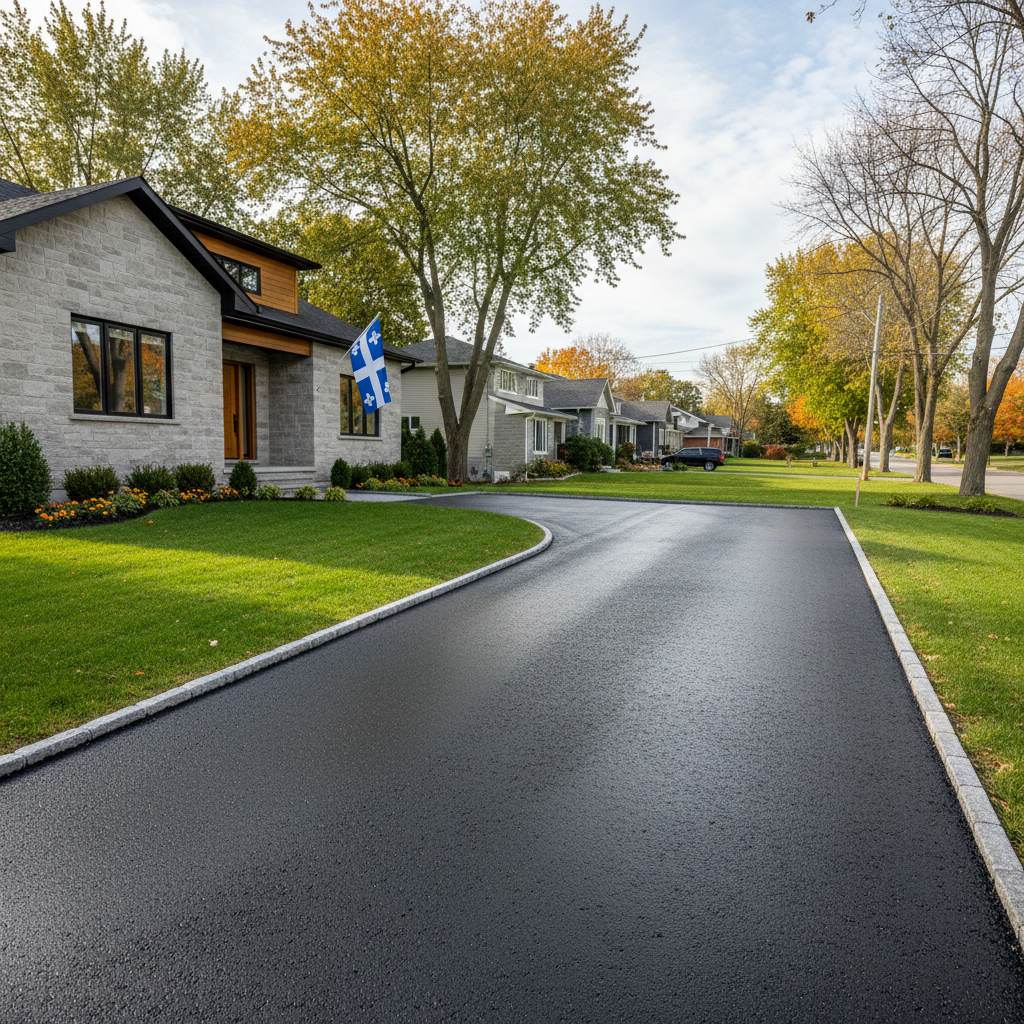
Driveway paving options and costs in East Clayton
East Clayton, British Columbia is a community of about 15,000 people (Statistics Canada, 2021 Census), and most residential lots are served by driveways tied to single-family homes. In practical terms, that means demand is driven by homeowners who want a driveway that performs through Lower Mainland–Southwest rainstorms, spring shoulder-season wet weather, and the freeze–thaw activity that still occurs near the frost line. Even though coastal BC typically sees milder freeze conditions than Interior regions, local practice and provincial expectations still design for a frost depth on the order of 18 inches for exposed, sensitive applications—so the base and drainage details are where contractors win or lose long-term results.
Lower Mainland–Southwest paving pricing also reflects scheduling and crew availability. Winter rains and muddy access can compress workable paving windows, and asphalt crews often need consistent warm, dry conditions for placement and compaction. In neighbourhood pockets where lots are older or soils are clay-heavy (common in parts of the Fraser Valley), excavation and drainage corrections can add cost—but they’re often the difference between a driveway that holds and one that heaves or cracks.
If you’re comparing options—especially for a typical 18 ft x 40 ft driveway off 13 Avenue area / East Clayton corridors—use the table below as a realistic baseline. Then we can tighten the numbers with site measurements, base thickness confirmation, and whether you’re doing new installation or a surface overlay.
| Material |
Lifespan |
Maintenance |
Best For |
Price per sq ft |
Price Range |
| Asphalt (new installation, proper base) |
15–25 years |
Seal every 3–5 years; patch as needed |
Value + smooth driving surface |
$12–$20 |
$12,000–$18,000 |
| Asphalt (overlay on existing gravel base) |
8–15 years |
Seal every 3–5 years; monitor settlement |
When the base is sound and height permits |
$10–$16 |
$10,500–$15,000 |
| Interlocking concrete pavers |
25–35 years |
Re-level individual stones; occasional re-sanding |
Curb appeal + modular repairs |
$20–$40 |
$18,000–$34,000 |
| Poured concrete (broom finish) |
20–30 years |
Seal every 5–8 years; joint maintenance |
Low visual upkeep and clean lines |
$18–$35 |
$16,000–$30,000 |
| Exposed aggregate concrete |
20–30 years |
Seal periodically; protect from staining |
Non-slip texture + premium look |
$22–$40 |
$20,000–$36,000 |
| Gravel / crushed stone (budget option) |
3–8 years |
Top up seasonally; re-grade |
Temporary solution or very tight budgets |
$7–$12 |
$6,000–$10,500 |
Prices are estimates only and vary by project scope, site access and material selection.
What affects the price of paving in East Clayton
Even when two homeowners in East Clayton ask for the “same” driveway, quotes in the Lower Mainland–Southwest can be 30–50% apart—and the spread is often real, not just marketing. Across British Columbia, contractors price for risk: soil conditions, drainage complexity, disposal and hauling, and how long they need to wait for weather windows. For example, a job that only needs a simple asphalt overlay can be priced very differently than one that requires full excavation and new granular base because the existing material is saturated or clay-rich.
Frost line depth and freeze–thaw cycles are decisive cost factors here. Lower Mainland coastal BC is milder than Interior or Northern regions, but local engineering practice still assumes a frost line on the order of 18 inches in exposed applications. When that expectation is applied to driveway base design, you typically see granular base thickness targets that keep the pavement system from heaving. That’s why a proper asphalt build often includes around 6 inches of compacted granular base with about 2.5–3 inches of asphalt—while weak or saturated subgrades may call for deeper excavation and more base. In cities with deeper, harsher freeze conditions, the base requirement increases; in East Clayton, the “freeze is shallower” story doesn’t eliminate the need for thickness and drainage—it changes how quickly failures show up. Poor drainage can cause settlement and rutting within 2–5 winters.
Concrete examples from East Clayton: (1) if you need thicker edge forms and additional subbase to control cracking, poured concrete can move toward the higher end of the $16,000–$30,000 estimate range; (2) if you choose broom-finish vs exposed aggregate, finish materials and texture labour can add cost; (3) if salt is used regularly for ice control, air-entrained concrete and proper mix design matter.
Finally, asphalt mix specifications for freeze–thaw rated performance can add dollars up front, but that’s often what keeps a driveway stable long-term within the region’s $12,000–$18,000 typical asphalt new-installation band.
| Price Factor |
Why It Matters |
Cost Impact |
| Driveway area in sq ft |
All materials, asphalt thickness, and labour scale with square footage |
Typically the largest driver; affects total by tens of thousands for larger lots |
| Base depth required |
Local design still targets frost protection; weak soils need deeper compacted granular layers |
Can shift a job by roughly 10%–25% when excavation goes deeper |
| Grading and drainage work |
Lower Mainland intensity is rainfall + poor drainage; correcting slope and adding drainage adds labour |
Often adds noticeable cost when ditches/catch basins must be tied in |
| Tear-out of existing surface |
Breaking concrete or removing old asphalt adds equipment time, labour and disposal |
Commonly one of the biggest “surprise” increases on remodels |
| Edge restraints and curbing |
Pavers need restraints; both pavers and asphalt need proper containment to prevent spread |
Moderate increase; can be worth it to avoid later movement repairs |
| Sealing requirement |
Asphalt in East Clayton benefits from sealing every 6–12 months after installation, then every 3–5 years |
Small per-season cost; extends lifespan and protects your investment |
| Site access |
Narrow lots or long carries slow skid-steers, trucks and compaction equipment |
Can add equipment time and minimum mobilization costs |
| Asphalt mix specifications |
Freeze–thaw rated mix design costs more but better resists moisture-related deterioration |
Usually a measurable increase; often reduces early cracking and raveling |
Permits & regulations in British Columbia
In British Columbia, paving a private driveway on your own property typically does not require a building permit—especially when you’re restoring or replacing the driveway surface within existing lot grading. However, approval is commonly required when you work in the municipal right-of-way or change how stormwater flows. In East Clayton, that usually means driveway cut changes involving the boulevard/curb area, new or modified curb cuts, and any work that alters storm drainage patterns, culverts, or connection points.
Step-by-step, here’s how a homeowner can verify a contractor’s compliance and legitimacy. First, confirm the contractor is properly licensed for the work type in BC (many paving companies hold relevant provincial business registration and safety credentials; your contractor should provide their licence details on request). Second, ask for a current certificate of liability insurance naming you as the certificate holder (or additional insured if they offer it) and verify the coverage amounts match the job size. Third, for workers and jobsite risk, request proof of workers’ compensation coverage (WSBC) and keep the clearance/policy document for your records.
Then, confirm utility locates before excavation. In BC, contractors and homeowners should call BC 1 Call (or ensure the contractor does) so buried services are marked prior to base excavation. Lastly, if you’re adjusting drainage or grading near property lines, check the municipality’s lot-grading bylaws—some areas limit how close hard surfaces can be built to the property line without proper drainage management.
Asphalt vs pavers vs concrete for East Clayton driveways
For East Clayton driveways, the “best” material depends on how you want to manage maintenance and how you expect the driveway to behave under Lower Mainland–Southwest weather. Asphalt is usually the lowest upfront cost (often the most budget-friendly route into the $12,000–$18,000 range for a typical install) and it provides a smooth ride, but it relies on sealing and good base drainage to resist moisture damage. In this region, sealing is not optional if you want long-term performance; plan on sealing after installation and then every 3–5 years.
Interlocking concrete pavers have the highest upfront cost (commonly in the $18,000–$34,000 band), but they shine when you value repairability. If a section settles, a contractor can lift and re-bed only the affected area instead of replacing an entire asphalt panel. That matters in Fraser Valley soils where saturated clay can create localized movement. Pavers also handle traffic well after proper compaction and edge restraints.
Poured concrete is often mid-range and can last 20–30 years, but it must be properly air-entrained and detailed with joints to manage freeze–thaw activity and moisture. In coastal BC, the freeze–thaw isn’t as severe as Interior regions, yet concrete can still crack if the base isn’t stable or if curing and finishing aren’t done correctly. Exposed aggregate offers traction and a premium look, while permeable drainage grid pavers may help manage runoff where drainage paths are constrained.
A real-world justification example: if your driveway paving bids come back with asphalt at roughly $2,000 less than pavers, that difference is only “worth it” if your base and drainage are excellent and you’re ready for regular sealing. If you know the driveway area is prone to pooling or you anticipate future utility work, pavers can be cheaper over time because localized repairs avoid full resurfacing.
| Material |
Frost Resistance |
Curb Appeal |
Repair Method |
Lifespan |
Price Band |
| Asphalt (sealed regularly) |
Good when base is properly drained and thickness is right for a shallow frost zone |
Medium |
Patch or mill-and-overlay sections |
15–25 years |
$12–$20 / sq ft |
| Interlocking concrete pavers |
Very good due to modular construction and flexibility around minor movements |
High |
Lift units, re-bed base, re-sand and reinstall |
25–35 years |
$20–$40 / sq ft |
| Poured concrete (air-entrained) |
Good when air-entrained and properly jointed on stable base |
Medium–High |
Crack repair/seal + patch; full replacement if widespread |
20–30 years |
$18–$35 / sq ft |
| Exposed aggregate concrete |
Good when designed and cured for moisture tolerance |
Very High |
Patch with matching finish; may be limited for large areas |
20–30 years |
$22–$40 / sq ft |
| Permeable pavers (drainage grid) |
Good for managing water before freeze–thaw acts |
High (modern look) |
Re-bed localized sections; check underdrain performance |
20–30 years |
$24–$45 / sq ft |
| Chip seal / tar-and-chip |
Fair to good; depends heavily on surface binder and maintenance |
Low–Medium |
Spot re-chip and re-seal; surface wear is common |
7–12 years |
$10–$18 / sq ft |
How to choose a paving contractor in East Clayton
Start by verifying credentials before you discuss price. In British Columbia, request the contractor’s proof of workers’ compensation coverage (WSBC) so you know you won’t be exposed if there’s an on-site injury. Ask for a certificate of liability insurance and confirm coverage limits and dates are current. Next, verify their business details and licence/registration where applicable, then confirm the company name and address match their paperwork and invoices. If they can’t provide insurance or coverage documents promptly, treat that as a serious concern.
Then get 2–3 itemised written quotes—not one lump sum. Ask for a breakdown that shows labour, excavation, base materials (gravel type and compaction plan), asphalt thickness or concrete thickness, and whether disposal is included. Confirm whether the quote includes a permit pull if any work touches right-of-way or requires municipal approval. Also ask whether old material tear-out includes hauling to an approved facility. Your contract should show the scope clearly.
Warranty matters: distinguish workmanship warranty (your install quality) from product/manufacturer warranty. Ask whether the workmanship warranty covers surface failure from poor base prep, and whether it is transferable to future owners—important in a market where driveways affect resale appeal. On payment, never pay more than 10–15% upfront; hold back the remainder until you’ve accepted the completed work and any final leveling/cleanup is done. Finally, request a written timeline with a start date range and completion estimate, since Lower Mainland weather can delay placements if crews get stuck waiting on dry base conditions.
- Request WSBC proof and confirm the effective dates.
- Ask for liability insurance certificate and verify coverage limits.
- Use an itemised quote: excavation, base, asphalt/concrete thickness, and compaction method.
- Confirm disposal and hauling are included (or priced separately).
- Specify edge restraints/curbs for pavers and containment for asphalt.
- Ask how they handle saturated soil or clay-heavy subgrade (what’s the replacement plan?).
- Get a written seal plan for asphalt (timing and frequency).
- Confirm drainage and slope corrections are included if required.
- Verify concrete is air-entrained (for BC freeze–thaw tolerance) and jointing strategy.
- Ask about compaction targets and equipment (plate compactor vs roller, test methods if available).
- Review warranty length in writing for workmanship and how it’s applied to repairs.
- Set a payment schedule with 10–15% max deposit and holdback until final acceptance.
Red flags I commonly see around East Clayton: contractors giving only a vague “asphalt price” without thickness/base details, refusing to provide insurance/WSBC documentation, starting without marked utility locates, using minimal base depth on clay soils, and offering very long warranties without written scope or inspection checkpoints.
Frequently asked questions — paving in East Clayton
How much does driveway crack repair cost in East Clayton?
In East Clayton and the broader Lower Mainland–Southwest, crack repair cost depends on the driveway material and whether the crack is “surface only” or tied to base movement. Small asphalt cracks are often treated with cleaning, crack sealing, and selective patching, while wider cracks may need saw-cutting and a more substantial asphalt patch. As a budget reference, sealing & repair is typically in the $2,000–$6,000 range for many homeowner-scale repairs, but larger areas or multiple cracks can push above that. If you’re dealing with repeated cracking after winter rains or after freeze–thaw activity, it’s a sign drainage or base stability may be the real issue—cheap seal-only fixes won’t last. The best approach is a quote that includes base evaluation and a clear repair method.
What base thickness do I need for pavers in East Clayton?
For East Clayton paver driveways, the rule of thumb in the Lower Mainland–Southwest is strong base preparation because rainfall-driven saturation and shallow freeze activity can still cause movement. Typically, you’ll see about 6 inches of compacted granular base plus bedding sand, then 2.5–3.5 inches of pavers (depending on the paver thickness and traffic load). If your soil is clay-heavy or holds water, the excavation depth may increase and you may need additional base and improved drainage to reduce heaving and settlement. Even though coastal BC has less severe frost than Interior regions, local practice still assumes a frost line on the order of 18 inches for exposed applications, so correct granular thickness and compaction matter. A detailed quote should state the base depth, material type, and compaction plan—not just “we’ll put in gravel.”
How do I get the most accurate paving quote in East Clayton?
To get an accurate paving quote in East Clayton, ask for an on-site assessment (not just photos) and ensure measurements match your actual driveway area. Make sure the contractor checks drainage: slope, pooling points, and where water goes after a storm. Request an itemised proposal showing excavation depth, base thickness, compaction method, and surface thickness (asphalt or concrete). Also confirm whether there’s tear-out, hauling/disposal, and whether right-of-way work would trigger municipal approvals—if it does, the quote should say who pulls the permit. If your driveway has existing issues like soft spots or standing water, mention them early; those conditions often change the quote by 30–50%. For asphalt, ask whether the mix is designed for Lower Mainland freeze–thaw exposure and moisture, since that affects durability and cost.
How much does it cost to pave a driveway in East Clayton?
Typical paving costs in East Clayton depend on material choice, driveway size, and how much excavation and drainage work is required. In this region, asphalt driveway paving commonly falls in the $12–$20 per square foot range, which translates into rough project totals around $12,000–$18,000 for many homeowner-scale installs when the base is properly built. Interlocking concrete pavers are usually $20–$40 per square foot, often landing around $18,000–$34,000 for standard residential driveways due to higher material and labour. Poured concrete typically trends $18–$35 per square foot, with many projects landing roughly in the $16,000–$30,000 ballpark. If you’re doing overlays instead of full replacement, costs can be lower, but only if the base is genuinely stable. The biggest price swings usually come from drainage correction and tear-out.
Asphalt vs interlocking pavers vs concrete — which is best in East Clayton?
For East Clayton, asphalt is usually the best match if you want the lowest upfront cost and a smooth driving surface, and you’ll keep up with sealing every 3–5 years. Interlocking concrete pavers are best if curb appeal and repairability matter to you—because individual units can be lifted and re-laid if a localized settlement happens after heavy rain or seasonal moisture. Poured concrete is a strong option when it’s properly air-entrained, jointed, and built on a stable, well-drained base; it tends to be mid-range on cost but can crack if the base isn’t right for freeze–thaw moisture movement. In the Lower Mainland–Southwest, drainage often matters more than people expect. If your driveway area has a pooling low spot, you’ll often get better long-term results from either a well-built asphalt system with drainage correction or from pavers that tolerate small movements. A common “value” difference: if pavers are only a small step up from asphalt, the repair flexibility can justify the price.
How long does a paved driveway last in East Clayton?
Driveway lifespan in East Clayton depends on how well the base is built and how water is managed. A properly installed asphalt driveway with correct granular base and regular sealing typically lasts about 15–25 years. Interlocking concrete pavers often last 25–35 years because sections can be re-bedded rather than replacing the entire surface. Poured concrete commonly lasts 20–30 years when air-entrained and jointed on a stable base. Exposed aggregate can also trend around 20–30 years, provided curing and finishing are done correctly. The key local factor is moisture: heavy winter rains and shoulder-season storms can saturate subgrades, and even with coastal BC’s milder freeze conditions, freeze–thaw near the frost line can cause heaving or cracking if drainage is poor. If you see early failures within a few winters, it’s usually a base or drainage issue—not just “bad luck.”