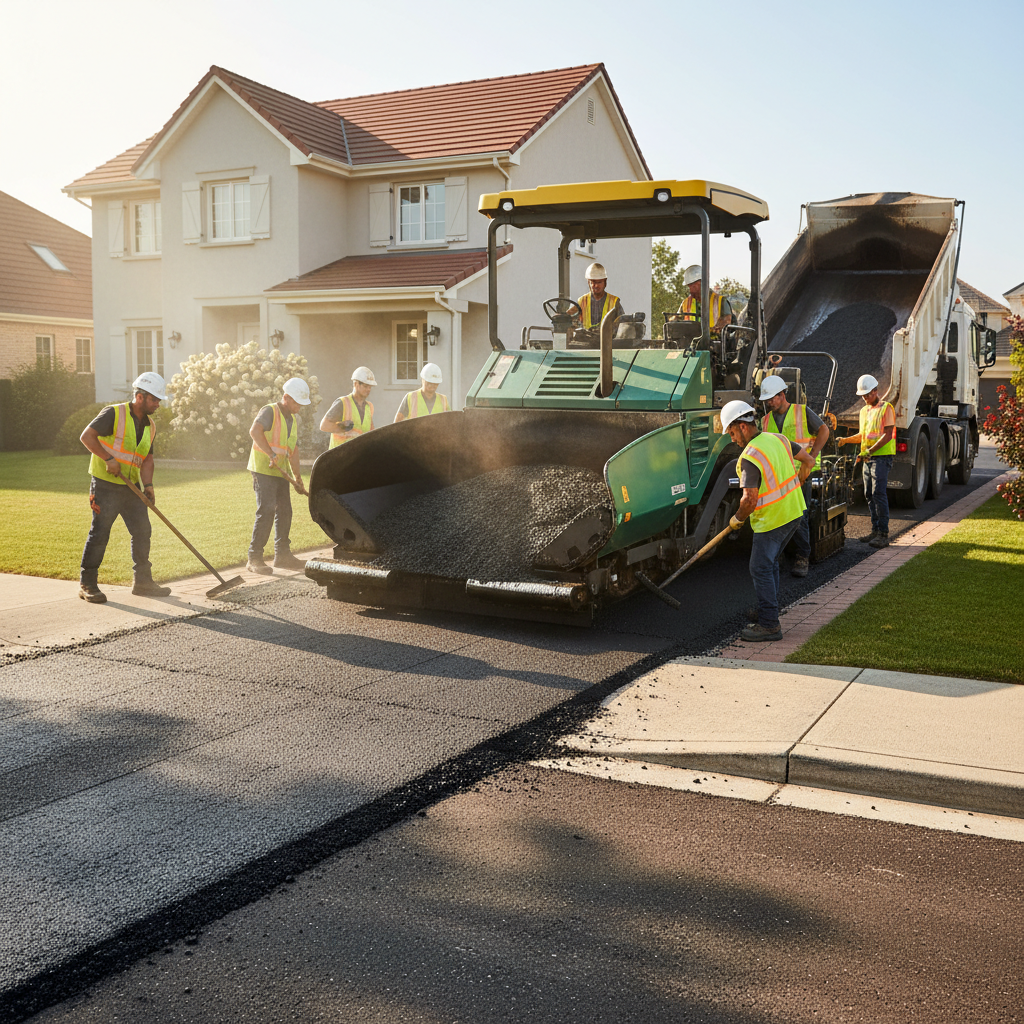
Driveway paving options and costs in Colwood
Colwood homeowners have a lot of choices when it comes to surfacing a driveway, but the right option usually comes down to expected winter performance, how often you want to maintain the surface, and how your property drains. In Colwood, the housing mix is a major part of the demand—about 49.2% of dwellings are single-detached homes, and those typically have private driveway approaches that get plowed, sanded, and exposed to freeze-thaw cycles. Homeownership is also high (73.5% of households own), which supports long-term upgrades rather than “patch and forget” repairs (Statistics Canada, 2021 Census).
On Vancouver Island and the Coast, we work in a mild coastal climate, yet we still see localized freezing and repeated freeze-thaw around Saanich, Nanaimo, Victoria, Langford, and farther north—Colwood is part of that same pattern. That means the base and drainage design matter as much as the surface. Asphalt can be one of the lowest upfront-cost approaches in the $10–$20 per sq ft range when the job is excavated to the right depth and compacted properly; skipping base work is what most often drives premature failures.
In neighbourhoods and busy pockets like Colwood’s core and Westshore-area residential streets, we’re especially in demand because lots are often tighter for equipment and access while still needing a durable surface that holds up through spring thaw and wet shoulder seasons. With that in mind, the table below compares common driveway materials and realistic price ranges for Colwood projects, then you can decide what fits your goals.
| Material |
Lifespan |
Maintenance |
Best For |
Price per sq ft |
| Asphalt (new installation, proper base) |
15–25 years |
Seal coat after 6–12 months, then every 3–5 years |
Best value with a smooth ride and budget-friendly initial cost |
$10 – $20 |
| Asphalt (overlay on existing gravel base) |
10–18 years |
Seal coat and targeted patching as needed |
When you’re staying on a gravel base but want a paved surface |
$12 – $22 |
| Interlocking concrete pavers |
25–40 years |
Lift-and-replace individual stones when needed |
Curb appeal, long-term repairability, and a premium look |
$25 – $45 |
| Poured concrete (broom finish) |
25–35 years |
Limited maintenance; minor crack sealing as needed |
Clean, modern finish with solid performance if air-entrained |
$18 – $35 |
| Exposed aggregate concrete |
25–35 years |
Occasional cleaning; seal if desired for staining resistance |
Non-slip texture and higher-end curb appeal |
$20 – $40 |
| Gravel / crushed stone (budget option) |
5–10 years |
Re-grade, top up, and manage washouts regularly |
Short-term budget, low disruption, and easier access for repairs |
$6 – $12 |
Prices are estimates only and vary by project scope, site access and material selection.
What affects the price of paving in Colwood
In Colwood, you can see surprisingly wide quote ranges for what looks like the same driveway—often 30–50%—because Vancouver Island and the Coast pricing isn’t just “material per square foot.” It’s a mix of labour availability, trucking and delivery to Island markets, equipment time, and how much excavation is needed to reach stable subgrade. Two contractors may both say “asphalt,” but if one allows for proper base depth and drainage correction while the other assumes your existing base is sound, the cost can swing dramatically.
Frost and drainage are decisive cost factors on Vancouver Island and the Coast. Compared with colder parts of Canada where frost penetration drives much deeper granular bases (often 6–12 inches in Ontario/Alberta), coastal BC typically needs a thinner base (often around 4–6 inches) because the frost line is relatively shallow. That said, localized freezing and repeated freeze-thaw cycles around the region can still heave and crack surfaces if the base is under-compacted or water is allowed to sit under the driveway. Asphalt mix design also matters: freeze-thaw-rated mixes that hold up through wet winters often cost more, and that shows up in labour and material selection.
Concrete pricing in Colwood can also move with local conditions. For example, an older driveway (common in homes built before 1981—42.2% of the housing stock) may have unknown fill, soft spots, or buried debris, which increases tear-out and disposal time. Conversely, properties with good existing grading and clean access can reduce excavation and keep costs closer to the lower end of the $10–$20 asphalt band or the $18–$35 concrete band.
| Price Factor |
Why It Matters |
Cost Impact |
| Driveway area in sq ft |
The surface area determines material quantity and machine time |
Large—often the biggest line item |
| Base depth required |
Frost line depth drives granular thickness and compaction requirements |
Moderate to large; underbuilding leads to failures |
| Grading and drainage work |
Slope, swales, and outlet protection control freeze-thaw moisture |
Moderate; can add significant labour |
| Tear-out of existing surface |
Concrete/asphalt removal plus hauling and disposal adds equipment time |
Often large on older driveways |
| Edge restraints and curbing |
Stops paver spread and asphalt edge raveling |
Small to moderate; depends on site layout |
| Sealing requirement |
Asphalt needs sealing after curing (commonly 6–12 months), then periodically |
Small to moderate; long-term protection |
| Site access |
Narrow drives and tight lots slow equipment movement and increase labour |
Moderate; may require more staging |
| Asphalt mix specifications |
Freeze-thaw-rated mixes help performance in coastal winters |
Small to moderate; improves longevity |
Permits & regulations in British Columbia
In British Columbia, paving a private driveway within your own property typically does not require a building permit. The key exception is when the work involves the municipal right-of-way or changes to municipal infrastructure. That can include building a new curb cut, altering boulevard areas, changing storm drainage patterns, or modifying how runoff reaches the street system. If you’re planning to change grade near the curb, adjust a drainage swale, or tie into any existing drainage infrastructure, you should expect municipal approvals and conditions.
Also note that some municipalities maintain lot-grading rules that affect how close a hard surface can be to property lines and how drainage must be directed. Before anyone digs, confirm the lot-grading expectations and any restrictions that apply to your parcel.
Step-by-step, here’s how a homeowner in Colwood should protect themselves:
- Call for utility locates before excavation (BC 1 Call). Don’t assume “there are no utilities” just because you can’t see them.
- Ask the contractor to provide their proof of liability insurance and to show you the scope boundaries (what’s included/excluded near the curb/sidewalk).
- Verify their British Columbia licence and standing through the appropriate online registry (by searching the company name and/or contractor details).
- Request their workers’ compensation coverage documentation (commonly WSIB-style coverage in other provinces; in BC you’ll be looking for the relevant workers’ compensation account coverage and clearance).
- Get everything in writing: the start date, end date, and which permits (if any) are handled by the contractor versus the homeowner.
If you stick to that checklist, you’ll avoid the most common “surprise” issues tied to drainage, right-of-way work, and utility conflicts.
Asphalt vs pavers vs concrete for Colwood driveways
Choosing among asphalt, interlocking pavers, and concrete in Colwood comes down to how each material handles Vancouver Island’s specific freeze-thaw pattern and wet shoulder seasons. Asphalt usually has the lowest upfront cost, and it offers a smooth driving surface right away, but it needs a sealing routine—typically every 3–5 years after the initial seal (often after 6–12 months). Interlocking concrete pavers cost more upfront, yet they’re the most forgiving when it comes to repairs: if a section settles or a utility trench needs future access, you can lift and reset individual units without replacing the whole driveway. Poured concrete generally sits in the middle on price, and if it’s properly air-entrained and finished for traction, it can perform well; however, freeze-thaw can still lead to cracking if the subbase and drainage aren’t engineered correctly.
For base preparation, we typically target a properly compacted granular base designed to limit moisture and movement during freezing nights and spring thaw. Even though coastal BC has a relatively shallow frost line, water management is still critical—especially where driveways meet the street or where the driveway crosses a slope. Around Colwood, we often see pricing shift because older homes (42.2% built before 1981) may have poorer original grading or variable subgrade, which increases excavation and stabilization effort.
Here’s where the dollar difference is justified: if a paver driveway is, for example, $25–$45 per sq ft compared with asphalt at $10–$20 per sq ft, the premium can make sense when you value long-term repairability and curb appeal—especially on driveways with complex edges or high visibility. If you want the smoothest value for budget, asphalt is hard to beat—provided it’s built on the right base and sealed on schedule.
| Material |
Frost Resistance |
Curb Appeal |
Repair Method |
Lifespan |
Price Band |
| Asphalt (sealed regularly) |
Good when base is compacted and drainage is tight |
Low to medium (smooth, clean look) |
Patch cut and re-pave small areas; seal maintenance |
15–25 years |
$10 – $20 |
| Interlocking concrete pavers |
Very good; movement is often contained per unit |
High (many colour/edge patterns) |
Lift-and-replace individual pavers |
25–40 years |
$25 – $45 |
| Poured concrete (air-entrained) |
Good with proper base, jointing, and air-entrainment |
Medium (clean finish, can be textured) |
Crack repair/sealing; localized patch where feasible |
25–35 years |
$18 – $35 |
| Exposed aggregate concrete |
Good when properly finished and protected from standing water |
High (texture and premium look) |
Sealing and localized repair; full replacement if wide damage |
25–35 years |
$20 – $40 |
| Permeable pavers (drainage grid) |
Excellent for water infiltration when underdrains are correct |
High (unique pattern + functional drainage) |
Replace affected units; clear and maintain the drainage layer |
20–35 years |
$30 – $55 |
| Chip seal / tar-and-chip |
Moderate; sensitive to base quality and traffic load |
Low to medium (rugged surface) |
Surface maintenance and re-chip/spot work |
8–15 years |
$8 – $16 |
How to choose a paving contractor in Colwood
When you’re choosing a paving contractor in Colwood, start by verifying the basics and insisting on documentation. In British Columbia, you should confirm the contractor’s business licence/registration status using the online registry for their legal entity (and not just a website domain). Ask for a current certificate of liability insurance and check that it covers paving-related work on occupied residential properties. For workers’ compensation coverage, request proof of coverage/clearance that matches BC requirements—this protects you if subcontractors or crews get injured.
Next, get 2–3 itemised written quotes. “Itemised” matters: you want a breakdown that separates excavation/base work, granular supply, asphalt or concrete quantities, compaction, disposal, and finish details. Avoid lump sums that hide what’s included—especially around tear-out, site grading, utility locates, and disposal. Confirm whether the quote includes permit/approval handling if your job touches the right-of-way, and specify what happens if additional excavation is found (common on older homes).
Warranty should be clear and in writing: workmanship warranty length, who is responsible for the fix, and whether product/manufacturer warranty applies to the materials used. Also ask if warranties are transferable if you sell your home. Payment should be controlled: never pay more than 10–15% upfront. Hold back a portion until the job is complete, cleaned, and reviewed with you.
Finally, insist on timing in writing: start date, target completion window, and weather-related contingencies. On Vancouver Island, rain and wet shoulder seasons can affect scheduling even when plans are solid.
- Verify contractor registration/licence through the appropriate BC online resources.
- Request certificate of liability insurance and confirm coverage limits.
- Confirm workers’ compensation coverage/clearance for their crews and subcontractors.
- Ask who will do the base engineering and compaction steps (not just the surface).
- Get 2–3 itemised quotes with unit rates where possible (sq ft / linear ft).
- Confirm whether disposal and hauling are included for existing asphalt/concrete tear-out.
- Clarify utility locate responsibility (BC 1 Call) and excavation conditions.
- Ensure edge restraints are specified (especially for pavers and asphalt edges).
- For asphalt, confirm the sealing plan: initial seal timing and long-term reseal schedule.
- Require a written warranty for workmanship and how failures are addressed.
- Set payment schedule: 10–15% upfront maximum; holdback until walkthrough completion.
- Get a written start date and a realistic completion timeline with weather allowances.
Red flags to watch for in Colwood: contractors who won’t show insurance or workers’ coverage, quotes that don’t explain base depth and drainage, “too-good-to-be-true” pricing that skips tear-out or compaction, no written warranty terms, and crews that pressure you for a large upfront deposit.
Frequently asked questions — paving in Colwood
How deep should the base be for Colwood's frost?
In Colwood and across coastal BC, the frost line is relatively shallow compared with colder parts of Canada, so the granular base is often thinner than what you’d see in Ontario or Alberta. That said, we still design for freezing and freeze-thaw cycles—especially where water can sit at the surface or at the driveway-to-street transition. Practically, many driveways are built around roughly 4–6 inches of properly compacted granular base on stable soils, with additional depth where subgrade is soft or where drainage requires regrading. The exact depth depends on your existing conditions and soil stability, so a proper excavation and compaction assessment is what protects the surface long-term.
How often should I seal my asphalt driveway?
For an asphalt driveway in Colwood, sealing is usually about timing and consistency. After installation, the pavement needs to cure, so sealing is commonly done after about 6–12 months (once the surface is ready and not bleeding oils). After that, a typical reseal schedule is every 3–5 years depending on sun exposure, vehicle traffic, and how quickly the surface starts to oxidize or dry out. If you compare options, asphalt in the $10–$20 per sq ft band becomes much more cost-effective when you actually follow the sealing plan—skipping it is often what leads to raveling, water infiltration, and then expensive base repairs.
Why does my driveway crack and heave in winter?
Cracking and heaving in Colwood is usually a freeze-thaw moisture problem. When water enters at the edges, through surface damage, or because drainage was insufficient, it can freeze under the slab/asphalt and expand. On a driveway built over an under-compacted base or inconsistent subgrade, that movement can lift sections and create cracks that get worse each season. It’s also common when the driveway grading doesn’t shed water away from the structure, or when the transition to the street traps moisture. Homes built before 1981 (42.2% of the housing stock) sometimes have older fill or drainage patterns, which is why contractors usually investigate and rebuild the base and ditches where needed.
Do I need a permit to pave my driveway in British Columbia?
In British Columbia, paving a private driveway within your own property typically does not require a building permit. However, if your project touches municipal right-of-way or municipal infrastructure—like creating a new curb cut, changing boulevard areas, or altering storm drainage—you should expect municipal approval requirements. Some areas also enforce lot-grading rules that limit how close hard surfaces can be to property lines or require specific drainage direction. In Colwood, the safest approach is to confirm whether any right-of-way work is involved before excavation, then follow the utility locate process (BC 1 Call). A reputable paving contractor can explain which parts of your scope are likely to need approval before they start.
How long before I can drive on new asphalt?
After asphalt paving in Colwood, the wait time depends on mix temperature and weather conditions (cooler, wetter days can extend cure time). In many residential driveway installs, crews will allow light traffic after the surface cools sufficiently—often within a few hours—then recommend normal vehicle use once fully cooled and stable. The bigger rule is to avoid turning steering loads, heavy equipment, and parking in the same spot right away. If you’re sealing, the schedule shifts: a fresh driveway needs time before sealing, and the surface should stay protected until that curing window is complete. If your quote is in the $10–$20 per sq ft asphalt range, ask the contractor to include the planned cure/traffic guidance in writing for your exact day and conditions.
What causes potholes and how are they repaired?
Potholes usually form because water gets under asphalt and softens the base. When traffic loads hit that weakened area, the surface breaks down into a hole. In Colwood’s freeze-thaw environment, even small failures can turn into larger potholes after wet periods followed by freezing nights. Repairs typically start with saw-cutting to remove unsound material, then excavating to reach firm base, addressing drainage if water entry is the root cause, and compacting the new base before installing asphalt patch layers. The best long-term fix includes fixing the underlying base/water path—not just filling the hole. Depending on the size and location, spot repairs can be paired with a broader sealing plan to slow future deterioration.