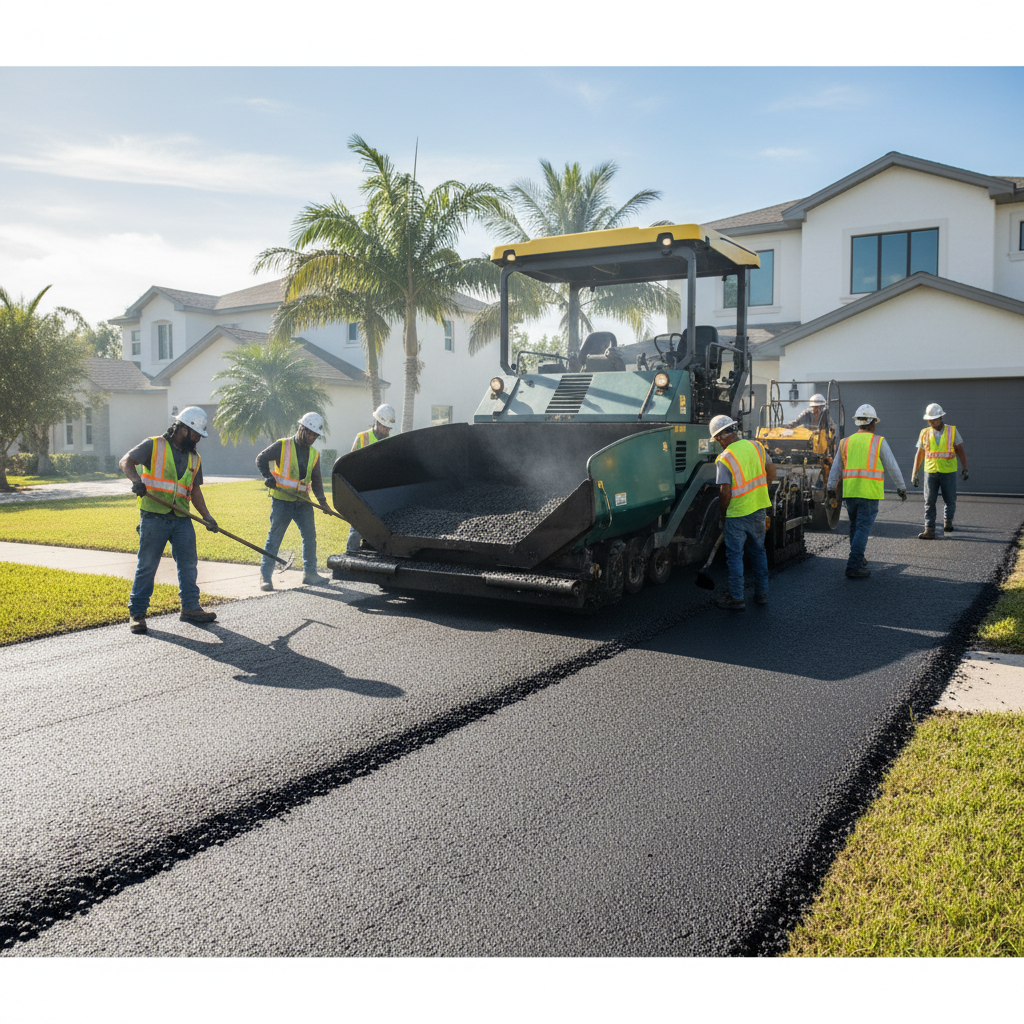
Driveway paving options and costs in Pitt Meadows
Pitt Meadows homeowners usually have one of three goals when resurfacing or replacing a driveway: control long-term maintenance, handle Lower Mainland–Southwest rain and drainage demands, and keep the front approach looking sharp on a typical detached-lot streetscape. With 41.9% of local dwellings being single-detached homes (Statistics Canada, 2021 Census), most private driveway projects are attached to detached houses—so the market is geared toward repeatable residential designs, not just one-off commercial builds.
Costs in Pitt Meadows are shaped less by deep inland freezing and more by intense stormwater events, saturated subgrades, and the freeze–thaw cycles that happen around the shallow frost zone. Even in coastal BC, pricing reflects the need for a properly compacted granular base and drainage. You’ll often see longer waits and tighter scheduling in spring because contractors are busiest when weather is stable enough for compaction and asphalt placement (hot-mix asphalt generally needs air temperatures above about 10°C). In neighbourhoods like North Bonson and around the downtown core, driveway demand is especially steady because many homes built earlier (25.9% built before 1981, Statistics Canada, 2021 Census) have older base conditions that can’t be “patched” without reworking drainage and excavation.
Below is a practical comparison of common materials, typical lifespan expectations, and the price bands you’ll see for well-prepared installations (including base where required). Use this table as a baseline, then compare quotes that line up the same scope—excavation depth, compaction requirements, and whether drainage is corrected.
| Material |
Lifespan |
Maintenance |
Best For |
Price per sq ft |
| Asphalt (new installation, proper base) |
15–25 years |
Seal every 3–5 years; patching as needed |
Clean, low upfront cost with good curb function |
$12–$20 |
| Asphalt (overlay on existing gravel base) |
10–18 years |
Seal every 3–5 years; more frequent patching if base is weak |
Existing subgrade is sound and grading is correct |
$14–$22 |
| Interlocking concrete pavers |
25–35 years |
Occasional panel replacement; resealing optional |
Premium curb appeal and easier localized repairs |
$20–$40 |
| Poured concrete (broom finish) |
20–30 years |
Minor joint crack monitoring; occasional patching |
Low visual maintenance, long straight runs |
$18–$35 |
| Exposed aggregate concrete |
20–30 years |
Low maintenance; keep up with cleaning to prevent staining |
High-end look with traction in wet weather |
$22–$38 |
| Gravel / crushed stone (budget option) |
3–7 years (typical) |
Regrade and top up every 1–3 years |
Short-term solution or low budget |
$8–$15 |
Prices are estimates only and vary by project scope, site access and material selection.
What affects the price of paving in Pitt Meadows
In Pitt Meadows and the broader Lower Mainland–Southwest, two quotes for what looks like the “same” driveway can still differ by about 30–50% because the cost drivers are mostly hidden—excavation depth, how well drainage is corrected, and the amount of base that’s actually installed and compacted. On paper you might be comparing asphalt to asphalt, but one contractor may be pricing a thin, poorly draining build, while another is pricing the full granular structure needed to manage saturated soil and the shallow frost zone. Over time, the cheaper build often ends up costing more through early rutting, edge failures, and repeated patching.
Frost line depth still matters in coastal BC even though winters feel mild. The provincial building-code assumptions and regional practice generally align around a sensitive frost zone of roughly 18" for exposed infrastructure, so bases and subgrade preparation must sit below that in critical areas. Where the base depth must be greater, you’ll see deeper excavation and higher material quantities—think more compacted granular base (often 6–12 inches in colder, more frost-influenced applications compared with 4–6 inches in some sheltered coastal situations). Separately, asphalt mix design must be freeze–thaw rated for Lower Mainland conditions, which can shift per-ton costs. In colder regions the paving season is shorter because hot-mix asphalt needs air temperatures above about 10°C; while coastal BC has a longer season, heavy shoulder-season rain still tightens workable windows and affects scheduling labour.
In Pitt Meadows specifically, older homes built before 1981 (Statistics Canada, 2021 Census) commonly have older driveways with compromised drainage, which increases tear-out and grading scope. Also, clay-heavy pockets in parts of the Fraser Valley can soften after storms, requiring additional granular replacement and longer compaction runs. That’s why a properly rebuilt asphalt driveway may land near the mid-to-high end (for example, closer to the $12–$20 range), while an “overlay-only” approach might look cheaper upfront but can drift upward if base stabilization is needed.
| Price Factor |
Why It Matters |
Cost Impact |
| Driveway area in sq ft |
Labour and material scale directly with surface area. |
High (often the biggest portion of the bill) |
| Base depth required |
Granular thickness helps prevent heaving and cracking near the frost zone. |
Medium to high (can swing pricing significantly) |
| Grading and drainage work |
Slope corrections, underdrains, or re-routing water reduce saturation and failures. |
Medium (repairs and excavation add up) |
| Tear-out of existing surface |
Breaking, hauling, and disposing of old asphalt/concrete is labour intensive. |
Medium to high, depending on material |
| Edge restraints and curbing |
Prevents paver spreading and asphalt edge breakdown during wet seasons. |
Low to medium, but critical for appearance |
| Sealing requirement |
Asphalt needs sealing after installation (typically after curing) to slow oxidation. |
Low to medium (planned long-term cost) |
| Site access |
Narrow lots or steep approaches slow equipment movement and increase labour time. |
Low to medium (can become high on tight sites) |
| Asphalt mix specifications |
Freeze–thaw rated mixes and proper binder design improve long-term performance. |
Low to medium (quality premiums) |
Permits & regulations in British Columbia
In British Columbia, paving a private driveway within your own property typically does not require a building permit—especially when the work stays inside the lot line and you’re not altering storm drainage in a way that affects the municipal system. However, municipal approval often comes into play when you impact the road-facing area or how water moves off the site. In Pitt Meadows, the work that commonly does require municipal approval includes: creating or changing a curb cut/driveway approach in the boulevard, modifying the boulevard footprint, and making stormwater drainage changes that affect municipal infrastructure. Some properties also fall under lot-grading expectations, so hard-surface placement and slope toward neighbouring areas should be checked before work starts.
Step-by-step, here’s how a homeowner should verify a contractor in BC before excavation:
- Confirm the contractor’s business credentials and trade qualifications listed for paving/asphalt work through the provincial and/or business registry pages they provide (don’t rely on word-of-mouth).
- Ask for a certificate of liability insurance and verify the coverage limits and effective dates match your job dates.
- Request evidence of workers’ compensation coverage (WSIB/WCB coverage). Review the clearance letter or confirmation document provided by the contractor.
- For any work affecting municipal right-of-way, ask whether they will handle the permit/approval process and provide the approval reference number before starting.
- Ask for utility locate confirmation (BC 1 Call) prior to digging—especially around existing services and drainage connections.
If a contractor can’t provide proof of insurance/coverage or won’t discuss what approvals are required for your specific approach, treat it as a major red flag.
Asphalt vs pavers vs concrete for Pitt Meadows driveways
For Pitt Meadows homeowners, the “best” driveway material is usually the one that matches how you maintain winter conditions and how the site sheds water during Lower Mainland downpours. Asphalt is commonly the lowest upfront choice and blends well with typical neighbourhood driveway widths, usually with a lifespan in the mid-to-high teens when the base is built correctly. The trade-off is maintenance: asphalt should be sealed about every 3–5 years to slow binder oxidation and reduce surface ravelling, particularly when rain and tire traffic wear the surface quickly.
Interlocking concrete pavers cost more up front, but they shine in this region because they’re repairable. If one section settles or a drainage correction is needed later, pavers can be lifted and reinstalled without tearing up the entire driveway. Paver edge restraints are essential so water doesn’t push material outward during winter saturation. In Pitt Meadows’ wet seasons, that repairability and curb appeal are often worth it—especially for single-detached homeowners who want a consistently neat front entry.
Poured concrete (especially when properly air-entrained) sits in the middle on cost and is durable when joints and base support are done right. Still, freeze–thaw and the use of de-icing methods can accelerate surface issues if the mix isn’t designed for cold exposure. Exposed aggregate improves traction in wet weather, but it doesn’t “erase” cracking risk if the base or drainage is off.
Local price logic is straightforward: if asphalt is around the $12–$20 per sq ft band, moving to pavers at $20–$40 per sq ft is justified when you want easier section repairs and higher curb appeal. If your base is poor, though, any material will cost more because excavation and drainage correction come first.
| Material |
Frost Resistance |
Curb Appeal |
Repair Method |
Lifespan |
Price Band |
| Asphalt (sealed regularly) |
Good with proper granular base and drainage; relies on seal to protect binder |
Medium (clean, smooth finish) |
Cut-out patching or full overlay if widespread |
15–25 years |
$12–$20 |
| Interlocking concrete pavers |
Very good when installed over a well-compacted base with restraints |
High (premium look and colour options) |
Lift and replace affected units; re-level as needed |
25–35 years |
$20–$40 |
| Poured concrete (air-entrained) |
Good with air-entrained mix and correct base/joints |
Medium (varies by finish) |
Crack monitoring; localized patching where feasible |
20–30 years |
$18–$35 |
| Exposed aggregate concrete |
Good traction; still depends on base and jointing |
High-end |
Localized patching; larger sections may require section removal |
20–30 years |
$22–$38 |
| Permeable pavers (drainage grid) |
Good for managing saturation when designed correctly |
High (modern look) |
Replace grid/pavers locally; requires correct subdrain design |
25–35 years |
$25–$45 |
| Chip seal / tar-and-chip |
Moderate; best for specific site conditions and consistent maintenance |
Low to medium (texture-forward) |
Spot chip/seal rejuvenation; repairs can be messy |
7–12 years |
$10–$18 |
How to choose a paving contractor in Pitt Meadows
Choosing the right paving contractor in Pitt Meadows starts with verification and scope clarity. In British Columbia, confirm they carry liability insurance and have active workers’ compensation coverage (WSIB/WCB). How to check: ask for a current certificate of insurance showing the coverage limits and effective dates, and request the clearance letter or proof of account status for workers’ compensation. Also make sure they’re comfortable discussing utility locating; proper excavation should be preceded by BC 1 Call locates, especially near service lines, drainage, and any sidewalk/curb relationships.
Next, get 2–3 itemised written quotes. You want a breakdown that separates labour and materials, and clearly lists the base depth, compaction method, asphalt thickness (or paver bedding thickness), and disposal. Avoid “all-in” numbers that don’t say what’s included—questions like “Is tear-out included?” and “Is disposal/haul-away included?” should be answered in writing. Also ask: are permits or municipal approvals included if you’re changing a curb cut or boulevard area?
Warranty matters in a rain-and-freeze environment. Ask for the workmanship warranty length, what product/manufacturer warranty covers (if any), and whether it transfers to a new owner. For payment, use a schedule that keeps your risk low—never pay more than about 10–15% upfront, and hold back until the job is complete and any corrections are finished. Finally, ask for a written start date and completion estimate, since shoulder-season rain can delay paving crews.
- Confirm liability insurance certificate is current for your project dates.
- Verify workers’ compensation clearance/proof is provided.
- Ask for a written scope that states excavation depth and base build-up.
- Ensure drainage requirements are described (slope, swales, tie-ins).
- Check whether utility locates (BC 1 Call) are planned before digging.
- Require itemised quote: labour, materials, equipment, disposal/haul-away.
- Make sure tear-out and disposal are clearly included or excluded.
- Confirm edge restraints/curbing are part of the design where needed.
- For asphalt, specify seal timing (after curing) and whether initial sealing is included.
- Request proof of previous similar residential projects in the Lower Mainland–Southwest.
- Get warranty terms in writing: length, exclusions, and how claims are handled.
- Use a payment plan with a holdback until final completion and cleanup.
Red flags in Pitt Meadows include: quotes that omit base depth and compaction details, “overlay only” recommendations without checking drainage and saturation, vague warranties that don’t specify workmanship coverage, requesting large upfront payments, and contractors who won’t itemise disposal/haul-away or confirm whether municipal approvals are needed for your driveway approach.
Frequently asked questions — paving in Pitt Meadows
How long does a paved driveway last in Pitt Meadows?
In Pitt Meadows, a driveway lifespan mostly depends on the base and drainage rather than the surface name. With a properly built asphalt driveway (good granular base, correct slope, and appropriate drainage), many homeowners plan for about 15–25 years, assuming you seal on a schedule (often every 3–5 years). If the base is weak or drainage is left to “sort itself out,” failures can show earlier through rutting, edge breakdown, and cracking after heavy winter rains and freeze–thaw near the shallow frost zone.
Interlocking pavers often last 25–35 years because individual units can be repaired without replacing the entire slab. Poured concrete commonly targets 20–30 years when the mix is air-entrained and joints/base support are done correctly. If you’re comparing budgets, remember that a typical asphalt range in the area is around $12–$20 per sq ft, while pavers are commonly higher (often $20–$40)—that price difference is largely tied to base, thickness, and how repairs are handled later.
When is the best time of year to pave in Pitt Meadows?
The best window in Pitt Meadows is usually late spring through summer, when temperatures stay stable enough for compaction and asphalt placement. Asphalt crews typically need air temperatures above about 10°C to lay and compact hot mix properly, and heavy rainfall in shoulder seasons can interrupt work and affect base moisture. That’s why scheduling can tighten after winter storms, even though coastal BC has a longer paving season than Interior regions.
If you’re planning pavers, you still benefit from dry conditions, but the work can sometimes be staged around light rain better than asphalt. For concrete, crews also prefer consistent weather so curing and finishing aren’t compromised by excessive moisture. In every case, ask the contractor for a written start date and completion estimate, and confirm how they manage weather delays.
How deep should the base be for Pitt Meadows's frost?
Base depth in Pitt Meadows isn’t one universal number—it depends on your soil condition, drainage, and where water sits during storms. Even in coastal BC, regional practice still assumes a sensitive frost zone on the order of roughly 18" for exposed infrastructure, so good builds keep the structure below the area where frost heave is most likely.
That usually translates to a compacted granular base around the mid range used for residential driveways in this region: commonly about 6" of compacted granular base plus 2.5–3" of asphalt for asphalt driveways, with deeper excavation and replacement when soils are weak or saturated (common in clay pockets). Where drainage corrections require more removal, contractors may need to go beyond minimums to restore thickness and strength.
The right answer should be stated in your quote: the planned excavation depth, the base gradation, and compaction requirements—not just the material name.
How often should I seal my asphalt driveway?
For asphalt driveways in British Columbia, sealing is typically done on a cycle of about every 3–5 years, after the pavement has cured. Sealing helps slow oxidation of the asphalt binder, which is important in Pitt Meadows because rainfall and tire wear expose the surface over time. It’s especially useful when the driveway sees frequent wet weather and standing water near edges.
If your contractor quoted asphalt in the $12–$20 per sq ft band, ask whether their estimate includes initial sealing or assumes you’ll seal later. Many homeowners treat sealing as a maintenance line item; in local repair planning, sealing and repair work is often budgeted around $2–$6 per sq ft depending on scope and condition.
Also follow the contractor’s guidance on timing: sealing too soon after installation can trap moisture and reduce long-term performance.
Why does my driveway crack and heave in winter?
Cracking and heaving in Pitt Meadows usually come from a combination of saturation, base weaknesses, and freeze–thaw cycles around the shallow frost zone. When water doesn’t drain away effectively, soils can soften during heavy rains. During colder spells, that moisture can freeze and expand, pushing against the surface—leading to heaving, edge lifting, and eventually cracking.
In older neighbourhood driveways, especially on homes built before 1981 (Statistics Canada, 2021 Census), the issue is often an inadequate base depth, poor slope, or missing drainage improvements at the curb/boulevard approach. De-icing practices can also worsen surface wear if the wrong products are used frequently, and freeze–thaw can make minor surface defects grow faster in wet climates.
When you get a quote, ask the contractor to explain what they’re doing to fix drainage and compaction—not just what patch or resurfacing layer they’re applying.
Do I need a permit to pave my driveway in British Columbia?
In most cases, paving a private driveway within your own property in British Columbia does not require a building permit. The work typically doesn’t need a permit if you’re keeping construction inside your lot and you’re not materially changing municipal storm drainage or altering the road-facing infrastructure.
Where approvals commonly do come into play is when the driveway approach affects the municipal right-of-way—examples include creating or changing a curb cut, modifying boulevard area, or altering storm drainage tied into municipal systems. In Pitt Meadows, it’s wise to confirm whether your scope touches the curb/boulevard or changes how water flows off your property before crews start.
Regardless of permit need, you should still require utility locates through BC 1 Call before excavation, and your contractor should provide proof of liability insurance and workers’ compensation clearance. If a contractor can’t clearly explain what does and doesn’t require municipal approval, ask questions before signing.