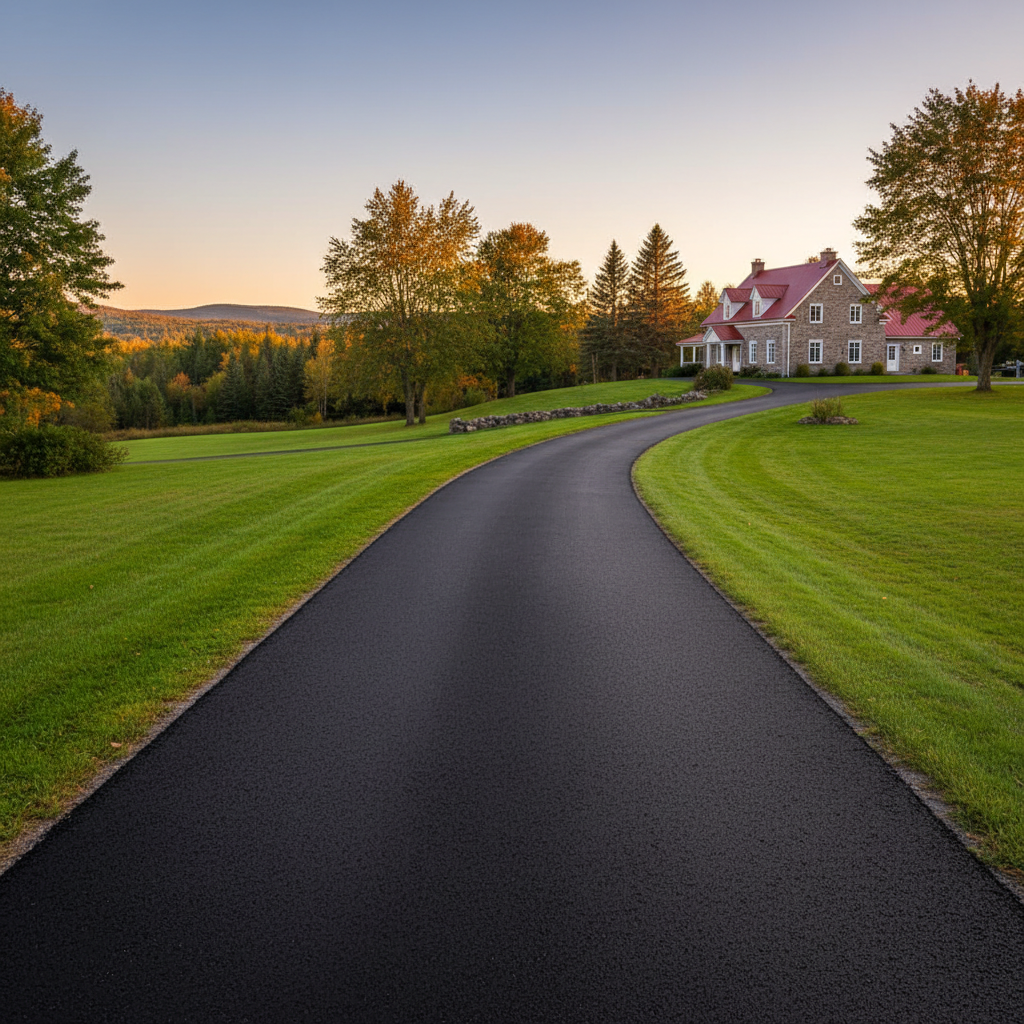
Driveway paving options and costs in Anmore
Anmore, British Columbia is a classic Lower Mainland–Southwest community, and most driveways here are tied to single-detached homes—71.1% of dwellings in the 2021 Census profile, with homeowner households making up 91.3% of all households (Statistics Canada, 2021 Census). That matters because driveway work is typically a “single property, high-visibility” project: customers want clean grading, good drainage, and a finish that survives our wet winters without turning into a patchwork of repairs.
Pricing in Anmore is shaped more by intense rainfall and drainage than by deep frost. Even though coastal frost penetration is relatively shallow, local practice still plans bases and sensitive infrastructure around a frost line roughly in the 18" range. In addition, clay-heavy pockets in parts of the Fraser Valley can hold water, so contractors lean on granular base thickness, proper compaction, and well-formed slopes. That’s why you’ll see costs clustered closer to the mid-to-upper end of the Lower Mainland bands for projects that need significant excavation, drainage correction, or full tear-out.
We also see higher demand around the Northwest Anmore / Morgan Creek area when homeowners replace old gravel and tighten drainage before the rainy season. From there, the decision usually comes down to asphalt versus pavers versus concrete—and how much you want to pay now versus how often you want to maintain. The comparison table below uses common residential thicknesses and local pricing ranges for Anmore so you can benchmark quotes.
| Material |
Lifespan |
Maintenance |
Best For |
Price per sq ft |
| Asphalt (new installation, proper base) |
12–20 years |
Seal coat every 3–5 years; patch as needed |
Best balance of upfront cost and smooth driving surface |
$12–$20 |
| Asphalt (overlay on existing gravel base) |
8–14 years |
Seal coat when surface condition requires; more frequent patching |
Smaller budgets when base is sound and drainage is proven |
$10–$16 |
| Interlocking concrete pavers |
20–30 years (panel-by-panel repair) |
Re-level minor areas; replace individual pavers if needed |
Curb appeal and repairability for visible driveways |
$20–$40 |
| Poured concrete (broom finish) |
20–30 years |
Crack monitoring; occasional patching |
Low ongoing hassle with a clean, solid look |
$18–$35 |
| Exposed aggregate concrete |
20–30 years |
Seal for stain resistance; repair spalls quickly |
Non-slip texture and upscale appearance |
$22–$40 |
| Gravel / crushed stone (budget option) |
3–8 years |
Top up annually; re-grade; weed control |
Short-term solution or steep-budget constraints |
$4–$10 |
Prices are estimates only and vary by project scope, site access and material selection.
What affects the price of paving in Anmore
In the Lower Mainland–Southwest and across British Columbia, it’s common to see the “same” driveway quoted 30–50% apart. The differences usually aren’t about asphalt or pavers themselves—they’re about what’s happening underground: excavation depth, base preparation, drainage corrections, and whether the contractor is priced to deliver compaction and thickness that can handle our wet seasons. Labour rates and scheduling pressure also play a role because winter rain and shoulder-season storms can compress workable windows, pushing some projects into tighter availability and higher minimum crew costs.
Frost line depth and freeze–thaw cycles are decisive cost factors even in coastal BC. Where deeper frost is present, you generally need thicker compacted granular base (6–12 inches in Ontario/Alberta versus 4–6 inches closer to coastal BC) to prevent heaving and cracking. In Anmore, the practical approach is to treat the driveway as freeze–thaw infrastructure: repeated temperature swings around that shallow frost line plus moisture movement demands granular thickness and drainage detailing. That’s why a driveway that truly needs only surfacing will land nearer the $12–$20 asphalt range, while a driveway needing drainage rework, full tear-out, or additional base material can push you toward the upper end of the same band.
Concrete costs can swing as well. For example, an air-entrained concrete pour with proper base can land in the $18–$35 band, but if the contractor encounters saturated subgrade and must over-excavate and rebuild with engineered fill, that can move the number upward quickly. Conversely, a well-drained site with straightforward access and minimal utility conflicts can keep concrete closer to the mid-range. With only 12.8% of homes built before 1981 (Statistics Canada, 2021 Census), many Anmore properties are newer—but older drainage patterns, existing driveway edges, and buried downspout runoff still commonly require fixes regardless of home age.
| Price Factor |
Why It Matters |
Cost Impact |
| Driveway area in sq ft |
Most material and labour scale directly with surface area |
Major: can change total cost the fastest |
| Base depth required |
Frost line planning determines granular thickness and compaction effort |
Major: thicker base increases excavation and aggregates |
| Grading and drainage work |
Proper slope and drainage reduce moisture movement under asphalt/concrete |
High: can involve regrading, drains, or adding gravel layers |
| Tear-out of existing surface |
Concrete/asphalt breaking and hauling adds equipment time and disposal costs |
High: can add significant line-items |
| Edge restraints and curbing |
Prevents paver spread and protects asphalt/concrete edges |
Medium: often overlooked but necessary for longevity |
| Sealing requirement |
Asphalt performs better with seal coats after cure and through wet seasons |
Medium: adds a planned maintenance cost |
| Site access |
Narrow lots slow equipment movement and may require smaller crews or extra labour |
Medium: can raise labour costs |
| Asphalt mix specifications |
Freeze–thaw rated mix designs cost more but resist moisture damage |
Medium: shifts material price and mix availability |
Permits & regulations in British Columbia
In British Columbia, paving a private driveway within your own property usually does not require a building permit. However, once the work touches the municipal right-of-way, you should expect municipal approval. In Anmore, that typically includes any new or altered curb cut, changes to the boulevard configuration, or work that impacts storm drainage (for example, reconnecting or modifying drains/ditches so runoff flows as intended). Some municipalities also apply lot-grading bylaws that can restrict how close a hard surface can be to property lines or require specific runoff handling to avoid diverting water to neighbours.
Regardless of permit needs, always call for utility locates before excavation—BC 1 Call (and equivalent provincial processes) helps prevent utility strikes. Step-by-step, here’s how a homeowner in Anmore can verify a contractor’s credentials: (1) confirm licensing status through the appropriate BC contractor/labour information sources (or the contractor’s published registration details), (2) request a certificate of liability insurance and verify it’s active for the job period, and (3) ask for coverage proof for workers—commonly including WSBC/WCB coverage documentation. Then ask for clearance or confirmation letters where available. Keep everything in writing so your quote, scope, and coverage align.
Asphalt vs pavers vs concrete for Anmore driveways
For Anmore driveways, all three materials can work well, but they fail differently when drainage isn’t perfect—which matters because Lower Mainland–Southwest weather is dominated by heavy rainfall. Asphalt is typically the lowest upfront option (often landing in the $12–$20 per sq ft range when the base is properly built). It needs a seal coat every 3–5 years to protect against moisture intrusion and surface aging, especially during wet winters. Interlocking concrete pavers cost more upfront (commonly within the $20–$40 band), but they’re the most repairable: if a spot settles or a drainage issue appears, individual blocks can be re-lifted, corrected, and re-set without replacing the entire driveway.
Poured concrete usually sits mid-range (often $18–$35), and when it’s air-entrained and properly finished, it handles freeze–thaw better than non-air-entrained mixes. Still, concrete can crack due to shrinkage or subgrade movement—so base preparation and drainage are what determine whether you see fine cosmetic cracking or more concerning movement. In practical terms, all three options should be built with a properly compacted granular base sized for the local freeze–thaw approach (even if frost is shallower than interior BC), plus a drainage design that sheds water away from the driveway structure.
A concrete example: if one quote offers asphalt around the $12–$20 band but excludes meaningful drainage correction, and another quote proposes full base rebuild and proper slopes that brings the project closer to the upper end, that difference is justified. Conversely, paying paver premium for a straightforward, well-drained site can be harder to “earn back” unless you value curb appeal or you expect future repairs. The best choice is the one that matches your site’s drainage reality first, and your budget second.
| Material |
Frost Resistance |
Curb Appeal |
Repair Method |
Lifespan |
Price Band |
| Asphalt (sealed regularly) |
Good with proper base and seal maintenance |
Medium (clean, dark finish) |
Mill/patch sections; surface re-seal |
12–20 years |
$12–$20 |
| Interlocking concrete pavers |
Very good when base/sub-base is engineered |
Highest (variety of patterns/colours) |
Lift individual units and reset |
20–30 years |
$20–$40 |
| Poured concrete (air-entrained) |
Good to very good if air-entrained and well-supported |
Medium (can be upgraded with finishes) |
Patch/route and replace damaged sections |
20–30 years |
$18–$35 |
| Exposed aggregate concrete |
Good with proper base and curing |
High (textured premium look) |
Patch repairs are more visible but localized |
20–30 years |
$22–$40 |
| Permeable pavers (drainage grid) |
Very good where drainage capture is required |
High (modern drainage-focused look) |
Lift and replace sections; inspect underdrain |
15–25 years depending on base design |
$25–$50 |
| Chip seal / tar-and-chip |
Moderate (serviceable with good maintenance) |
Low to medium (texture varies) |
Re-chip/maintenance overlays |
7–12 years |
$8–$15 |
How to choose a paving contractor in Anmore
Choosing the right paving contractor in Anmore is mostly about verifying coverage and matching the quote to the actual conditions under your driveway. In British Columbia, confirm licensing information that the contractor is operating within the correct scope for the work being proposed, and request proof of liability insurance (certificate of insurance with active dates and jobsite coverage). For workers, ask for WSBC/WCB clearance or coverage documentation—don’t rely on “we’re covered” statements. If you’re shopping quotes, the contractor should provide this documentation early, not after you decide.
Next, get 2–3 itemised written quotes. You want a breakdown that separates excavation, base gravel, compaction, drainage corrections, asphalt/pavers/concrete supply, installation, and disposal. Avoid vague “includes all taxes” language that hides exclusions. Check whether a permit pull is included if the work is in the boulevard/right-of-way, and whether disposal of removed asphalt/concrete is included or billed separately. For warranties, ask for the workmanship warranty length (often stated as a period for installation), product/manufacturer warranty details, and whether the warranty transfers if you sell the home.
For payment, keep deposits reasonable: never pay more than 10–15% upfront. Use a holdback until the job is complete and you’ve verified grading, edge treatment, and finish quality. Finally, ask for a written timeline with a start date window and completion estimate—seasonal weather can affect asphalt and concrete cure and scheduling.
- Request insurance and coverage proof before scheduling equipment.
- Ask for an itemised quote (labour vs materials) rather than a lump sum.
- Confirm base depth and compaction standards in writing.
- Ensure drainage slope and any subdrain fixes are explicitly included if needed.
- Verify tear-out scope: what’s removed, how it’s hauled, and what it costs.
- Confirm edge restraints/curb details for pavers and exposed edges.
- Ask how they handle saturated subgrade (over-excavation vs patching).
- Check whether seal coats for asphalt are planned (and when) if required.
- Review warranty for workmanship and whether it covers settlement and workmanship defects.
- Clarify disposal and site restoration (topsoil/landscaping impacts).
- Confirm timeline assumptions for rain and shoulder-season work windows.
- Get everything in writing: scope, exclusions, start date window, and completion.
Red flags specific to paving quotes in Anmore: (1) missing base thickness/compaction details, (2) “we can overlay” without checking drainage or subgrade saturation, (3) no mention of edge restraints for pavers, (4) vague warranty language like “best effort” instead of a defined workmanship period, and (5) asking for large upfront payments with no signed scope or schedule.
Frequently asked questions — paving in Anmore
How do I compare paving quotes fairly?
Start by comparing apples to apples: each quote should show the same driveway area (sq ft) and the same scope for excavation, base depth, drainage work, and tear-out. In Anmore, drainage correction is often the hidden cost driver, so make sure one contractor isn’t quietly excluding grading, subdrain work, or proper granular base replacement—those omissions can swing total price by 30–50% across the Lower Mainland–Southwest market. Ask for an itemised breakdown (not a single number) so you can see whether you’re paying for compaction, not just material supply. If asphalt is proposed, ask for the surface thickness and whether a freeze–thaw-rated mix is included. As a benchmark, many asphalt driveway installs with proper base land in the $12–$20 per sq ft range.
Can asphalt be laid in cold weather in Anmore?
In British Columbia’s Lower Mainland–Southwest, you can sometimes pave later in the season, but asphalt still needs workable air temperatures and proper curing conditions. Hot-mix asphalt generally requires air temperatures above about 10°C for reliable placement and compaction, and rain can complicate the surface if temperatures drop quickly. In Anmore, heavy rain and shoulder-season storms often shorten viable work windows even when day temperatures look mild. A reputable contractor will confirm the forecast, protect the sub-base, and sometimes adjust schedule rather than pushing through. If a company offers to pave during cold snaps without a plan for curing and surface protection, that’s a quality risk—especially when moisture and freeze–thaw cycles can start acting on the base once the season turns.
What is a driveway apron and do I need one in Anmore?
A driveway apron is the paved/finished transition area between your driveway and the road curb or driveway cut, designed to create a smooth, stable ramp and protect edges from crumbling and washboarding. In Anmore, whether you need an apron depends on where your driveway ties into the street and whether your curb cut and boulevard are being modified. If the work impacts the municipal right-of-way (like a new curb cut or changes to storm drainage patterns), municipal approval is typically required. Your contractor should confirm whether the apron is part of your scope and whether it matches the surrounding grade. For many homeowners, adding or renewing the apron improves the long-term performance of the asphalt edge and helps prevent water from routing underneath the driveway structure.
How do I maintain my driveway through Anmore winters?
Maintenance in Anmore is mostly about managing water and catching small issues early. After freeze–thaw starts, watch for surface depressions, ponding, and edge breakdown—those are signs the base or drainage isn’t performing as intended. For asphalt, plan crack cleaning and patching promptly and keep up with seal coats on a reasonable cycle (commonly every 3–5 years) to reduce moisture intrusion through hairline cracks. Avoid aggressive de-icing practices that can damage surface texture; use sand sparingly for traction instead of heavy salt application wherever possible. For pavers, remove snow with a plastic shovel/brush to prevent chipping and check for minor settling so panels can be re-levelled before it becomes a larger drainage problem. The most important winter “maintenance” is actually preventing water from accumulating on the driveway surface.
Is it worth sealing a new driveway right away in Anmore?
In most cases, you should not seal a brand-new asphalt driveway immediately. Asphalt needs time to cure and release moisture so the seal coat bonds properly. In Anmore’s rainy climate, applying too soon can trap moisture and reduce performance. Many driveway projects have a window where sealing is done after the asphalt has cured—often after a season or within the first year depending on product and weather conditions. If you have a quote in the $12–$20 per sq ft range, ask whether the contractor’s plan includes sealing and when it will be applied. A good contractor will outline the cure timeline, recommend surface prep before sealing, and explain how the seal coat fits into your long-term maintenance schedule.
What is a chip seal driveway and is it suited to Anmore?
Chip seal (tar-and-chip) is a thin asphalt binder sprayed with aggregate chips to form a textured wearing surface. It can be a practical option for certain driveways because it’s typically lower upfront cost than full asphalt paving—often falling around the lower end of paving budgets—but it’s also more maintenance-sensitive. In Anmore, the Lower Mainland–Southwest mix of heavy rainfall and seasonal wet periods can wear the surface faster if drainage is poor or if the binder loses integrity due to moisture movement. Chip seal can be suited when the driveway has solid base preparation and good slope control, and when you’re willing to budget for periodic rework. For many homeowners seeking longer-lasting, smoother performance without frequent touch-ups, new asphalt in the $12–$20 band or pavers (often $20–$40) are the more predictable long-term choices.