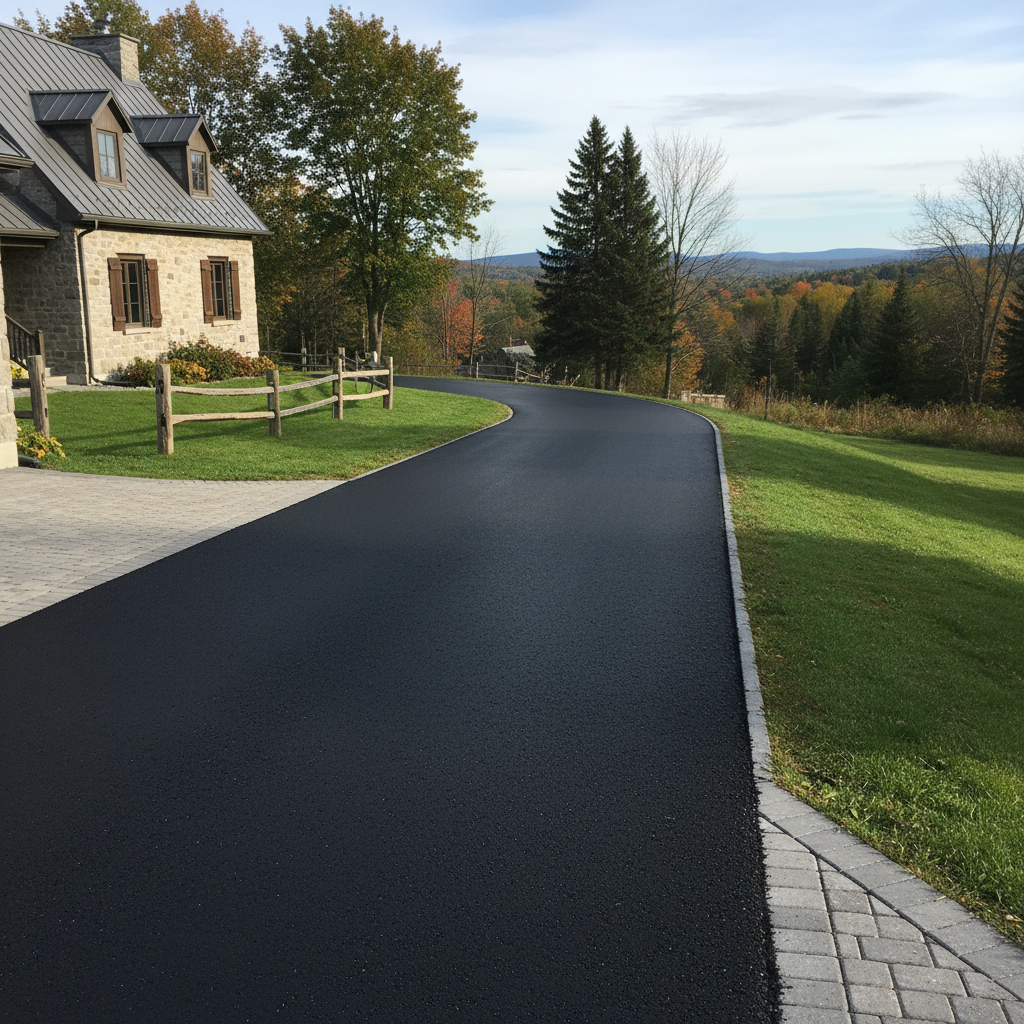
Driveway paving options and costs in Highlands
In Highlands, British Columbia, driveway paving choices usually come down to three things: how your property is set up (access and drainage), how your base is engineered, and how you want the surface to look for the long run. With most local homes being owner-occupied—885 homeowner households out of 1,000—driveways are a major “curb-to-curb” improvement homeowners tend to plan around (Statistics Canada, 2021 Census). Highlands also has an overwhelming share of single-detached homes (94.5% of dwellings), so private driveway work is the norm rather than the exception.
Vancouver Island and the Coast have a mild coastal climate, but frost and repeated freeze-thaw cycles still matter around neighbourhoods like Saanich-style terrain and wet low spots near seasonal drainage paths. That means pricing isn’t just about surface square footage; it’s also about proper excavation, a well-compact compacted road base, and water management at transitions to the street. Because Highlands sits on Vancouver Island markets, material and trucking costs can run higher than some mainland areas, and scheduling tightens in the short, wetter shoulder seasons.
As a result, a “like-for-like” quote can differ depending on base depth, whether we’re tearing out existing asphalt or gravel, and how much edging and drainage correction is required. Use the table below as a realistic starting point for comparing options before you request an itemised estimate.
| Material |
Lifespan |
Maintenance |
Best For |
Price per sq ft |
| Asphalt (new installation, proper base) |
15–25 years |
Sealcoat every 3–5 years; spot patch as needed |
Balanced cost, smooth ride, good value with engineered base |
$10 – $20 |
| Asphalt (overlay on existing gravel base) |
10–18 years |
Sealcoat every 3–5 years; monitor settlement spots |
When you have solid compaction and minimal base work |
$9 – $16 |
| Interlocking concrete pavers |
25–40 years |
Occasional panel replacement; re-screed and re-level if needed |
High curb appeal, repairability, long-term flexibility in freeze-thaw areas |
$25 – $45 |
| Poured concrete (broom finish) |
25–35 years |
Minimal routine maintenance; occasional sealing optional |
Clean lines, wheelchair-friendly grade, strong performance with drainage |
$18 – $35 |
| Exposed aggregate concrete |
25–35 years |
Reseal as recommended (typically every 5–8 years) |
Slip resistance and decorative texture without sacrificing strength |
$22 – $40 |
| Gravel / crushed stone (budget option) |
3–8 years (varies widely) |
Re-grade and top up; weed control; edging maintenance |
Short-term solution or low-traffic access |
$4 – $10 |
Prices are estimates only and vary by project scope, site access and material selection.
What affects the price of paving in Highlands
In Highlands, two neighbours can receive quotes that differ by 30–50% even when the driveway looks similar, because the job hidden under the surface is rarely identical. Across Vancouver Island and the Coast, and more broadly throughout British Columbia, contractor availability, hauling distances for aggregate/asphalt, and how much excavation is required all influence labour and material costs. In practice, the biggest cost drivers are always the engineered base, drainage corrections, and the amount of demolition—rather than the final asphalt or concrete thickness you can see.
Frost line depth and freeze-thaw cycles are decisive cost factors in our coastal region. While coastal BC typically needs less granular depth than colder Interior zones, Highlands still sees localized freezing around edges, low spots, and transitions where water collects. When base thickness is undersized or drainage is poor, freeze-thaw pressure can force movement, leading to heaving and cracking that then triggers more patching. On colder and drier zones we often see 6–12 inches of compacted granular base used as a rule of thumb; in coastal BC we commonly design around roughly 4–6 inches when soils, compaction, and drainage are favourable—yet that can increase if we need to dig out unsuitable material.
Concrete examples in Highlands: if your driveway ties into an older, settled curb area, we may need extra forming and subgrade correction before broom-finished concrete will perform. If you’re paving over older asphalt that’s fractured, removal and re-compaction pushes the project upward, regardless of whether you choose asphalt or pavers. A properly engineered new asphalt installation often lands in the $10 – $20 per sq ft band, while pavers typically sit higher in the $25 – $45 per sq ft band because of excavation, base layers, and detailed edging.
| Price Factor |
Why It Matters |
Cost Impact |
| Driveway area in sq ft |
Most materials and labour scale directly with surface area and thickness. |
High (primary driver) |
| Base depth required |
Frost protection comes from compacted granular thickness and quality. |
High |
| Grading and drainage work |
Fixing slope, adding swales, and redirecting runoff prevents water-driven failure. |
Medium–High |
| Tear-out of existing surface |
Removal, breaking, trucking, and disposal add time and equipment costs. |
High |
| Edge restraints and curbing |
Prevents paver spread and keeps asphalt/concrete edges from rolling. |
Medium |
| Sealing requirement |
Asphalt needs sealcoat to protect binder from moisture and weathering. |
Low–Medium (ongoing cost) |
| Site access |
Narrow drives, steep grades, and limited staging slow production and raise costs. |
Medium |
| Asphalt mix specifications |
Freeze-thaw rated mixes and binder content can cost more but improve durability. |
Medium |
Permits & regulations in British Columbia
In British Columbia, paving a private driveway within your own property usually doesn’t require a building permit. Where permits and municipal approvals come in is when your work impacts the municipal right-of-way—especially at the point where your driveway meets the street. That includes new or modified curb cuts, changes to boulevard grading, adjustments that alter storm drainage flow, or any work within the area controlled by the municipality.
For Highlands homeowners, the safest approach is to treat right-of-way work as “approval required” and document what you’re changing before the first shovel lifts. Step-by-step, verify the contractor’s credentials and compliance: (1) ask for their BC licence details and confirm they’re a legitimate registered contractor for the scope of work; check any online registry listings they provide. (2) Request a certificate of insurance showing general liability coverage; your contractor should also carry proof of coverage that matches the job risk (for example, coverage for workers involved on-site). (3) Confirm their workers’ compensation coverage and provide the documentation/clearance letter they use to demonstrate compliance before work starts.
Also call for utility locates before excavation—BC 1 Call is the standard starting point—then confirm any lot-grading bylaws that may restrict how close you can hard-surface or alter drainage near property lines. Once approvals and locates are in place, scheduling can move quickly into the workable paving window for our coastal conditions.
Asphalt vs pavers vs concrete for Highlands driveways
When you’re choosing between asphalt, interlocking pavers, and concrete in Highlands, the “best” material is the one that matches your base preparation and drainage—not just the first cost. In our Vancouver Island and Coast freeze-thaw environment, water control is everything. Asphalt typically offers the lowest upfront cost and a smooth ride, but it does require sealcoat every 3–5 years to protect the binder and reduce moisture damage. Interlocking pavers cost more to install, yet they’re highly repairable: if you ever have a localized base issue from settlement or drainage changes, individual units can be lifted, the problem corrected, and the surface rebuilt without tearing out a whole slab. Poured concrete sits in the middle for cost, but it can crack if the subgrade isn’t stable or if freeze-thaw cycles create movement—especially if de-icing salts are used heavily and the concrete isn’t properly air-entrained.
Base prep for Highlands still needs frost-aware design. Even with a relatively shallow frost line compared with colder provinces, we still excavate and compact to a depth that accounts for freeze-thaw pressure near edges and low points. Drainage design matters: we’ll slope away from the house and manage water at transitions to reduce long-term heaving and surface break-up.
Example: if your driveway is around 500 sq ft, asphalt at roughly $10 – $20 per sq ft versus pavers at $25 – $45 per sq ft can easily shift the total by several thousand dollars—yet that difference is often justified when you want maximum curb appeal, easier repairs, or when your site has a history of minor settlement. Asphalt can still be the right call when access and base conditions are straightforward and you’re comfortable planning sealcoat.
| Material |
Frost Resistance |
Curb Appeal |
Repair Method |
Lifespan |
Price Band |
| Asphalt (sealed regularly) |
Good with proper base and drainage; sensitive to water |
Moderate (clean, smooth finish) |
Mill/patch and re-pave localized sections |
15–25 years |
$10 – $20 |
| Interlocking concrete pavers |
Very good; flexible surface over engineered base |
High (varied colours/patterns) |
Lift-and-replace pavers in affected zones |
25–40 years |
$25 – $45 |
| Poured concrete (air-entrained) |
Good when air-entrained and properly reinforced/supported |
Medium (broom finish or stamped/exposed options) |
Small cracks may be patched; larger issues can require section replacement |
25–35 years |
$18 – $35 |
| Exposed aggregate concrete |
Good; depends on mix, finishing, and drainage |
High (decorative texture) |
Patch/replace affected areas when needed |
25–35 years |
$22 – $40 |
| Permeable pavers (drainage grid) |
Excellent for water management when designed correctly |
High (modern look) |
Lift-and-replace pavers; maintain stone reservoir as specified |
25–35+ years |
$30 – $55 |
| Chip seal / tar-and-chip |
Fair to good; best as a coating over suitable base |
Low–Moderate (texture, not “pavement-perfect”) |
Spot recoat and surface maintenance |
7–15 years |
$8 – $15 |
How to choose a paving contractor in Highlands
Picking the right paving contractor in Highlands is less about flashy photos and more about proof. Start with licensing and coverage. In British Columbia, request the contractor’s business licence/registration details relevant to the work and the specific scope they’ll perform, then ask for a certificate of insurance showing general liability. For worker protection, confirm workers’ compensation coverage documentation (the clearance letter or proof package they provide) before the first day on-site. If they can’t produce it quickly, that’s a serious warning.
Next, get 2–3 itemised written quotes—never a “lump sum only” number. You want a breakdown that separates excavation, disposal, base material and compaction, asphalt/concrete/paver supply, edging, and any drainage grading. Check what’s excluded: permit pull (if any right-of-way approval is required), utility locating, topsoil restoration, landscaping reinstatement, and cleanup. Disposal is often overlooked—missing hauling/disposal costs are a common reason projects exceed initial expectations.
Warranty matters. Ask for workmanship warranty length, what it covers (settlement? workmanship defects? surface cracking?), and whether coverage is transferable if you sell your home. Payment schedules should be conservative: never pay more than about 10–15% upfront, and use holdback until completion and final walkthrough.
- Confirm their BC licence/registration and ask for the exact scope they are contracted for.
- Request a certificate of insurance with stated limits and job-site coverage.
- Verify workers’ compensation clearance/proof before work starts.
- Get 2–3 itemised quotes with labour and material breakdowns (not lump sum only).
- Insist on a written scope: excavation depth, base type, and compaction requirements.
- Ask who handles disposal/hauling of removed asphalt/concrete/soil.
- Confirm whether utility locates are included or if you must arrange them.
- Clarify edging/restraints and whether they’re included in the base design.
- Check if drainage/grading corrections are part of the quote or considered extra.
- Review warranty terms for workmanship and product/system warranty details.
- Use a payment schedule with 10–15% max upfront; keep holdback until final acceptance.
- Request a start date and realistic completion window in writing.
In Highlands, red flags we see include contractors who won’t provide insurance or workers’ compensation proof, quotes that don’t specify base depth or drainage work, “free upgrades” with no written scope, crews starting before utility locates are done, and warranties limited to a short period with vague wording.
Frequently asked questions — paving in Highlands
What causes potholes and how are they repaired?
Potholes in Highlands are usually the result of water getting into weak spots below the surface. In our Vancouver Island and Coast freeze-thaw pattern, trapped moisture expands when temperatures drop, loosening the base and breaking the asphalt surface. Common causes include poor drainage at edges, insufficient base compaction, or cracks that let water infiltrate until voids form. Repairs typically involve cutting back to stable material, removing any saturated/failed base, re-compacting and re-laying asphalt in lifts, and then feathering the edges to match. If the surrounding area is already brittle, a patch can return quickly; in those cases, a larger mill-and-replace or an overlay may be a more durable fix. A reputable contractor should show you where the water is coming from before patching.
How do I prepare for a paving project?
Preparation starts with making the site accessible and clear. Move vehicles, trailers, and plan for foot traffic reroutes because excavation and delivery staging can affect the driveway width. If you have sprinklers, confirm shutoff timing so equipment isn’t damaged during work. Arrange utility locates before excavation—BC 1 Call is the correct starting point—and ask your contractor whether they schedule locates or you need to. If landscaping ties into the driveway, request a clear scope for demolition, disposal, and reinstatement. It also helps to know what you’re keeping: for example, if you want an asphalt finish in the $10 – $20 per sq ft band, base and drainage scope must be confirmed up front so you’re not surprised by additional excavation. Finally, plan for temporary gravel or partial access if the job spans multiple days.
How do I compare paving quotes fairly?
Compare quotes line-by-line, not by the total. Ask each contractor to break down excavation depth, base material type, compaction, edging/curb restraint, and disposal. In Highlands, frost and freeze-thaw performance depends heavily on the base and drainage, so a cheaper quote may be using less excavation or a thinner granular structure. Also check the product selection: asphalt mix design (freeze-thaw rated), concrete air entrainment, and paver bedding/screed details. Make sure the quotes cover the same demolition scope (full tear-out vs overlay) and any grading required to manage water. If you’re comparing asphalt to pavers, note that pavers typically fall in the $25 – $45 per sq ft range because of labour-intensive detailing and the repairable structure. Finally, confirm warranty terms and payment schedules match.
Can asphalt be laid in cold weather in Highlands?
Asphalt can be laid in cool temperatures, but it’s not a simple “yes/no” in Highlands. Hot-mix asphalt placement generally requires warm enough air and surface conditions for proper compaction and binder performance; many crews use thresholds around 10°C for air temperature to avoid poor compaction and early deterioration. During shoulder seasons on Vancouver Island, wet ground and low temperatures can slow production and increase the risk of premature cracking. If we’re paving outside the ideal window, the contractor should explain how they’ll protect the mat, manage weather exposure, and adjust placement timing. If conditions aren’t workable, it’s better to schedule within a proper window than to chase a date—especially because our freeze-thaw cycles punish weak early workmanship. A responsible contractor will be upfront about weather-driven scheduling and may recommend delay rather than “forcing” the pour.
What is a driveway apron and do I need one in Highlands?
A driveway apron is the transition area between your driveway and the street—often at the curb cut—meant to manage turning loads, prevent edge breakdown, and protect the interface from washboarding and cracking. In Highlands, you may need an apron (or apron-style treatment) when your driveway connection is uneven, when there’s minor settlement at the curb area, or when the driveway edge needs reinforcement to prevent paver spread or asphalt edge failure. Whether it requires municipal approval depends on whether you’re changing work within the municipal right-of-way, such as curb cut adjustments or boulevard grading. Ask your contractor to confirm what they’re proposing at the street interface in writing. A well-designed apron can also reduce the water ponding that leads to freeze-thaw damage—one of the most common drivers of future repairs.
How do I maintain my driveway through Highlands winters?
Winter maintenance is mostly about controlling water and reducing stress on the surface. Keep an eye on drainage: if you see water ponding at the driveway edges after rain, note where it collects so the next service visit can address grading or spot drainage. For asphalt, plan sealcoat maintenance—many homes benefit from sealcoat every 3–5 years, and fresh seal helps protect the binder from moisture intrusion. Avoid aggressive scraping that chips the surface and try to remove snow promptly to prevent repeated ice formation. If you use sand or de-icers, use them conservatively; heavy de-icing salt can accelerate surface deterioration on concrete, especially if cracking develops from freeze-thaw movement. For pavers, keep joints topped with the right polymeric sand if your installer specifies it, and avoid pulling out the bedding during snow clearing. The small habits are what prevent the “water-in, freeze, expand” cycle from starting again.