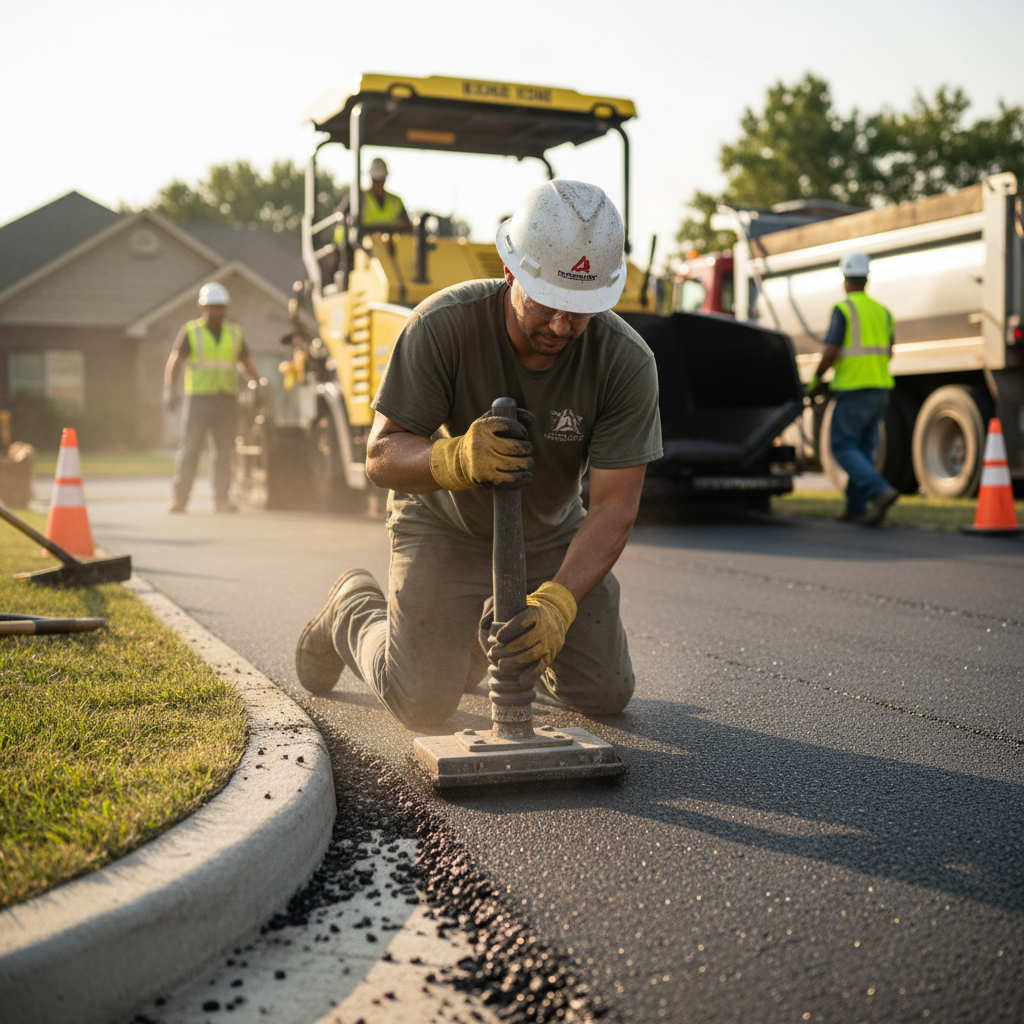
Driveway paving options and costs in Burns Lake
Burns Lake homeowners usually have a few clear driveway paving paths, and the “right” one comes down to freeze–thaw performance, drainage, and how much maintenance you’re willing to do. With 64.2% of dwellings being single-detached homes (Statistics Canada, 2021 Census), most private driveways in town are tied to detached properties—so demand is concentrated around neighbourhoods with steady house lots rather than multi-unit streets. In 2021, Burns Lake had 410 homeowner households, which helps explain why you’ll see contractor schedules tighten quickly once the weather cooperates.
In the Nechako area, cold continental winters and a deep frost line are the main technical cost drivers. Repeated freeze–thaw cycles push moisture through the structure, so proper jobs in Burns Lake require deeper, well-graded granular bases, strong positive drainage (ditching/crossfall), and careful compaction. Mobilizing heavy equipment and doing extra excavation in glacial till or clay can raise labour and haul costs compared with milder parts of BC.
We also work with a short paving season, typically late spring through early fall, because asphalt typically needs warmer conditions (air temperatures above 10°C) to place and compact properly. That seasonality can nudge unit rates above Metro Vancouver norms, especially for small or rushed jobs.
If you drive through Francois Lake Road area or the older-lot sections closer to the downtown corridor, you’ll notice more pavements needing renewal—many homes are older; 61.6% of dwellings were built before 1981 (Statistics Canada, 2021 Census), and older subgrades often need more base correction. Use the table below to compare typical material choices and price expectations before we talk site-specific details.
| Material |
Lifespan |
Maintenance |
Best For |
Price per sq ft |
Price Range |
| Asphalt (new installation, proper base) |
15–25 years |
Seal every 3–5 years; patch as needed |
Clean, newly built driveways; good value with correct base and drainage |
$5.50–$7.50 |
$12,000–$18,000 |
| Asphalt (overlay on existing gravel base) |
10–18 years |
Seal every 3–5 years; spot repairs sooner if base is weak |
When you want asphalt but need less excavation than full replacement |
$4.80–$6.80 |
$9,000–$15,000 |
| Interlocking concrete pavers |
25–40 years |
Weed control; re-screed/replace individual stones |
Curb appeal and future repairs without tearing out everything |
$8.50–$12.50 |
$18,000–$28,000 |
| Poured concrete (broom finish) |
20–30 years |
Crack monitoring; joint maintenance; sealing optional |
Low visual maintenance; straightforward driveway shapes |
$7.50–$11.00 |
$20,000–$30,000 |
| Exposed aggregate concrete |
20–35 years |
Occasional seal depending on surface; repairs are patch-based |
High slip resistance and a premium look |
$10.00–$14.00 |
$24,000–$36,000 |
| Gravel / crushed stone (budget option) |
3–7 years (varies widely) |
Top-up and re-grade; weed control |
Temporary coverage or very low budget before full build-up |
$3.00–$5.00 |
$6,000–$10,000 |
Prices are estimates only and vary by project scope, site access and material selection.
What affects the price of paving in Burns Lake
In Burns Lake and across the Nechako region, it’s common to see quotes for the “same” driveway come in 30–50% apart. The biggest reason isn’t the asphalt or concrete itself—it’s the foundation build: frost protection, drainage corrections, and how much excavation is required to reach a stable subgrade. In softer parts of BC, crews can sometimes get away with thinner base and less aggressive drainage detailing, but here the freeze–thaw cycle is the rule, not the exception.
Specifically, frost-line performance drives granular thickness. For colder continental areas, we typically design with deeper compacted granular bases (often in the 4–6 inch range as a minimum concept in milder coastal areas, versus deeper assemblies in colder regions). For Burns Lake, the “right” thickness is determined by soil conditions and how much moisture movement we have—then we confirm compaction and gradation. That’s why two driveways of the same size can price differently if one lot has clay pockets or a higher water table.
Seasonality also affects pricing. Asphalt placement generally requires air temperatures above 10°C, and the paving season here is late spring through early fall. When scheduling gets tight, small jobs can carry a premium, and rain or cold snaps can shift crews to the next workable window. On the concrete side, we see cost swings from joint layout, air-entrainment requirements, and how much base stabilization is needed so slabs don’t heave.
To put it in dollars: if your current surface is failing and needs full tear-out, you might move from a typical asphalt driveway band (often around $12,000–$18,000) toward the higher end due to haul and excavation. If you choose interlocking pavers, labour for base prep and edging typically lifts the project into the $18,000–$28,000 band, but repairs later can be much cheaper than replacing an entire slab or asphalt cap.
| Price Factor |
Why It Matters |
Cost Impact |
| Driveway area in sq ft |
Material and labour scale directly with square footage |
Usually the largest cost driver (often 50–70% of total) |
| Base depth required |
Frost line and moisture control determine granular thickness |
Higher base can add excavation/haul and compaction time |
| Grading and drainage work |
Crossfall, ditches, and subdrain routes reduce trapped water |
Can add mid-range costs if regrading is significant |
| Tear-out of existing surface |
Breaking and hauling concrete or old asphalt affects disposal |
Often a major swing factor; can increase project by 10–25% |
| Edge restraints and curbing |
Prevents paver spread and asphalt edge failure |
Adds materials and labour, especially on curved driveways |
| Sealing requirement |
Asphalt needs proper sealing after installation and re-seals later |
Typically small upfront line item; long-term budgeting matter |
| Site access |
Narrow lots slow equipment movement and raise labour time |
May require smaller equipment or more manual handling |
| Asphalt mix specifications |
Freeze–thaw rated mixes help resist rutting and early surface failure |
Higher-spec mix can raise unit rates modestly |
Permits & regulations in British Columbia
In British Columbia, paving a private driveway within your own property generally does not require a building permit. Most straightforward work—such as asphalt surfacing, interlocking pavers, or concrete within your lot limits—falls under normal private property improvements. However, you may need municipal approval (or a permit process) when the work affects the municipal right-of-way or site drainage in a way the municipality regulates.
Work that typically DOES require municipal approval includes: creating or modifying a new driveway entrance (for example, a new curb cut or access point across the boulevard), changing the boulevard area, and altering storm drainage that ties into municipal systems. Some municipalities also regulate lot grading and drainage patterns, including how close hard surfaces and surface grades can be to property lines and how water must be directed.
Before excavation in Burns Lake, always confirm utility locates (in BC, use BC 1 Call) so the contractor can mark services and avoid costly damage. Step-by-step, homeowners should also verify the contractor’s credentials: (1) check their BC licence status (when applicable for their trade), (2) request a certificate of insurance that matches the job address and dates, and (3) confirm they carry required worker coverage and can provide proof/clearance documentation. If a company can’t provide clear, current certificates, treat that as a red flag and ask for the documents before signing.
Asphalt vs pavers vs concrete for Burns Lake driveways
When choosing between asphalt, interlocking concrete pavers, and concrete in Burns Lake, you’re really choosing how each surface handles Nechako freeze–thaw cycling, how water is managed, and how future repairs will be handled after winters and plowing. All three can perform well when the base is built for frost control and drainage is correct—this is non-negotiable in a deep-frost environment.
Asphalt is usually the lowest upfront cost. With correct compaction and a well-graded granular base, it’s a practical choice for homeowners who want good value and can plan on sealing. In a colder climate, expect sealing roughly every $2,000–$4,000 range depending on driveway size and product choice, and more importantly, every few years to protect the surface from moisture intrusion.
Interlocking pavers cost more up front, but they’re repair-friendly: a failing section can be lifted, corrected, and reset without replacing the entire driveway. That matters where older lots and variable subgrades are common—61.6% of homes built before 1981 (Statistics Canada, 2021 Census) often means base variability. On a typical project, pavers commonly land in the $18,000–$28,000 band.
Poured concrete sits mid-range and can look great, but it must be air-entrained and properly jointed to survive repeated freeze–thaw cycles. If drainage is poor or salts are used heavily, cracking can show up sooner than expected. Concrete is often in the $20,000–$30,000 band, and in Burns Lake it’s worth paying for the right base preparation rather than “saving” there.
Where does the price difference make sense? If you have a driveway that will see frequent plowing and you’d rather avoid future full-depth replacements, pavers can justify their higher cost. If your main goal is affordability and you’re comfortable with periodic sealing, asphalt is usually the smartest financial fit.
| Material |
Frost Resistance |
Curb Appeal |
Repair Method |
Lifespan |
Price Band |
| Asphalt (sealed regularly) |
Good with proper base and sealing; sensitive to water intrusion if edges fail |
Moderate (clean, dark finish; limited pattern) |
Mill/patch localized areas |
15–25 years |
$12–$18 |
| Interlocking concrete pavers |
Very good; flexible surface helps resist heave when base is correct |
High (varied colours/patterns, neat edging) |
Remove and reset individual pavers or small sections |
25–40 years |
$18–$28 |
| Poured concrete (air-entrained) |
Good when air-entrained and joints are correctly placed |
Moderate to high (broom or exposed options) |
Patch/reseal or targeted slab repair |
20–30 years |
$20–$30 |
| Exposed aggregate concrete |
Good; texture can add slip resistance in slush/snow |
Very high (premium look) |
Limited patching; often aesthetic repairs needed |
20–35 years |
$24–$36 |
| Permeable pavers (drainage grid) |
Very good when designed for local drainage routing |
High (modern look; can blend colours) |
Same as pavers—individual units can be replaced |
20–35 years |
$22–$34 |
| Chip seal / tar-and-chip |
Moderate; can ravel if base is weak or if moisture management is poor |
Low to moderate (textured surface) |
Re-chipping/spot resurfacing |
7–12 years |
$10–$16 |
How to choose a paving contractor in Burns Lake
Choosing a paving contractor in Burns Lake is mostly about verifying proof and reading the quote like it’s a spec, not just a number. In BC, ask for their licence status (when applicable for their scope), then request a current certificate of insurance showing liability coverage for your address and the project period. For worker protection, confirm they carry the required worker coverage and can provide the documentation/clearance letter they’re supposed to have. A contractor who won’t provide paperwork is usually taking shortcuts somewhere else—often in base depth, compaction, or drainage detailing.
Next, get 2–3 itemised written quotes. Look for a breakdown that separates excavation/tear-out, granular base and compaction lifts, drainage corrections, fabric/geotextile (if used), edging/restraints, and then the surfacing material and application. Avoid “all-in” pricing where key items are vague; that’s where 30–50% swings happen later. Confirm what’s included for debris disposal and whether permit/municipal approvals (if required) are handled by the contractor or by you.
Warranty matters in cold climates. Ask for the workmanship warranty length, whether it’s prorated, and whether it’s transferable to future owners. Product/manufacturer warranty should be separate from workmanship. Payment schedule is another control point: never pay more than 10–15% upfront; hold back enough until the final inspection and punch-list items are complete. Finally, ask for a written start date and a realistic completion window—seasonality and weather in Nechako can change schedules.
- Request insurance certificate and confirm dates match your project.
- Confirm worker coverage documentation before work starts.
- Ask for their municipal drainage/permit experience for driveway entrances.
- Get quotes itemised by excavation, base, drainage, edging, and paving.
- Require a written scope that lists what’s excluded (e.g., rock removal, geotextile, saw cutting).
- Ask if disposal/hauling of old asphalt or concrete is included.
- Confirm base depth and compaction requirements (lifts and density targets).
- Verify drainage design: crossfall, ditching, and subdrains where needed.
- Ask how they handle soft spots and unstable clay/till.
- For asphalt, confirm sealing plan and timing after installation.
- Get a workmanship warranty in writing, and ask if it transfers to buyers.
- Use a payment schedule with a holdback until completion and cleanup.
In Burns Lake, common red flags include: quoting a driveway without measuring square footage and slope/drainage; stating a “standard base” with no soil discussion; skipping proof of insurance or worker coverage; refusing to list disposal/tear-out inclusions; and promising winter work that can’t meet placement/compaction conditions for asphalt or proper curing for concrete.
Frequently asked questions — paving in Burns Lake
What is a chip seal driveway and is it suited to Burns Lake?
A chip seal (also called tar-and-chip) is a surface treatment where binder (asphalt emulsion) is sprayed and aggregate chips are broadcast for traction. It can be an economical way to renew an existing asphalt base, but it’s not the same as a full new build-up. In Burns Lake’s Nechako winters, chip seal performance depends heavily on having a strong, well-draining base underneath; otherwise moisture and freeze–thaw can cause bleeding, raveling, and early aggregate loss. If your existing surface is failing or the base has pumping/rutting, a proper base replacement plus asphalt or pavers is usually a better long-term spend. As a ballpark, chip seal often falls closer to lower paving bands (e.g., around $10–$16 per sq ft), but you should expect shorter service life than new asphalt—so it’s best used as a renewal strategy, not a foundation replacement.
How much does driveway crack repair cost in Burns Lake?
Crack repair cost varies by crack width, depth, and whether water is feeding the problem. For many homeowner driveways in Burns Lake, small isolated cracks are repaired with routing/sealing or targeted patching, often landing in the low hundreds of dollars for labour if access is easy. If the crack is accompanied by settlement, edge failure, or repeated moisture intrusion, repairs may require partial tear-out and base correction, which increases cost. Also consider that the right fix depends on the freeze–thaw mechanism: if the base is saturated, sealing alone won’t stop recurrence. Sealing and repair lines are typically budgeted separately in the $2,000–$4,000 range for a driveway-size treatment, while true crack remediation for a localized area might be less—ask for an itemised quote that specifies whether the contractor is sealing only or doing a cut-and-patch.
What base thickness do I need for pavers in Burns Lake?
For pavers in Burns Lake, “base thickness” isn’t one fixed number—it depends on soil type, frost susceptibility, and drainage. Because the Nechako region has a deep frost line and freeze–thaw cycles, we design thicker, well-compacted granular base and confirm proper compaction with each lift. If your driveway is on known clay or glacial till that holds moisture, you typically need more granular thickness and drainage correction than you would on well-draining sand. A contractor should measure and propose the build-up in writing: excavation depth, base gradation, compaction method, and joint sand thickness. Pavers also need solid edge restraints so they don’t spread when snowplows push against the surface. If your home is older (many Burns Lake dwellings were built before 1981), it’s common to find a weak subgrade that requires more reconstruction rather than just topping off.
How do I get the most accurate paving quote in Burns Lake?
For the most accurate quote in Burns Lake, start with a clear scope: measure your driveway area (sq ft), note any slope issues, and tell the contractor about previous failures (potholes, heaving, standing water, pumping). Then ask them to do a site walk and assess base stability and drainage—don’t accept a quote based only on photos. A good Nechako-climate quote will include line items for excavation/tier-out, granular base and compaction lifts, drainage corrections (crossfall/ditching/subdrains), edging/restraints, and the asphalt/paver/concrete installation. Ensure disposal of old material is included, and confirm any sealing timing for asphalt. Finally, request itemised pricing aligned to your choice: for example, asphalt driveway paving is commonly in the $12–$18 per sq ft pricing band, while interlocking pavers often land higher. That itemisation lets you compare apples-to-apples rather than guessing what changed.
How much does it cost to pave a driveway in Burns Lake?
Driveway paving cost in Burns Lake depends mainly on size, base condition, and drainage corrections—not just the surface material. As a useful planning range, asphalt paving often falls in the $12–$18 pricing band, while interlocking pavers typically land in $18–$28, and concrete commonly prices around $20–$30. Those bands reflect the Nechako reality: deeper frost-protection bases, freeze–thaw-rated workmanship, and the short late-spring-to-early-fall paving season that compresses scheduling. If your driveway needs significant tear-out, haul, and grading, expect to lean toward the upper end of the band. If you’re overlaying on a stable base, you might come in closer to the lower end. Because 61.6% of Burns Lake dwellings were built before 1981 (Statistics Canada, 2021 Census), older subgrades are common, and base correction can be the difference between a budget outcome and a full reconstruction.
Asphalt vs interlocking pavers vs concrete — which is best in Burns Lake?
In Burns Lake’s freeze–thaw climate, the “best” option is the one paired with correct base construction and drainage—material choice is important, but foundation quality is decisive. Asphalt is usually the lowest upfront cost and performs well when sealed regularly (commonly every few years) and when edges drain properly; typical planning bands are in the $12–$18 range. Interlocking pavers cost more upfront (often $18–$28) but are very forgiving for localized repairs—if a section moves, it can be lifted and reset rather than replacing a whole slab or large asphalt area. Poured concrete (often $20–$30) can be a solid choice if it’s air-entrained, properly jointed, and built on a stable frost-protected base. If you use a lot of plowing or you want curb appeal plus easy future fixes, pavers are often the best long-term value. If you want to minimize upfront cost and manage maintenance, asphalt is usually the best fit.