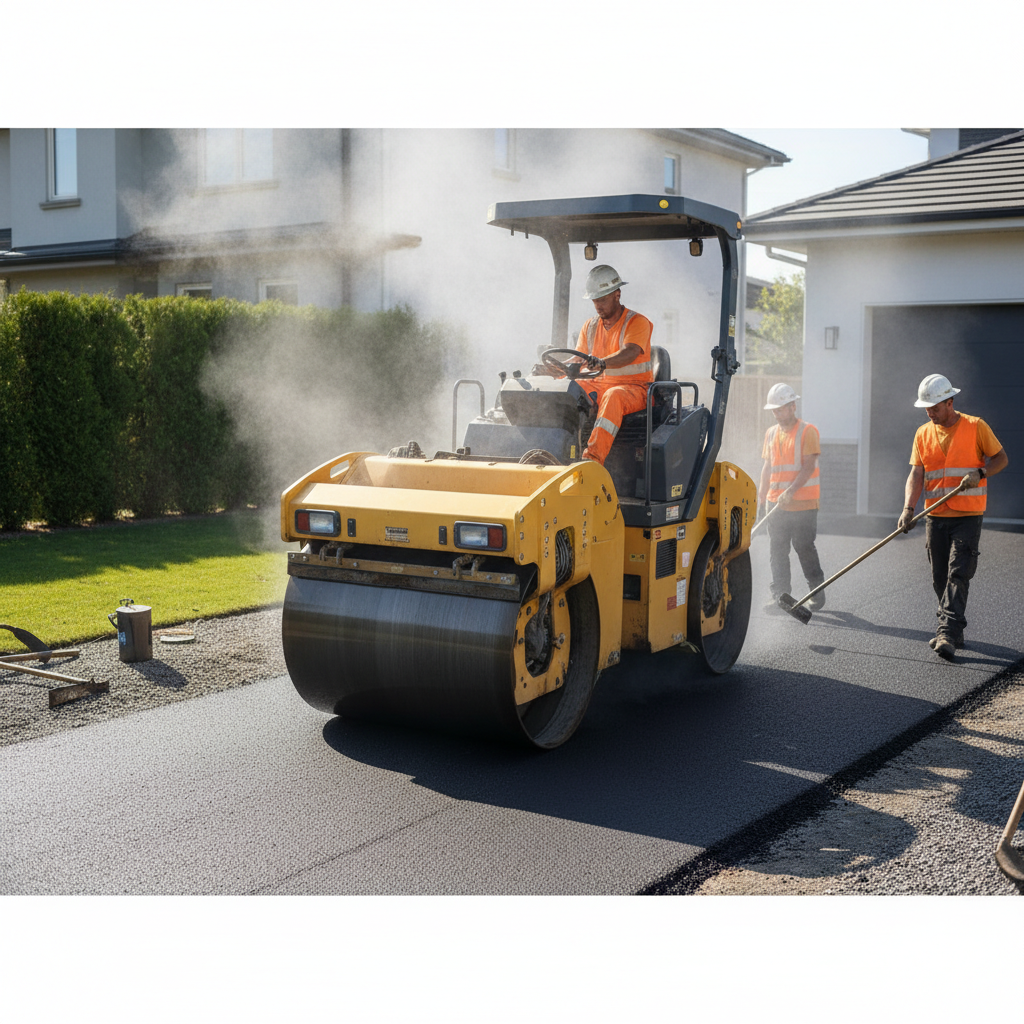
Driveway paving options and costs in St. Albert
St. Albert homeowners usually have a few driveway paving paths to choose from, and the “best” option depends on how your lot freezes, drains, and gets maintained during winter. With 21,505 homeowner households (82.9% of households own) and single-detached houses making up 70.4% of dwellings (Statistics Canada, 2021 Census), most driveways here are attached to long-term homes where you want a finish that looks good year after year. In the Edmonton economic region, pricing is shaped less by material alone and more by frost protection and drainage design. Edmonton-area builders commonly plan for frost depth around 1.5 metres or more, so contractors often recommend deeper excavation and a well-graded compacted granular base—especially if the subgrade is soft or water collects near the garage. Freeze-thaw cycling is also a major cost driver: any trapped moisture in the base can expand when it freezes, then weaken the structure during spring thaw, leading to settlement and cracks.
Demand is especially steady in established neighbourhoods where driveways typically need a base check before overlay, such as around Pineridge and Deer Park (often older streets with more mature trees and variable drainage). If your existing driveway has poor slope or you’re replacing old asphalt or damaged concrete, bids tend to run higher because excavation, hauling, drainage stone, and compaction take time during the shorter paving season. Below is a practical comparison table to help you anchor your quote discussions before we talk about your site conditions and access.
| Material |
Lifespan |
Maintenance |
Best For |
Price per sq ft |
| Asphalt (new installation, proper base) |
15–25 years |
Seal every 3–5 years (typical) |
Best value for most St. Albert driveways with stable base and proper drainage |
$7–$12 |
| Asphalt (overlay on existing gravel base) |
10–18 years |
Seal every 3–5 years; monitor settlement |
When the base is sound and the existing grade/drainage is already correct |
$6–$10 |
| Interlocking concrete pavers |
25–40 years |
Occasional panel re-leveling; periodic joint sand refresh |
Highest curb appeal and easy localized repairs without replacing the whole surface |
$12–$20 |
| Poured concrete (broom finish) |
20–30 years |
Clean regularly; seal optional |
Clean lines, durable surface, good for straight driveway profiles |
$10–$17 |
| Exposed aggregate concrete |
25–30 years |
Seal as recommended to reduce staining |
Slip-resistant finish and a premium look for entry drives |
$12–$21 |
| Gravel / crushed stone (budget option) |
3–7 years (varies widely) |
Re-grade and top up 1–2 times per season |
Short-term solution or rural-style access where aesthetics are secondary |
$4–$8 |
Prices are estimates only and vary by project scope, site access and material selection.
What affects the price of paving in St. Albert
In St. Albert and across the wider Edmonton region, it’s common for quotes on the “same size” driveway to differ by 30–50%. That gap usually comes from the site work that isn’t always obvious at first glance: excavation depth, subgrade condition, drainage corrections, and how much of the existing surface must be removed. Asphalt might start in the $7,000–$15,000 driveway range depending on area and base prep, while interlocking pavers often land higher—commonly in the $12,000–$28,000 band once you include proper edging, geotextile, and leveling base.
Frost line depth and freeze-thaw cycles are decisive cost factors here. In the Edmonton/central Alberta climate, deeper frost typically means a thicker compacted granular base (often on the order of 6–12 inches of granular layers in many Ontario/Alberta-style designs, while coastal BC solutions are sometimes slimmer). If water gets into that base, freeze-thaw cycling can push material, create voids, and eventually lead to cracking or potholes. Asphalt mix design also matters: freeze-thaw-rated mixes and proper compaction are priced in, especially when contractors have to haul and stock materials to meet schedule during a shorter paving season. Hot-mix asphalt generally requires air temperatures above about 10°C to place properly, so St. Albert projects can also see labour premiums around spring working windows when crews are booked.
Two common examples that raise cost in St. Albert: (1) replacing asphalt that has failed due to poor drainage under the drive—contractors may need more base removal and added drainage stone; and (2) widening a narrow driveway where equipment access is tight, requiring more time for grading and compaction passes. Costs can be lower when the existing subgrade is already stable, slopes correctly away from the garage, and the driveway area is square and accessible for roller compaction.
| Price Factor |
Why It Matters |
Cost Impact |
| Driveway area in sq ft |
The surface area drives asphalt/stone quantities, labour time, and compaction passes |
High (often the biggest swing between bids) |
| Base depth required |
Frost protection needs enough granular thickness to resist heave and settlement |
High (deeper excavation increases hauling and material) |
| Grading and drainage work |
Correct slope and water management reduce freeze-thaw damage |
Medium to high (can add significant labour and stone) |
| Tear-out of existing surface |
Breaking and hauling old asphalt or concrete affects disposal and crew time |
Medium to high (especially if it’s reinforced concrete) |
| Edge restraints and curbing |
Restraints prevent paver spread and keep the finished grade stable |
Medium (more labour and material) |
| Sealing requirement |
Asphalt typically needs sealing after curing to protect against weathering and water intrusion |
Low to medium (add-on that protects long-term performance) |
| Site access |
Narrow lots slow equipment movement and may require more manual handling |
Medium (often time-based pricing) |
| Asphalt mix specifications |
Freeze-thaw-rated mixes and correct placement reduce cracking risk |
Low to medium (quality choices can raise unit cost) |
Permits & regulations in Alberta
For most St. Albert homeowners, paving a private driveway within your own property usually does not require a building permit. However, the work that sits in or affects public space is where approvals often come into play. If your driveway project includes changes in the municipal right-of-way—for example, a new curb cut, adjustments to the boulevard, or altered storm drainage patterns that connect to municipal infrastructure—you should expect to need municipal approval before excavation and grading.
Some municipalities also enforce lot-grading expectations to prevent runoff from directing water toward neighbours or into foundations. Even when a permit isn’t required, contractors still have to design the base and drainage so water doesn’t pool and freeze under the slab or asphalt. In practice, work that changes how water flows can trigger review if it affects the street drainage system.
Before anyone digs in St. Albert, homeowners should confirm that utility locates are called in (Alberta One-Call). Next, verify your contractor properly before they start: request proof of Alberta licensing (where applicable for the scope of work), liability insurance (certificate of insurance showing your address/jobsite if possible), and WSIB/WCB coverage so you’re not left holding the risk if there’s an injury on site. The best contractors will provide clear documentation and a readiness checklist.
Asphalt vs pavers vs concrete for St. Albert driveways
For St. Albert’s freeze-thaw climate and real-life winter maintenance (ploughing, sand, and occasional salt exposure), base preparation and drainage design matter as much as the surface material. Asphalt typically offers the lowest upfront cost and smooth ride, but it relies on regular sealing—often every 3–5 years—to keep water from migrating into the base. Interlocking concrete pavers usually cost more upfront, but they’re forgiving: if a section ever shifts, many homeowners can repair localized blocks without tearing out the entire driveway. Poured concrete sits in the middle price-wise and is durable, but it can crack under repeated freeze-thaw if it’s not properly air-entrained and detailed for expansion and drainage.
Because Edmonton-area designs commonly plan deeper frost protection, every option depends on a stable, well-compacted granular base and correct slope away from the garage and house. When drainage is well-designed, asphalt performs well and stays affordable within the $7,000–$15,000 driveway paving band for many typical residential sizes. If you want maximum curb appeal and easy repairs through the life of the home, pavers can justify the higher $12,000–$28,000 range—especially on driveways with corners, changing grades, or where future utility work might be likely. A simple dollar example: if asphalt and pavers both fit your driveway area, paying a few thousand more for pavers often makes sense when you’re prioritizing long-term flexibility and localized repair rather than sealing schedules.
| Material |
Frost Resistance |
Curb Appeal |
Repair Method |
Lifespan |
Price Band |
| Asphalt (sealed regularly) |
Good when base/drainage are right; sensitive to water intrusion if unsealed |
Good (clean black finish, less pattern variety) |
Patch and re-compact localized areas; re-seal sections as needed |
15–25 years |
$7,000–$15,000 |
| Interlocking concrete pavers |
Very good with proper geotextile and base; joints handle minor movement better |
Excellent (pattern/colour options) |
Remove and replace individual pavers; re-level affected area |
25–40 years |
$12,000–$28,000 |
| Poured concrete (air-entrained) |
Good when properly air-entrained and detailed for freeze-thaw |
Good (simple, modern look with broom finish) |
Crack patching/patch panels; full replacement if major slab failure |
20–30 years |
$9,000–$22,000 |
| Exposed aggregate concrete |
Good when well-detailed; surface helps with traction |
Premium (texture and finish depth) |
Localized patching is possible but colour matching can vary |
25–30 years |
$12,000–$24,000 |
| Permeable pavers (drainage grid) |
Very good for water management when installed with correct base/permeable layers |
High (modern look, grid systems vary) |
Replace paver units; maintain drainage pathways |
20–35 years |
$14,000–$30,000 |
| Chip seal / tar-and-chip |
Fair to good short-to-mid term; depends heavily on base and staging |
Moderate (more utilitarian look) |
Surface rejuvenation and top-ups; more maintenance over time |
7–15 years |
$6,000–$12,000 |
How to choose a paving contractor in St. Albert
Choosing a paving contractor in St. Albert comes down to verifying competence and reducing risk—especially with Alberta freeze-thaw performance expectations. First, confirm Alberta licensing for the type of work they’re doing (where required), and ask for liability insurance and current WSIB/WCB coverage. You can check licensing and good standing through the relevant online registry channels, then verify the certificate of insurance is active and covers the work at your address. For WSIB/WCB, the contractor should provide proof of coverage/clearance letter—don’t accept “we’re covered” verbally.
Next, request 2–3 itemised written quotes rather than lump sums. You want a breakdown that clearly separates excavation/haul, base materials, drainage work, asphalt or concrete supply, compaction, and finishing. Read the scope carefully: what’s excluded (old base stabilization, disposal fees, saw-cutting), is a permit pull included if right-of-way work is involved, and who handles debris/disposal and restoration? Ask about warranty terms: confirm the workmanship warranty length, whether any manufacturer warranty applies to material, and if coverage is transferable to future owners.
Finally, watch the payment schedule. A common safe approach is never paying more than 10–15% upfront; hold back the balance until completion and any final walkthrough items are finished. Get your timeline in writing too—start date and estimated completion—because spring paving windows can tighten quickly in central Alberta.
- Ask for itemised quotes (materials, labour, equipment, disposal) not a single number.
- Confirm who designs/targets the drainage slope and how water will be managed away from the garage and house.
- Verify base specs: granular type, compaction method, and planned depth for frost protection.
- Request a written plan for tear-out (what thickness, what haul/disposal, and what gets backfilled).
- Check that edging/restraints are included where needed (pavers especially).
- Confirm asphalt sealing expectations (timing after cure, and whether it’s included or add-on).
- Verify insurance COI is current and matches the project scope and address.
- Provide WSIB/WCB proof/clearance letter for worker protection.
- Ask about past St. Albert installs and the contractor’s local references or job photos.
- Review warranty in writing: workmanship duration, exclusions, and response time.
- Use a payment schedule with a small upfront deposit and a holdback until you approve completion.
- Get a start/completion timeline in writing and confirm weather contingency terms.
Red flags in St. Albert include: vague scopes that don’t mention base depth or drainage; quoting “overlay only” without checking the existing base condition; refusing to provide a written itemized breakdown; asking for most payment upfront (beyond 10–15%); and promising asphalt or concrete placement “regardless of temperature” without addressing cold-weather limitations.
Frequently asked questions — paving in St. Albert
Do I need a permit to pave my driveway in Alberta?
In most cases in Alberta, paving a private driveway within your own property typically doesn’t require a building permit. However, St. Albert projects that affect the municipal right-of-way can require municipal approval—think new or altered curb cuts, changes to boulevard grading, or drainage modifications that tie into storm systems. Even if a permit isn’t required, contractors should still follow lot-grading expectations that prevent water from being redirected toward neighbours or toward your foundation. Before work starts, ask your contractor to clarify whether any portion of excavation or grading reaches the boulevard area. Also, make sure utility locates are called in before digging (Alberta One-Call). If in doubt, confirm with the municipality or ask for documentation that indicates right-of-way approval is not needed for your exact scope.
How long before I can drive on new asphalt?
For new asphalt in St. Albert, the typical window is about 24 to 48 hours before normal vehicle traffic—provided the surface temperature and weather conditions are suitable. Asphalt needs time to cool and set, and crews also want to avoid trapping moisture or damaging the surface while it’s still vulnerable. If your contractor plans additional lifts or finishing passes, the timeline can shift. Pricing usually already factors placement and compaction quality, and many crews include or recommend a curing period before any sealing. If you’re budgeting, remember that regular sealing later is part of long-term performance—many owners plan for sealing as an ongoing maintenance item, not something that replaces proper base work. If your quote is in the $7,000–$15,000 driveway band, ask whether sealing is included or scheduled as a separate step.
What causes potholes and how are they repaired?
Potholes in the Edmonton area are usually caused by water getting into the pavement or base—then freezing and thawing repeatedly weakens the granular structure. In St. Albert, freeze-thaw cycling can pull apart the bond around ravelled areas, and ploughing/salt can speed up deterioration at edges or low spots where water collects. Sometimes the root cause is drainage or grading: a driveway that doesn’t shed water properly can fail even if the surface looked fine initially. Repairs generally fall into two categories: patching (cut out the failed area, clean and stabilize the base, install asphalt in lifts, and compact) or deeper rework (if the base has saturated or settled). A contractor should inspect under the surface before re-paving. Good repairs match the mix and thickness to the original design rather than just “topping up.”
How do I prepare for a paving project?
Start by clearing the driveway area of vehicles, trailers, and anything that blocks equipment access. In St. Albert, access matters because rollers and compactors need safe paths, and tight lots can extend labour time. Mark any sprinkler heads, low-voltage lines, or landscaping you want protected, and confirm with your contractor where you want topsoil/landscaping restoration to occur. Next, plan for utility locates before any excavation (Alberta One-Call). If you’re replacing asphalt or concrete, discuss tear-out limits: should the contractor remove the full failing thickness or only parts of it? Ask where debris will be hauled and whether disposal is included. Finally, confirm the schedule in writing and decide who will be available for a quick site walkthrough at completion. Proper preparation helps keep your project within the expected scope and reduces change orders.
How do I compare paving quotes fairly?
To compare quotes fairly in St. Albert, make sure you’re comparing the same scope—not just the same driveway “size.” Ask for itemised breakdowns: excavation and haul, base depth and granular materials, geotextile (if needed), compaction, drainage adjustments, surface thickness, and finishing. The biggest reason quotes differ by 30–50% locally is how much frost protection work is included. Also confirm what’s included for disposal and restoration, and whether right-of-way approvals are required for your specific site. If one quote is in the $7,000–$15,000 asphalt range and another is closer to $12,000–$28,000 for pavers or higher for concrete, confirm the base prep and edging details, not just the finish. Finally, check warranty length and what triggers exclusions. A lower price with weaker base/drainage often becomes a higher cost later through cracking or settlement.
Can asphalt be laid in cold weather in St. Albert?
Asphalt placement in Alberta needs temperature conditions that allow proper paving and compaction. Asphalt generally requires air temperatures above about 10°C for reliable placement, and contractors also consider surface temperature and wind. In St. Albert, cold snaps can shorten the paving window—so reputable crews plan around workable weather and schedule earlier in the season when conditions are favourable. If a contractor tries to push work during borderline temperatures without proper adjustments, you risk poor compaction and early raveling or cracking once freeze-thaw cycles return. A quality contractor will explain how they’ll manage weather and cure time, and they’ll design the mix for local freeze-thaw performance. If your project timeline is tight, ask about their sequencing plan and whether delays could affect your schedule or the need for a later sealing step.