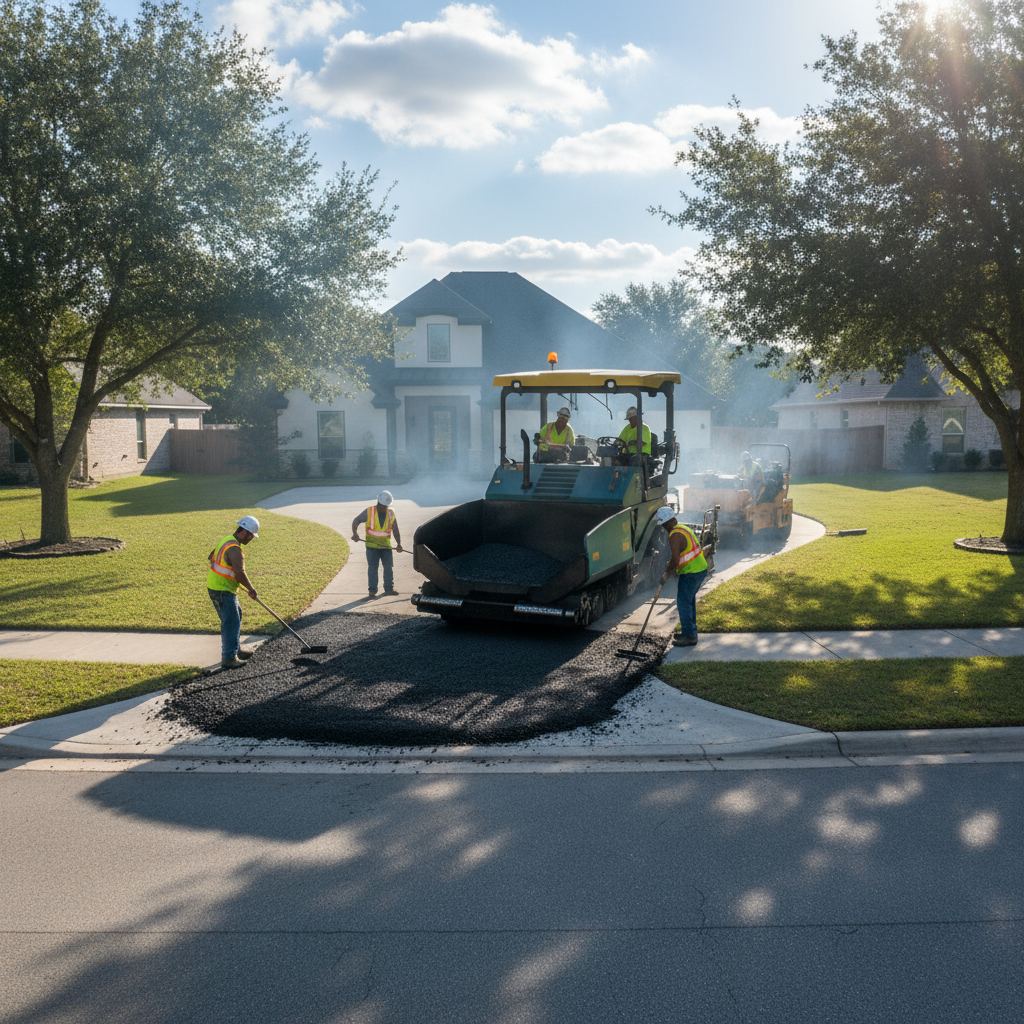
Driveway paving options and costs in Jasper
Jasper driveways are a little different than many places in Canada because the Banff–Jasper–Rocky Mountain House corridor lives with deep frost and rapid freeze–thaw cycles. With a population of 4,738 (Statistics Canada, 2021 Census) and about half of households owning their homes, you’ll see lots of private driveway projects clustered around long-term neighbourhoods and established streets—especially in areas with older housing stock (57.9% of homes built before 1981, Statistics Canada, 2021 Census). That age matters: existing bases are often shallow, drainage can be off, and the ground may already be compacted in inconsistent layers, so the “fix the foundation first” portion of the job becomes the difference between a driveway that lasts and one that fails early.
Costs also rise and tighten schedules here. Asphalt paving depends on warm daytime temperatures (often above 10°C) so the workable season is shorter, and contractors tend to be booked quickly from late spring into early fall. You also generally need a deeper, well-graded granular base with strict compaction and positive drainage, because colder Alberta frost penetration can drive heaving and cracking if water sits in the structure.
In Jasper, the best-value option is usually the one that matches your site conditions and maintenance comfort—then gets built on the right base. Use the table below to compare typical lifespans, maintenance needs, and realistic per-square-foot pricing for driveway work in the Jasper market, including common options in town near downtown and around neighbourhoods like Patricia Street and the broader Jasper East area.
| Material |
Lifespan |
Maintenance |
Best For |
Price per sq ft |
| Asphalt (new installation, proper base) |
12–20 years |
Seal 6–12 months after paving, then every 3–5 years; patch as needed |
Most common choice when you want a smooth, affordable surface |
$9–$18 |
| Asphalt (overlay on existing gravel base) |
8–14 years |
Seal and patch sooner; watch for settlement |
When the current base is proven stable and well-drained |
$10–$16 |
| Interlocking concrete pavers |
20–30+ years |
Occasional joint sand top-up; replace individual stones if needed |
Curb appeal and repairability without full replacement |
$18–$45 |
| Poured concrete (broom finish) |
18–25 years |
Minimal, but plan for crack sealing and patching |
Low-maintenance look with good durability if properly designed |
$15–$30 |
| Exposed aggregate concrete |
20–30 years |
Seal periodically; manage minor spalling with spot repairs |
Better texture for traction in winter; premium appearance |
$20–$38 |
| Gravel / crushed stone (budget option) |
3–8 years |
Re-grade and add stone annually; weed control |
Temporary solution or where paving isn’t currently feasible |
$6–$12 |
Prices are estimates only and vary by project scope, site access and material selection.
What affects the price of paving in Jasper
In Jasper, quotes for the “same” driveway can vary by 30–50% across the Banff–Jasper–Rocky Mountain House corridor because the expensive part is often below the surface. Two contractors can both quote an asphalt finish, but one includes proper excavation, base thickness, drainage fixes, and disposal—while the other assumes you already have a stable base. That difference gets magnified here by frost depth and freeze–thaw cycles. Deeper frost requires a thicker compacted granular base to prevent heaving and cracking; in colder Alberta settings, that typically means going well past a thin base and getting compaction done to spec, not “by feel.”
The paving season is also shorter at elevation and in winter-ready climates. Asphalt needs warm enough air temperatures to place and compact reliably (commonly above 10°C), so schedule pressure drives mobilization and sometimes overtime. Asphalt mix design matters too: the mix has to meet freeze–thaw performance targets, which can cost more than a basic mix.
Concrete pricing can swing based on whether you need additional reinforcement or better jointing to manage thermal movement. For example, a small driveway that’s already well-drained and cut cleanly may land near the asphalt band of $9–$18 per square foot, while the same size job with a failed base, poor grading, and curb or edge work can push into the higher end quickly. Similarly, an interlock job (often $18–$45 per square foot) can be worth it when you anticipate future localized repairs—though if your site requires heavy tear-out and re-grading anyway, the “premium look” can be delayed by the foundation work first.
| Price Factor |
Why It Matters |
Cost Impact |
| Driveway area in sq ft |
Materials and labour scale directly with surface area |
High (often 60–75% of total) |
| Base depth required |
Frost line determines granular thickness to prevent heaving |
High (more excavation and aggregate) |
| Grading and drainage work |
Slope and positive drainage keep water out of the structure |
Medium to High (can change the whole scope) |
| Tear-out of existing surface |
Breaking and hauling old asphalt or concrete adds labour and disposal |
Medium to High (especially with thick slabs) |
| Edge restraints and curbing |
Prevents paver spread and keeps asphalt from raveling at the edges |
Medium (more forms/materials) |
| Sealing requirement |
Asphalt needs seal coat after curing to slow oxidation and water penetration |
Low to Medium (often added as a small line item) |
| Site access |
Narrow lots and difficult staging slow equipment movement and productivity |
Medium (mobilization and extra labour time) |
| Asphalt mix specifications |
Freeze–thaw-rated mixes can cost more but reduce early cracking |
Medium (quality-focused materials) |
Permits & regulations in Alberta
In Alberta, paving a private driveway within your own property usually does not require a building permit, especially when you’re simply replacing or paving an existing surface with no changes to municipal infrastructure. Where permits and municipal approvals typically come into play is when you work in the municipal right-of-way or affect services: that includes creating or modifying curb cuts, changing a boulevard area, altering storm drainage patterns, or extending the hard surface beyond your property line in a way that impacts municipal systems. Even if your intent is strictly aesthetic, you should confirm whether Jasper requires approvals for any work that touches the road allowance or drainage flow path.
Before anyone digs, call for utility locates through Alberta One-Call so the contractor and homeowner know where gas, power, and telecom lines are. Then verify contractor credentials. For the contractor’s Alberta licence, check the relevant online registry provided by Alberta for roadwork/asphalt-related contracting (the exact category can vary by scope). For insurance, request a Certificate of Insurance showing general liability limits, and ask that the certificate list you or your property as an additional insured where appropriate. For worker coverage, ensure they carry WSIB/WCB coverage—either by a clearance letter or a current coverage confirmation showing active status.
Step-by-step for Jasper homeowners: (1) get a written scope and start date, (2) confirm utility locates are booked, (3) review COI and WSIB/WCB confirmation before work begins, and (4) confirm any right-of-way approvals with the municipality if your project changes curb cuts or drainage.
Asphalt vs pavers vs concrete for Jasper driveways
For Jasper, the “best” driveway material is the one that holds up through repeated freeze–thaw and winter maintenance. Asphalt typically has the lowest upfront cost and can look sharp when placed on a well-compacted granular base; the trade-off is maintenance—plan for sealing about every 3–5 years after an initial seal coat in the first 6–12 months. In harsh Alberta winters with snowploughing and sand/salt, that seal is what helps slow water infiltration.
Interlocking concrete pavers cost more initially, but they’re the most forgiving if something shifts. If a subgrade issue shows up, sections can be lifted, corrected, and reset without replacing the whole driveway. That matters in the Banff–Jasper–Rocky Mountain House corridor where frost and drainage management can reveal problems over time.
Poured concrete sits mid-range in price, but it’s sensitive to design choices. Proper air entrainment, jointing, and base prep reduce cracking risk—yet freeze–thaw and de-icing chemicals can still shorten its life if water gets trapped or if the concrete lacks the right mix. Exposed aggregate is usually more textured (helpful for traction on icy surfaces), but it still depends on the same base and freeze–thaw considerations.
Base prep here generally needs to account for frost penetration with a deep, well-graded crushed aggregate base and positive drainage. As a practical example, on a similar-size driveway, choosing asphalt at the lower end of $9–$18 per square foot may save you roughly $3,000 to $8,000 versus pavers in the $18–$45 range—only to cost more later if you skip sealing or your drainage isn’t corrected. Conversely, pavers are often justified when you want easier spot repairs or stronger curb appeal near entry areas and plough routes.
| Material |
Frost Resistance |
Curb Appeal |
Repair Method |
Lifespan |
Price Band |
| Asphalt (sealed regularly) |
Good when base is deep and drainage is positive |
Medium (clean, smooth finish) |
Mill and patch/overlay sections |
12–20 years |
$9–$18 |
| Interlocking concrete pavers |
Excellent with correct bedding and restraints |
High (varied colours/patterns) |
Lift, re-level base, replace stones |
20–30+ years |
$18–$45 |
| Poured concrete (air-entrained) |
Good with air entrainment and proper joints |
Medium (broom finish) |
Crack repair and patch; slab replacement if severe |
18–25 years |
$15–$30 |
| Exposed aggregate concrete |
Good with proper base and freeze–thaw-rated mix |
High (premium texture/traction) |
Spot patch; maintenance of sealing as advised |
20–30 years |
$20–$38 |
| Permeable pavers (drainage grid) |
Very good when underdrain is designed correctly |
High (modern look) |
Replace units; clear/maintain drainage layer |
20–30+ years (system-dependent) |
$22–$50 |
| Chip seal / tar-and-chip |
Moderate (surface wears under heavy ploughing) |
Low to medium |
Spot reseal and re-chip as needed |
6–12 years |
$7–$14 |
How to choose a paving contractor in Jasper
Choosing a paving contractor in Jasper isn’t just about price—it’s about verifying coverage, getting detailed scope language, and ensuring your freeze–thaw risk is handled at the base layer. Start with Alberta licensing for the type of work they’ll do. Then request proof of liability insurance (Certificate of Insurance) showing active coverage and limits that make sense for construction work. For worker protection, confirm WSIB/WCB coverage: ask for either a current clearance letter or a documentation confirmation that coverage is in good standing. Don’t assume “they’ll handle it”—ask before equipment arrives.
Next, get 2–3 itemised written quotes. The best quotes separate excavation, base materials, compaction labour, drainage corrections, asphalt or concrete placement, edge restraints, and disposal. Avoid lump-sum quotes that don’t state thicknesses or whether the contractor includes a proper seal coat plan for asphalt. Confirm what’s excluded: removing existing structures, hauling and landfill fees, permit pulls (if any are needed for right-of-way work), and snow/ice control around the work zone.
Warranty matters in a climate like Jasper. Ask for a workmanship warranty length and whether it covers base and compaction issues (not just surface defects). Also ask about the product/manufacturer warranty and whether it’s transferable to subsequent owners. Payment schedule should protect you: never pay more than about 10–15% upfront, and hold a portion until the job is complete and cleaned up. Finally, insist on a start date and completion estimate in writing—because the paving window is short and weather can shift timelines quickly.
- Ask for Alberta licensing details for the exact scope (asphalt/concrete, excavation, and any curb/roadway interface).
- Request a Certificate of Insurance and confirm you’re covered as additional insured where applicable.
- Verify WSIB/WCB coverage with a clearance letter or active status confirmation.
- Get thickness details for excavation and granular base, not just “proper base.”
- Confirm drainage plan: slope targets, ditch tie-ins, and where water will go.
- Require a stated compaction standard for the base materials (by spec).
- Ensure edge restraints/curbing are included (especially for pavers).
- Ask whether asphalt includes a seal coat plan: timing (6–12 months) and frequency (3–5 years).
- Make disposal/hauling explicit—landfill fees are often omitted in budget quotes.
- Confirm tear-out scope: breaking, loading, and removal of old asphalt or concrete.
- Get a written timeline tied to weather windows for Jasper.
- Put warranty terms in writing, including what’s covered and response timing for defects.
Red flags in Jasper: a contractor who won’t show base thickness/compaction details; quotes that omit disposal and drainage corrections; no written warranty or vague “materials-only” coverage; requesting large upfront payments (well beyond 10–15%); and contractors who won’t provide insurance/WSIB/WCB documentation before scheduling equipment.
Frequently asked questions — paving in Jasper
When is the best time of year to pave in Jasper?
In Jasper, the safest window is late spring through summer into early fall—when daytime temperatures stay high enough to properly place and compact asphalt, and when subgrade moisture is manageable. Asphalt placement typically needs air temperatures around 10°C or warmer for reliable compaction and to prevent cold-lay issues. Late-season work can be risky if nights cool quickly and curing stalls, especially with deep frost bases and freeze–thaw conditions. For concrete, weather still matters, but asphalt is often more sensitive to short-term temperature swings. If your driveway involves drainage correction and base excavation first, those earthworks also need dry conditions so the granular base isn’t saturated. Plan to schedule early because trades can be booked tight in the Banff–Jasper–Rocky Mountain House corridor.
How deep should the base be for Jasper's frost?
For Jasper, base depth is driven by frost penetration and the need to keep water out of the structure. While the exact depth depends on subgrade condition, soil type, and site drainage, you generally should expect a deeper, well-graded granular base and tighter compaction standards than in milder climates. A practical way to judge a quote is to ask for excavation depth, granular layer thickness, and the compaction approach—not just “we’ll do a base.” If the contractor is proposing minimal base over questionable fill or with poor drainage, the driveway is more likely to heave and crack after winter freeze–thaw cycles. This is also why full-scope asphalt work in Jasper commonly lands in the $9–$18 per square foot range, since the “real” cost is the excavation and granular supply.
How often should I seal my asphalt driveway?
For asphalt in Alberta and specifically Jasper, sealing is one of the highest-impact maintenance steps you can take. In most proper installations, you apply the first seal coat after the asphalt has cured—often within 6–12 months—so the surface is ready and less likely to trap moisture. After that, plan on resealing about every 3–5 years depending on traffic, how aggressively snowploughs contact the edges, and whether water is draining properly away from the driveway. If you see darkened water lanes, stripping on the edges, or early raveling, sealing sooner can prevent deeper deterioration. It’s also worth budgeting repairs alongside sealing; sealing and repair projects commonly fall within the $300–$1,200 range in the Jasper market depending on driveway size and patch scope.
Why does my driveway crack and heave in winter?
Cracking and heaving usually come from water and movement meeting each other. In Jasper’s freeze–thaw cycles, moisture that freezes within an inadequate base or from poor drainage can expand, pushing the surface up (heave) and then pulling it down as it thaws. Older homes and older driveways—common in Jasper, where 57.9% of homes were built before 1981 (Statistics Canada, 2021 Census)—often have shallow, inconsistent bases and drainage paths that no longer match today’s runoff patterns. Another common cause is edge failure: if water gets under the asphalt/pavers at the margins, the structure can deteriorate from the outside in. The fix is usually not just patching the top; it requires addressing base thickness/gradations and restoring positive drainage so water doesn’t sit in the pavement structure.
Do I need a permit to pave my driveway in Alberta?
Typically, paving a private driveway within your own property in Alberta does not require a building permit, especially if you are simply replacing or repaving existing driveway surfaces without changing municipal infrastructure. Where approvals can be required is when you do work in the municipal right-of-way—such as creating or modifying a curb cut, changing boulevard grading, or altering storm drainage flow paths. In Jasper, if your scope affects how water runs from the road or involves the roadway interface, confirm requirements with the municipality before excavation. Also make sure utility locates are done through Alberta One-Call. Before any work begins, verify the contractor provides proof of insurance and WSIB/WCB coverage, and confirm their applicable Alberta licensing for the work they’re performing.
How long before I can drive on new asphalt?
Most new asphalt driveways can handle light traffic relatively soon after paving, but you should follow the contractor’s curing guidance rather than a blanket rule. Generally, contractors may allow limited use once the surface has cooled and the mix has set enough to avoid tracking, while heavy loads and tight turns often require longer. Weather matters a lot in Jasper: cool nights, wind, and moisture can slow curing and increase the risk of surface damage. If your project includes base work and drainage corrections, the paving schedule can also be affected by the short season. A reliable contractor will provide a clear timeline in writing and will explain any restrictions for the first 24–72 hours. If you’re planning sealing later, remember the initial seal coat timing is usually within 6–12 months.