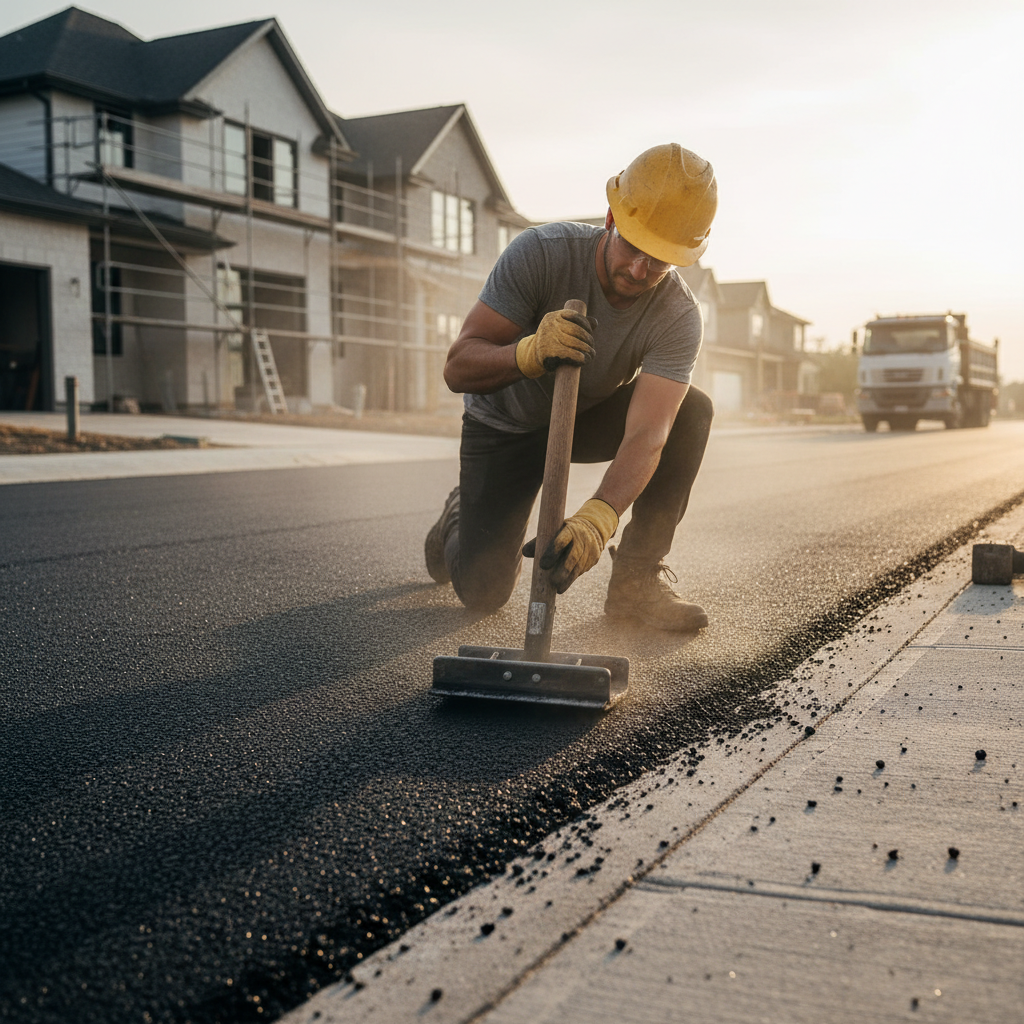
Driveway paving options and costs in Valleyview
Valleyview driveways come with a real cold-climate challenge: the freeze–thaw season is long, and frost can penetrate deeply in the Athabasca–Grande Prairie–Peace River region, so a “cheap” surface can fail early if the base isn’t engineered properly. In Valleyview, most homes are detached—57.6% of dwellings are single-detached—and that matters because the vast majority of driveway work here is attached to private homes (and many homeowners plan renovations rather than replacements). With 455 homeowner households (68.9% of households own), there’s steady demand for new asphalt, pavers, and concrete in neighbourhoods like the areas around Juniper Drive and the broader residential sections of town.
Pricing also reflects contractor availability and logistics. Because heavy work can only be scheduled when soils are firm (roughly mid-May to September), mobilization and scheduling premiums are common, especially in spring when thawing soft spots can shut down full compaction. In a frost-susceptible zone, contractors typically go deeper on granular base, compact carefully, and build positive drainage so meltwater doesn’t cycle through freeze–thaw under your driveway.
Below are realistic starting points for common driveway surfaces when the base is built correctly for Valleyview’s conditions. Use this to compare apples-to-apples, then we can tighten the numbers once we measure your area and review site access, drainage, and what’s underneath.
| Material |
Lifespan |
Maintenance |
Best For |
Price per sq ft |
Price Range |
| Asphalt (new installation, proper base) |
15–20 years |
Seal coat every 3–5 years; patch minor alligatoring/cracks |
Smooth ride, fastest install, best value with engineered base |
$6.50–$10.50 |
$6,500–$12,000 |
| Asphalt (overlay on existing gravel base) |
10–15 years |
Seal coat every 3–5 years; watch settlement at edges |
If the subgrade is stable and you’re building from gravel |
$5.75–$9.25 |
$6,500–$12,000 |
| Interlocking concrete pavers |
20–30 years |
Re-seat minor areas; periodic joint sand top-up |
High curb appeal and “repair without full replacement” |
$9.50–$15.50 |
$9,000–$18,000 |
| Poured concrete (broom finish) |
25–35 years |
Keep it clean; seal if desired; repair spalls early |
Long-term flat surface, good plowing compatibility |
$10.00–$14.50 |
$8,000–$16,000 |
| Exposed aggregate concrete |
25–35 years |
Less visible wear; seal for stain resistance |
Texture and traction, premium look |
$12.00–$18.00 |
$8,000–$16,000 |
| Gravel / crushed stone (budget option) |
2–7 years (depends on base) |
Re-grade and top up every 1–3 seasons; manage washboarding |
Lowest upfront cost, temporary solution, easy modifications |
$2.50–$5.50 |
$3,000–$8,000 |
Prices are estimates only and vary by project scope, site access and material selection.
What affects the price of paving in Valleyview
Even when two homeowners in Valleyview want the “same” driveway, quotes can swing by 30–50% in Athabasca–Grande Prairie–Peace River and across Alberta because the real cost sits in the groundworks and the calendar. Frost-susceptible soils in the region can heave if the granular base isn’t thick and well-graded, and that’s why two contractors may quote very different base depths, compaction targets, and drainage builds—especially when the subgrade is clay or silty material.
Freeze–thaw is decisive here. With frost penetration routinely exceeding 1 m (and sometimes approaching 1.5–2 m in harsher pockets), base thickness typically needs to be engineered for stability, not just surface thickness. In practice, that often means thicker compacted granular sections than you’d see in milder areas—so if one quote assumes minimal excavation and the other includes undercutting plus stabilized base, the difference can be substantial.
The paving season is also shorter, because hot-mix asphalt generally needs air temperatures above 10°C to place reliably. When spring soft spots delay full compaction and early fall frost threatens final lifts, contractors concentrate crews mid-May to September, which pushes mobilization and scheduling premiums. You’ll also see mix design differences: freeze–thaw-rated asphalt and proper binder content cost more than “standard” product.
Concrete costs can move too. For example, older homes built before 1981 (46.2% of dwellings) often have driveway geometry, utility crossings, or buried material that increases tear-out and disposal. If the site has tight turning radiuses or needs grading for water to flow away from the slab, you might see concrete move toward the higher end of the $8,000–$16,000 band. For asphalt, a well-drained, properly compacted base can keep you near $6,500–$12,000, while poor drainage changes can force additional excavation and bring the job closer to the top end.
| Price Factor |
Why It Matters |
Cost Impact |
| Driveway area in sq ft |
Most material and production time scales directly with square footage. |
Often the single largest driver (about 50–70% of the total variation). |
| Base depth required |
Frost-susceptible subgrades need thicker, compacted granular base to prevent heaving/cracking. |
Can add significant cost where undercutting/stabilization is required. |
| Grading and drainage work |
Slope corrections and drainage channels keep meltwater from cycling under the surface. |
Typical increase if spot grading, ditches, or swales are needed. |
| Tear-out of existing surface |
Breaking, loading, and hauling old asphalt/concrete adds labour and disposal fees. |
Often a major swing factor, especially with thick slabs. |
| Edge restraints and curbing |
Prevents paver spread and asphalt edge raveling during freeze–thaw. |
Costs rise with longer restraint runs or curb style changes. |
| Sealing requirement |
Asphalt needs sealing after cure (often within 6–12 months) to slow oxidation and water intrusion. |
Adds a maintenance line item but improves long-term performance. |
| Site access |
Narrow lots, steep approaches, and limited staging slow equipment movement and production. |
Can force smaller equipment and more labour hours. |
| Asphalt mix specifications |
Freeze–thaw-rated mixes better resist moisture damage and thermal cracking. |
Generally increases material cost versus basic mixes. |
Permits & regulations in Alberta
In Alberta, paving a private driveway within your own property typically does not require a building permit when you’re staying on private land and you’re not changing the underlying storm drainage strategy in a way that affects municipal infrastructure. Where approvals are commonly required is when work touches the municipal right-of-way—this can include new curb cuts, changes to boulevard areas, alterations to driveway approaches that affect the road allowance, and drainage modifications that may influence how water leaves the site. Some municipalities also have lot-grading or surface material rules that restrict how close hard surfaces can be installed to property lines or how water must be directed.
The practical step-by-step for Valleyview homeowners is straightforward:
- Before excavation, call for utility locates using the provincial one-call process so buried services are marked.
- Confirm whether your proposed driveway ties into any curb/boulevard work that falls within the municipal right-of-way.
- Ask the contractor to identify any permits they expect (or whether they assume approvals are not needed).
- Verify contractor standing: request their Alberta licence details (where applicable for the work type), their liability insurance certificate, and their WCB/WCB clearance information.
- Confirm the quote includes excavation/disposal and how drainage will be handled on your lot so you’re not surprised later.
When in doubt, contact the municipality to confirm lot-grading requirements and whether right-of-way changes will trigger approval. That’s the best way to avoid stop-work issues during the short paving window.
Asphalt vs pavers vs concrete for Valleyview driveways
For Valleyview’s freeze–thaw climate, asphalt, interlocking pavers, and concrete can all work—if the base and drainage are designed for frost-susceptible soils. Asphalt is usually the lowest upfront option, but it relies on surface protection: with local winter maintenance (plowing and sand, and in some cases salt), asphalt benefits from regular sealing every 3–5 years to slow water penetration into joints and cracks. Interlocking concrete pavers cost more at the start, but they’re repairable: one failed area can be lifted, re-compacted, and re-layed without replacing the entire driveway. That matters here because localized settlement can happen where drainage isn’t perfect or where subgrade conditions vary. Poured concrete sits in the middle on upfront cost, but it can crack if it’s not properly air-entrained and detailed—freeze–thaw plus de-icing practices can widen cracks over time if water finds a path.
Base preparation is the common denominator. In Athabasca–Grande Prairie–Peace River, contractors generally need deeper granular base and meticulous compaction so frost doesn’t pump moisture under the wearing surface. Drainage design—positive slope and clear outflow away from the structure—often determines longevity more than the brand of surface material.
A real-world example: if asphalt is quoted near the $6,500–$12,000 band and pavers come in around the $9,000–$18,000 band, the premium is often justified when you want higher curb appeal near the front approach and a driveway that can be spot-repaired after future utility or subgrade settlement. If you’re mainly optimizing first cost and you’ll follow an asphalt sealing routine, a properly built asphalt driveway is usually the most practical choice.
| Material |
Frost Resistance |
Curb Appeal |
Repair Method |
Lifespan |
Price Band |
| Asphalt (sealed regularly) |
Good with engineered base and sealing; vulnerable if water penetrates |
Moderate (smooth, clean look) |
Crack fill, patch sections; re-seal |
15–20 years |
$6,500–$12,000 |
| Interlocking concrete pavers |
Very good with proper base; tolerates movement better |
High (variety of patterns and edge detail) |
Lift-and-replace small sections; re-seat |
20–30 years |
$9,000–$18,000 |
| Poured concrete (air-entrained) |
Good when air-entrained and jointed; can crack over time |
Moderate to high (clean lines) |
Patch spalls and seal cracks; joint repair |
25–35 years |
$8,000–$16,000 |
| Exposed aggregate concrete |
Good with proper base; surface texture holds up well |
Very high (premium traction and appearance) |
Patch and re-finish; localized surface repair |
25–35 years |
$8,000–$16,000 |
| Permeable pavers (drainage grid) |
Good when installed with correct drainage layer; helps reduce ponding |
Moderate to high (functional design) |
Lift-and-replace individual blocks; clean/restore joints |
20–30 years (when drainage stays functioning) |
$12,000–$22,000 |
| Chip seal / tar-and-chip |
Moderate; performance depends on placement and base condition |
Low to moderate (more utilitarian look) |
Re-chip or overlay when worn/thin |
6–12 years |
$5,000–$10,000 |
How to choose a paving contractor in Valleyview
Choosing the right contractor in Valleyview starts with verifying coverage and workmanship before you sign. In Alberta, ask for proof of their liability insurance certificate (it should show coverage amounts and your project listed or at least applicable). For worker protection, confirm their WCB/WCB clearance status—request either the clearance letter or verification details they can provide for your job date. Also ask about the contractor’s Alberta standing for the type of work they’re doing and any subcontractors they plan to use; reputable paving companies can explain their crew structure and documentation without pushing you to “just approve the estimate.”
Then get 2–3 itemised written quotes. You want a breakdown that separates labour, granular base quantities, asphalt or concrete tonnage, hauling, edge restraints/curbs, and disposal. A quote that only lists a lump sum without explaining what’s included (tear-out, grading, compaction requirements, drainage correction, and permit responsibility) is harder to compare and more likely to drift in price.
Warranty matters. Ask for the workmanship warranty length and whether it covers base preparation and settlement-related issues. Also ask for the product or manufacturer warranty details—some are limited and may not cover installation errors. Confirm if warranties are transferable if you sell your home. For payment scheduling, never pay more than 10–15% upfront; hold back a meaningful amount until the job is complete and cleaned up. Finally, put the start date and completion estimate in writing, because the paving window is short in northern Alberta and weather can affect mobilization.
- Verify liability insurance certificate and ensure it’s current for the project period.
- Request WCB/WCB clearance and confirm it matches the contractor performing the work.
- Confirm the contractor’s Alberta standing for the work type (ask what’s applicable).
- Insist on 2–3 itemised quotes (labour + materials + hauling + disposal).
- Ask what’s included: tear-out, base compaction, drainage correction, and edge restraints.
- Clarify exclusions: permits, utility locates, over-excavation for soft subgrade, and extra loads.
- Confirm disposal handling for old asphalt/concrete.
- Ask how grade and drainage will be tested before paving/concrete placement.
- For asphalt, ask when sealing will be scheduled and whether cure time is included.
- For pavers, ask about joint sand type and compaction under the paver base.
- For concrete, confirm air-entrainment and joint spacing/treatment approach.
- Use a payment schedule tied to milestones, not cash upfront.
Red flags I see too often around Valleyview: (1) quotes that skip base depth or compaction details, (2) no mention of frost-protection drainage strategy, (3) vague warranties like “best effort” instead of a written workmanship term, (4) asking for most of the money up front, and (5) crews starting excavation without documented utility locates or clear disposal plans.
Frequently asked questions — paving in Valleyview
What is a driveway apron and do I need one in Valleyview?
An apron is the transition area where the driveway meets the road approach/curb or where the paving “wraps” from driveway to adjacent grade. In Valleyview, whether you need one depends on how your existing approach is built and whether you’re changing anything in the municipal right-of-way. If your project involves a new curb cut, boulevard tie-in, or drainage changes near the approach, an apron is commonly used to create a smooth, durable transition and protect edges from freeze–thaw deterioration. For private-only work on your own lot with no right-of-way impact, you may not need a formal apron—but you still need proper edge restraints and drainage so water doesn’t track into the base. A good contractor will show you the grade tie-in during the quote walk-through.
How do I maintain my driveway through Valleyview winters?
Winter maintenance is mainly about preventing water from getting under the surface and reducing damage during freeze–thaw. For asphalt, plow carefully and avoid digging into edges; most early failures happen where the plow lifts material or breaks the edge restraint. Use sand when possible rather than heavy salt application (salt can accelerate deterioration for asphalt and contribute to concrete cracking over time). Keep an eye on drainage: if water pools at the bottom of the driveway after snowmelt, that’s a sign your slope or outlet needs correction before the next season. For concrete, don’t scrape aggressively at joints, and repair small cracks early so water doesn’t track downward. A paving company should recommend a maintenance rhythm; typically, sealing is a planned step for asphalt, and quick crack patching helps protect the base.
Is it worth sealing a new driveway right away in Valleyview?
Usually, no—you don’t seal asphalt until it has cured. Sealing immediately after paving can trap moisture and reduce adhesion, which is especially risky in northern Alberta where temperature swings and melt cycles are frequent. The practical approach in Valleyview is to wait the proper cure time (often within the 6–12 month window mentioned by contractors) and then apply a quality seal coat so water intrusion through hairline cracks is slowed. If your driveway is priced within the $6,500–$12,000 band for new asphalt with proper base, sealing is one of the most cost-effective maintenance actions you can add to protect that investment. If your contractor includes sealing scheduling in the scope, that’s a good sign—ask about the product type and whether they’ll document the cure timing.
What is a chip seal driveway and is it suited to Valleyview?
Chip seal (tar-and-chip) is a surface treatment where a binder is sprayed and covered with aggregate chips, creating a textured wearing layer. It’s sometimes used on rural approaches or as a lower-cost option, but it’s more variable than asphalt or pavers because performance depends heavily on base condition, placement timing, and how well the surface holds aggregate during winter plowing and freeze–thaw. For Valleyview, chip seal can be suited if your base is stable and drainage is addressed, and if you’re comfortable with more frequent maintenance. Expect a shorter typical lifespan (often closer to 6–12 years) compared with asphalt or concrete. If you’re already seeing edge washouts or base movement, chip seal alone usually won’t fix the underlying issue.
How much does driveway crack repair cost in Valleyview?
Crack repair cost varies by crack width, driveway length, and how many patches are needed. Minor driveway cracks are often filled and sealed to slow water infiltration, while wider failures may require cutting out and patching sections or applying a localized overlay. In Valleyview and the Athabasca–Grande Prairie–Peace River region, labour time can be higher because crews aim to match material cure and placement to the short summer window. As a planning benchmark, sealing & repair budgets commonly range from about $500–$3,500 for straightforward crack filling and surface prep. If repairs reveal base settlement during inspection, the scope can rise because the contractor may need to regrade or rebuild base locally. The best approach is a site assessment: many homeowners save money by repairing early instead of waiting for potholes or raveling.
What base thickness do I need for pavers in Valleyview?
For Valleyview paver driveways, base thickness is driven by frost exposure, soil conditions, and drainage—not just the paver thickness. In a cold frost-susceptible zone where frost penetration can exceed 1 m, contractors typically plan for a deeper, well-graded granular base and careful compaction to prevent frost action from pumping moisture upward. The exact inches depend on whether the subgrade is clay/silt and whether undercutting or stabilization is required; that’s why quotes should include a base depth and compaction approach, not only paver colours. If your soil is soft or wet, base may need to be rebuilt deeper, increasing the overall project within the $9,000–$18,000 paver band. Ask your contractor how they’ll handle drainage and how they’ll test compaction before bedding sand and pavers go in.